
Fiordland
A week fishing and diving in the Fiordland frontier...
My world is dark. I’m 10 metres under the surface of the ocean, and above me is a thick layer of tannin-stained seawater. The surface is alive with action, bombarded by a steady artillery of raindrops the size of bowling balls. Only in Fiordland!
Despite the reddish-brown tinge of the surface layer, down here the visibility is pristine. And it’s quiet, too – a silent world.
As I refocus on the mission at hand, I return to scouting around, searching under rocks and ledges with the hunger of a lion on an empty stomach. It doesn’t take long for me to locate a thick set of antennae poking out from under a boulder: red gold. I make the decision to return to the top to restock on air and am met with a barrage of fire as my head breaks the surface. I hastily inhale a bellyful of wet air and then glide back down, to the place where the wild things live.
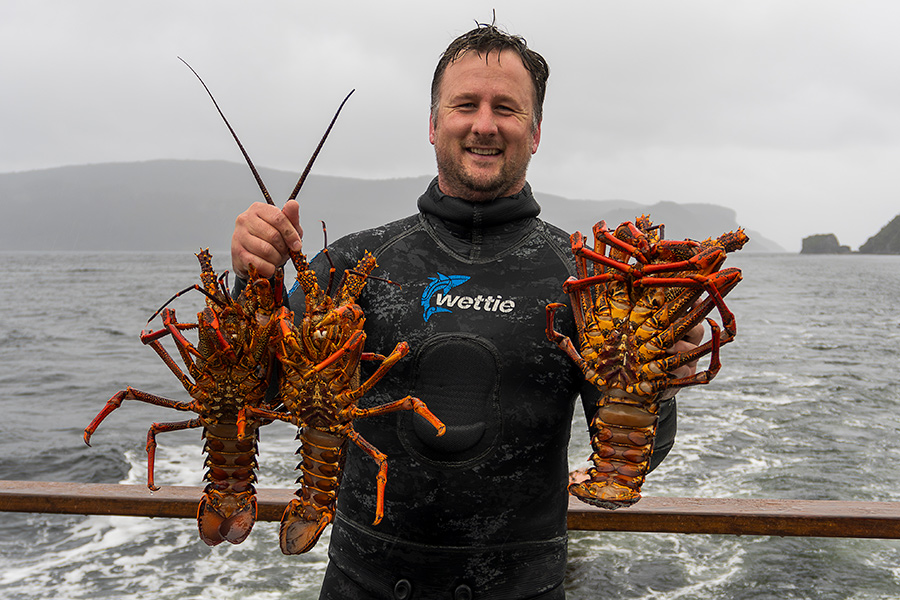
I edge my way towards the boulder and notice a huge buck guarding the entrance to the hole, just as he spots me too – cover blown! But rather than back away (like any self-respecting North Island cray would do), he starts coming head-on towards me instead. He wants a scrap! I extend my hand towards him, snatch at one of his horns, and pry him from his rocky lair. Yes! That’s a PB, for sure!
But he’s clearly not happy about getting unceremoniously plucked from his granite den. He starts flapping his beefy tail and contorting his Schwarzenegger-sized front claws into my forearm with a power that scares the living shit out of me. “Fuuuggckkk” I gurgle into my snorkel. “Whaat thhhe hehll…”
And then I let go.
He takes a moment to realise he’s free and then he makes direct eye contact with me as he flaps himself off my wrist, taking a chunk of neoprene (and my dignity) with him.
Dammit! Oh well, I am in Fiordland, after all. Plenty more fish in the sea.
Living aboard
I’ve only been here for a week, but I already wish I lived in Fiordland. The air tastes sublimely fresh, the fishing and diving are outstanding, and the scenery makes it feel like I’m being reborn into a paradisical Narnia every morning. And the best news? It’s early May and the sandflies are virtually non-existent.
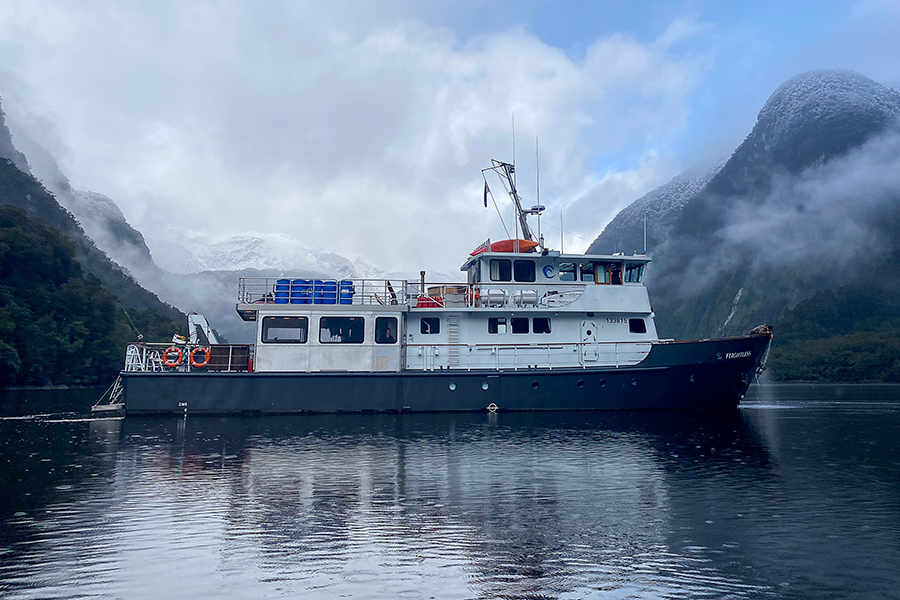
I’ve been staying aboard the M.V. Flightless, an ex-navy vessel that plies these southern waters under the helm of Pure Salt NZ owners, Maria Kuster and Seán Ellis, and their salty crew of mavericks and dreamers.
On a previous trip to Fiordland I stayed in a tent, in a rainstorm. And if there’s one thing that I took from that experience, it’s that tents and Fiordland rainstorms don’t make for a fun time.
So, although it has been raining a lot – and snowing, too – I’m quite content to be sleeping on a comfy boat with all the modern, civilised amenities that one could ask for: a diesel heater (!), a hot shower (!!), and fresh baking from the onboard chef (!!!). And did I mention we were taxied to/from the boat by helicopter?
The fishing
Fiordland is world famous for several reasons. For one: Fiords. But the next in line to the throne would have to be its rich, bountiful (and still intact) fishery.
As a general rule, the further south you go in New Zealand, the more rugged and remote it gets, and the bigger the fish are allowed to grow, undisturbed by humans. There are plenty of fish species that call Fiordland home, and most of them have a reputation for being some of the best table fare in the country: blue cod, tarakihi, bluefin, trumpeter, butterfish, moki, and h?puku. In addition to these usual suspects, Fiordland has also been known to surprise unsuspecting fishos with a trophy snapper or rogue kingfish workup.
Just about any fishing technique is worth a crack. On this trip, we targeted blue cod on bait, moki (copper and blue) on the spear, and southern bluefin tuna on trolled lures.
For most Kiwi anglers, the southern bluefin tuna is high on the bucket list, and I’m not immune. Prior to the trip, I was chomping at the bit to get stuck into one of these ephemeral leviathans. As soon as I had permission, I had the trolling rods out the back of Flightless, hoping for a monster. But I couldn’t buy a bite. Hours went by as we steamed up the coast from Preservation Inlet to Dusky Sound with nothing to show for it. And then it happened – BAM! The rod went off and I picked it up expectantly, ready for the fight of a lifetime.
I probably should have done my homework beforehand though; bluefin aren’t renowned for being great fighters, and this fish (albeit a small one) didn’t give much of an account of itself. I hauled it onboard with a bemused smile – not exactly the sweaty melee of relieved high-fives and congratulatory back slaps that I’d always imagined.
To my mind, what makes Fiordland so unique as a fishery is the combination of its nutrient-rich waters, protected sounds and fiords, myriad islets and coves, and rambunctious outer coast. This geographic diversity means that, on any given day, it is possible to find somewhere to tuck away from the wind and swell and have a fish or a dive (provided you had the foresight to get out of dodge the night before).
The diving
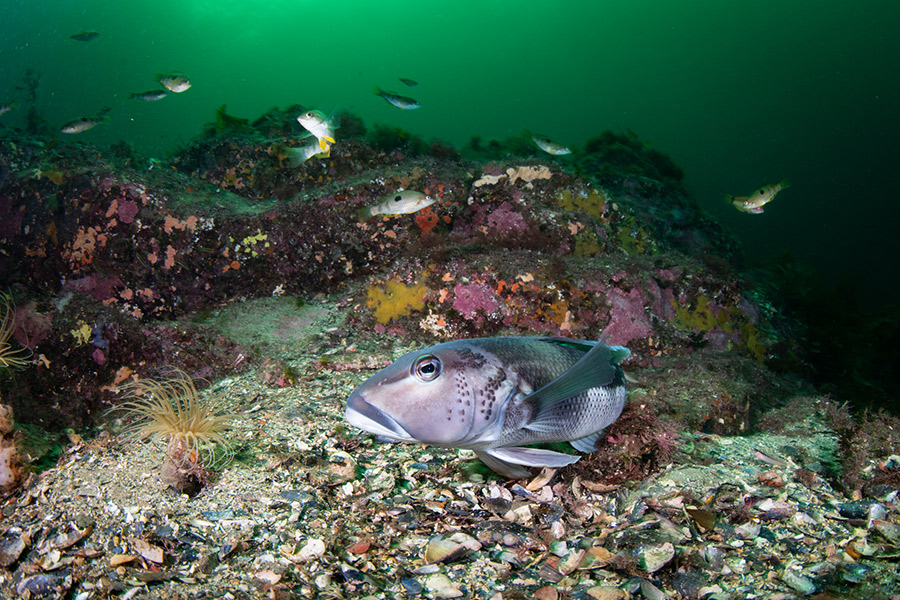
Despite losing a monstrous buck cray, I did manage to secure a healthy catch total for the week. I would say it was harder to find crays less than 1.5kg than it was to find them over, so I completely blitzed my previous North Island cray PB. On the fish front, I speared my first-ever copper moki, and managed a couple of beautiful, representative specimens of blue moki and butterfish. My modus operandi in the water was to smash up a few kina as ground bait, leave the scene to stew for 10 minutes, and then snoop my way back to see who had joined the party.
Some of my fellow travellers opted to SCUBA dive, and they had a field day wall-diving, checking out all the rare black corals (actually white), and pocketing crays to their heart’s content. But although I dabble in SCUBA, I prefer to freedive. I adore freediving for its simplicity and the mental challenge it presents. Plus, with no regulator to breathe through and no bubbles to blow, it makes for a truly peaceful experience down there.
The kai
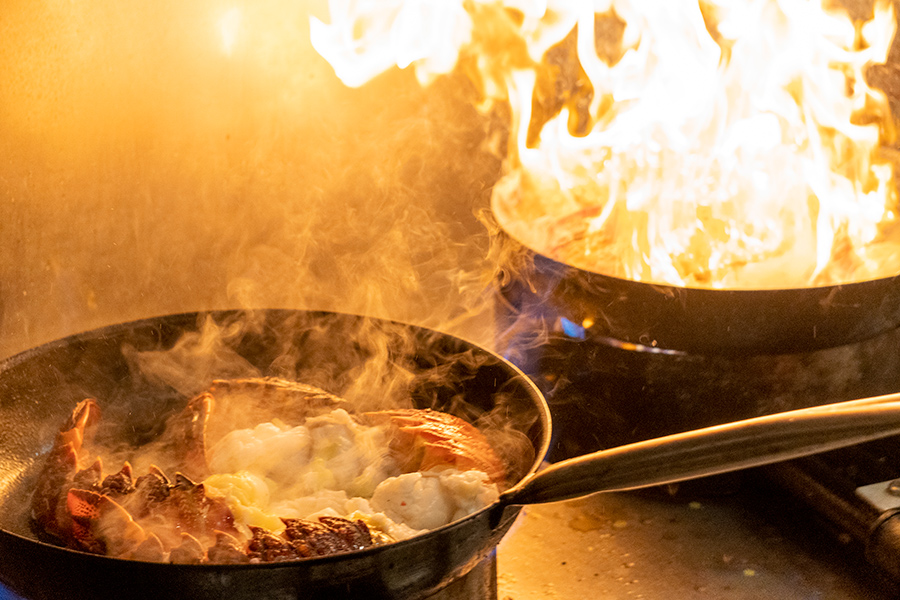
Aboard the M.V. Flightless, there’s a chef named Anna Shanks who (and this is by no means an exaggeration) is a gastronomic wizard. I challenge you right now to walk into your own kitchen, tape off a 1m x 1m box, give yourself access to three pots, a pan, a couple of knives, and a wooden spoon, and do your best to knock the culinary socks off a dozen ravenous visitors. That is her day-to-day experience as a liveaboard chef, and she absolutely nails it.
Anna’s skill in the galley is impressive, there’s no doubt, but the reality is she’s also dutifully aided by her ingredients. Fresh Fiordland seafood was on the menu for us at almost every meal – and it was off-the-charts delicious. Despite growing up near the coast in Hawkes Bay, I have never eaten more kaimoana in my life.
But there is a strategy behind it all. The majority of Fiordland charter businesses know that these pristine fisheries won’t survive – and neither will they – if it’s a free-for-all-take-whatever-you-like fest. So then, what’s the answer? Well, there are two parts to it, and both are strategies that all recreational anglers in New Zealand can (and should) adopt more often:
1) Full-utilisation
Full-utilisation is really about reducing wastage. Many Kiwis grew up learning to fillet their fish and throw away the rest, which we now know is incredibly careless and wasteful. Depending on the species, some of the tastiest parts of the fish can be found in these ‘throwaway parts.’ During this Fiordland trip, Anna and the rest of the crew took great pride in preparing the seafood in such a way that every part was used. We had smoked wings, cheeks, and head; crispy fried fish skins; cod liver pâté, and fish balls. She even boiled the cod heads to make a delicious fish broth.
2) Selective harvesting
Selective harvesting, on the other hand, is all about shifting the pressure away from traditionally harvested slow-growing species (like blue cod) to species that are faster-growing or more numerous. Baitfish are a great example of this, but really, any species that doesn’t have a significant commercial quota on it is a good option. In Fiordland, butterfish is an excellent alternative option. It’s also about spreading the load to other plants and animals – kina, sea urchins, scallops, seaweed – and terrestrial species, too.
Supplementary species
It seems a bit unfair to call them aliens but, bug-eyes or not, that’s what they are. Aside from the predatory mammals (which are a whole other story), the most notable introduced species in Fiordland are the brown trout, the rainbow trout, the red deer, and the true monarch of Fiordland: the Wapiti.
In addition to its prodigious saltwater exploits, Fiordland is also a world-renowned freshwater fishing destination – fly fishing in particular. (I can personally attest to the many agreeable attributes of the Fiordland trouts.)
And of course, fishing and hunting go together like peas and carrots; to me, they are principally the same word. If you feel the same way, then the deer population in Fiordland needs your help. Part of the aforementioned shift towards selective harvesting and sustainability is about spreading culinary love to other species – including those with four legs and funny-shaped toes. Harvesting Fiordland venison is a great way to help the land while also reducing our reliance on marine resources.
Wildlife & nature
If you’re anything like me, then fishing, diving, and hunting will undoubtedly be the main drawcards for your journey to Fiordland. But take it from me: don’t box yourself in. There is so much more here than meets the eye.
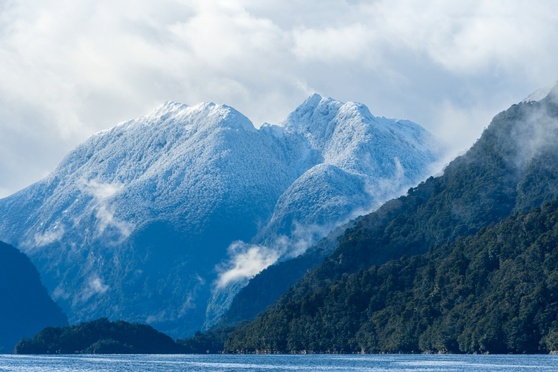
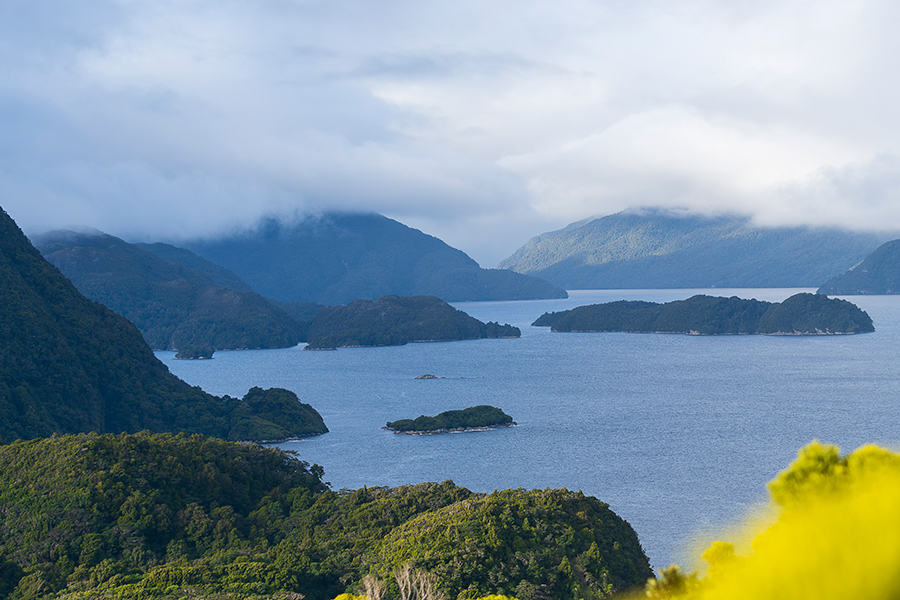
Take a break from chasing your quarry and immerse yourself in the awe-inspiring natural beauty. Marvel at the cascading waterfalls, towering granite peaks, and lush rainforests. God knows we could all use a bit more wonder.
Maybe you’ll get lucky and spot a kea, a pod of bottlenose dolphins, a tawaki (Fiordland crested penguin), or one of the many sub-species of albatross that call the Fiordland coast home. It’s the kind of place where each day brings with it new opportunities for adventure and exploration. Fiordland is a haven for wildlife, and it’s a haven for the human soul, too.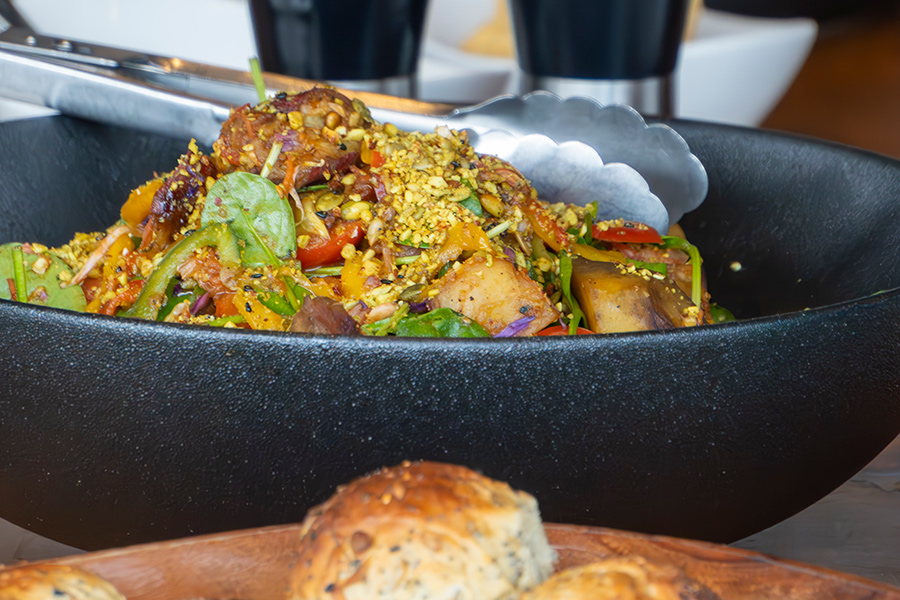
A note on sustainability
Cold water generally means slower growing, so although many of the Fiordland species appear to be on Frankenstein growth spurts, the reality is that it can take them years, even decades, to reach their gargantuan size. In this sort of environment, the key becomes selective harvesting. It’s a hard pill to swallow for the average fisho who has invested their hard-earned dollars to travel deep into the heart of Fiordland and slay trophies, but the reality is we must all exercise self-restraint otherwise this pristine ecosystem will collapse – just like all the others.

August 2023 - Jason Harman
New Zealand Fishing News Magazine.
Copyright: NZ Fishing Media Ltd.
Re-publishing elsewhere is prohibited


Major Bites
Minor Bites
Major Bites
Minor Bites
Latest Articles

Extreme Aluminium Trailers Review
June 2026Extreme Boats has long been recognised for its award-winning aluminium vessels, and is now expanding into high-quality aluminium trailers... Read More >
The Export NZ Fishing Competition Announces Season Winners
June 2026Another exciting season of The Export NZ Fishing Competition – has come to an end, and we’ve just announced our prize winners... Read More >
History of Zane Grey's Fishing in NZ
June 2026One hundred years ago, the trajectory of big game fishing in NZ changed forever with the arrival to its shores of one man - Zane Grey... Read More >
BBQ'd Gurnard with Citrus and Herb Butter
May 2026This is a pretty ‘cheffy’ recipe, featuring a sauce that is definitely one to impress guests with, but it's fairly easy to cook... Read More >
Mackenzie Country Trout & Tahr
May 2026The Mackenzie Country winter months of June, July, and August herald the main spawning time for canal trout... Read More >