
Fishing South Africa's East Coast

South African fishing and diving offer variety and challenges...
My hometown is Durban, South Africa and for all its shortcomings economically and politically, the fishing and diving are world-class. The variety of species that can be found along the coast is mind-blowing. I have travelled all over the world working as a spearfishing guide, but nothing beats diving and fishing the coastal waters of my hometown.
Durban lies on the East coast of South Africa and is at the bottom reaches of the warm Agulhas Current that runs down from the tropics, bringing with it a variety of tropical species such as mahimahi, wahoo, marlin, sailfish, GTs and Spanish mackerel, to name a few. A finger of the cold Benguela Current runs up the coast during the winter months, and the sardines use that as a highway to travel as far north as Durban, creating a spectacle known as the annual ‘sardine run’. It is comparable to the great migration of wildebeest in the Serengeti and is largely believed to be the biggest migration of any animal species in the world.
During the same period that the sardine run is happening, approximately 12,000 humpback whales make their way up the East African coastline which is a spectacle in itself. The colder water from the south brings a diverse range of species such as the garrick, dagga salmon, geelbek, shad and musselcracker as far north as Durban, which is the current convergence zone. For a large portion of the year, it can simultaneously hold all the above species in one area. It is an amazing fishery that differs from the NZ environment in many ways.
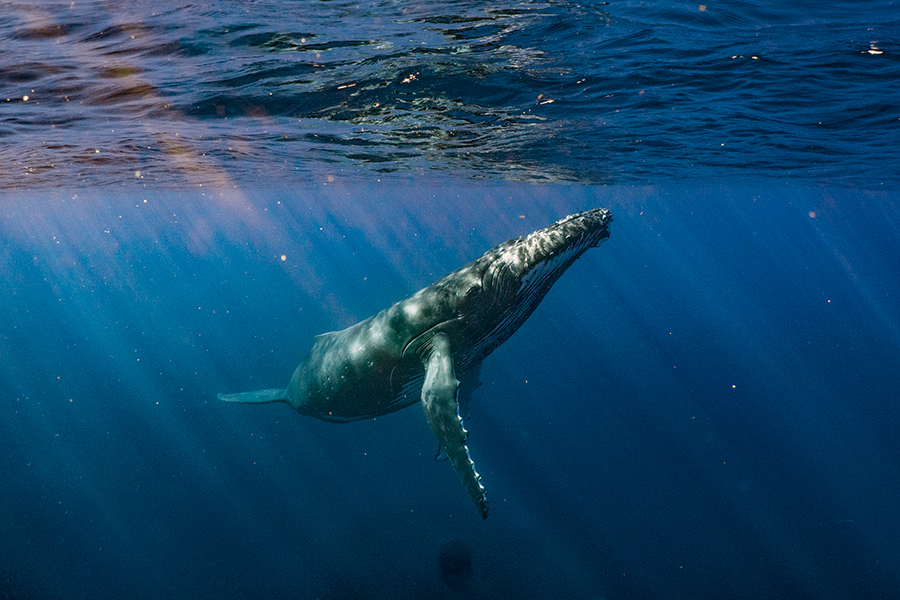
A humpback whale during the annual migration up the East Coast of South Africa.
With 700km of straight coastline from the Wild Coast to the border of Mozambique, there are varying landscapes, conditions and species to keep challenging anglers and spearos. The prime season for the east coast is April through to July, which is the dry season and the time of the sardine run.
The coastline is straight and long. Anywhere north of Durban, you’ll find beaches interspersed with rocky points and a gradually sloping sandy bottom – much different from the sheer drop-offs and volcanic contours of New Zealand. The consistently shallow water and rocky points create amazing shore fishing and diving – offering opportunities to catch some impressive fish. The most popular are the stumpnose, pompano, white musselcracker, grunter, and many trevally species, including the GT, queen mackerel and garrick. Dagga salmon, also known as the Aussie mulloway, come in shallow and lie in sandy guts, and if you are lucky, it is possible to get fish up to 40kg off the shore.
No mention of South Africa would be complete without a word on the healthy shark population. It is not uncommon to see multiple species of shark on a shore dive, including bulls, tigers, bronzies, black tips, ragged tooth, and of course, the great white. Many shore-based sport anglers target sharks for catch and release, which has been made easier with fishing drones.
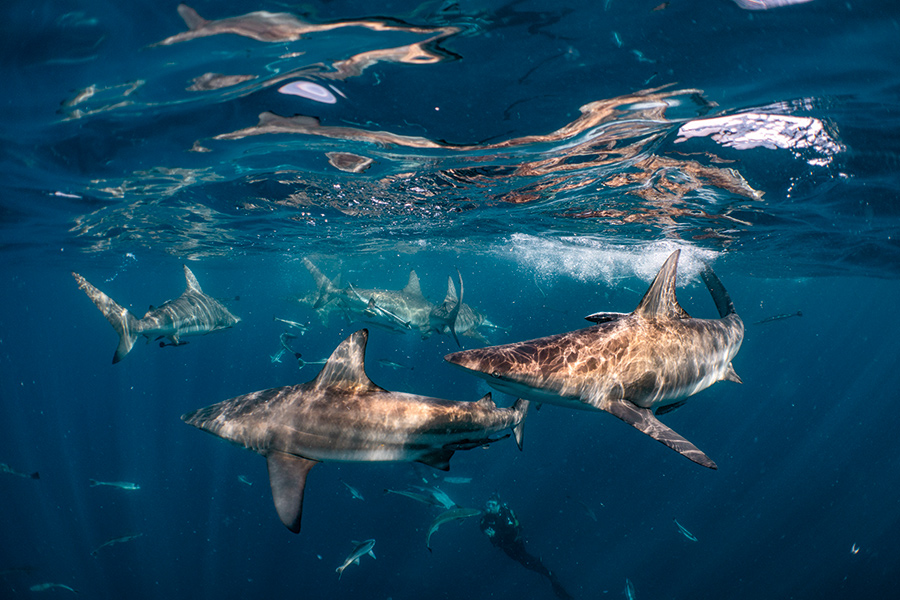
The ever-present oceanic black tip sharks.
One aspect of the South African recreational fishery managed very differently from New Zealand is crayfish. Firstly, no commercial quota is available for the east coast rock lobster (NZ spiny red lobster equivalent). You can only harvest crayfish during a specific time of year and must purchase a licence. Furthermore, you are not permitted to catch crayfish using a boat or vessel. As if this was not hard enough, you are not allowed to use scuba or any breathing apparatus, nor are you allowed to use a noose, gaff or implement to catch them.
It is only free divers, braving the open ocean swell, who can harvest by hand their eight crayfish per day on reefs to 20m deep. It is more of an extreme sport than a leisurely harvest. Because of these strict regulations and challenging marine environments, crayfish numbers are thriving along the northeastern coast of South Africa.
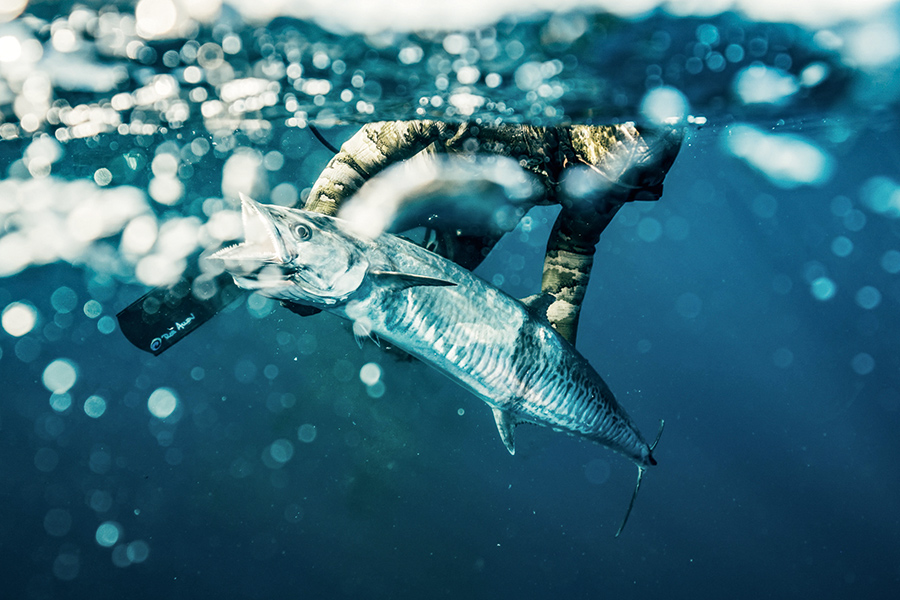
South Africa’s spanish mackerel are locally known as ‘couta’.
Some of the main differences I have noticed in NZ compared to South Africa and a lot of the rest of the world is that in NZ:
• No one sells their fish
• People limit their catch, rather than catch their limit
• The average person is willing to share spots and information
• The coastguard will come to your aid if you need it
• No one needs a skipper’s ticket, not even on the west coast of NZ
• Boats mostly have a single engine.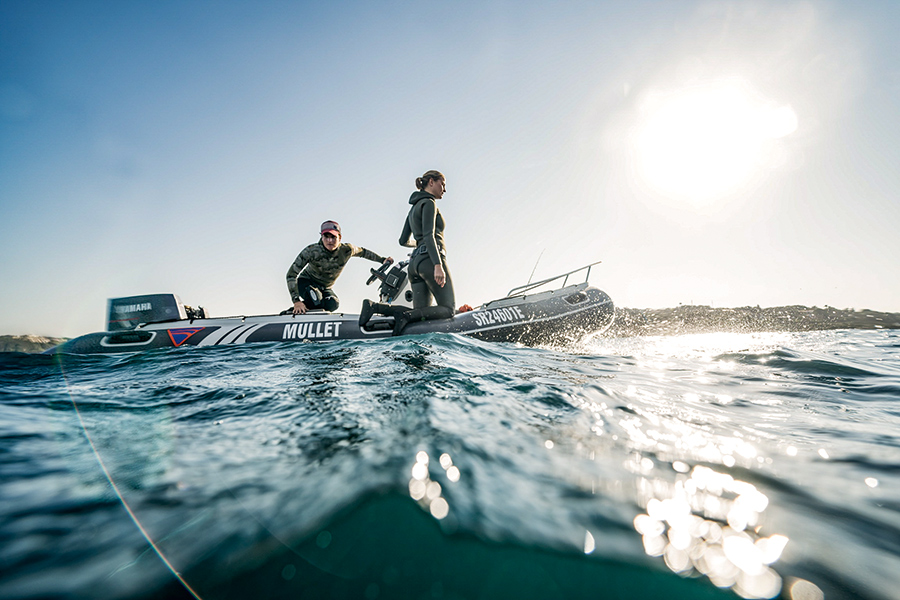
An inflatable boat with twin engines is an excellent vessel to get through the infamous surf breaks.
Compared to the fishery back home in Durban, it is refreshing to see how the average recreational fisherman in NZ takes a ‘feed’ home and releases a large portion of the catch. The same goes for spearos, who often don’t come home with anything. In South Africa, the mindset is different. The harsh economic environment forces some fishermen without official commercial licences to rely on the ocean to assist them in making ends meet. As soon as you put a price on a fish and create an environment where it is ‘accepted’ to sell your recreational catch, it becomes a slippery slope with a big grey area.
Durban is a city of “recremmercials” and, at a guess, I would say 80-90% of fishers have sold a fish or crayfish on the ‘black market’. The average price for a kilogram of fish is $6, and for crayfish, $12. This may not seem much, but considering the minimum wage is $2.20 an hour, you can earn a month’s salary in a few good fishing days. This mindset can cause serious pressure on specific species, particularly bottom-dwelling reef fish that taste great in a Durban curry.
In NZ, getting stuck in a bubble is easy when you are situated on a rock at the bottom of the Pacific island chain, the last stop on the way to Antarctica, where everyone talks about how the fishery is declining. There never seems to be any good news regarding management.
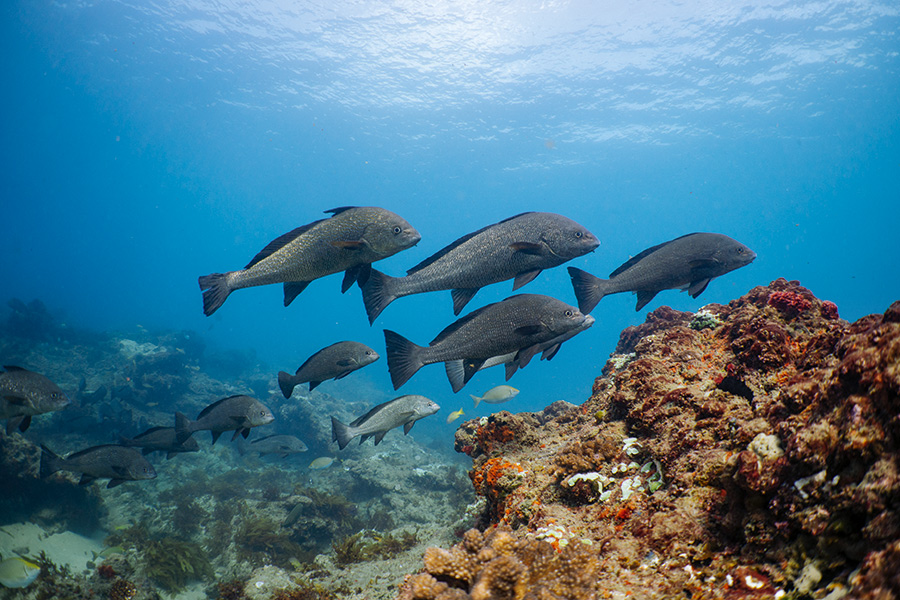
Tasselfish inhabiting a healthy reef in Zululand.
However, credit needs to be given to policing the fishery here and enforcing the rules when it comes to illegal black market fish sales. I have heard people complain that the laws are too lax, the catch allowance too high, and that poaching is rife. While I feel this is true to an extent, NZ is the only country I have fished and dived in where most people abide by the fishing laws and don’t sell fish illegally.
I just returned from a six-week trip back to Africa. After witnessing the raw sewage being pumped into the ocean and rivers, the foreign trawlers decimating the coastal fish, and the number of people relying on poaching fish and crayfish to make a living, it gave me a genuine appreciation for NZ’s fishery and its management.
Even with all its management issues, the marine environment off the east coast of South Africa should be on the top of any ocean-lovers bucket list – whether your interest is fishing, diving, spearfishing or just marine life. It is the one place in the world where you can see anything and target a range of amazing species.

November 2022 - Davie Du Pavillon
New Zealand Fishing News Magazine.
Copyright: NZ Fishing Media Ltd.
Re-publishing elsewhere is prohibited


Major Bites
Minor Bites
Major Bites
Minor Bites

Latest Articles

History of Zane Grey's Fishing in NZ
June 2026One hundred years ago, the trajectory of big game fishing in NZ changed forever with the arrival to its shores of one man - Zane Grey... Read More >

BBQ'd Gurnard with Citrus and Herb Butter
May 2026This is a pretty ‘cheffy’ recipe, featuring a sauce that is definitely one to impress guests with, but it's fairly easy to cook... Read More >
Mackenzie Country Trout & Tahr
May 2026The Mackenzie Country winter months of June, July, and August herald the main spawning time for canal trout... Read More >

The Hutchwilco NZ Boat Show Official Guide - 2026
May 2026This year, The Hutchwilco New Zealand Boat Show returns bigger than ever as New Zealand's ultimate boating and fishing showcase... Read More >
Peter Gordon's Fish Head Chowder
May 2026This recipe uses 1-1.5kg of fish heads to make six large bowls of chunky, tasty chowder... Read More >