
Fishing for Mahseer in India
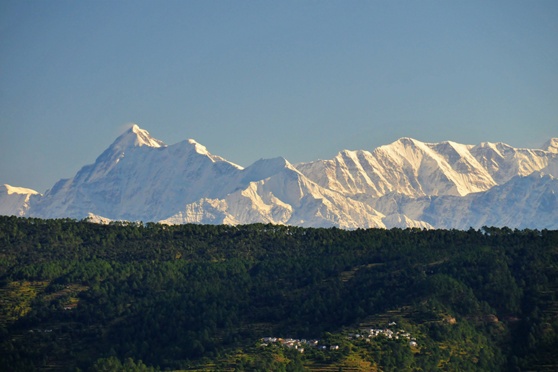
Every country has its iconic sportfish. In India, it is undoubtedly the mahseer – a fish I first encountered in the books of Jim Corbett, a revered hunter, fisherman, conservationist, and humanitarian of the British Raj period.
It appears that there are seven different species of this monster member of the carp family, but the main ones (as far as size and angling interest go) are the humpback mahseer of southern India – a dark-coloured, stocky, heavy-shouldered species – and the golden mahseer of the north, made long, lean and powerful by battling the swift currents and powerful rapids of its mountain river habitat.
Both species have a growth potential of 50kg, but such large fish are rare these days. The mahseer is now in much-reduced circumstances due to habitat loss from hydro schemes and irrigation, pollution, and constant poaching. Although sportfishing is not a common thing in India, a few visionaries see that the only way for these spectacular fish to survive the intense pressure they are under is by developing the tourist sport fishery, showing the local people the value of keeping these fish alive.
A handful of years ago, I had an opportunity to travel to India and fish for mahseer. For visiting anglers, there were two main ways to fish. There are places where fish are consistently fed by fishing and tourist operators and are pretty much on tap. These are mostly the lowland humpback variety and are fished for with baits of ragi, a paste made from millet flour and water, flavoured with various spices, and boiled until rubbery.
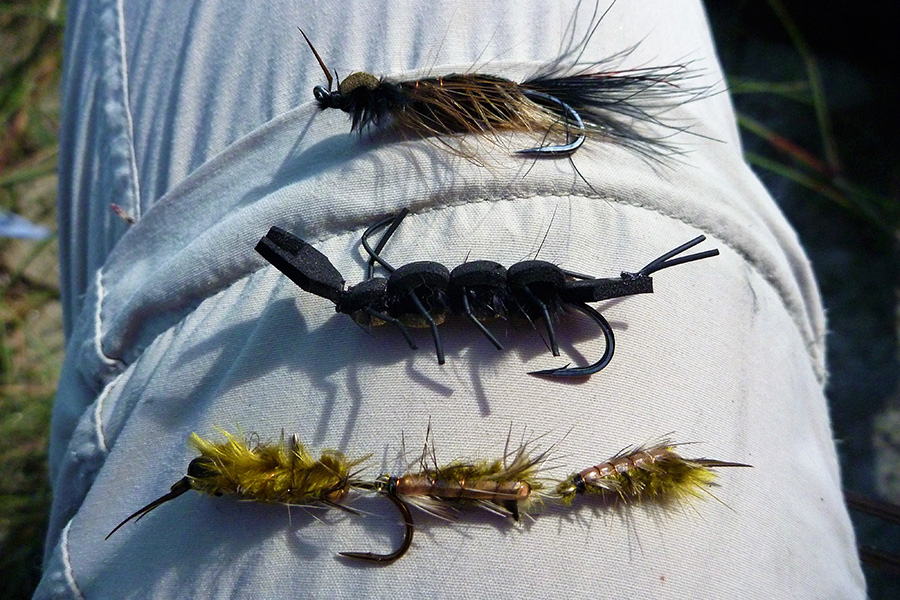
With huge insects, some of the imitations are monsters, too. The biggest of these ‘nymphs’ are over 100mm long.
The other option is to get out on a mountain river where the fish, mostly golden mahseer, are wild and cautious. In the right place, at the right time, the fishing can be full on, but it is often a matter of persistence, patience, and precision fishing, hoping the fish will show an interest. Although high country mahseer are commonly fished for with spoons and diving minnows such as Rapalas, the guiding company we booked with, Himalayan Outback, specialised in flyfishing for the smart, moody, and long-lived golden mahseer in their wild, unbaited, environment. Flyfishing makes catching one ven more challenging and difficult, but my fishing buddy Rick Wakelin and I were prepared to give it a go.
After a seven-hour drive from Delhi through the populated lowlands, we eventually reached the Himalayan foothills of the Kumaon region. The road wound through hill country and forest before we finally pulled over and made a half-hour hike into our camp on a plateau about 100m above the West Ramganga River, an upper tributary of the Ganges. It was bush with some terraced agricultural land on our side of the river and pure jungle on the other, where the Corbett Tiger Reserve (named for the great man whose books had fascinated me as a child) started. It was beautiful country, steep and forested. The West Ramganga River itself was running crystal-clear, a classic rapid-and-pool high country river that would have any Kiwi feeling right at home. But we weren’t in Kansas anymore.
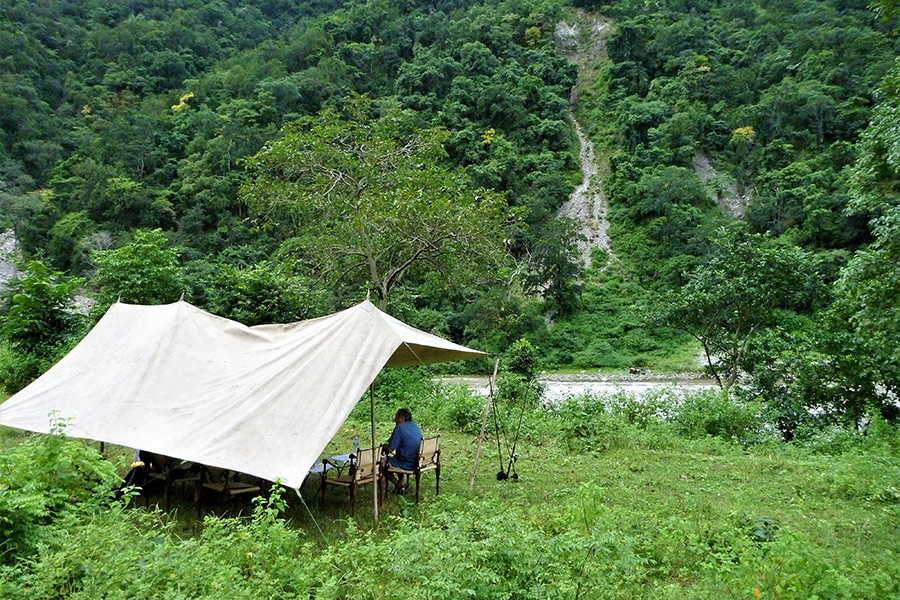
Tent camp on the West Ramganga River. It was bush with some terraced agricultural land on our side of the river and pure jungle on the other.
A few days before we got there, one of the camp dogs had been killed and eaten by a leopard, and the two surviving dogs were wearing wide steel ‘leopard collars’ covered in spikes to give them some protection from the big cats. While tigers are thin on the ground, the smaller leopards are still doing tolerably well and adapting to the changes humans are making to the environment. There were leopards about, but so cunning we never saw one. I fished the pool below camp one evening and walked back after dark, carefully probing the track ahead with my torch for cobras. When I went back down to the water the next morning, my previous night’s boot prints were overlaid with leopard tracks…
The river life was strange by New Zealand standards: huge insects, big turtles, otters, freshwater garfish – strange things to find in a river that could be mistaken for the upper Tongariro. Some of the plant life was a bit exotic, too, with dense patches of wild cannabis along the banks.
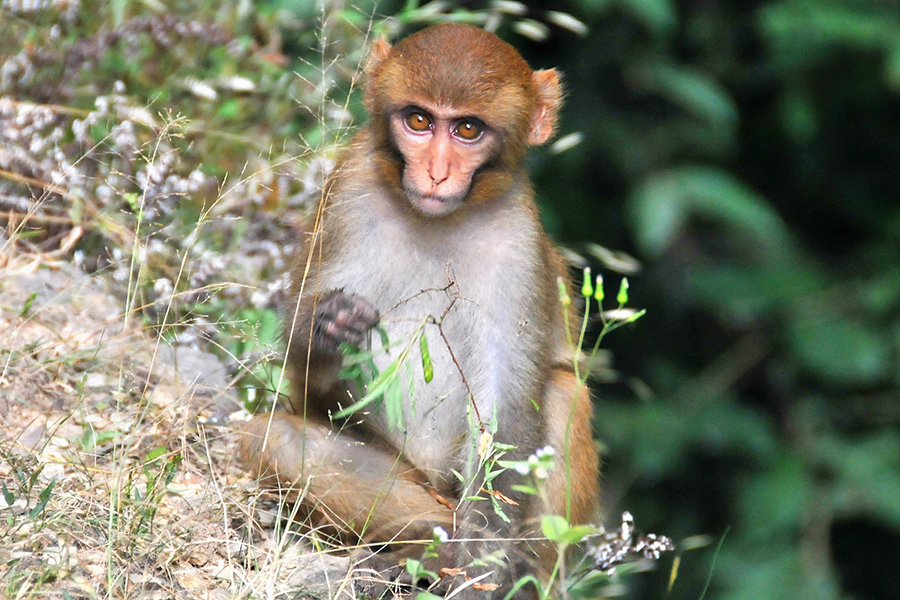
The wildlife is not what Kiwis may be used to encountering when flyfishing.
The mahseer, as expected, proved challenging to take on the fly. The river was clear and low when we arrived. Although plentiful fish life could be seen, and despite fishing hard with a range of techniques including upstream nymphing with indicators and floating lines; across-and-down fishing with sinking lines and streamers; and casting popping Crease flies on floating lines, results were slow to come.
We were getting the odd strike and small fish, but these wild, long-lived, well-educated, and moody fish had seen it all before. We needed some sort of environmental change to fire things up, and it came in the shape of a solid belt of rain lifting the river levels and cooling and discolouring the water. The atmospheric pressure went through the floor. The first sign that the fish were coming on the feed was when my indicator slid under the surface as a fish took a big nymph. It then surged up-pool briefly before the hook pulled.
Rick signalled from the pool below. With the water colouring up, he had swapped the fly for a Rapala minnow and spin rod and was playing a nice fish. I joined him in time to photograph the unhooking and release of a gorgeous golden mahseer of around 10kg, with huge scales in gold, green, silver and orange. It was Rick’s trophy fish for the trip, and I watched with a tinge of envy as it finned back out into the current.
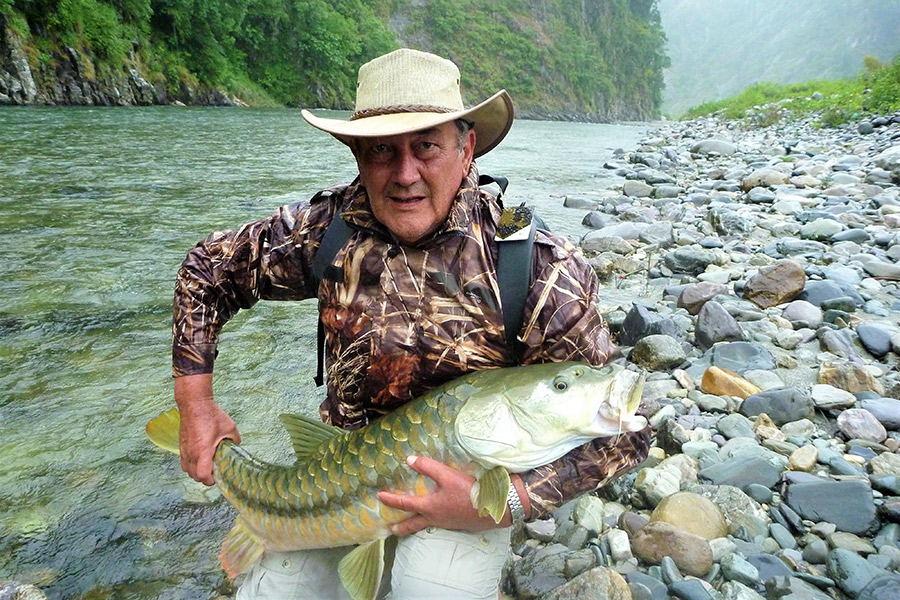
Rick’s big golden mahseer pulled from a rapidly rising river.
Returning to my beat, I launched a big minnow fly across the white water at the head of the rising, murky-green, rain-splattered pool. This was nailed emphatically as it swung out of the main current. The fish played heavily in the fast water and was a decent match for the eight-weight flyrod I was using. I was amazed when it came to the bank to find the 1.5kg fish had taken the 160mm-long saltwater fly right down its throat. Clearly, they can be aggressive feeders when in the mood.
Only a modest capture, but at least I had a representative specimen of golden mahseer on the fly. A little further down the pool, I had another hit and swirl on the fly, but no hook-up. The rain was even heavier now, and the fish were biting at last. The water coloured further, so I changed to a big black marabou streamer and fished through the pool again. As the fly swung from the heavy current, I had another powerful hit, this time a slightly bigger fish of two kilos or so, which put up a fair fight in the heavy current.
The rain got heavier still, and lightning started – not the time to be waving a graphite rod around – so we retired to camp and the luxury of shelter, dry clothes, and a hot cuppa.
We had more action a few days later as the flood dropped away, and then our week in the Indian high country was done. We had fulfilled our goal of catching mahseer on the fly, taking eight fish of various sizes between us and dropping a handful of others from the region and waters that had captivated me from the pages of a dusty book all those years ago.

June 2023 - Sam Mossman
New Zealand Fishing News Magazine.
Copyright: NZ Fishing Media Ltd.
Re-publishing elsewhere is prohibited


Major Bites
Minor Bites
Major Bites
Minor Bites
Latest Articles
The Export NZ Fishing Competition Announces Season Winners
June 2026Another exciting season of The Export NZ Fishing Competition – has come to an end, and we’ve just announced our prize winners... Read More >
History of Zane Grey's Fishing in NZ
June 2026One hundred years ago, the trajectory of big game fishing in NZ changed forever with the arrival to its shores of one man - Zane Grey... Read More >
BBQ'd Gurnard with Citrus and Herb Butter
May 2026This is a pretty ‘cheffy’ recipe, featuring a sauce that is definitely one to impress guests with, but it's fairly easy to cook... Read More >
Mackenzie Country Trout & Tahr
May 2026The Mackenzie Country winter months of June, July, and August herald the main spawning time for canal trout... Read More >

The Hutchwilco NZ Boat Show Official Guide - 2026
May 2026This year, The Hutchwilco New Zealand Boat Show returns bigger than ever as New Zealand's ultimate boating and fishing showcase... Read More >