
Why Dredging Scallops Should Stop

Tairua’s Carl Muir has a vested interest in the health of the fishery, and in particular scallops. He both operates a charter vessel and hosts retreats that focus on wellbeing from being on and in the ocean. He also has a family and is passionate about sharing the bounties and the beauty of the moana with them. The following is Carl’s view on the management of the scallop resource, taken from his recent submission to MPI on the scallop fishery…
First and foremost, I contribute this as a New Zealander who wishes to see scallops preserved as part of an abundant eco system; secondly, it is as a Coromandel local, who has dived many of the local beds for the last 30 years and wishes to continue to sustainably gather a meal of healthy scallops for his family in the future; and finally, as a tourism operator and local business person who has guided visitors to the area for the last 20 years, sharing this resource in a way that contributes economically and socially to the local community.
Main considerations
The main points for consideration are:
1. The Quota Management System (QMS) has failed to protect the local scallop population;
2. From my observation, commercial and recreational dredging and bottom trawling has destroyed the scallop habitat;
3. Our basic human rights to gather food for ourselves from nature should come before companies harvesting to sell scallops for profit;
4. Locals are currently forgoing this human right to protect the fishery, while the commercial sector continues to destroy it;
5. A completely new approach needs to be taken to managing this fishery outside the QMS;
6. Non-commercial harvesting (i.e. recreational) should be given preference once the fishery rebounds;
7. If any commercial benefit is to be gained for scallops in the future, that benefit should be maximised locally – firstly at a community level, then nationwide, but never for export; and
8. Future commercial effort, if any, should be via commercial tank or freedivers, not dredging.
Scallops and well-being
Collecting scallops freediving and scuba diving is good for mental and physical wellbeing. It gets people out moving, breathing, socialising and connecting with nature.
Scallops are an important source of many minerals and vitamins. They are high in omega-3, magnesium, cobalamin (vitamin b12) and potassium. All of these are essential for immunity, brain health, blood circulation and overall preventative health.
It is widely known that there is a major health crisis in New Zealand, and our health system cannot cope. A New Zealander dies every nine minutes from heart disease; 250,000 people suffer from diabetes, a condition which often leads to major strain on the health system; and one in three New Zealanders have experienced some form of mental distress.
Recreational activities such as diving and freediving, and eating clean as a result of harvesting while diving, should be considered part of a preventative health focus to decrease the burden on the health system.
Cultural heritage
If I were to write a list of the things I love about being a New Zealander, diving for scallops and eating fresh scallops I have caught that day would be top of the list.
It is a tradition passed down from my father, I have passed it on to my own daughter (16) who learnt to dive aged 12, and I consider it one of the iconic things that makes New Zealand and the Coromandel the special place it is. Diving for scallops is an important part of our cultural heritage which should be preserved.
QMS has failed scallops
In 2005 while I worked as the Events Manager for the local Coromandel tourism board, I worked collaboratively with the local seafood plant and the local business association to develop a new event for Whitianga. I specifically pushed for the scallop to be the hero behind the festival as everyone loves scallops right? I naively placed trust in our ‘world class’ QMS to protect the fishery. We weren’t catching any more than the QMS let us.
Looking back, this was extremely naive. Around that time the commercial boats found a ‘mother bed’ in the Hauraki Gulf that had previously never been fished. The downward trend in scallop population and commercial take since this bed has been relentlessly dredged would suggest that it seeded the other surrounding beds in the catchment area.
The premise behind getting people to come to Whitianga to eat scallops harvested commercially and maximising the benefit for the town, instead of sending them all out of town at a ridiculously low price, remains a sound one. A scallop eaten during the festival, if you considered the wider flow on benefits, was worth $100/scallop, versus 50 cents in an Auckland supermarket. The same principle should be applied if ever opening the fishery again.
How can we ensure scallops aren’t seen as a cheap commodity again, then thrashed to the point of extinction?
Habitat destruction
As a charter fisherman on the water largely full time for the last 20 years, I have witnessed scallop dredging boats literally grid mapping Opito Bay and Home Bay, Great Mercury and absolutely hammering it in the period where the season is commercial only.
The change to have different seasons for recreational and commercial has been detrimental for the fishery, as having recreational divers in the vicinity of the commercial boats used to keep these boats a little more honest.
I have been concerned about the take at Opito Bay and Home Bay at Great Mercury Island for some time. Any concerns I have raised by posting or reporting photos of commercial boats very close to shore, even raising it with iwi and MPI officials, have often been met with comments like, “Mate they are just doing their job, and its all legal as part of the QMS”. This is naive. Now we are in a position where we may have to forgo a basic human right of collecting scallops ourselves recreationally because of commercial exploitation.
I spend a large amount of time in the water each year diving. There is a particularly noticeable difference in habitat in very shallow water with a variety of life, to the deeper areas that are mowed by the commercial scallop boats. There is simply not the habitat any more for the scallops to grow in many of the old beds around Great Mercury, Opito Bay, Shoe Island, Slipper Island and the like.
Protecting inshore waters
A complete ban on dredging and bottom trawling of our coastline from North Cape to Cape Barrier and Motiti Island out to 50m is necessary and is the only way to protect the fishery.
We need to look at the national scallop fishery, not just lock down Ngati Hei’s proposed area on the Coromandel.
If we continue to let the commercial sector smash the other beds that make up part of the eco system, there is absolutely zero point locking down the Coromandel fishery. Placing a rahui on recreational divers is pointless if we continue to allow dredging anywhere in the North Island.
The current system of setting a TACC for scallops, given current commercial methods, is fundamentally flawed.
If we are ever to allow commercial fishing for scallops in the future, and this should come second to Kiwis harvesting their own food diving, then the following considerations should take place:
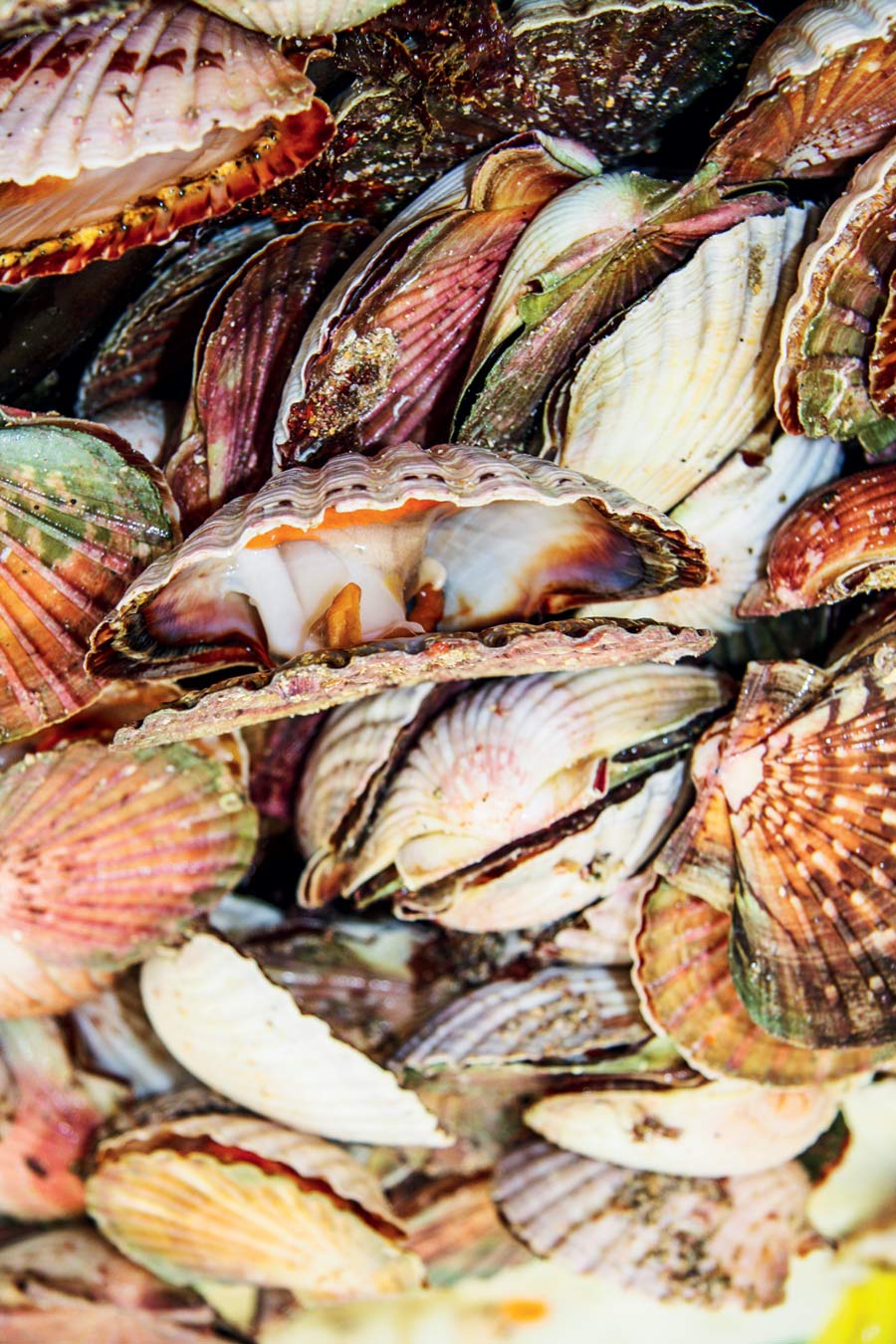
1. We should not export scallops. Once the borders are re-opened we should make it clear – if you want to eat the best, cleanest, sweetest scallops in the world, you need to travel here to eat them – in our restaurants, or even better, on our charter boats. The economic benefit, per scallop, would be huge. Chartering a boat to eat half a dozen scallops at $1700, plus a flight to get here, plus accommodation vs $12 for half a dozen scallops in Australia – the maths is pretty simple.
2. Scallops should only ever be harvested commercially by free or tank diving, not dredging. This would limit the detrimental effect on the sea floor and would mean the commercial sector is more connected to the ecosystem they are harvesting from.
3. Local residents and local restaurants should always be given first preference to buy scallops before they are shipped out of the region (often they find it impossible to buy scallops due to quota holdings).
Immediate action needed
The immediate action that should be taken is:
1. Ban all commercial take of scallops in New Zealand until better methods to manage the fishery are agreed on and implemented.
2. Continue to allow a smaller recreational take, over a shorter period, outside summer. (Recreational fishermen in the Coromandel have voluntarily already had three months over summer observing a rahui – after the commercial fishers plundered the fishery late 2020).
3. Invest in research to better understand how to preserve scallops in the wider ecosystem and the impact of things like rising water temperatures, pollution and sediment, as well as dredging and bottom trawling.
Recent Forum Posts Visit Forum

Shane Jones
in Fisheries Management10 hours ago
Tzer
Far cry to the twats at Liegasea/NZSFC were proposing of 5 Tarakihi person in their submission for the central management area and this is what our...

Bluefin Tuna at the cavs.
in The Briny Bar30 hours ago
smudge
Despite my years of fishing I haven't really fished many places, my focus has always been on Auckland's west coast and out toward Great Barrier. I...

Casting gloves
in Popper and Topwater Fishing75 hours ago
Mc Tool
100 bucks for a lure 😬. Watching one of them flying over the horizon without the line attached would be " character building " for sure...
I thought Id post some nice photo's , join...
in The Briny Bar126 hours ago
Alan L
That is a very cool pic Krow.The Far North is very cool, the Far far North even cooler. Mint looking day.Alan...

Mc Tools berley mincer
in The Briny Bar133 hours ago
SaltyC
Good size, they scrap well. Got an 18kg one up in Vava'u back a few years ago fishing off squeaky Going's boat. That was quite a...

Out with the "Twelves"
in Fishing Reports187 hours ago
Pcj
I should be able to get out end of October. The nephew been out virtually every weekend over winter and has done well. It seems the...
Manukau Harbour & West Coast fishing
in Fishing Reports195 hours ago
smudge
Nice work Schecter, I think snapper may be around sooner than you think. Well I am hoping so...

Whangarei Harbour report.
in Fishing Reports627 hours ago
krow
180 +m is where I've had to be lately. A lot less low foul around these parts and some of it shallower that looks like Tarakihi...
Whangarei Harbour Scallops
in Fisheries Management737 hours ago
Pcj
Reopening WhangÄ쳌rei Harbour to recreational scallop fishingTÄ“nÄ쳌 koeFisheries New Zealand is seeking feedback from tangata whenua, stakeholders, and the public on whether WhangÄ쳌rei Harbour should be...
SNA1 Recc fishing cops the blame.
in Fisheries Management833 hours ago
Tzer
What Liegasea won’t tell you is that some of their own fisheries contractors were co-authors of this study for fear of being called hypocrites, one of...

Popular Articles

Softbait Fishing - Part 1 - gear selection
John Eichlesheim writes an article about selecting the right equipment for softbait fishing... Read More >
Softbait fishing Pt 2 - tips and tricks
Techniques, tips and tricks of softbait fishing – getting the most from your soft baits.... Read More >

Surfcasting - setting yourself up
Gary Kemsley helps sort out the necessary gear for intending surf fishers.... Read More >

Squid - How to catch them
Squid fishing is a rapidly growing aspect of fishing - Paul Senior shares some hints and tips to get started.... Read More >
Fishing Reports Visit Reports
Outer Hauraki Gulf Fishing Report 17/09/26
Spring wind the handbrake. Spring is starting to make its presence felt in the outer... Read More >
Top of the South Fishing Report - 17/09/26
Early snapper in Tasman Bay. Well, spring is finally here, and the days are getting... Read More >
Bream Bay Fishing Report - 17/09/26
Good snapper catches reported. After Tangaroa turned off the fish tap for a month or... Read More >
Bay of Islands Fishing Report - 17/09/26
Pacific bluefin tuna for the lucky few. The last fortnight has seen more fishable days... Read More >
Comments