
Whitebaiting 2020
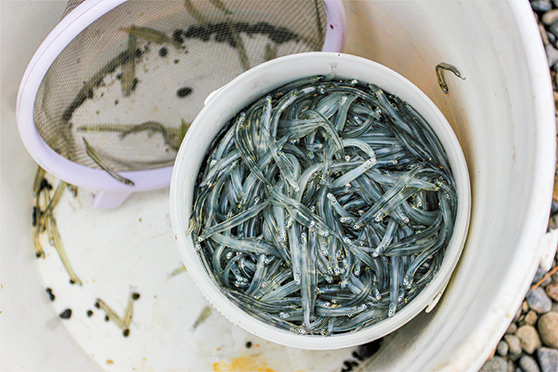
The new whitebaiting season begins this month and no one is more excited than Peter Langlands. He shares some valuable insights for the 2020 season and lets us know how we can best protect this iconic species.
The main whitebaiting season is just around the corner. Despite a lot of discussion in recent years about changes to whitebaiting regulations, they will remain the same for the upcoming season. The main whitebaiting season begins on August 15 and continues to November 30 (with a shorter season on the South Island’s west coast from September 1 to November 14). There is also a whitebaiting season on the Chatham Islands which runs from December 1 to February 28/29 (depending on the year).
The Chathams are certainly becoming a popular “overseas tourist destination” given recent restrictions on international travel. DOC is in charge of the fishery and regulations, which can be found on their website – http://www.doc.govt.nz/whitebait. The 2020 season is likely to be the last under the current regulations as new regulations will come into effect in 2021.
It pays to have a range of techniques up your sleeve when heading out whitebaiting. Scoop netting the incoming surf on the stony beaches of Canterbury’s Coastline is a distinctive style with the Temuka scoop net often being used. It is hard work and risky. Life vests need to be worn – at least one whitebaiter is swept off their feet into the surf each season. Larger scoop nets are used in bigger river mouths to work the lagoons and river channels with gentler currents. Set-netting is the most relaxing and popular form of whitebaiting, and popular on the edges of large slow-moving rivers.
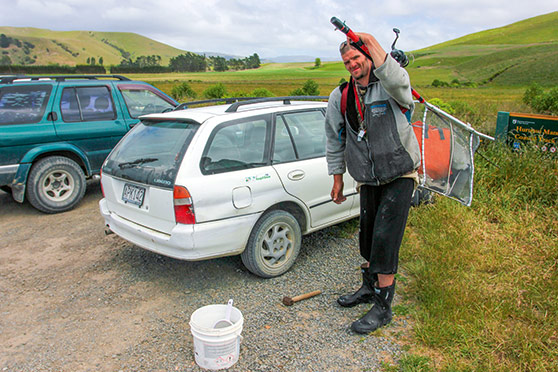
Scoop netting is an effective way to fish fast flowing river mouths at locations such as the Hurunui.
Every location has its own techniques which have proven themselves over the decades. So, it is a matter of watching the locals and then gearing up yourself. I like to get out early in the season to suss out the effective techniques before the big runs come through later on.
The best catches of whitebait are often made a few days either side of the full moon, on the highest of tides. Having tide tables on hand will allow you to predict the best times to go out. The better catches of whitebait are usually made after there has been some rain, which slightly increases river-flow. I prefer overcast days for whitebaiting, but if whitebaiting on a sunny day, pay close attention to the riverbanks as the bait will often run hard up against the bank.
While the season can be slow in August and September, October and November make up for this. The combination of increasing water temperatures and a spring tide, perhaps after a little rain, will create the ideal conditions for baiting. On any day, it is often the final push of the incoming tide that will see the biggest whitebait shoals coming in. Having a range of whitebait nets ready to go at short notice is important. For all the time that people spend whitebaiting, I would dare to say that 95% of the whitebait is caught within a 5% time period. Timing is everything.
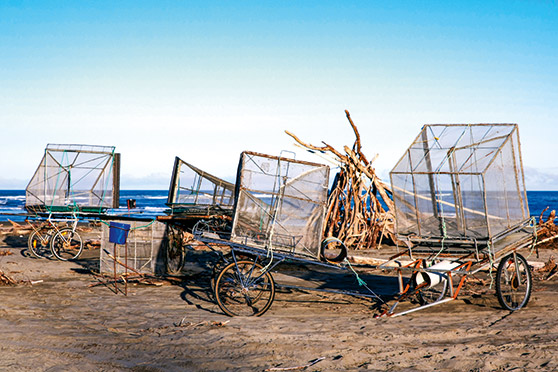
During whitebaiting season, there are many whitebait nets along the beach at Waikuku marking each fisherman's spot while they wait for the right tide.
In regions where good spawning whitebait habitat remains, there are still strong runs of whitebait. It is important that community groups, DoC and landowners protect and enhance river margins. By creating and enhancing habitat for whitebait, we are likely to improve the habitat for other fisheries too such as flounder, eel and even sea-run trout, as well as for endangered wetland birds such as the Australasian bittern which requires reed environments. I would like to see a basic license for whitebaiting recreationally which provides funds for the purchase of wetland areas to enhance and create further whitebaiting habitat.
We must treasure and respect our opportunity to go whitebaiting as it is an important part of our national identity and provides us with a strong connection to our fresh waterways. It is also a gateway for many younger people to spend time out with their relatives, encouraging an intergenerational appreciation for our wetlands. Going out with family or friends to catch just enough whitebait for a decent fresh feed is the approach I personally promote. The experience of catching the whitebait is as much a part of the equation as eating it. To see whitebait as a bulk commodity to be harvested in as large amounts as possible is not, in my opinion, the future of whitebaiting.
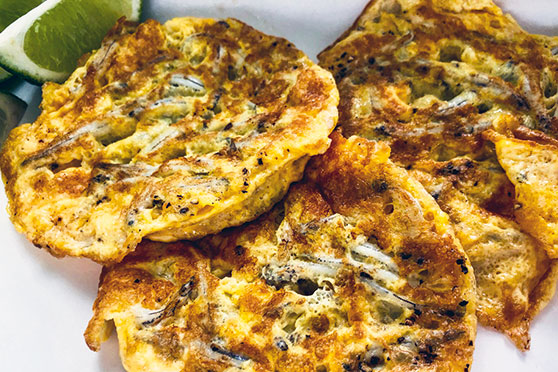
The whitebait pattie is an iconic NZ dish.
As all of us whitebaiters spend a lot of time along our waterways, we have a responsibility to report any environmental impacts we see when whitebaiting, particularly in locations otherwise well out of sight of the general public.
Ultimately, it is about looking after the whitebait’s habitat and the environment. How well we do this will determine the future our whitebait fishery. We all have a responsibility to report any illegal whitebaiting activity we see (such as the blocking of small streams) as people who flout the liberal regulations are cheating us all. If someone is breaking the regulations, have a friendly chat first and make them aware, and then if they persist, report them. You should also take the time to release any unwanted fish such as smelt, cockabullies and glass eels. Whitebaiters have the opportunity to take on the role of guardians of our fresh waterways.
Finally, social media is also playing a part and gives whitebaiters another way to meaningfully connect with other anglers. The Kiwi Whitebaiters group on Facebook is good for sharing information – it has over 7500 members so there is always something happening! Social media is a great way to learn new techniques too. The innovation is infinite!
|
|
This article is reproduced with permission of |

Recent Forum Posts Visit Forum

Shane Jones
in Fisheries Management47 minutes ago
Tzer
From what I see too even commercial in WA aren’t getting any favours from politicians there. I think here our advocacy groups like Liegasea aren’t doing...

Trailer wheel clamp
in The Boat Shed8 hours ago
krow
I like the SAS wheel clamp. I've had no issues with the lock....

Foton tunland v9
in The Briny Bar11 hours ago
Ho Dee
not fishing related and delete if required but was wondering if any has one of these or someone who has just wanting so e real world...

Bluefin Tuna at the cavs.
in The Briny Bar57 hours ago
smudge
Despite my years of fishing I haven't really fished many places, my focus has always been on Auckland's west coast and out toward Great Barrier. I...

Casting gloves
in Popper and Topwater Fishing102 hours ago
Mc Tool
100 bucks for a lure 😬. Watching one of them flying over the horizon without the line attached would be " character building " for sure...
I thought Id post some nice photo's , join...
in The Briny Bar153 hours ago
Alan L
That is a very cool pic Krow.The Far North is very cool, the Far far North even cooler. Mint looking day.Alan...

Mc Tools berley mincer
in The Briny Bar161 hours ago
SaltyC
Good size, they scrap well. Got an 18kg one up in Vava'u back a few years ago fishing off squeaky Going's boat. That was quite a...

Out with the "Twelves"
in Fishing Reports215 hours ago
Pcj
I should be able to get out end of October. The nephew been out virtually every weekend over winter and has done well. It seems the...
Manukau Harbour & West Coast fishing
in Fishing Reports223 hours ago
smudge
Nice work Schecter, I think snapper may be around sooner than you think. Well I am hoping so...
Whangarei Harbour report.
in Fishing Reports655 hours ago
krow
180 +m is where I've had to be lately. A lot less low foul around these parts and some of it shallower that looks like Tarakihi...
Popular Articles

Softbait Fishing - Part 1 - gear selection
John Eichlesheim writes an article about selecting the right equipment for softbait fishing... Read More >
Softbait fishing Pt 2 - tips and tricks
Techniques, tips and tricks of softbait fishing – getting the most from your soft baits.... Read More >

Surfcasting - setting yourself up
Gary Kemsley helps sort out the necessary gear for intending surf fishers.... Read More >

Squid - How to catch them
Squid fishing is a rapidly growing aspect of fishing - Paul Senior shares some hints and tips to get started.... Read More >
Fishing Reports Visit Reports
Outer Hauraki Gulf Fishing Report 17/09/26
Spring wind the handbrake. Spring is starting to make its presence felt in the outer... Read More >
Top of the South Fishing Report - 17/09/26
Early snapper in Tasman Bay. Well, spring is finally here, and the days are getting... Read More >
Bream Bay Fishing Report - 17/09/26
Good snapper catches reported. After Tangaroa turned off the fish tap for a month or... Read More >
Bay of Islands Fishing Report - 17/09/26
Pacific bluefin tuna for the lucky few. The last fortnight has seen more fishable days... Read More >
Comments