
What makes the ideal wetsuit
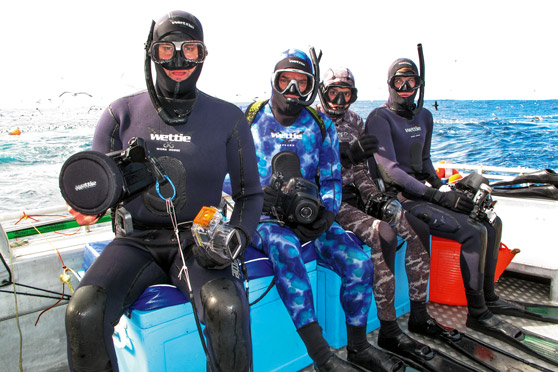
Are you one of those people who still thinks your 20-year-old wetsuit is the best thing you have ever dived in?
Can it almost stand up on its own because it’s so stiff? Does it have zips in the wrist, ankles and up the front to make it easy to get into? Is the material so coarse you couldn’t cut it with a chainsaw?
If so, I am about to tell you why you should ditch it for the new era of soft, comfortable and sooo much warmer wetsuits! For the last 45-odd years, I have swum most parts of New Zealand, from Stewart Island to the to the Three Kings Islands, the Chathams, 80 kilometres off the South Island’s west coast, Fiordland, lakes and rivers all over New Zealand, and many other countries as well, testing suits in all extremes. These experiences have given me a pretty good insight into what a good wetsuit should be.
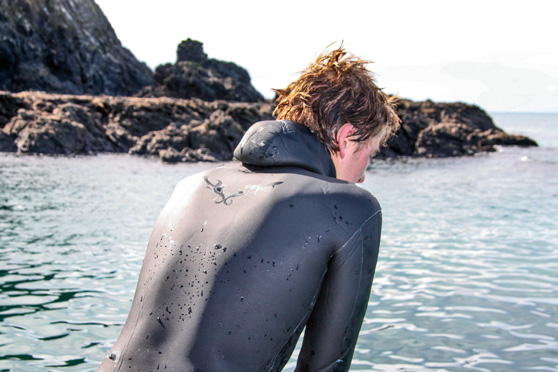
Wetsuits need to be like a second skin to be effective. For this to happen, a wetsuit must be made from very flexible neoprene, without being too soft. If overly soft, the neoprene will sag when wet, allowing too much water to enter the suit; too stiff and it won’t hug the contours of your body.
A suit should have a fitted hood to stop water pouring down your neck – arguably one of the worst sensations. I know some of you will be reading this and thinking: ‘But I get claustrophobic with anything on my head!’ All I can say is try the new, soft neoprene – it’s so much nicer than the stiff material used in the past.
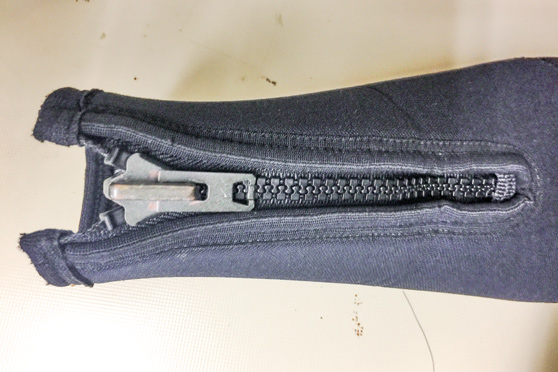
Zips have become redundent. They are only required in suits that are too stiff, so won’t stretch to allow your hands and feet to slip through. As for the zip fitted up the torso to help you get in, this makes your suit very rigid lengthways and allows a constant trickle of water to flush through the suit during your dive, helping to make you cold.
Another feature of a good suit is the open-celled raw rubber used inside the suit, without the lining. This means two things: firstly, the suit is very stretchy, as it has one less layer of nylon; secondly, the open-cell seals against your skin, stopping water flowing around your body and enabling the minimal amount that does get in to stay put and get warmed to body temperature. With the old suits, the water continually flows, never warming and leading to you getting cold.
Consequently, a better fitting suit made from the right material may see you able to have a 5mm suit instead of one that’s 7mm. Wouldn’t that be nice?
You will need to squirt soapy water inside an open-cell suit to slip it on, or you will likely tear it. While always having soapy water on hand may seem a hassle, it sure makes putting the suit on easy, doing away with the struggle involved with getting that old suit on. Just a quick squirt from the bottle, then give the suit a shake, and it’ll slide on as easily as a pair of normal trousers. So no more sweating, heaving, and getting your mates to help etc.
Open-cell suits in today’s market are very well priced compared to what has been available in the past. That’s mostly because a soft neoprene suit doesn’t need the same number of panels a stiffer neoprene suit requires to mould to your shape. Consequently, you can find a very good basic model for around $300. Better still, it’s no less effective or lower in quality than the more expensive models, it just has fewer design features (which, in some cases, won’t matter much anyway).
One-piece suits are favoured by many, but aren’t in the ball game when it comes to comfort and warmth, allowing water in, being unable to stretch as much, and offering less warmth than a two-piece suit.
No wonder more and more divers are changing over to these relatively new, soft, open-cell neoprene suits, especially as they are just as effective for scuba diving as well. Nothing fancy, just good common sense and design.
|
|
This article is reproduced with permission of |

Recent Forum Posts Visit Forum

Shane Jones
in Fisheries Management15 hours ago
Tzer
Far cry to the twats at Liegasea/NZSFC were proposing of 5 Tarakihi person in their submission for the central management area and this is what our...

Bluefin Tuna at the cavs.
in The Briny Bar35 hours ago
smudge
Despite my years of fishing I haven't really fished many places, my focus has always been on Auckland's west coast and out toward Great Barrier. I...

Casting gloves
in Popper and Topwater Fishing80 hours ago
Mc Tool
100 bucks for a lure 😬. Watching one of them flying over the horizon without the line attached would be " character building " for sure...
I thought Id post some nice photo's , join...
in The Briny Bar131 hours ago
Alan L
That is a very cool pic Krow.The Far North is very cool, the Far far North even cooler. Mint looking day.Alan...

Mc Tools berley mincer
in The Briny Bar138 hours ago
SaltyC
Good size, they scrap well. Got an 18kg one up in Vava'u back a few years ago fishing off squeaky Going's boat. That was quite a...

Out with the "Twelves"
in Fishing Reports192 hours ago
Pcj
I should be able to get out end of October. The nephew been out virtually every weekend over winter and has done well. It seems the...
Manukau Harbour & West Coast fishing
in Fishing Reports200 hours ago
smudge
Nice work Schecter, I think snapper may be around sooner than you think. Well I am hoping so...

Whangarei Harbour report.
in Fishing Reports632 hours ago
krow
180 +m is where I've had to be lately. A lot less low foul around these parts and some of it shallower that looks like Tarakihi...
Whangarei Harbour Scallops
in Fisheries Management742 hours ago
Pcj
Reopening WhangÄ쳌rei Harbour to recreational scallop fishingTÄ“nÄ쳌 koeFisheries New Zealand is seeking feedback from tangata whenua, stakeholders, and the public on whether WhangÄ쳌rei Harbour should be...
SNA1 Recc fishing cops the blame.
in Fisheries Management838 hours ago
Tzer
What Liegasea won’t tell you is that some of their own fisheries contractors were co-authors of this study for fear of being called hypocrites, one of...

Popular Articles

Softbait Fishing - Part 1 - gear selection
John Eichlesheim writes an article about selecting the right equipment for softbait fishing... Read More >
Softbait fishing Pt 2 - tips and tricks
Techniques, tips and tricks of softbait fishing – getting the most from your soft baits.... Read More >

Surfcasting - setting yourself up
Gary Kemsley helps sort out the necessary gear for intending surf fishers.... Read More >

Squid - How to catch them
Squid fishing is a rapidly growing aspect of fishing - Paul Senior shares some hints and tips to get started.... Read More >
Fishing Reports Visit Reports
Outer Hauraki Gulf Fishing Report 17/09/26
Spring wind the handbrake. Spring is starting to make its presence felt in the outer... Read More >
Top of the South Fishing Report - 17/09/26
Early snapper in Tasman Bay. Well, spring is finally here, and the days are getting... Read More >
Bream Bay Fishing Report - 17/09/26
Good snapper catches reported. After Tangaroa turned off the fish tap for a month or... Read More >
Bay of Islands Fishing Report - 17/09/26
Pacific bluefin tuna for the lucky few. The last fortnight has seen more fishable days... Read More >
Comments