
What makes a good lure
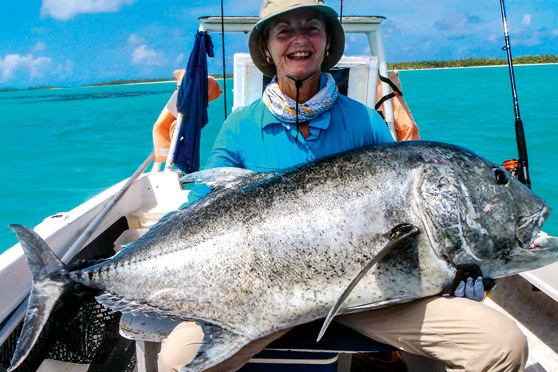
No doubt about it, I’m addicted, with lures working their way into all facets of my fishing and becoming a lifelong obsession.
I’ve been lucky enough to lure-fish through the latter part of the last century, a period when lure innovation was only superseded by the staggeringly rapid advancement of tackle technology.
Can you remember the first kahawai you caught on a lure? I can: a feisty two-pounder that slammed my hex wobbler under the Westshore Bridge near Napier. That was the beginning for me – I fell in love with lure fishing.
My whole fishing life has been shaped around lure fishing, including: spinning and fly fishing for trout; soft-bait fishing for a variety of species; jigging for snapper and kings; trolling for a range of predators, both here and overseas; casting and trolling Rapala lures; high-speed spinning; popper fishing, both here and overseas; micro jigging … the list goes on. In fact, I have been specifically targeting different species using lures for many years now, and the journey’s been a very exciting and rewarding one. Even now, when I catch a new species on an artificial lure, it’s a great thrill.
One fish that haunted me for years and refused lures on many occasions was the longnose emperor. This hard-living, hardfighting tropical might look like an unlikely lure taker, but it does and is worth the effort. I cast to many in the Solomon Islands over the years, but all refused my offerings. At times, they looked like they were chasing small fish, but I was never sure.
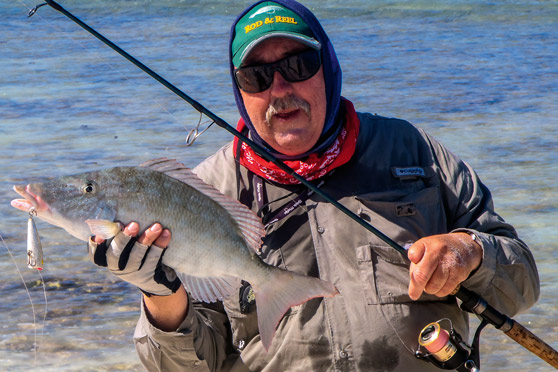
Last year I caught my first one in the sandy flats of remote Christmas Island. I had never seen one there before, so it was a nice surprise when this one charged out of the coral to demolish a small popper I was using, then fought hard all the way in. I didn’t know what it was till I slid him up on the sand.
Isn’t it funny how perceptions change? Most of my early fishing for snapper was with bait. No one was even thinking that it might be possible to catch snapper on a lure. Then innovative Auckland snapper fishers started to develop small jigs for snapper fishing.
Hardly anyone believed it, but pioneers in that field (like Bruce Riley) were having a fabulous time out on the Gulf dropping jigs into the snapper schools and catching all they wanted without using any bait. Others followed, like Eric Morman with his Lethal Lures, which are still available today.
Further afield, in the Far North, we were immersed in the culture of high-speed spinning around the same time. Our inspiration came from Australia, as did a lot of our lures, particularly WK Arrows and the Iron range.
However, one lure that really opened our minds to the possibilities at that time was the Stingsilda. These lures were expensive right from the start and prone to the paint flaking off, but once we had used them, we couldn’t be without them. They were available in a range of sizes and weights that suited a number of fish species, could be fished straight and fast on the surface, bent slightly to wobble attractively when fished slow and deep, or jigged.
I remember a few good Stingsilda catches, including: 10 snapper in a morning off Karikari Peninsula when it was open; a big, brawling kingfish from the rocks at Tapotupotu near Cape Reinga; and catching speedy skipjack tuna from the rocks in front of the lighthouse at Cape Karikari. As I’ve already said, this lure is very versatile.
If targeting kingfish, only a few lures were required in those days: the larger Stingsildas, along with Iron Coffins, Assassins and Undertakers. Or, when surface fishing, it was Rebel Poppers and WK Arrows. Today I would be happy with a similar range, along with some soft-plastics.
It was the introduction of soft-plastic lures that really turned some heads. Again, most anglers wouldn’t believe that they would catch fish. But catch fish they did, and more effectively than anyone expected!
Species that had never been associated with artificial lures before fell for soft-baits. In fact, they were so effective that a freshwater ban was quickly announced. Commercial fishers were seen using them on long-lines, and shore long-liners used them on their kontiki rigs with great success. It wasn’t just snapper either – turned out gurnard and trevally loved soft-plastics, too.
Land-based fishers were slower to pick up on the worth of soft-plastics in their arsenal, but got there in the end, and some fantastic catches have been made from shore.
One session that is special in my memory was at a place called Rangiputa in the Rangaunu Harbour up north. I was fishing around the Far North with Duncan Watson and we had been catching fish everywhere we went. This particular outing involved fishing an incoming tide up in the mangrove forest.
We fished with eight-foot soft-bait rods and light braid lines. The day before we had caught kahawai, kingfish and john dory on softbaits off Pukenui Wharf, so we used the same setup here.
Fishing was slow to start, with just the odd kahawai hitting our lures. Later, the snapper came in for half an hour and we caught several, including a 7kg fish to Duncan – and then they were gone again.
At the top of the tide, when the current stopped, they were back, smashing the five-inch soft-baits and streaking from the shallows to the channels. It was great fun, with two or three more snapper in the 2-3kg range – and then they were gone once more, along with all the other species it seemed.
We talked of packing it in as it became dark, but thought I’d like to try something first, charging up a luminous soft-bait tail with my torch. After casting out, the lure had hardly reached the bottom when a feisty fish grabbed it, hooking itself and streaking away. That fish was about 5kg and was my best for the session so far.
Repeating the illuminating procedure before casting brought more hard and fast strikes for the next couple of hours, and they were still biting when we left.
The boat fishers were interesting to study as the soft-bait revolution took hold. Half the Hauraki Gulf anglers were dubious, taking bait as well as soft-baits when venturing offshore. It’s still the same. The more sporting types took only soft-baits and generally came home with full fish boxes.
Much was made of technique, and many would only use one brand of soft-bait. We were told that one type of head was better than the others, and that you may as well not bother if not fishing with braid lines. Some anglers wanted scented baits and others unscented. It was a great time to be in the tackle industry – but you could forgive some anglers for being confused.
Don’t believe all the propaganda and do get in and have a go at any new developments in lure fishing. Thanks are due to Kilwell Sports, who had the gumption to import a full range of Mr Twister lures to get soft-plastic fishing kicked off the first time around. However, it was the development of light braid lines and later arrival, Gulp!, that fired up the second iteration of soft-baiting, followed by Z-man and others.
Savage lures have recently come up with some very different lures, and two of them particularly intrigue me. They are the Suicide Duck and the Crabs. These crabs are so realistic you won’t believe it. Available in a couple of colours, they are mounted on a unique lead head that sits the crab up in a defensive stance. These can be hopped along the bottom very realistically or removed from the lead-head and used on a hook like a bait. I caught two moki on soft-plastic crabs before these new lures were available, but the new versions look even better, so I’m very keen to get them in the water.
The Duck is something else. It is a duckling-sized lure with feathers and paddling feet. I have seen videos where it is being used to attract and catch northern pike by splishing and sploshing across a pond, enticing some impressive water-shifting strikes. I’m sure they will be just as effective in raising the biggest, baddest brown trout in the river or lake. After all, the big old browns (and rainbows, too) eat birds on occasions.
I caught a mid-sized rainbow in a small mountain stream here in Hawkes Bay. It was destined for the smoker, so I opened it up and was surprised to find a small bird inside. This suggests we need to keep an open mind on potential prey items, as well as the artificials that can imitate them.
|
|
This article is reproduced with permission of |

Recent Forum Posts Visit Forum

Trailer wheel clamp
in The Boat Shed3 hours ago
krow
I like the SAS wheel clamp. I've had no issues with the lock....

Shane Jones
in Fisheries Management5 hours ago
Fish Addict
The recreational sector can expect no favours from politicians. They know all too well who butters their bread and it ain't the recs. No different over...

Foton tunland v9
in The Briny Bar6 hours ago
Ho Dee
not fishing related and delete if required but was wondering if any has one of these or someone who has just wanting so e real world...

Bluefin Tuna at the cavs.
in The Briny Bar53 hours ago
smudge
Despite my years of fishing I haven't really fished many places, my focus has always been on Auckland's west coast and out toward Great Barrier. I...
Casting gloves
in Popper and Topwater Fishing97 hours ago
Mc Tool
100 bucks for a lure 😬. Watching one of them flying over the horizon without the line attached would be " character building " for sure...
I thought Id post some nice photo's , join...
in The Briny Bar148 hours ago
Alan L
That is a very cool pic Krow.The Far North is very cool, the Far far North even cooler. Mint looking day.Alan...

Mc Tools berley mincer
in The Briny Bar156 hours ago
SaltyC
Good size, they scrap well. Got an 18kg one up in Vava'u back a few years ago fishing off squeaky Going's boat. That was quite a...

Out with the "Twelves"
in Fishing Reports210 hours ago
Pcj
I should be able to get out end of October. The nephew been out virtually every weekend over winter and has done well. It seems the...
Manukau Harbour & West Coast fishing
in Fishing Reports218 hours ago
smudge
Nice work Schecter, I think snapper may be around sooner than you think. Well I am hoping so...
Whangarei Harbour report.
in Fishing Reports650 hours ago
krow
180 +m is where I've had to be lately. A lot less low foul around these parts and some of it shallower that looks like Tarakihi...
Popular Articles

Softbait Fishing - Part 1 - gear selection
John Eichlesheim writes an article about selecting the right equipment for softbait fishing... Read More >
Softbait fishing Pt 2 - tips and tricks
Techniques, tips and tricks of softbait fishing – getting the most from your soft baits.... Read More >

Surfcasting - setting yourself up
Gary Kemsley helps sort out the necessary gear for intending surf fishers.... Read More >

Squid - How to catch them
Squid fishing is a rapidly growing aspect of fishing - Paul Senior shares some hints and tips to get started.... Read More >
Fishing Reports Visit Reports
Outer Hauraki Gulf Fishing Report 17/09/26
Spring wind the handbrake. Spring is starting to make its presence felt in the outer... Read More >
Top of the South Fishing Report - 17/09/26
Early snapper in Tasman Bay. Well, spring is finally here, and the days are getting... Read More >
Bream Bay Fishing Report - 17/09/26
Good snapper catches reported. After Tangaroa turned off the fish tap for a month or... Read More >
Bay of Islands Fishing Report - 17/09/26
Pacific bluefin tuna for the lucky few. The last fortnight has seen more fishable days... Read More >
Comments