
What Happens to Confiscated Seafood?
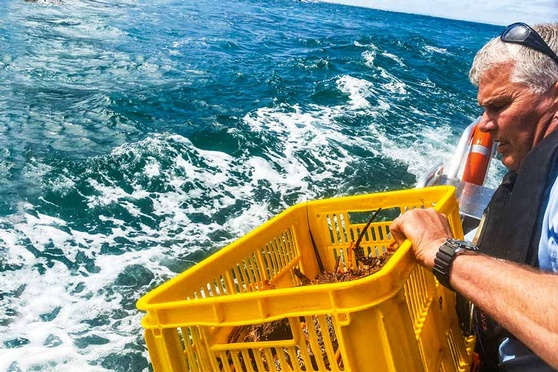
Dozens of shellfish and paua sprawled out on tarpaulin. Hundreds of crayfish lined up neatly alongside fish. It sounds like a rustic fish market, but it’s not. Instead, it’s illegally gathered seafood seized by the Ministry for Primary Industries (MPI).
You may have seen images like this on the Ministry’s Facebook page or read reports of MPI Fishery officers seizing goods off people caught breaking our fisheries laws and regulations.
Following four very recent interventions, Fisheries officers were able to put almost 3,000 cockles and 156 undersized paua back into the sea after several groups of people were caught with the hauls, claiming to be unaware of a beach closure and regional and quantity limits on shellfish gathering.
While smaller-scale offences are often dealt with through education, bigger offences often lead to infringements and prosecutions. Consequently, the illegally harvested seafood becomes evidence for any subsequent proceedings such as court cases.
“Of course, the court does not appreciate us showing up with a bag of wet, smelly, mouldy two-month-old paua, so the next best thing for our officers to do is to lay out any kaimoana as quickly as possible, take photos to show the court, then put everything back in the ocean if it has a high chance of surviving. Usually, shellfish and rock lobster will recover if the time out of the water is kept to a minimum,” says Steve Ham, National Manager of Fisheries Compliance at MPI.
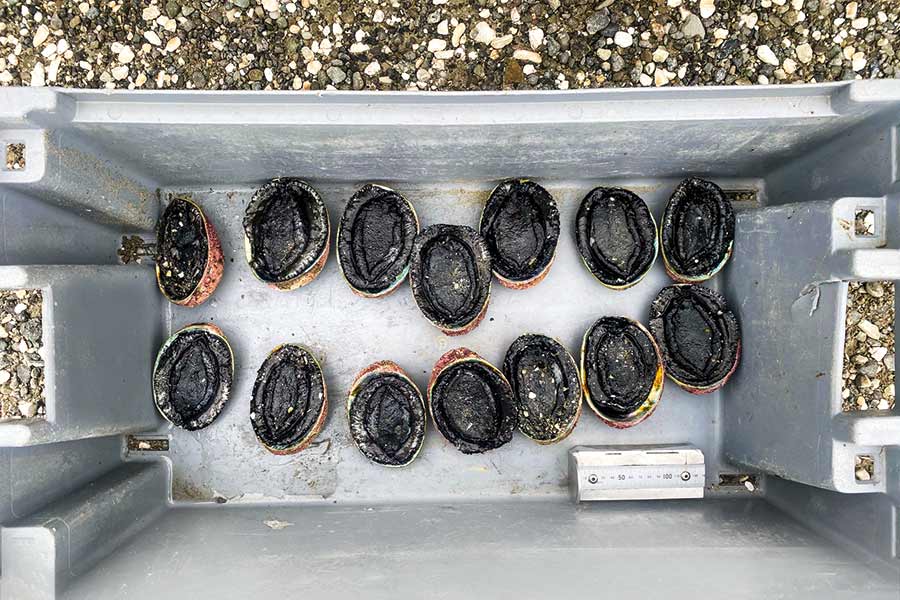
The individual caught with these paua was infringed for both excess and undersized paua, which were returned to the sea once the evidence was documented.
“If the kaimoana is dead or damaged, we can’t just throw it back in, as it could wash up on the shoreline, so we will take it back to our offices where it is measured, weighed, tagged and photographed.
“It’s then frozen and kept till the court case is over.”
So, what happens then to the seafood MPI confiscates? Where does it all go?
A question that inevitably comes up is why MPI doesn’t donate the seized kaimoana to charity or people in need.
“Sadly, it is just too dangerous to redistribute it or give it away – no matter how nice of an idea it seems.
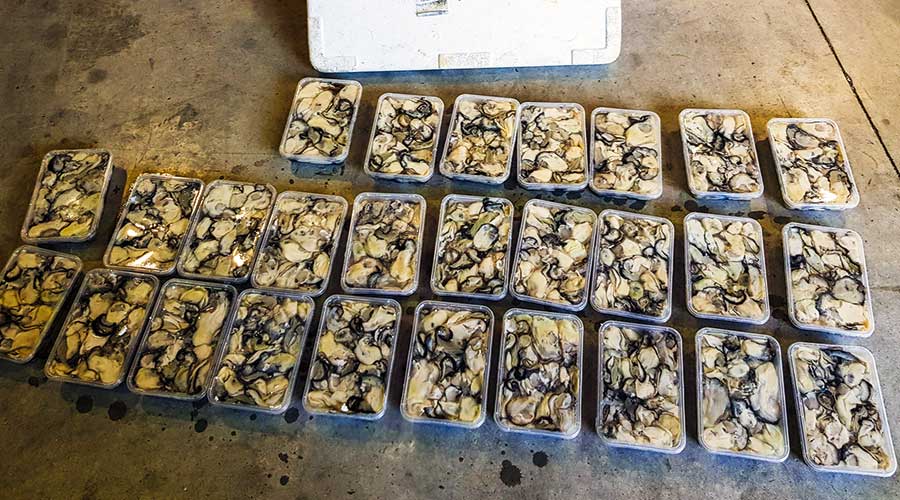
Because of its unknown history, a haul like this intercepted by fisheries officers cannot be distributed to the community for health reasons.
“We have no idea how it’s been caught, how long it’s been in the sun, and whether it’s been collected or stored in a clean and hygienic way. Seafood that has not been handled correctly could pose a significant health risk.
“We could make people really sick, so that’s why we can’t donate it,” Mr Ham says.
“We have freezers at our fisheries offices around the country, so every so often we take the confiscated fish and seafood and return it back into the marine ecosystem. This enables this illegally harvested seafood to enter the food chain in a controlled manner.”
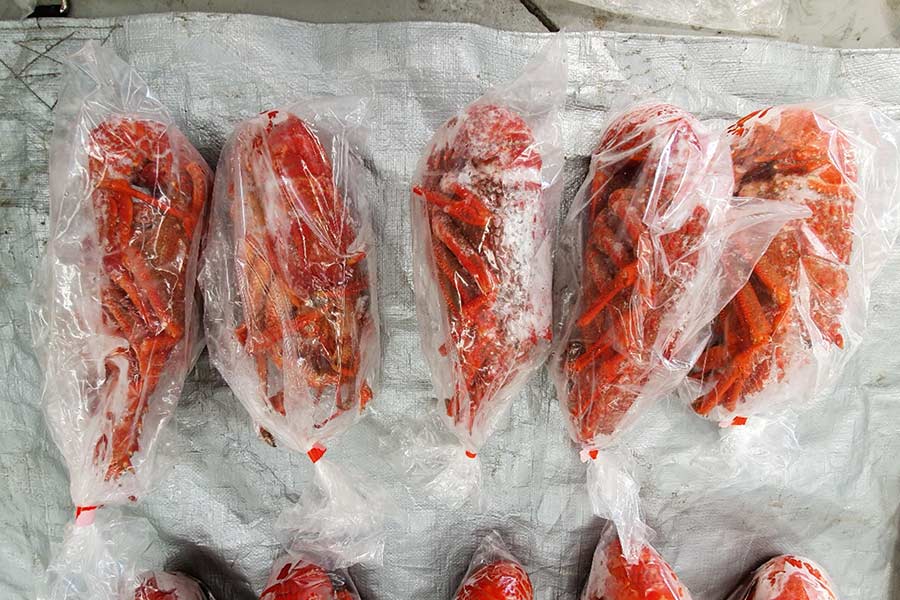
Illegal hauls, despite being frozen, will be sometimes returned into the ecosystem in a controlled manner.
This means it is well documented where the illegally harvested seafood has been released and how much was put back into the sea, and as a result we don’t overwhelm the ecosystem.
There are minimum size and daily catch limits for all fish and shellfish, including cockles, kina, paua, green-lipped mussels, oysters, pipi, scallops, toheroa and tuatua.
There are also regionally specific limits, closures and area restrictions in New Zealand, which are outlined on the MPI website. There is also the NZ Fishing Rules app.
|
|
This article is reproduced with permission of |

Recent Forum Posts Visit Forum

FC 595 For Sale
in Buy Sell Trade or Exchange40 hours ago
Kevin.S
I have reluctantly decided to sell my boat. It really is not getting enough use to justify keeping it. It is a 2016 FC 595 with...

2026 Grunter Hunter
in The Briny Bar57 hours ago
smudge
Bugger, the only way we can swap tickets is like for like and while a couple have come up they have been club member tickets. Hope...

Manukau Harbour & West Coast fishing
in Fishing Reports80 hours ago
smudge
That's a great catch Schecter! Kayak fishers do it so much harder than anyone else. It would be an absolute pleasure to hand over the $5k...

Knife sharpeners
in The Briny Bar127 hours ago
krow
I'm about to order a couple from Amazon. Check your PM Smudge...
1989 Evinrude 90hp V4
in The Boat Shed128 hours ago
bricker
Inherited the above outboard on a boat - is in very good order with little use. The serial number is A1351974. Is there a way of...

Auckland Yakkers
in Yak Yak Yak206 hours ago
BananaBoat
Out from Mission bay this evening. Went to the red marker by Mission & Kohi. Never fished this area beforeHad a quick looksie for some structure....
Yellowfin
in The Briny Bar223 hours ago
krow
I heard there were Yellowfin East of the chicks yesterday but I'd suggest this is unusual this late in the season as the water is cooling....

Mac'nificent Autumn Fishing....Mokau!
in Fishing Reports250 hours ago
Snappa Geoff
Thankyou for the replies guys... Tagging some bigger fish is a good idea Krow! but it doesn't interest me enough to get involved....
Yozuri crystal minnow deep diver lure 6"?
in Popper and Topwater Fishing289 hours ago
SeniorInvissibl
Anyone ever used this lure before to provide feedback? I've never used yozuri before.The package states it dives to 20 feet, I'm using it to troll...
Popular Articles

Softbait Fishing - Part 1 - gear selection
John Eichlesheim writes an article about selecting the right equipment for softbait fishing... Read More >
Softbait fishing Pt 2 - tips and tricks
Techniques, tips and tricks of softbait fishing – getting the most from your soft baits.... Read More >

Surfcasting - setting yourself up
Gary Kemsley helps sort out the necessary gear for intending surf fishers.... Read More >

Squid - How to catch them
Squid fishing is a rapidly growing aspect of fishing - Paul Senior shares some hints and tips to get started.... Read More >
Fishing Reports Visit Reports
Tauranga Fishing Report - 28/05/26
Tarakihi on the bite Trips are few and far between at this time of year,... Read More >
Canterbury Fishing Report - 28/05/26
Fresh and salt turning it on! It is not very often I get to say... Read More >
Bay of Islands Fishing Report - 28/05/26
Lures paying dividends We finally had a break in the SE winds that have been... Read More >
Manukau/West Coast Fishing Report - 28/05/26
Snapper and gurnard in the harbour The weather has finally taken a turn for the... Read More >
Comments