
Types Of Lifejackets And How They Differ

Having to wear a lifejacket as a youngster, at his parents’ insistence, while fishing off the Kawhia Wharf was one of managing editor Grant Dixon’s less pleasant childhood memories. But he survived the taunts and jibes of his young peers relatively unscathed and after a few decades on the water, has developed a change in attitude to lifejackets…
In my early days, I had a love/hate relationship with lifejackets. I knew if I wanted to go fishing either off the wharf or with my parents in their boat, I had to wear one, especially while the vessel was underway.
Apart from being the only kid on the wharf having to wear one, I found the lifejackets available then were hot, bulky, restricting and uncomfortable. But that has all changed.
With the advent of the PFD (Personal Floatation Device) most of my arguments for not wearing a lifejacket as a youngster disappeared overnight.
In the last 60 years lifejackets have come a long way in their practicality, comfort and effectiveness.
The early jackets I was forced to wear were quite inflexible – the stiff plastic compartments were filled with kapok and the vests were secured with a short strap in front and another that tied around your middle. Sizes were limited to CHILD, S, M, L or XL, and that was your lot.
Slowly lifejacket design began to change. The next set of jackets on the family boat were Hutchwilco ones manufactured using closed- cell foam as the floatation material. They were brightly coloured yellow and orange and much more user-friendly to wear. They were nowhere near as bulky and clips were used to secure the bottom straps. Soon a zip was added in the front.
This style of jacket was the boaty’s ‘go-to’ product for many years. It was quick to dry, generally robust, much more comfortable to wear than its predecessors and provided an extra layer of protection against the weather.
We were also starting to see the addition of whistles, reflector strips and crotch straps, the latter preventing the jackets from riding up when the wearer was in the water.
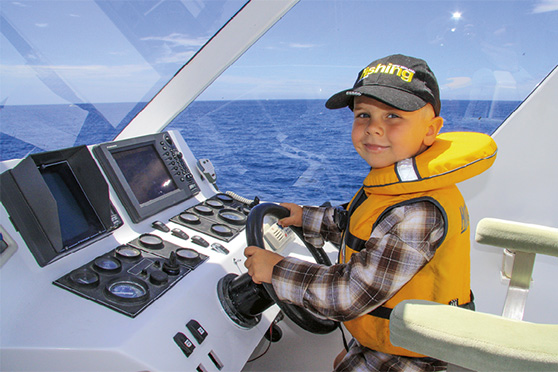
PFD's can be accessorised with the likes of lights, auto-inflators, whistles, reflectors, hoods and safety line carabiners.
Despite all the developments, these closed cell jackets, while doing a great job as far as a floatation device, were still not the most comfortable to wear.
That was until the PFD was developed. These horseshoe style life preservers have several advantages over their conventional counterparts.
They were easy to take on and off, could be inflated both manually and automatically, but best of all, they were comfortable. You can wear them all day and hardly know they are on. The latest ones are lightweight and have been designed with comfort in mind – a feature second only to their ability to keep your head above water should the unthinkable happen and you end up in the tide.
PFD’s have changed my attitude to wearing lifejackets. In the past I have always worn a jacket when crossing a bar, when the conditions have suggested it would be prudent to do so, or when travelling in the dark.
Most regional councils have regulations that say you must carry a suitable lifejacket for everyone on board and that it is the skipper or individual’s call as to whether it should be worn. Others have gone a step further and enshrined in law the mandatory wearing of lifejackets in vessels under a certain length when underway. So much for personal responsibility, but that is a discussion for another day!
The good news is, the availability of quality lifejackets that do not impede movements such as casting and jigging has meant these regulations are becoming more universally accepted. Sometimes when I have worn a jacket for a bar crossing, I have kept it on until I have reached the fishing location and started to fish with it – it becomes ‘invisible’ but is there should yo u need it.
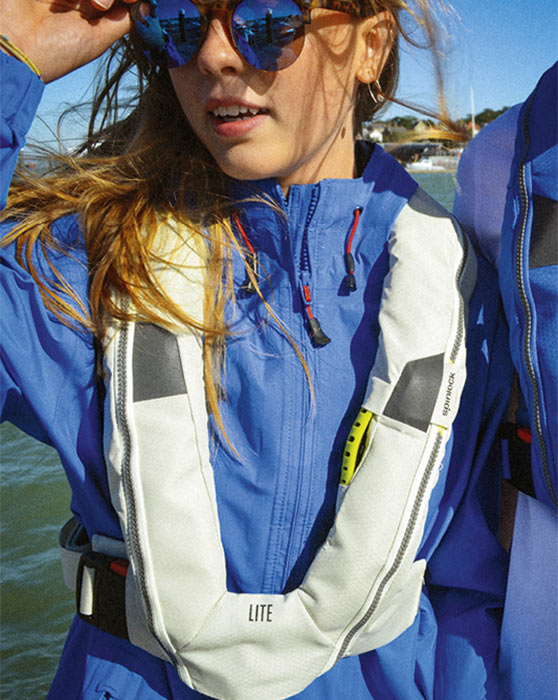
Modern lifejackets allow plenty of uninhibited movement, while still protecting the wearer, should they fall overboard.
Several companies have taken the PFD to the next level, incorporating a bladder and inflating device into the design of a jacket. For many years I wore a Stormy Seas vest – at least until I ‘grew’ out of it. Today I wear a Hutchwilco Contender jacket which offers great protection from the elements as well as providing life-saving support if I was to fall in.
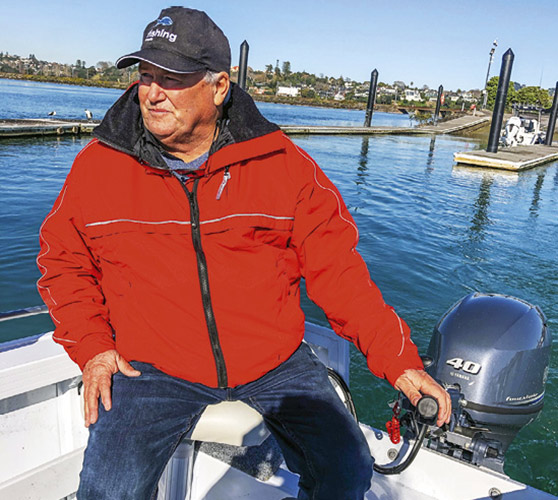
The writer wearing his Hutchwilco Contender jacket - safety and comfort combined.
Relatively new to the New Zealand market, Spinlock product are another example of lifejackets being taken to the next level with its own generic fabrics; lights; auto inflators; improved fit; and spray hoods, the latter designed to reduce the possibility of secondary drowning by protecting the head and face.
Lifejackets, and PFD’s in particular, are now a part of many angler’s kit along with rods, reels, chillybins and tackle boxes, and are not just a safety item. They are now an item people are happy to wear sooner and longer, regardless of what the by-laws insist upon.
What to Look For in a Good PFD
• First and foremost, they must meet NZ and ISO safety and standards.
• A good, comfortable fit is essential.
• Materials used in the manufacture must be durable.
• A whistle and reflective strips should be mandatory.
• A crotch strap to prevent the jacket riding up your torso in the water is essential.
• Handles to enable someone to drag you on board are useful.
• The CO2 inflating system must be made of corrosion resistant materials.
• The very best jackets will incorporate a light for summoning help in the dark.
Lifejacket Tips
• A crotch strap, while a small feature, is an important one. It holds the jacket or PFD in the optimum position to support the wearer in the water.
• Having lifejackets on board is one thing, but getting to them in an emergency is another. They’re not much use if they are buried under the forward bunks that have a bunch of gear sitting on top of them. I was once on a charter boat that caught fire some 30 miles from its home port and the nearest rescuers. While it had 20 jackets on board they were no use to us as we couldn’t access them. Located in the forepeak, the fire prevented us from reaching them. Had they been stored on the flybridge, it would not have been a problem. Luckily we had a life raft to clamber into once we had abandoned ship.
• Like all your gear, lifejackets need to be maintained, especially PFD’s. Check the inflating device regularly for any signs of corrosion. Before fitting the cylinder, apply a little light grease or oil to the thread. Manually inflate the jackets to ensure they hold air over an extended period.
• Despite their importance, I have seen lifejackets used for many purposes other than keeping people afloat in the water. They have not been designed as a buffer, nor should they be used to prevent dive bottles from banging together!
• PFD’s that inflate automatically are better than manual ones, especially in the situation where the wearer is unconscious when they fall in.
• With most purchases, you get what you pay for – lifejackets are no different.
|
|
This article is reproduced with permission of |

Recent Forum Posts Visit Forum

Shane Jones
in Fisheries Management5 hours ago
Pcj
But reality is maybe 4 from legasea and the NZSFC .Rather than asking what fishos want they blindly go ahead with their own ideas and...

Trailer wheel clamp
in The Boat Shed16 hours ago
Mc Tool
either crc long life or 556 marine are way better ...

Foton tunland v9
in The Briny Bar32 hours ago
Ho Dee
not fishing related and delete if required but was wondering if any has one of these or someone who has just wanting so e real world...

Bluefin Tuna at the cavs.
in The Briny Bar78 hours ago
smudge
Despite my years of fishing I haven't really fished many places, my focus has always been on Auckland's west coast and out toward Great Barrier. I...
Casting gloves
in Popper and Topwater Fishing123 hours ago
Mc Tool
100 bucks for a lure 😬. Watching one of them flying over the horizon without the line attached would be " character building " for sure...
I thought Id post some nice photo's , join...
in The Briny Bar174 hours ago
Alan L
That is a very cool pic Krow.The Far North is very cool, the Far far North even cooler. Mint looking day.Alan...

Mc Tools berley mincer
in The Briny Bar182 hours ago
SaltyC
Good size, they scrap well. Got an 18kg one up in Vava'u back a few years ago fishing off squeaky Going's boat. That was quite a...
Out with the "Twelves"
in Fishing Reports236 hours ago
Pcj
I should be able to get out end of October. The nephew been out virtually every weekend over winter and has done well. It seems the...
Manukau Harbour & West Coast fishing
in Fishing Reports244 hours ago
smudge
Nice work Schecter, I think snapper may be around sooner than you think. Well I am hoping so...

Whangarei Harbour report.
in Fishing Reports676 hours ago
krow
180 +m is where I've had to be lately. A lot less low foul around these parts and some of it shallower that looks like Tarakihi...
Popular Articles

Softbait Fishing - Part 1 - gear selection
John Eichlesheim writes an article about selecting the right equipment for softbait fishing... Read More >
Softbait fishing Pt 2 - tips and tricks
Techniques, tips and tricks of softbait fishing – getting the most from your soft baits.... Read More >

Surfcasting - setting yourself up
Gary Kemsley helps sort out the necessary gear for intending surf fishers.... Read More >

Squid - How to catch them
Squid fishing is a rapidly growing aspect of fishing - Paul Senior shares some hints and tips to get started.... Read More >
Fishing Reports Visit Reports
Outer Hauraki Gulf Fishing Report 17/09/26
Spring wind the handbrake. Spring is starting to make its presence felt in the outer... Read More >
Top of the South Fishing Report - 17/09/26
Early snapper in Tasman Bay. Well, spring is finally here, and the days are getting... Read More >
Bream Bay Fishing Report - 17/09/26
Good snapper catches reported. After Tangaroa turned off the fish tap for a month or... Read More >
Bay of Islands Fishing Report - 17/09/26
Pacific bluefin tuna for the lucky few. The last fortnight has seen more fishable days... Read More >
Comments