
Trout Fishing in Small Streams
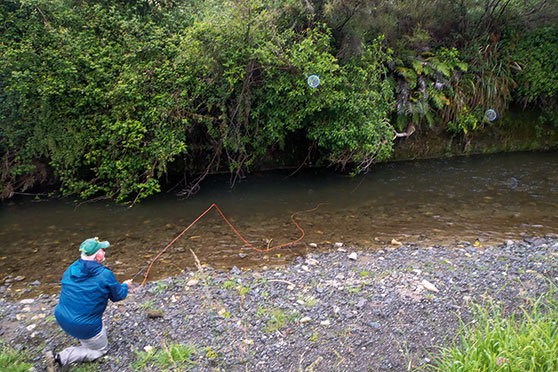
There is something thrilling about casting a long line over big water, writes Gary Kemsley. The tug of a trout with thirty metres of line out is exciting, and landing a large trout is no doubt a great experience. But is there more to trout fishing than catching big fish? Gary explains…
The river slipped through a culvert under the main highway, secret, unseen by most. Calling it a river was a bit of a joke but that is what it says on the map. “The Golden River” or something similar. It doesn’t matter; there are hundreds of similar waterways in New Zealand. This one runs clean and clear from the mountains to where it disappears, swallowed by the larger waters of one of our major rivers twenty-five kilometres downstream. Even where it enters the mighty Waikato River, it’s only a small stream. Too deep to cross there, but only a few metres wide. This is a well-trodden fishing spot, used by spin fishers and kids from a nearby settlement. I am sure it has produced some great fish at times to a number of fishing techniques; most legal, some not.
This part of the river was my introduction to these waters but in the years to follow, my interest has been with the subtle, bush-lined pools and runs secreted away in the beautiful natural setting upstream. I kicked myself for not exploring these earlier, but my mentor at that time was a big water fisher and liked the open spaces in front of him when fishing. I did too at that time. The idea that big water had the promise of big trout was something he instilled in me. It would be a few years before I became a better fisherman by following such streams to their beautiful upstream waters.
The upper “Golden River” is probably the same as most tributary waters: difficult to access, largely unfishable and yet having enough open water to make the effort worthwhile. The nature of such rivers, streams or creeks is determined by the country they run through. Some cut through solid rock, creating plunge pools and deep (for the size of the stream) rocky runs with hundreds of holding spots for trout to live in. Others sluice through clay and broken rock banks. They often run discoloured for days while rocky waters will clear overnight. Either way, they have their own appeal. Steep rocky streams can have waterfalls that are impassable for the trout and no fish in the uppermost reaches. You have to try though. Some keen game warden may have arranged a release above the falls at a culvert or place where access is possible.
I know one stream in Hawkes Bay known to a few as “Terry’s Creek”. It has a waterfall between its fertile and trout-choked upper waters and the lower reaches before it runs into a larger river a few kilometres further down. Access is difficult and it’s on private property at the top end, so I have never heard of anyone fishing it. At the extreme upper end where another waterfall stops all trout progress, you can jump across it. Even there a trout will show itself at times. The water between the two falls is five kilometres of trout-hunters’ paradise. The water is small, shallow and clear. Every good-looking spot seems to hold a solid trout. I saw a 2.5kg specimen on one visit. It was so long that it could only hide its head under a rock, leaving its tail half hanging out below. This certainly indicated that the trout were not being worried by anglers or it would have found a better hide out.
I had mixed emotions about this stream. On the one hand I really wanted to fish it – there were so many fish. On the other hand, it’s such a great stocking area for the stream. Hatchlings negotiate the waterfall and head downstream, although there is no chance for adult fish to migrate up stream of the bottom fall. It showed me that you need to question every stretch of water, even when it seems impossible to fish. Another stream, a tributary of the Mohaka, is the same. It has a large unscaleable waterfall and a beautiful stream above full of big boulders. You could be excused for thinking there were no trout, but there are.
Some small streams get ignored because they just look too small in normal flows and vulnerable in times of floods. Have faith – floods won’t devoid rivers of fish although they might cull the weaker ones present. The Hawkes Bay rivers I fish are affected by floods, some of which are huge and severe. You would think that nothing could survive, yet the day the levels drop and the water clears, there are fish to catch. They all have tributaries that get equally knocked around by high waters. The trout survive and quickly thrive. In small streams, high water can mean an influx of food and trout are quick to capitalise on such handouts.
Fishing small streams can be like starting all over again if you have concentrated on big rivers. There are a lot of new rules to put into play. The most important one: you need to stay out of sight. Fish in small waters, unless they are totally untouched, can be very spooky. Try wearing camo clothing in darker hues and don’t forget that your hat may be the first thing you will show a fish. If you look in the mirror before heading out and see an SAS Commando looking back at you, then you’re on the right track.
Light gear will catch you all the fish you want. Try a five- or six-weight fly rod. Some suggest that short fly rods are the way to go because of all the overhanging scrub and tight spots you will be encountering, but I disagree. Stick with a standard 9’ rod. In the smallest of streams, you may not be casting much at all. You will find that the length will achieve two important things for you. First, as you will be doing short casting (sometimes only your leader and a metre of line), the long rod will help you flick out your offerings with side casts, roll casts or steeple casts. Second, when you are crawling around getting into position to cover the water, there will be lots of opportunities to present a fly by reaching out and dropping the fly on the water without casting. This will catch you plenty of bonus fish which are using undercut banks for cover but are prepared to take a fly. The fish you spot will also be close at hand in faster water, so leaders need not be very long. Try a 2.5m to 3m leader in the tight country and only extend it when the water opens up and you need to cast some distance to fish in flat water.
The fish you are after will generally be small – 30 cm and under, and sometimes half that – however, they will be the prettiest fish you catch. Brown and rainbow trout will typically be present in similar population proportions as the trout in the tributary’s main stem river. Admire, photograph and release your catch. They will enthral you with their beauty.
Fly choice is simple. In the smallest of streams, a size 14 Royal Wulff is all you need. A fish on the bottom will see everything that is on the surface in all but the deepest holes. If you have no success on top, try a size 14 caddis nymph. Sink it deep and drift it through the pools. If grasshoppers, cicadas or beetles are present in large numbers, then the trout may concentrate on those species and their imitations will catch you trout. You will notice that these are all summer flies. The reason they are mentioned is because most small streams and upriver tributaries are closed to winter fishing. These are of course the spawning waters for many large rivers and even lakes. The big spawny trout jostle their way up to the pristine waters at the head of the streams, spawn and then generally return to the main stem after winter.
You may encounter these fish as you survey these waters. In early spring, some big fish may decide to remain in the upstream waters and you might just catch one. It will make your day when, in water better suited to a 500g trout, a 2kg rainbow turns on the afterburners and heads back down the river with you in tow.
When the bigger rivers are weedy with summer growth or crowded with other fishers, give yourself a break and head into the hills. You may find a fishing genre that will suit you better than chasing big fish in deep waters.
|
|
This article is reproduced with permission of |

Recent Forum Posts Visit Forum

Offshore Power Boats - Gulf Harbour 17 Oct
in The Briny Bar3 hours ago
Phantom Menace
It was interesting helping out with the racing. I had the lap scorers / timekeepers and the chequered flag on board again.As the race briefing was...

Freams?
in Soft Bait Fishing5 hours ago
Mc Tool
Yeah , I dont get the whole "salt water in the bearings " thing . My rods sit in the holder at the back of the...

Anyone get out today??
in Landbased & Surfcasting30 hours ago
LBGer
Nice work looks like a you had a great day...

50L icey tek - new
in Buy Sell Trade or Exchange54 hours ago
Telecaster
Unwanted prize - same as this: https://www.marine-deals.co.nz/chilly-bins-coolers/icey-tek-pro-series-chilly-bin-cooler-50l-white/p/229785/c/1782$250 ono...

Manukau Harbour & West Coast fishing
in Fishing Reports225 hours ago
smudge
Thats a great catch Schecter, big fish. I'll post up a report from off the coast a bit later on...

Garmin vs Lowrance
in The Boat Shed318 hours ago
Roscoe C
Hi folksI'm looking at upgrading the electronics on my Stabi 1450. I've currently got a Lowrance Eagle 7 which I'm not especially impressed with. In particular...

Shimano 3500 baitrunner
in Buy Sell Trade or Exchange453 hours ago
0nlanders_Nz
Hello, I have come across to on the cash converters website search fishing reels $35 on there...
Manu bay boat ramp
in The Boat Shed459 hours ago
610gc
Hey teamhas any one tried the Manu bay boat ramp since the repairs?Is it any better to use?thank you ...
Popular Articles

Softbait Fishing - Part 1 - gear selection
John Eichlesheim writes an article about selecting the right equipment for softbait fishing... Read More >
Softbait fishing Pt 2 - tips and tricks
Techniques, tips and tricks of softbait fishing – getting the most from your soft baits.... Read More >

Surfcasting - setting yourself up
Gary Kemsley helps sort out the necessary gear for intending surf fishers.... Read More >

Squid - How to catch them
Squid fishing is a rapidly growing aspect of fishing - Paul Senior shares some hints and tips to get started.... Read More >
Fishing Reports Visit Reports
Manukau/West Coast Fishing Report - 15/10/26
Big spring snapper in 60 metres. The El Niño weather pattern isn’t going to be... Read More >
Rotorua Fishing Report - 15/10/26
Solid start to the season! The Rotorua lakes have all started the season well, and... Read More >
Tutukaka Fishing Report - 15/10/26
Big snapper in shallow. Things remain relatively quiet on the fishing front out of Tutukaka,... Read More >
Tauranga Fishing Report - 15/10/26
Bait and temperature on the rise. It’s been great to get out and see some... Read More >
Comments