
Tarakihi: The Forgotten Fish

Ethan Neville hasn’t caught many tarakihi, but not a lot of people have in the last ten years. Hearing rumours of a few worrying stories, he started researching what happened to this iconic Kiwi species…
If you grew up in NZ, you probably have fond memories of tarakihi: we caught them fishing in our dinghies and they arrived battered with a side of chips at our local takeaways.
If you’re growing up in NZ today, well, the same might not be the case.
In 2017, the first fully quantitative assessment of the tarakihi east coast stock was undertaken, and the results were a little frightening. The stock was sitting somewhere around 17% of its original unfished biomass. In 2018, the commercial fishing industry funded another comprehensive study, and 17% somehow turned into 15.9%. This meant we’d effectively removed 84% of all tarakihi from our east coast waters in a little over 100 years of fishing. 15.9% is also below the Government’s “soft limit” for fish stocks, which means, in their own words, the “fish stock is considered to be overfished or depleted and needs to be actively rebuilt.”
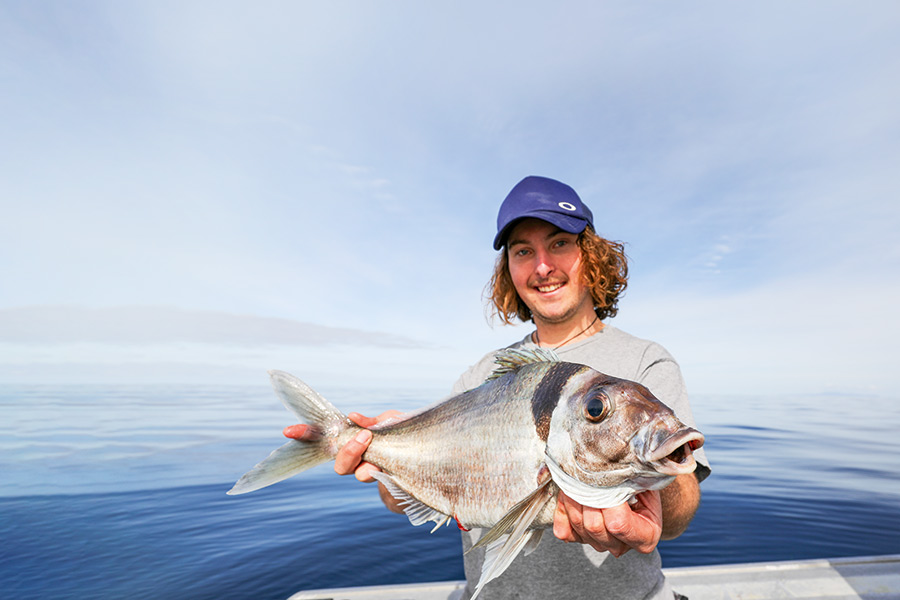
A healthy outer-Hauraki Gulf tarakihi.
To get a better idea of what these numbers really mean, I called a few prominent east coast fishermen around the country to hear their experience of the fishery. The result was unanimous: for recreational fishermen, tarakihi have become something of a forgotten fish.
“We used to target them…”; “We used to get a lot of tarakihi…”; “I don’t bother to chase them much these days”; “We might give it a little go but we don’t really target them anymore” – these phrases were repeated again and again in my conversations with east coast charter captains, NZ Sportfishing Council members and long-time recreational fishermen.
So, what happened?
The Fish
The heart of the problem is that these fish are too tasty for their own good. New Zealander’s love to eat them, and we keep over 90% of the commercial catch to ourselves.
The second problem is that they are slow growing. They race out of the gate, reaching 25cm in the first three to four years, but then run out of steam and relax into their old age. A 44-year-old tarakihi was caught in 2000 that was only 47cm long – yep, she only grew around 22cm in 40 years. When we trawl or recreationally catch tarakihi over 40cm, which until recently was very common, know that these fish are probably making preparations for their 40th birthday.
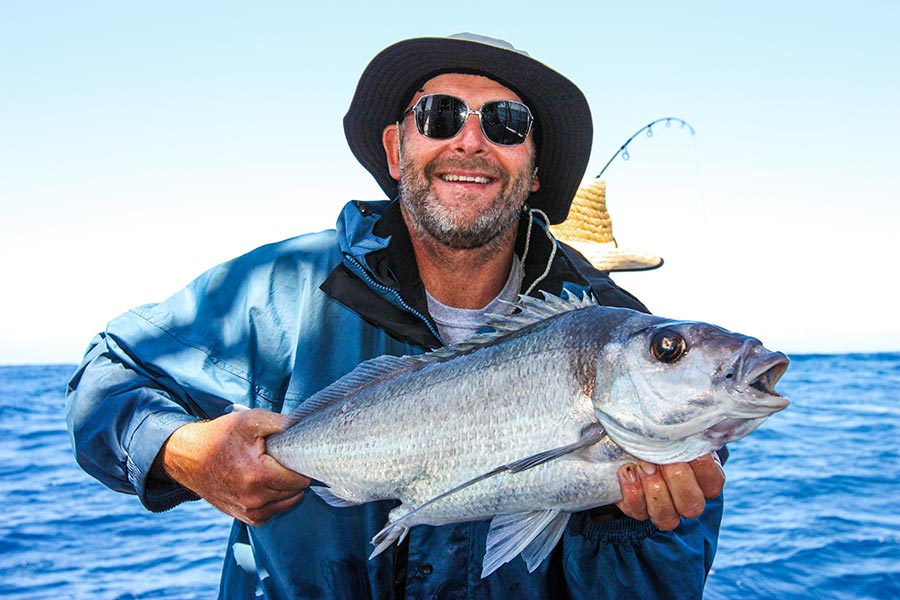
A fish this size is probably in its late twenties.
The final issue is that females can take up to six years to sexually mature, which means there is usually a two year window where tarakihi can be harvested legally before they’ve even had a chance to spawn.
Combine all the above factors, then throw in the indiscriminate fishing technique of mass bottom trawling, a Government about 20 years behind the ball game, and a bunch of recreational fishermen oblivious to what’s going on, and you’ve got all the ingredients you need for the stock to collapse.
Of course, the tarakihi still had to be physically caught, and the easiest and most effective way to do this is by trawling.
The Timeline
In the 1890s, the commercial tarakihi industry officially kicked off when the first steam trawlers left their respective ports. It was a slow start to the game, however, as technology prohibited any massive catch numbers. The catch slowly started to tick up over the next forty years and by the mid 1930s, the annual catch was around 2000t. And then the rush began. In the 1950s and 60s, the catch numbers would hover around 5000t-7000t, and by 1975, current models estimate the stock to be already getting down to 20% of the original unfished biomass.
The Government then finally rose from their slumber, looked out the window and saw the NZ oceans looking something like a modern wild west. Plans were made, documents were signed and the great Quota Management System (QMS) roared into life in 1986. There was little understanding of how low the tarakihi stock truly was, and hence 5160t became the magic TACC (total allowable commercial catch). This was low enough to slow the decline, but nowhere near low enough to rebuild the fishery. Amazingly, the TACC only grew over the next 20 years, and by 2008, it was at a whopping 6438t – which, as you will remember, is around the annual catch number that triggered the first radical decline in biomass.
At this stage, no one was quite sure what was going on under the water as no comprehensive stock assessment had been undertaken. Anecdotal evidence was starting to pour in, however, and the infamous 2017 and 2018 stock assessments confirmed what most fishermen suspected: the fishery was well and truly decimated.
So a plan was made.
The 2019 Eastern Tarakihi Management Strategy and Rebuild Plan
When a stock moves below the soft-limit of 20%, the Government has to act. Their response was to cut the commercial quota by 20% in 2018 to “minimise the risk of reducing the stock below the hard limit”, noting also that “substantially larger reductions in catch are required to rebuild the stock to the 40% SB0 default target level within a 10-year period.”
But after MPI liaised with industry, the default plan changed considerably. The quota was cut by only a further 10% in 2019 and MPI also accepted industry’s 2019 Eastern Tarakihi Management Strategy Plan. This set out a 20 year plan to build the stock back to 35% of unfished biomass.
Yes, you heard me right – that’s a 5% lower goal over double the period of time.
I asked MPI about this radical change in plan, and Emma Taylor, Director of Fisheries Management, noted that the 20 year time frame “was agreed recognising the need to ensure the sustainability of the fishery, balanced against the impacts on fishers, their families and the regional communities where they operate.” She also explained that 40% biomass was the appropriate target set by the former Minister, but – as the Minister noted when making his decision– more work was required to confirm an alternative target (this ended up being 35% after more research was undertaken). After reading the full report outlining the reasoning behind these decisions, I will note that it was a very complicated situation with some people’s livelihoods truly on the line. But was it still too conservative? It seems only time will tell.
There are six other areas of the plan also worth mentioning. As well as adhere to the new catch limits, industry promised to:
• Spread their catch, i.e. not just thrash the same spots
• Report catches of sub minimum legally size fish
• Implement a move-on rule (boats to move-on where high concentrations of undersized tarakihi are found)
• Voluntarily close areas to commercial fishing where there are high levels of juvenile tarakihi
• Improve their selectivity of nets (adjusting nets so larger fish are kept while undersize tarakihi are not)
• Have cameras on-board boats by end of 2020
In his 2019 decision letter, the Minister wrote that “If industry fails to deliver on the commitments outlined in the Industry Rebuild Plan, I will look to introduce further catch reductions in October next year.”
In their latest update, commercial admitted to failing in two of the six areas. They did not meet their targets for the “move-on rule” or the “voluntary closed areas”. However, as Taylor pointed out, these failures were very minor. The move-on rule was only triggered four times in 2019/20 and was adhered to twice, giving a 50% success rate. Industry also adhered to the voluntary closures 99% of the time, but 100% success rate is required for them to meet their target. In regard to the cameras, Taylor explained that some boats had cameras as early as October last year, but the full rollout had been delayed due to Covid. By March 2021, this was meant to come into full effect, but I struggled to verify whether this has actually happened. We now await the next quarterly report from industry to see whether the catch reductions have worked and whether they have in fact installed cameras.
For LegaSea spokesperson Sam Woolford, the reality is a little more complicated than industry and MPI make out.
“The reason tarakihi are so interesting and the reason commercial will keep fighting this is that fin fish don’t swim alone. Snapper and kahawai will also be around. So, if you close the tarakihi fishery, you also close down the snapper and kahawai fishery. You could be more selective, but this would require long lining not trawling.”
This, he continues, is the “unfair economic duress” referred to by industry in their response to the original plan for more drastic quota cuts.
The whole situation we’ve found ourselves in is, for Sam, another example of the QMS’s failure, and his answer is quite simple: get rid of it. Buy the quota back and start again as the current approach is clearly not working – a plan LegaSea has put forward in their Rescue Fish campaign.
This is now getting into territory beyond the scope of this article, so I’ll get back to what we do know: the tarakihi fishery is in trouble. The next question we should ask then is: what can us every day Kiwis do about it?
Team Effort
When it was announced in 2018 that the tarakihi fishery was buggered, one fish and chip shop in Christchurch decided to take tarakihi off the menu. The logic was simple: reduce demand, which will lower supply. If you are sceptical of the Government’s and Industry’s ability to fulfil their plan or feel that 20 years is too long of a time frame to rebuild the fishery, this is definitely an option. As consumers, we could choose to eat other species – 90% of commercially caught tarakihi is sold in NZ, so if we stop eating it, industry will be forced to lower their catch.
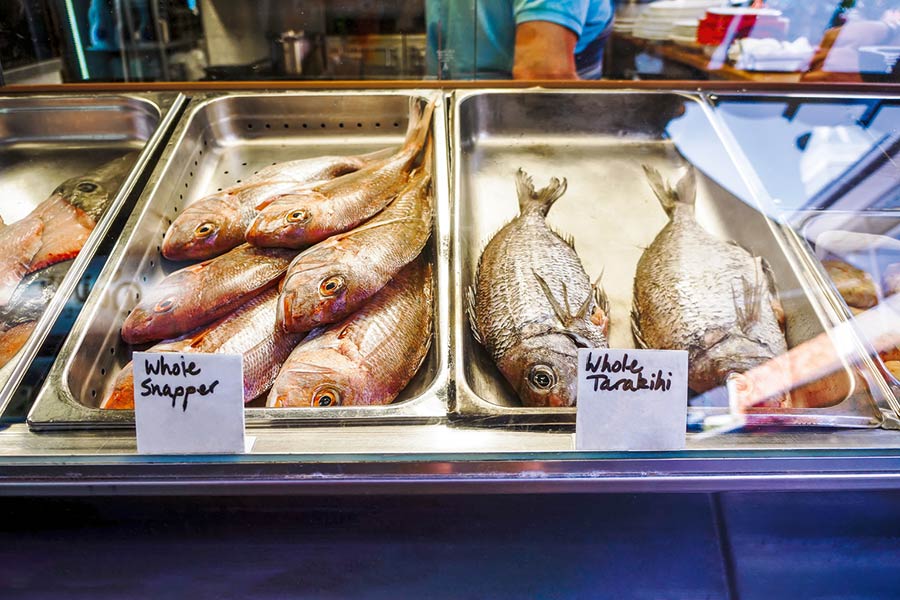
Tarakihi are a favourite eating fish, which is the heart of the problem.
Another option is to get political. Forest and Bird took the Government to High Court over their failure to respond quickly enough to the tarakihi stock levels moving below the soft limit and are still awaiting the decision. If the court rules in favour of Forest and Bird, the then Minister’s decisions would have to be reviewed. While this decision is now out of our hands, we can put pressure on the current and future Governments to continue to review and monitor the Tarakihi Rebuild Plan.
Perhaps the most exciting example of public action has come out of Hawke’s Bay. Five years ago, a voluntary agreement was made between LegaSea Hawkes Bay, the Napier Trawlermen’s Association and Fisheries Inshore NZ to not commercially bottom trawl the “Springs Box” area from December 1 to February 29. This area covers 237km2 of ocean due east of Napier Port.
Since implementing this initiative, the recreational catch has been monitored during the closure period via the Hawkes Bay Sport Fishing Club’s Colin Murray Ramp Survey. Amazingly, the average catch per angler has moved from 0.42 in 2016 to 0.905 in 2020.
For Hawkes Bay LegaSea representative Wayne Bicknell, “The agreement is testament to the ongoing collaboration between recreational and commercial sectors and has the common goal of improving local fish stocks.”
Wayne’s completely right: both commercial and recreational want the same thing – abundance – so we might as well work together to achieve it. In this regard, the “Springs Box” initiative is the kind of solution we need more of; that is, thoughtful, collaborative initiatives which bring together opposing parties for a common good.
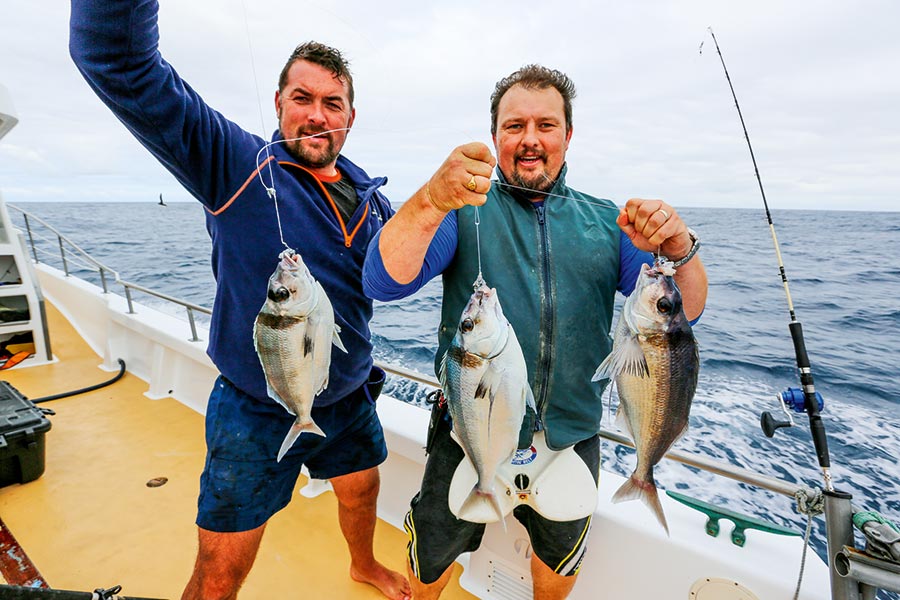
It's easy to put the blame on commercial for the depleted stocks, but recreational fishermen also have to accept some responsibility.
To finish, there is one more thing us recreational anglers can do, and it’s relatively obvious. When I did the rounds and spoke to a number of prominent anglers about their experience of the tarakihi fishery, some alarming comments were made. Keeping 50 tarakihi, all taken from the same spot, was common place. There were stor ies of charter boats returning to the same pinnacle day after day and filling bins for their clients, and fishermen complaining that their local tarakihi spot was empty after they’d fished it once a week for twenty years – go figure. Admittedly, these fishermen weren’t aware of the issues – but neither were the commercial boats. As the tarakihi stock starts its rebuild, we have to be mindful of where we are targeting tarakihi and what sized fish we are keeping. If you come across a patch of tarakihi below 25-30cm, move on – they probably haven’t spawned yet. If you find a honey hole of tarakihi, maybe just go there once a month, and forego the Facebook post with its GPS coordinates in the background. We’ve got a good shot here at restoring this stock to abundance, but – to risk cliche – it’s going to take a pretty big team effort.

July 2021 - Ethan Neville
New Zealand Fishing News Magazine.
Copyright: NZ Fishing Media Ltd.
Re-publishing elsewhere is prohibited
Recent Forum Posts Visit Forum

Manukau Harbour & West Coast fishing
in Fishing Reports46 minutes ago
smudge
Just a heads up. Sunday through to Tuesday next week is looking ok for over the coast. at this stage. If it is fishable I will...
Knife sharpeners
in The Briny Bar1 hour ago
smudge
I'm a big fan of Jason Abbot. A real down to earth approach. My son is a butcher and can put a mean edge on a...

Wanted to Buy
in Buy Sell Trade or Exchange3 hours ago
Mc Tool
https://www.fishing.net.nz/forum/forum_posts.asp?TID=140153 Doin' it ...
Trailer wheel clamp
in The Boat Shed9 hours ago
610gc
Thanks team ill give that a goif that doesn't work is the a better option of the wheel clamp that people recmend...

Shane Jones
in Fisheries Management28 hours ago
Pcj
Taking my limit. Not high grading legal it comes home...

Foton tunland v9
in The Briny Bar75 hours ago
Ho Dee
not fishing related and delete if required but was wondering if any has one of these or someone who has just wanting so e real world...
Bluefin Tuna at the cavs.
in The Briny Bar122 hours ago
smudge
Despite my years of fishing I haven't really fished many places, my focus has always been on Auckland's west coast and out toward Great Barrier. I...
Casting gloves
in Popper and Topwater Fishing167 hours ago
Mc Tool
100 bucks for a lure 😬. Watching one of them flying over the horizon without the line attached would be " character building " for sure...
I thought Id post some nice photo's , join...
in The Briny Bar218 hours ago
Alan L
That is a very cool pic Krow.The Far North is very cool, the Far far North even cooler. Mint looking day.Alan...

Mc Tools berley mincer
in The Briny Bar225 hours ago
SaltyC
Good size, they scrap well. Got an 18kg one up in Vava'u back a few years ago fishing off squeaky Going's boat. That was quite a...
Popular Articles

Softbait Fishing - Part 1 - gear selection
John Eichlesheim writes an article about selecting the right equipment for softbait fishing... Read More >
Softbait fishing Pt 2 - tips and tricks
Techniques, tips and tricks of softbait fishing – getting the most from your soft baits.... Read More >

Surfcasting - setting yourself up
Gary Kemsley helps sort out the necessary gear for intending surf fishers.... Read More >

Squid - How to catch them
Squid fishing is a rapidly growing aspect of fishing - Paul Senior shares some hints and tips to get started.... Read More >
Fishing Reports Visit Reports
Outer Hauraki Gulf Fishing Report 17/09/26
Spring wind the handbrake. Spring is starting to make its presence felt in the outer... Read More >
Top of the South Fishing Report - 17/09/26
Early snapper in Tasman Bay. Well, spring is finally here, and the days are getting... Read More >
Bream Bay Fishing Report - 17/09/26
Good snapper catches reported. After Tangaroa turned off the fish tap for a month or... Read More >
Bay of Islands Fishing Report - 17/09/26
Pacific bluefin tuna for the lucky few. The last fortnight has seen more fishable days... Read More >
Comments