
Sportfishing: Conservation and Morality

With the ethics of recreational fishing getting increasingly called into question, John Eichelsheim weighs in on the issue, looking at it from different perspectives.
Over the years, I have been called out many times for clearly enjoying and promoting recreational fishing.
Often the challenges were made on ethical grounds, specifically animal ethics, or over conservation concerns.
Pictures of anglers proudly posing with large fish on the pages of magazines like this one inflame some people, who claim to lament the loss of such “magnificent, majestic creatures”.
Catch and release fishing is another bone of contention for the anti-angling lobby, who consider it inhumane. Some also claim it is environmentally unsound.
As a recreational fisher, I consider myself a conservationist by default. Without fish in the water, I could not enjoy this healthy pastime which makes me so happy – it is in my interest to conserve the fishery. Responsible anglers care deeply for the marine environment because they get so much pleasure from engaging with it through fishing.
But unlike many in the anti-fishing lobby, who appear to adopt a conservationist stance as much on moral, political or ethical grounds than scientific ones, I have no philosophical problem with killing a fish for the table, provided my activities don’t adversely impact on the health of the resource.
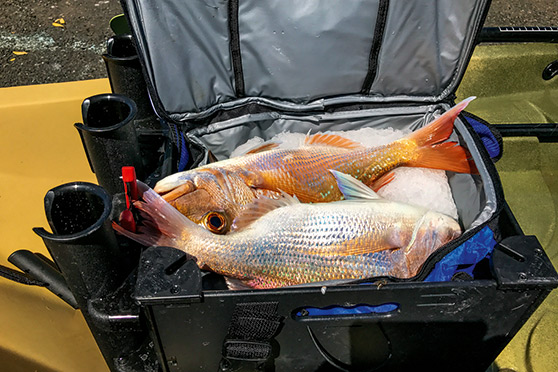
The writer has no problem keeping a few fish for the table.
I accept that the thought of killing an animal is repulsive for some – and I certainly have no truck with killing for the sake of killing – but ending the life of an animal (or a plant…) is not inherently an immoral act.
A wolf that kills a deer is not behaving badly; it is just being a wolf. In the same way, an angler or a hunter who kills an animal for food is just being human – after all, humans are hunters and gatherers first, animal herders second and arable farmers a very distant third. Killing to eat is part of our makeup.
Too many of us have become so removed from our roots we have forgotten where our food comes from. These days, a lot of people have problems dealing with any animal food that is not pre-packaged, bloodless and unidentifiable.
I know some who, while they still eat meat, refuse to handle it in a raw state. Increasingly people are eschewing eating animal products altogether – veganism is now more than just a fad.
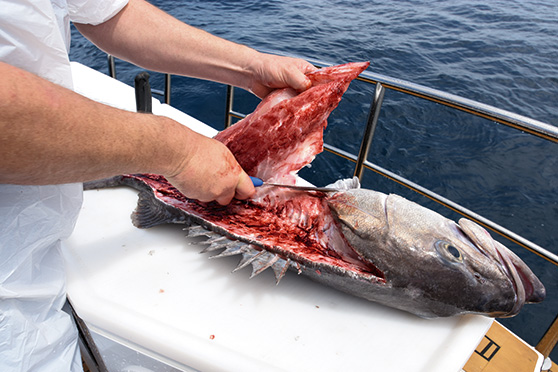 Knowing where your food comes from is important.
But in truth every creature dies, usually from disease or predation and occasionally from old age. Fish are no different. For a fish, an angler is just another predator and at least anglers who butcher and eat the fish they catch, fully understand their provenance.
When it comes to calls to restrict or ban recreational fishing for conservation reasons, the motivation is often mixed. There are people who are anti-fishing ostensibly for conservation reasons, but who also hold radical views about vegan lifestyles and animal rights, which have nothing to do with it.
Conservation is rooted in science, not morality, and we should not confuse the two. There is no ecological argument for banning sport fishing (or hunting) if it is properly regulated.
We should not confuse what is good for individual animals with what is best for the species. While being caught and killed may be disastrous for an individual fish, provided the overall catch rate is within limits, its demise will have little impact on the viability of the population as a whole.
Playing with your food
Among the anti-angling zealots, some reserve extra-special condemnation for catch and release anglers.
The argument, often heard, is that – if we fish at all – we should only fish for food. It is, in my opinion, specious.
Years ago, at one of those endless meetings to discuss the future of our recreational fishery, a very forceful kaumatua dressed down recreational fishers for ‘playing with their food’. Of course, fish is food, but for most of us, what we catch is no more than a welcome supplement to our usual diet.
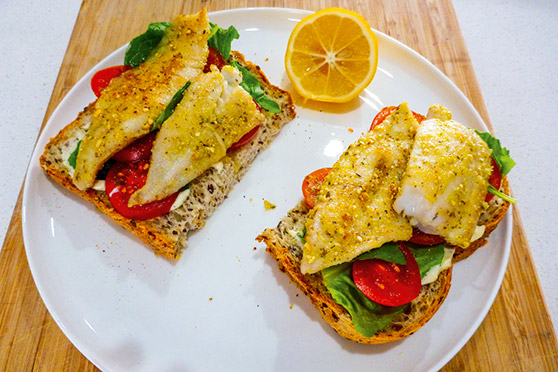
Snapper sandwiches - yum!
With all due respect to the kaumatua and others, the ocean is not a free food larder – there are far too many people in the world today for wild food gathering to be a viable way to feed our families. It is the 21st century and we live in a market economy – if you are hungry, go to the supermarket and buy something.
Catching fish is challenging and fun, which is why so many of us enjoy it. For many Kiwis, it is the recreational value of fishing that is most important in our busy modern world.
Catch and release
Catch and release is not for everyone, and depending on the water depth and fish species, it is not always appropriate. The argument that any fish you release is caught purely for enjoyment cannot be refuted. It is true, though fish are also released for other reasons: wrong species, too small or too large, in poor condition etc.
But is the enjoyment of catching them morally reprehensible? Surely not! I certainly do not think too deeply about it. Rightly or wrongly, I take moral responsibility for any stress, discomfort, or injury I cause the fish I catch. I also treat those fish with care and respect, quickly and humanely dispatching any I wish to keep and releasing the rest to live another day.
I do not accept that releasing a fish is somehow sinful – to the contrary! Ask the fish whether it would rather be dead on ‘moral’ grounds, or released, perhaps a little stressed and tired but alive and probably wiser for its ‘out of world’ experience. I can guess the answer.
Properly handled, most fish survive catch and release, which in fact makes it a useful management and conservation tool. And proper handling is not difficult.
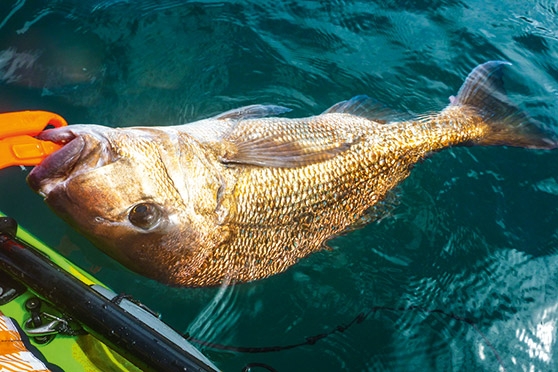
Under the right circumstances, fish survive catch and release, provided they are handled carefully.
Recreational fishing is okay. It is fun and offers anglers and their families a whole range of mental and physical health benefits.
But killing fish you cannot or do not intend to use is not okay. That sort of behaviour is simply wasteful and ignorant. Far better to practice catch and release and leave more fish in the water – the environment, your children and maybe even the kaumatua will thank you for it.
|
|
This article is reproduced with permission of |

Recent Forum Posts Visit Forum

Shane Jones
in Fisheries Management2 hours ago
Fish Addict
The recreational sector can expect no favours from politicians. They know all too well who butters their bread and it ain't the recs. No different over...

Foton tunland v9
in The Briny Bar2 hours ago
Ho Dee
not fishing related and delete if required but was wondering if any has one of these or someone who has just wanting so e real world...

Trailer wheel clamp
in The Boat Shed2 hours ago
Pcj
Doesnt dry out like crc.I use it on my trailer lock...

Bluefin Tuna at the cavs.
in The Briny Bar49 hours ago
smudge
Despite my years of fishing I haven't really fished many places, my focus has always been on Auckland's west coast and out toward Great Barrier. I...
Casting gloves
in Popper and Topwater Fishing94 hours ago
Mc Tool
100 bucks for a lure 😬. Watching one of them flying over the horizon without the line attached would be " character building " for sure...
I thought Id post some nice photo's , join...
in The Briny Bar145 hours ago
Alan L
That is a very cool pic Krow.The Far North is very cool, the Far far North even cooler. Mint looking day.Alan...

Mc Tools berley mincer
in The Briny Bar152 hours ago
SaltyC
Good size, they scrap well. Got an 18kg one up in Vava'u back a few years ago fishing off squeaky Going's boat. That was quite a...
Out with the "Twelves"
in Fishing Reports206 hours ago
Pcj
I should be able to get out end of October. The nephew been out virtually every weekend over winter and has done well. It seems the...
Manukau Harbour & West Coast fishing
in Fishing Reports214 hours ago
smudge
Nice work Schecter, I think snapper may be around sooner than you think. Well I am hoping so...

Whangarei Harbour report.
in Fishing Reports646 hours ago
krow
180 +m is where I've had to be lately. A lot less low foul around these parts and some of it shallower that looks like Tarakihi...
Popular Articles

Softbait Fishing - Part 1 - gear selection
John Eichlesheim writes an article about selecting the right equipment for softbait fishing... Read More >
Softbait fishing Pt 2 - tips and tricks
Techniques, tips and tricks of softbait fishing – getting the most from your soft baits.... Read More >

Surfcasting - setting yourself up
Gary Kemsley helps sort out the necessary gear for intending surf fishers.... Read More >

Squid - How to catch them
Squid fishing is a rapidly growing aspect of fishing - Paul Senior shares some hints and tips to get started.... Read More >
Fishing Reports Visit Reports
Outer Hauraki Gulf Fishing Report 17/09/26
Spring wind the handbrake. Spring is starting to make its presence felt in the outer... Read More >
Top of the South Fishing Report - 17/09/26
Early snapper in Tasman Bay. Well, spring is finally here, and the days are getting... Read More >
Bream Bay Fishing Report - 17/09/26
Good snapper catches reported. After Tangaroa turned off the fish tap for a month or... Read More >
Bay of Islands Fishing Report - 17/09/26
Pacific bluefin tuna for the lucky few. The last fortnight has seen more fishable days... Read More >
Comments