
Small boat safety
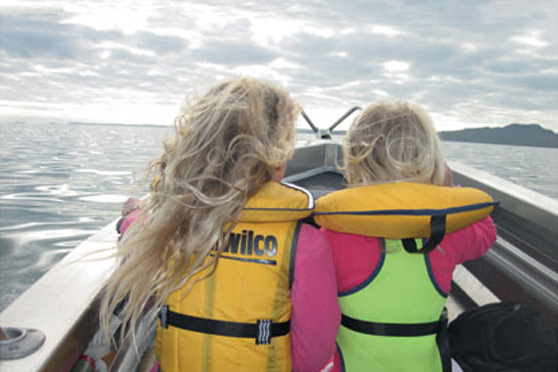
The festive season and sunny weather ahead often combine to provide plenty of boating opportunities, but pleasure can turn to tragedy if some basic guidelines are ignored, as Eric Holliday, CEO of the non-profit FISH Safety Foundation explains…
Recreational fishing in New Zealand is massive – it’s a $1bn a year sector, with some 700,000 people fishing at sea every year, making it the fifth most popular recreational activity for adult New Zealanders. But, unfortunately, that means a lot of unnecessary accidents and injuries as well.
So, given the very real possibility of a fishable summer this year, the time is right to look at some of the small-boat safety essentials, drawing on the lessons our FISH Safety Foundation has learned from the commercial fishing industry. Ultimately, the same factors and precautions apply to both sectors: preparedness, weather awareness, stability, vessel soundness, communication, etc. And before you flick over to the next article, consider this: fishing safely is the smart thing to do. You really don’t want to be that guy!
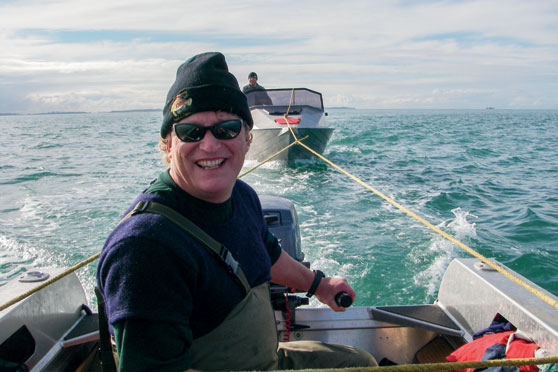
Being prepared for your trip is critical. Do you know what the weather is forecast to be, having checked at least three different weather forecasts for your marine area? How about the swell? The tides? How well do you know your intended fishing area? Are there bars or tidal channels to cross – remembering that these don’t only occur at river mouths.
Back to your preparation. Is your boat seaworthy? When did you last check and service your boat’s engine? Have you run it lately? And is your fuel tank still full of last year’s petrol? If yes, it’s not worth the risk – replace it; you can always use it in the lawnmower. And has the battery been charged for the fish-finder? I can keep going on: have you replaced the anchor that you lost last year; the radio that’s not transmitting anymore…?
Anyway, you get the picture (I hope). The most important part of the safety equation takes place before you go to sea. It’s all about preparation.
So, let’s assume you were able to find all the missing gear, the batteries are fully charged etc, and you’ve dragged your sorry butt down to the beach. You’re late, and your mates are waiting impatiently – all three of them – with heaps of gear and enough food to feed a cruise ship for a week.
The first thing you’ll need to do is apologise to Joe; he’s staying behind – your boat simply isn’t big enough to take everyone safely out to sea. Tough call, but you’re the skipper and are ultimately responsible for everyone on your boat, even if it’s only a 4.2-metre tinny. Better to brass-off a mate than have to tell his missus you caused his death…
Right, so now you’ve reduced the number of people on your boat and loaded only the essential fishing gear, food and protective clothing. All of you have your lifejackets on. Les has brought his spare radio, and all the boys have their mobile phones securely wrapped in waterproof plastic bags. And, another tough one, you’ve told the boys they can’t bring the beer on board; it’s just not worth it. The US coastguard (in its 2016 Recreational Boating Report) says that alcohol, combined with typical conditions such as motion, vibration, engine noise, sun, wind and spray, can impair a person’s abilities much faster than alcohol consumption on land. Operators with a blood alcohol concentration (BAC) above 0.10 percent are estimated to be more than 10 times more likely to die in an accident than watercraft operators with zero BAC.
Also in this report, the USCG stated that 80 percent of fatal boating accident victims died by drowning in 2016, and of those, 83 percent were not wearing lifejackets.
Wearing a lifejacket is the single greatest factor in preventing death from drowning. Boaties should wear a lifejacket at all times when on the water, no matter your age, physical ability, or condition. It’s just not negotiable.
Before launching, spend some time looking at the sea. Conditions onshore where you’re launching may be very different to conditions further out at sea, so watch to see what’s happening to the other boats heading out. Are they chucking up heaps of spray? If so, it could be really lumpy out there, even though it’s calm on the beach.
What’s the wind doing? Is it the same direction and strength as has been forecast? How is the sea moving the other boats around as they launch? Is there a strong current pulling them sideways as soon as they’re off the trailer?
You’re ready to launch. Bung in? Motor up? Have you told someone where you’re going, who’s onboard and when you expect to be back? Yes? Right, time to launch.
Back the boat in, slip it off the trailer (making sure someone is actually holding the boat), get the car and trailer securely parked – above the high-water mark – and don’t block the access way for other boaties. Simple really.
Back to the boat (with your car keys securely wrapped and stowed away from the water), get the guys in, balancing the boat. If there’s one thing we’ve learned from the commercial fishing sector, it’s about the importance of stability. You only have to read Maritime NZ and TAIC accident reports to see the importance of keeping the boat floating safely at all times; and make sure there’s a bailer on board in case you take a wave or two over the bow.
One additional thing: if you have a small boat with an engine that has to be manually lifted and dropped back into the water, you’ll need a set of oars to take you out of the shallows prior to lowering the outboard leg and starting it. So make sure the oars are ready to be used once you hop on board. Never learnt to row? Oh boy…
It pays to know where you’re going. Many of our offshore islands have rocky shelves extending some way off the main landmass. Be careful. Watch your sounder carefully. Whether you’re in a big commercial vessel or a small recreational craft, running into rocks can really spoil your day! As I said, you don’t want to be that guy!
For more on boating safely, visit www.fishsafety.org.
|
|
This article is reproduced with permission of |

Recent Forum Posts Visit Forum

Trailer wheel clamp
in The Boat Shed10 minutes ago
610gc
Hey teamI have a wheel clamp like the one below on the boat trailer. its getting harder and harder to unlockI've sprayed it with CRC on...

Shane Jones
in Fisheries Management23 hours ago
Tzer
Far cry to the twats at Liegasea/NZSFC were proposing of 5 Tarakihi person in their submission for the central management area and this is what our...

Bluefin Tuna at the cavs.
in The Briny Bar43 hours ago
smudge
Despite my years of fishing I haven't really fished many places, my focus has always been on Auckland's west coast and out toward Great Barrier. I...
Casting gloves
in Popper and Topwater Fishing88 hours ago
Mc Tool
100 bucks for a lure 😬. Watching one of them flying over the horizon without the line attached would be " character building " for sure...
I thought Id post some nice photo's , join...
in The Briny Bar139 hours ago
Alan L
That is a very cool pic Krow.The Far North is very cool, the Far far North even cooler. Mint looking day.Alan...

Mc Tools berley mincer
in The Briny Bar146 hours ago
SaltyC
Good size, they scrap well. Got an 18kg one up in Vava'u back a few years ago fishing off squeaky Going's boat. That was quite a...

Out with the "Twelves"
in Fishing Reports200 hours ago
Pcj
I should be able to get out end of October. The nephew been out virtually every weekend over winter and has done well. It seems the...
Manukau Harbour & West Coast fishing
in Fishing Reports208 hours ago
smudge
Nice work Schecter, I think snapper may be around sooner than you think. Well I am hoping so...

Whangarei Harbour report.
in Fishing Reports640 hours ago
krow
180 +m is where I've had to be lately. A lot less low foul around these parts and some of it shallower that looks like Tarakihi...
Whangarei Harbour Scallops
in Fisheries Management750 hours ago
Pcj
Reopening WhangÄ쳌rei Harbour to recreational scallop fishingTÄ“nÄ쳌 koeFisheries New Zealand is seeking feedback from tangata whenua, stakeholders, and the public on whether WhangÄ쳌rei Harbour should be...
Popular Articles

Softbait Fishing - Part 1 - gear selection
John Eichlesheim writes an article about selecting the right equipment for softbait fishing... Read More >
Softbait fishing Pt 2 - tips and tricks
Techniques, tips and tricks of softbait fishing – getting the most from your soft baits.... Read More >

Surfcasting - setting yourself up
Gary Kemsley helps sort out the necessary gear for intending surf fishers.... Read More >

Squid - How to catch them
Squid fishing is a rapidly growing aspect of fishing - Paul Senior shares some hints and tips to get started.... Read More >
Fishing Reports Visit Reports
Outer Hauraki Gulf Fishing Report 17/09/26
Spring wind the handbrake. Spring is starting to make its presence felt in the outer... Read More >
Top of the South Fishing Report - 17/09/26
Early snapper in Tasman Bay. Well, spring is finally here, and the days are getting... Read More >
Bream Bay Fishing Report - 17/09/26
Good snapper catches reported. After Tangaroa turned off the fish tap for a month or... Read More >
Bay of Islands Fishing Report - 17/09/26
Pacific bluefin tuna for the lucky few. The last fortnight has seen more fishable days... Read More >
Comments