
Should I Anchor or Drift Fish?

Traditionally, when targeting snapper from a boat, it is done in two ways – either at anchor or on the drift. Grant Dixon looks at the advantages of both, as well as offering a solution that gives anglers the best of both words.
In the first – fishing at anchor – you bring the fish to you; in the second, you go to the fish; and now there is a third option – an electric motor where you can have a choice of both techniques at the flick of a switch.
When I first started fishing with my dad in the Kawhia Harbour in the early 1960s, there was no such thing as commercially produced berley. The keener fishers among us made their own, filling containers with their special brew to be stored in the freezer and brought out for the next trip where it was dispensed via an onion sack.
Dad’s method was more along the lines of chumming where the likes of the trevally and skipjack frames, once the fillet had been removed, would be chopped up or the flesh scraped off, and then flicked over the side to create an irregular flow of tasty morsels. I recall watching the fish being filleted and Dad showing me the chunks of chum among the stomach contents of caught fish. While not wanting to get distracted from the main story, that act of dissecting the stomach contents was of great interest. It was good to know what the snapper were feeding on where we were fishing.
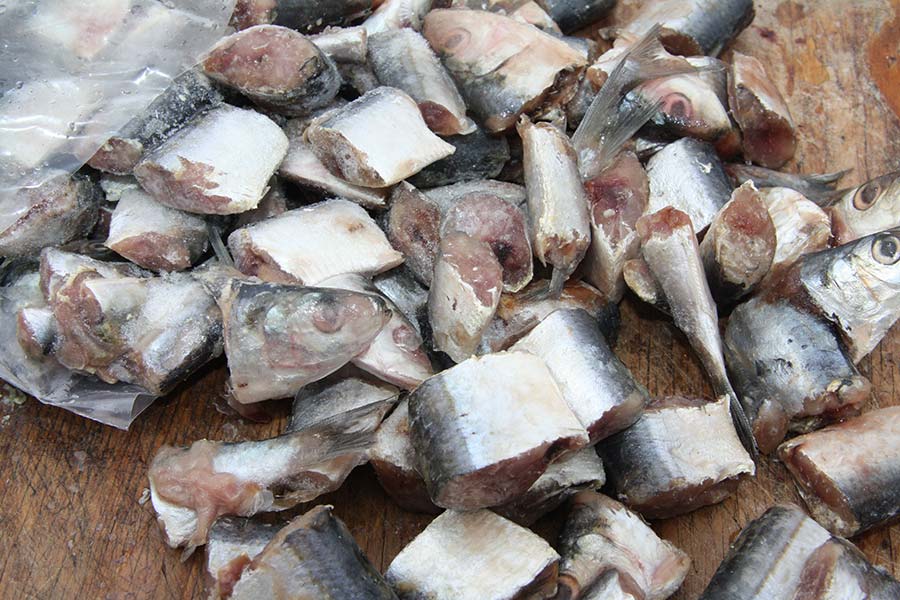
Chunking the likes of pilchards and fish frames can be a substitute for, or add to, a berley trail.
Berley and bait soon went hand in hand – over the years I rarely went to the bait shop without purchasing a selection of both. Today the choice of berley is endless – paua, mussel, mullet, skipjack, kina, pilchard and salmon – and it all works. The only one I trialled that didn’t was made from koi carp. When it was put in the water, the baitfish in our trail moved around and away from it. When it was replaced with conventional berley, the baitfish happily swam through it, nibbling away at the finely ground morsels.
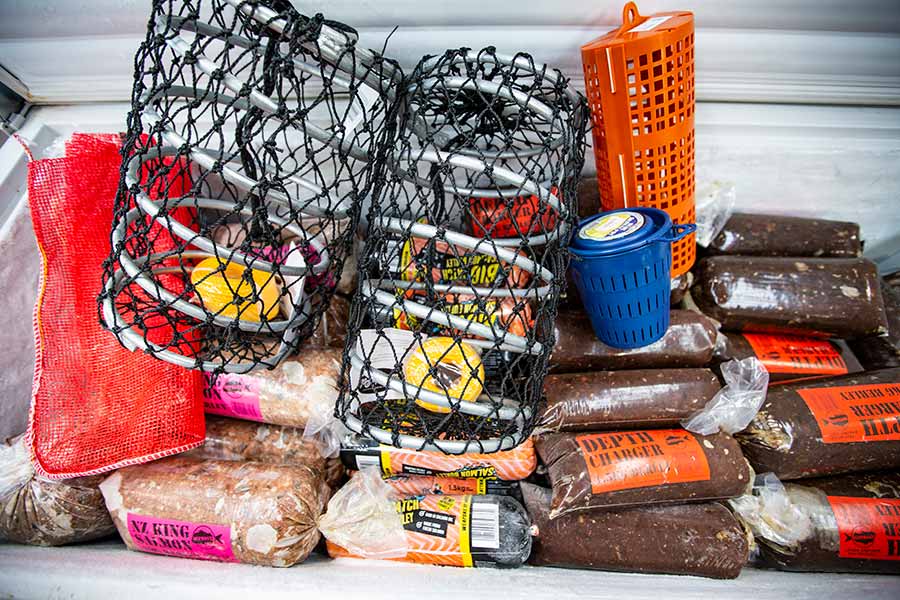
Berley is an essential component when fishing from an anchored boat to bring the fish to your baits.
We are coming into a time when bait and berley seem to be more effective than lures. Bring out that overhead rod and reel combo spooled with mono – is it time to replace the line perhaps? – tie up some strayline rigs and go to it.
Berleying from an anchored boat works best when the current and wind align. If that sees your berley trail running down a weed line or back into some foul ground or a drop off, then you have it nailed, giving yourself the best shot at a decent snapper.
There is something about straylining that gets my blood going. There is that first inquisitive enquiry, followed by the pick-up of the bait then the run, but when do you engage the drag and strike? – the million dollar question. And if you are using circle hooks the technique is different on the bite. Instead of the strike, there is a more even application of resistance, allowing time to roll the hook into the corner of the fish’s mouth.
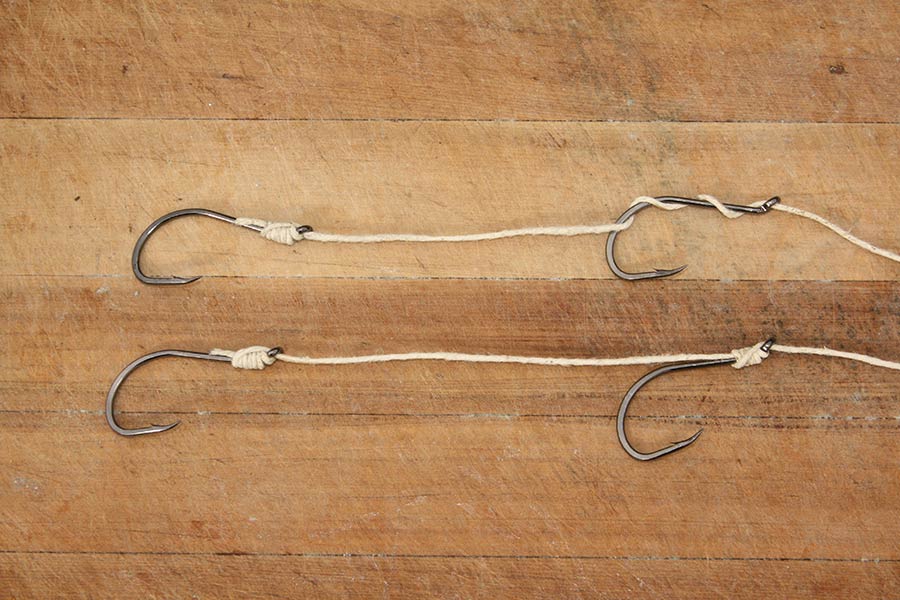
The writer’s two-hook straylining/deep drifting rig for baiting up with pilchards, piper and jack mackerel. Note the top rig is not IGFA legal as both hooks are not fixed to the trace.
While I am fully engaged with the new-age lure movement, I still thoroughly enjoy a good strayline session – although I don’t get much of a kick out of washing bait and berley-stained clothing and the boat clean-up takes longer.
On the drift
While most of my early snapper fishing was done at anchor, as I began fishing deeper with more open bottom, this was done on the drift. I had also discovered jack mackerel which I consider to be the most versatile bait in our waters.
Fishing the open, deeper water, or over the likes of rubble or light foul, had several advantages when targeting big fish. It was easier to stay on top of them and they were less likely to rub you off on the bottom. Fishing mono, the natural stretch was more forgiving of any poor angling technique or lumpy drags.
An integral part of any drift fishing setup is the sea anchor. ‘Cheap’ does not often equate to ‘good’. I have made no secret of my preferred drogue and these are the ones manufactured in Whangarei by John Hewinson Canvas. I still have my very first one, although it has been back to John for a refurb, and I have added a couple of floats to the trip line. I like to set my drogues up to be fished both off the bow or the stern, which is easily done if you have a centre console or a centre cab boat but requires extra length ropes if you intend to run it off the bow and operate it from the cockpit of a cabin boat.
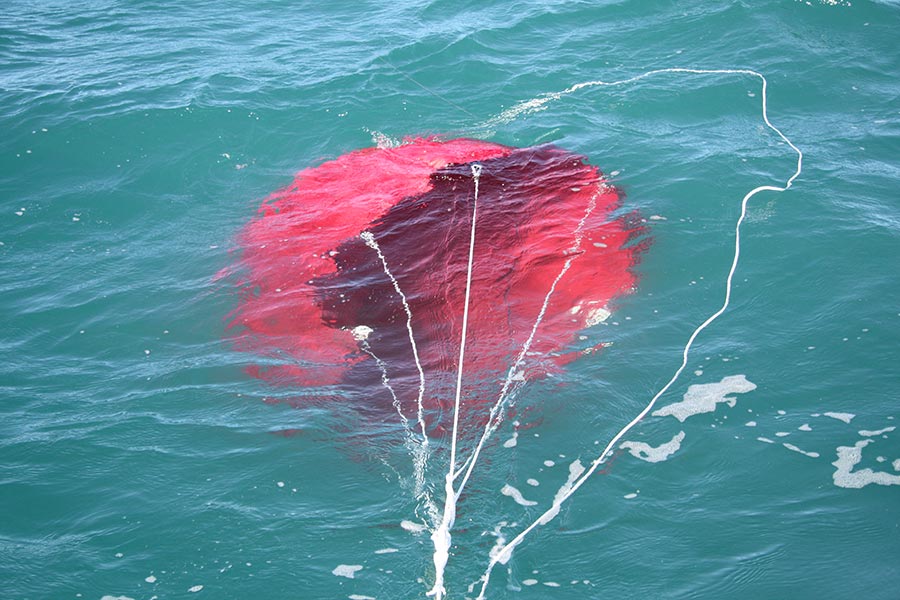
There is no substitute for a decent sea anchor when drifting.
Many anglers fish on the drift with a ledger rig and that is one option. My preferred terminal tackle is a double fixed 8/0 hook rig on 60-80lb trace, with egg sinker/s sitting on the nose of the bait. I have nominated egg-shaped sinkers as there is less resistance when retrieving from depth. These are pinned in place with a toothpick to prevent them running up the trace on the drop. The jack mackerel are fished either as livebaits, a whole dead bait, or butterflied. Piper are another great dead bait for snapper, and can be fished the same way.
I regularly fish to 60-80 metres depth this way and just when you are lure fishing, it pays to be ready to engage the spool on the drop. In more recent times I have changed my hook style to recurves for this style of fishing. Firstly, they will set themselves; and secondly, when using lighter mono (my preferred line weight is 6kg) there is a lot of stretch, making the hell strike a pointless exercise. On feeling additional weight, I let the rod and line load up by taking a few winds on the reel, which takes out the slack and ensures there’s enough pressure to set the hook.
I prefer an overhead lever-drag reel for drifting at depth – and snapper fishing generally – because I have more control at the bite. Spin reels don’t offer the same finesse. The likes of the Shimano 6500 Baitrunner, as the name suggests, go some way to alleviating this. This style of reel is often fished out of the rod holder, but I prefer a more hands-on approach.
Another option
The introduction of electric motors has added another dimension to my snapper fishing, especially on the drift. Traditionally two elements have dictated drift speed – the wind and the tide.
Electric motors allow you to control your rate of drift, and the direction. I use the electric motor on our centre console Tackle Tester to hold us over a patch of fish or to slow the drift. On those very still days you can still cover the ground when prospecting for fish ‘on the drift’.
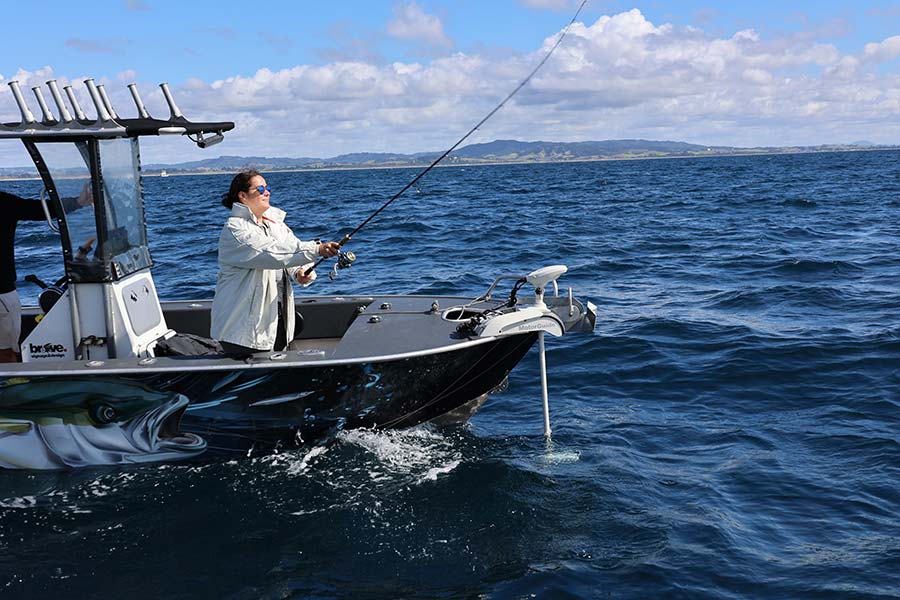
An electric motor is particularly useful when targeting schooling fish as it can hold the vessel over sign.
When on the drift, I sometimes use a combination of sea anchor and electric motor. I will drift until I come across the fish, then deploy the electric motor to hold us in that spot. This is particularly effective when fishing lures, especially the likes of slow-pitch jigs. Anglers who like to chase kingfish, especially on topwater gear, will find an electric motor a great advantage. Just find the fish and stay on top of them – easy.
There are some considerations that include cost, including the need for a separate battery system (the biggest electric motors require 36 volts – three 12v batteries), which requires charging capacity, extra storage and the ability to carry the extra weight. Lithium batteries, while more expensive and smaller, go some way to dealing with these issues.
Many electric motors can be deployed automatically from the helm, making for convenient use. They can also be retro-fitted, which is easier to do on an alloy boat than a fibreglass one – but not impossible.

June 2021 - Grant Dixon
New Zealand Fishing News Magazine.
Copyright: NZ Fishing Media Ltd.
Re-publishing elsewhere is prohibited
Recent Forum Posts Visit Forum

Shane Jones
in Fisheries Management4 hours ago
Pcj
But reality is maybe 4 from legasea and the NZSFC .Rather than asking what fishos want they blindly go ahead with their own ideas and...

Trailer wheel clamp
in The Boat Shed15 hours ago
Mc Tool
either crc long life or 556 marine are way better ...

Foton tunland v9
in The Briny Bar30 hours ago
Ho Dee
not fishing related and delete if required but was wondering if any has one of these or someone who has just wanting so e real world...

Bluefin Tuna at the cavs.
in The Briny Bar77 hours ago
smudge
Despite my years of fishing I haven't really fished many places, my focus has always been on Auckland's west coast and out toward Great Barrier. I...
Casting gloves
in Popper and Topwater Fishing122 hours ago
Mc Tool
100 bucks for a lure 😬. Watching one of them flying over the horizon without the line attached would be " character building " for sure...
I thought Id post some nice photo's , join...
in The Briny Bar173 hours ago
Alan L
That is a very cool pic Krow.The Far North is very cool, the Far far North even cooler. Mint looking day.Alan...

Mc Tools berley mincer
in The Briny Bar180 hours ago
SaltyC
Good size, they scrap well. Got an 18kg one up in Vava'u back a few years ago fishing off squeaky Going's boat. That was quite a...
Out with the "Twelves"
in Fishing Reports234 hours ago
Pcj
I should be able to get out end of October. The nephew been out virtually every weekend over winter and has done well. It seems the...
Manukau Harbour & West Coast fishing
in Fishing Reports242 hours ago
smudge
Nice work Schecter, I think snapper may be around sooner than you think. Well I am hoping so...

Whangarei Harbour report.
in Fishing Reports674 hours ago
krow
180 +m is where I've had to be lately. A lot less low foul around these parts and some of it shallower that looks like Tarakihi...
Popular Articles

Softbait Fishing - Part 1 - gear selection
John Eichlesheim writes an article about selecting the right equipment for softbait fishing... Read More >
Softbait fishing Pt 2 - tips and tricks
Techniques, tips and tricks of softbait fishing – getting the most from your soft baits.... Read More >

Surfcasting - setting yourself up
Gary Kemsley helps sort out the necessary gear for intending surf fishers.... Read More >

Squid - How to catch them
Squid fishing is a rapidly growing aspect of fishing - Paul Senior shares some hints and tips to get started.... Read More >
Fishing Reports Visit Reports
Outer Hauraki Gulf Fishing Report 17/09/26
Spring wind the handbrake. Spring is starting to make its presence felt in the outer... Read More >
Top of the South Fishing Report - 17/09/26
Early snapper in Tasman Bay. Well, spring is finally here, and the days are getting... Read More >
Bream Bay Fishing Report - 17/09/26
Good snapper catches reported. After Tangaroa turned off the fish tap for a month or... Read More >
Bay of Islands Fishing Report - 17/09/26
Pacific bluefin tuna for the lucky few. The last fortnight has seen more fishable days... Read More >
Comments