
Seaspiracy Review
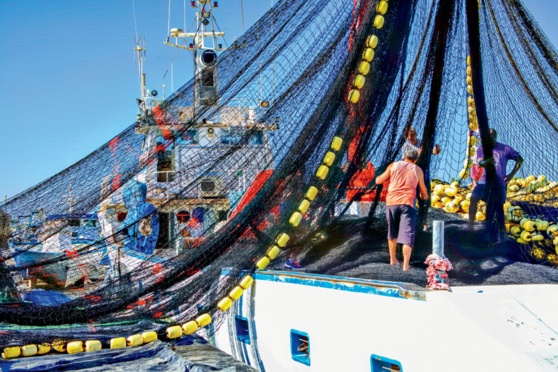
I heard about Seaspiracy before I watched it. Some friends told me that after seeing the documentary, their teenage children had advised them they were no longer going to eat fish and anyone that did was part of the world’s fisheries problem.
Seaspiracy, made by the same company that produced the 2014 Cowspiracy, which has had its own accuracy issues, is on the surface a look at the impact of fishing on MSY (Maximum Sustainable Yield). Most notably, its final call to action is asking the Netflix subscriber to solve the world’s fisheries problem by refusing to eat fish.
The documentary is engaging, entertaining, dramatic, and openly pulls at the visual heart strings with heart-breaking images and mood music. It jumps from one tragic scenario to another and is more like ‘Fast and Furious’ than an investigation into the world’s fisheries issues.
A documentary is described as: “A non-fictional motionpicture intended to document reality, primarily for the purposes of instruction, education, or maintaining a historical record.” From this point onwards I will refer to Seaspiracy as a film, not a documentary, as it blurs the lines between fact and entertainment.
The tragic issue is that the problems are real. Some of the scenarios in Seaspiracy are truly catastrophic, but the documentary/film does more harm than good by simplifying these problems, seeding misinformation, and introducing a Machiavellian worldwide conspiracy between the fishing industry and conservation groups. And quite simply, it’s blaming the wrong people. Why? Because it makes for a better story. This ‘Hollywood approach’ is not needed to highlight the real issues at play here.
As the film draws to an end, they show a hard to watch culling of a number of whales and then Ali Tabrizi makes a final call to action: “If you want to save the world fisheries, don’t eat fish.” This simplification is not only impractical, but would actually make the issues worse.

There is not a person who goes fishing or loves the ocean that is not concerned about the damage that Seaspiracy depicts, and while so much progress has been made, there are a multitude of people who still do not know about the problems facing the ocean. So, the prospect of a film on Netflix reaching out to its 200 million subscribers is something I welcomed with open arms.
The film includes all the damning evidence and dramatic footage required to make the important point that industrial fishing throughout the world is too often out-of-control, sometimes even taking the form of a criminal enterprise that needs to be reined in and regulated. Yet Ali Tabrizi fails to focus on the big industrial companies which are the core issue and takes aim at those trying to do good.
At one stage the film criticises ‘dolphin safe’ labels on tuna cans and says, “The internationally recognized seafood label was a complete fabrication since it guaranteed nothing. At this point, I began to wonder what else was being covered up.”
Great dramatic TV, but extremely poor research. Mark Palmer, the associate director of the International Marine Mammal Project of the Earth Island Institute, did say that “dolphin safe” tuna cannot be 100% guaranteed and that observers on the vessels can be bribed. But what Palmer meant was there was no guarantee – how could there possibly be? He is not on every fishing boat. In contrast, Dr. Sara McDonald of Monterey Bay Aquarium (quoted in Newsweek) stated that “The U.S. dolphin-safe program has been very effective. Dolphin mortality in the 1980s was 130,000. In 2018, there were 819 documented deaths.” This is not a guarantee of no death but those are pretty amazing numbers.
Ali Tabrizi puts the blame for the fisheries decline on the ocean conservation community and the organisation trying to fix the problem, instead of pointing the finger at the industrial fishing companies at the very root of the issues.
Seaspiracy ended up twisting the narrative about the destruction of the our planet’s fisheries, concluding that if we become carnitarians (a person who eats meat but not fish or seafood), the world’s fishing problems would be over.
In doing so, Seaspiracy weakens its overwhelming potential value: to persuade people to work together, and push for real change in policy and regulations that will actually rein in an industry which often breaks the law with complete freedom.
If you are going to make bold statements, get your facts right – or at least current. One of the main claims the documentary makes is that the world’s fisheries will be depleted by 2048.
In Tabrizi’s own words: “If current fishing trends continue, we will see virtually empty oceans by the year 2048.”
The claim originally comes from a 2006 study called “Study Sees ‘Global Collapse’ of Fish Species”. Recently, the author Prof Boris Worm of Dalhousie University said that this research is no longer correct.
“The 2006 paper is now 15 years old and most of the data in it is almost 20 years old,” he explains.
“Since then, we have seen increasing efforts in many regions to rebuild depleted fish populations.”
Another ‘horror’ fact Seaspiracy introduces is that 48% of all fish caught are discarded (unwanted fish that are dumped). The actual discard amount is about 10%, a number that’s still obscene, but a lot less than Seaspiracy’s. 48% is actually the bycatch rate, which is simply the number of non-targeted species caught, and many of these fish are still taken to market.
Another glaring sliver of misinformation is the film’s claim that 80% of the world plastic waste in the seas is from fishing nets. This may have been true in the 1980s, but it’s patently wrong now. Currently, 80% of the plastic that ends up in the sea is thrown away packaging (soda bottles, tires, etc), while 20% comes from marine sources, with most of that being debris not netting. So why the fuss? With the blame being put squarely on the fisheries, it takes the pressure off of us on land. But we need to be vigilant about plastic and not pass the buck. Tabrizi actually draws the viewers’ attention to the fact plastic straws are not the issue, which is partially true, but this again shifts the blame and makes us feel better about our own plastic use.
Another unsettling facet of the film is its aim at the Japanese. To be fair, they are an easy target when it comes to fishing. The focus on Japan’s attitude towards whales and dolphins through showing the whaling and dolphin cull at Taiji is heart-breaking, but also makes for great emotional TV.
There are images of Japanese fishermen brandishing knives and walking toward the film crew, Asian people pushing the camera away, and seedy Japanese fish markets with lines of dead tuna on display. Surprisingly, Japan is actually ranked 8th in the world behind USA, Russia and even India in fisheries management.
On reflection, it looks as if the Western documentary maker is making the West the defender of the seas, which is far from the truth. The defence of our oceans is not a West verse East conflict; there are as many, if not a lot more western industries causing huge damage. Once again, the film gave us the chance to point the finger and pass the buck to someone else.
In defence of Seaspiracy, we live in a fast-paced clickbait world. Would our kids sit through a David Attenborough documentary on sea life? Probably not. So these types of bubble-gum entertainment docos are now becoming common. Because it is on television and wears the cloak of a documentary, people just accept the facts as given. Sometimes, these documentaries are just a bit of fun, but when viewers are drawn into a narrative that is dangerously false, this presents a massive issue.
Finally, the conservative environmental group Greenpeace has this to say about Seaspiracy (taken from their website): “But our true power lies in when we work together. If we want to change things at the speed we need to, we must put pressure on global governments to change the way we treat the ocean. The ocean doesn’t have time to wait for every individual to go vegan.”
Seaspiracy is right about one thing – there is a worldwide fisheries issue that needs to be addressed. However, not eating fish will not fix the issue. What will is knowing the correct facts, placing the blame where it belongs, pressuring governments to do better and supporting conservation groups’ efforts to do u need a hand bring about change.
Recent Forum Posts Visit Forum

Shane Jones
in Fisheries Management10 hours ago
Pcj
But reality is maybe 4 from legasea and the NZSFC .Rather than asking what fishos want they blindly go ahead with their own ideas and...

Trailer wheel clamp
in The Boat Shed21 hours ago
Mc Tool
either crc long life or 556 marine are way better ...

Foton tunland v9
in The Briny Bar37 hours ago
Ho Dee
not fishing related and delete if required but was wondering if any has one of these or someone who has just wanting so e real world...

Bluefin Tuna at the cavs.
in The Briny Bar83 hours ago
smudge
Despite my years of fishing I haven't really fished many places, my focus has always been on Auckland's west coast and out toward Great Barrier. I...
Casting gloves
in Popper and Topwater Fishing128 hours ago
Mc Tool
100 bucks for a lure 😬. Watching one of them flying over the horizon without the line attached would be " character building " for sure...
I thought Id post some nice photo's , join...
in The Briny Bar179 hours ago
Alan L
That is a very cool pic Krow.The Far North is very cool, the Far far North even cooler. Mint looking day.Alan...

Mc Tools berley mincer
in The Briny Bar187 hours ago
SaltyC
Good size, they scrap well. Got an 18kg one up in Vava'u back a few years ago fishing off squeaky Going's boat. That was quite a...
Out with the "Twelves"
in Fishing Reports241 hours ago
Pcj
I should be able to get out end of October. The nephew been out virtually every weekend over winter and has done well. It seems the...
Manukau Harbour & West Coast fishing
in Fishing Reports249 hours ago
smudge
Nice work Schecter, I think snapper may be around sooner than you think. Well I am hoping so...

Whangarei Harbour report.
in Fishing Reports681 hours ago
krow
180 +m is where I've had to be lately. A lot less low foul around these parts and some of it shallower that looks like Tarakihi...

Popular Articles

Softbait Fishing - Part 1 - gear selection
John Eichlesheim writes an article about selecting the right equipment for softbait fishing... Read More >
Softbait fishing Pt 2 - tips and tricks
Techniques, tips and tricks of softbait fishing – getting the most from your soft baits.... Read More >

Surfcasting - setting yourself up
Gary Kemsley helps sort out the necessary gear for intending surf fishers.... Read More >

Squid - How to catch them
Squid fishing is a rapidly growing aspect of fishing - Paul Senior shares some hints and tips to get started.... Read More >
Fishing Reports Visit Reports
Outer Hauraki Gulf Fishing Report 17/09/26
Spring wind the handbrake. Spring is starting to make its presence felt in the outer... Read More >
Top of the South Fishing Report - 17/09/26
Early snapper in Tasman Bay. Well, spring is finally here, and the days are getting... Read More >
Bream Bay Fishing Report - 17/09/26
Good snapper catches reported. After Tangaroa turned off the fish tap for a month or... Read More >
Bay of Islands Fishing Report - 17/09/26
Pacific bluefin tuna for the lucky few. The last fortnight has seen more fishable days... Read More >
Comments