
Preventing a catfish infestation
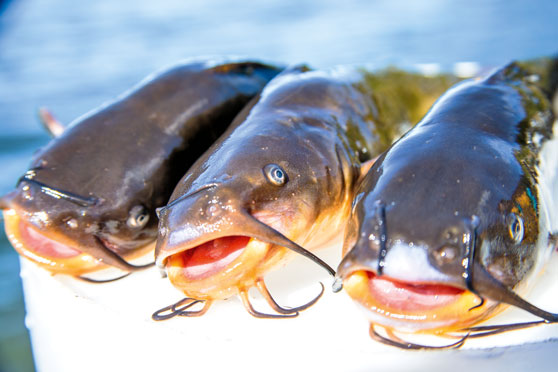
Introduced into New Zealand in the 1870s, for reasons unknown, catfish have now found their way into Lake Rotoiti. The Bay of Plenty Regional Council needs your help to stop them from spreading further.
Biosecurity Team Leader, Shane Grayling, greeted me at a lakeside property in Te Weta Bay, on the shores of Lake Rotoiti. Te Weta Bay, according to Shane, is the ground zero of the Rotorua Lakes District catfish issue. The bay is dotted with yellow research buoys, telling the story of the research projects conducted beneath the surface.
How it all started
Catfish were introduced to New Zealand waters in the 1870s from America, although there is little understanding as to why.
For many years, they remained restricted to a few Waikato waterways and Lake Taupo, as well as a few isolated locations in the South Island.
In March 2016, a weed harvester working in Lake Rotoiti hauled up an unexpected guest – a catfish. Biosecurity teams in the Bay of Plenty Regional Council (BOPRC) went into full-on research mode, deploying nets that same week. The problem, unfortunately, was already so advanced that they caught 50 catfish in the one night.
The issue
Catfish are an invasive species that pose a threat to both our trout and native koura (freshwater crayfish). Should the impact of catfish develop further, there is also a risk of economic threats, as fewer trout and less desirable lakes mean potentially fewer people visiting the region to experience them.
In an attempt to take a more proactive approach to this issue, BOPRC and partners Te Arawa Lakes Trust have begun a research programme which involves catching and tagging catfish, to better track their movements.
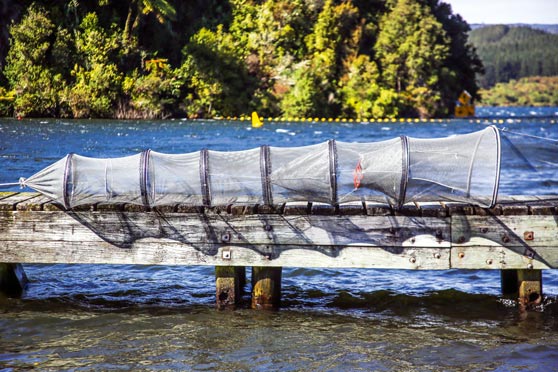
The team is currently targeting critical areas with fyke nets, baited with tins of salted sardines (a catfish favourite!), however the numbers they are bringing up are still only a small fraction of the population lurking below the surface.
As well as all the work being undertaken by the council, it is up to the recreational users of the lake to pitch in to ensure this species doesn’t do further damage to the surrounding waterways.
Stopping the spread – how you can help
The message to fishers and boaties accessing Lake Rotoiti in the coming months is very clear – if you’re out and about, check, clean and dry your boat before moving to another body of water.
This means:
Check
Flush out your bilges, ballast tanks and trailers before leaving the lake where you’ve been boating. This ensures that if you have any catfish in your boat or trailer, they won’t be transferred elsewhere.
Clean
Thoroughly clean your boat/kayak/jetski with fresh water – this not only prevents the spread of catfish but also invasive weed species. Flush out your bilges and ballast tanks, as well as any open areas in your trailer, as small catfish can hide away in these areas and stay alive for up to 48 hours out of the water.
Dry
Give your boat and trailer time to dry out completely before putting it back into a new body of water.
It only takes one small catfish in a new body of water to start a new population that could be the end of some of our native species, and these simple steps can help you play a part in preventing disaster.
|
|
This article is reproduced with permission of |

Recent Forum Posts Visit Forum

Trailer wheel clamp
in The Boat Shed4 minutes ago
Schecter
I spray with WD40 after each trip. No issues with the lock so far. ...

Shane Jones
in Fisheries Management4 hours ago
Tzer
From what I see too even commercial in WA aren’t getting any favours from politicians there. I think here our advocacy groups like Liegasea aren’t doing...
Foton tunland v9
in The Briny Bar14 hours ago
Ho Dee
not fishing related and delete if required but was wondering if any has one of these or someone who has just wanting so e real world...

Bluefin Tuna at the cavs.
in The Briny Bar61 hours ago
smudge
Despite my years of fishing I haven't really fished many places, my focus has always been on Auckland's west coast and out toward Great Barrier. I...

Casting gloves
in Popper and Topwater Fishing106 hours ago
Mc Tool
100 bucks for a lure 😬. Watching one of them flying over the horizon without the line attached would be " character building " for sure...
I thought Id post some nice photo's , join...
in The Briny Bar157 hours ago
Alan L
That is a very cool pic Krow.The Far North is very cool, the Far far North even cooler. Mint looking day.Alan...

Mc Tools berley mincer
in The Briny Bar164 hours ago
SaltyC
Good size, they scrap well. Got an 18kg one up in Vava'u back a few years ago fishing off squeaky Going's boat. That was quite a...

Out with the "Twelves"
in Fishing Reports218 hours ago
Pcj
I should be able to get out end of October. The nephew been out virtually every weekend over winter and has done well. It seems the...
Manukau Harbour & West Coast fishing
in Fishing Reports226 hours ago
smudge
Nice work Schecter, I think snapper may be around sooner than you think. Well I am hoping so...

Whangarei Harbour report.
in Fishing Reports658 hours ago
krow
180 +m is where I've had to be lately. A lot less low foul around these parts and some of it shallower that looks like Tarakihi...

Popular Articles

Softbait Fishing - Part 1 - gear selection
John Eichlesheim writes an article about selecting the right equipment for softbait fishing... Read More >
Softbait fishing Pt 2 - tips and tricks
Techniques, tips and tricks of softbait fishing – getting the most from your soft baits.... Read More >

Surfcasting - setting yourself up
Gary Kemsley helps sort out the necessary gear for intending surf fishers.... Read More >

Squid - How to catch them
Squid fishing is a rapidly growing aspect of fishing - Paul Senior shares some hints and tips to get started.... Read More >
Fishing Reports Visit Reports
Outer Hauraki Gulf Fishing Report 17/09/26
Spring wind the handbrake. Spring is starting to make its presence felt in the outer... Read More >
Top of the South Fishing Report - 17/09/26
Early snapper in Tasman Bay. Well, spring is finally here, and the days are getting... Read More >
Bream Bay Fishing Report - 17/09/26
Good snapper catches reported. After Tangaroa turned off the fish tap for a month or... Read More >
Bay of Islands Fishing Report - 17/09/26
Pacific bluefin tuna for the lucky few. The last fortnight has seen more fishable days... Read More >
Comments