
Pacific Fish Species (Part One)
Mark Kitteridge counts down his top 10 Pacific fish species...
Thank goodness for jobs in the recreational fishing trade, otherwise, I would never have caught so many amazing fish in a wide variety of overseas destinations!
Obviously working for this magazine in various roles for almost 40 years has been very helpful, particularly in regard to the various Pacific Islands early on, with two or three fishing trips potentially on offer every year – if I was lucky.
But, of course, there were still limits to the opportunities, particularly once I got married and had children, preventing me from going much further. Not to mention my always rickety bank balance. So the many other legendary species available elsewhere around the world, such as mahseer, tarpon, Nile perch, black bass, arapaima, taimen, cubera snapper, goliath tigerfish and roosterfish – to name but a few – have been left to those in more fortunate situations… for now, at least!
But staying ‘local’ in the huge Pacific Ocean is hardly something to cry about. In addition to a variety of absolute beasts lurking within those azure depths, there are others possessing impressive qualities that make them well worth targeting too, such as being particularly acrobatic, having great speed, or simply tasting great and fighting well for their size.
While there are many other species that came close, such as Napoleon/M?ori wrasse (too rare to encourage targeting), potato cod (often huge in size, impressive to wrestle, but generally not kept either) and red bass (exciting to hook on poppers but often toxic to eat), the following species are my personal ‘Top 10’. Rather tellingly, there are good arguments for the top eight choices to be rearranged and for all to be the top contender instead. A lot comes down to the individual’s own experiences – or lack of them.
10: Coral trout
Although coral trout give a decent tussle for their size when hooked, especially those weighing over 10 kilos, few anglers set out after them for the sport provided. Instead, coral trout are highly prized for their delicious eating qualities – except the largest, which may contain ciguatera toxins, a common potential problem for reef-dwelling predators which varies greatly from area to area.
Coral trout tend to be targeted with bait, but I’d rather encounter them as bycatch while chasing dogtooth, wahoo and giant trevally using jigs, poppers, bibbed minnows and stick baits. This strategy has resulted in some absolute stonkers to around 15 kilos, but 1.5-2kg specimens are more usual.
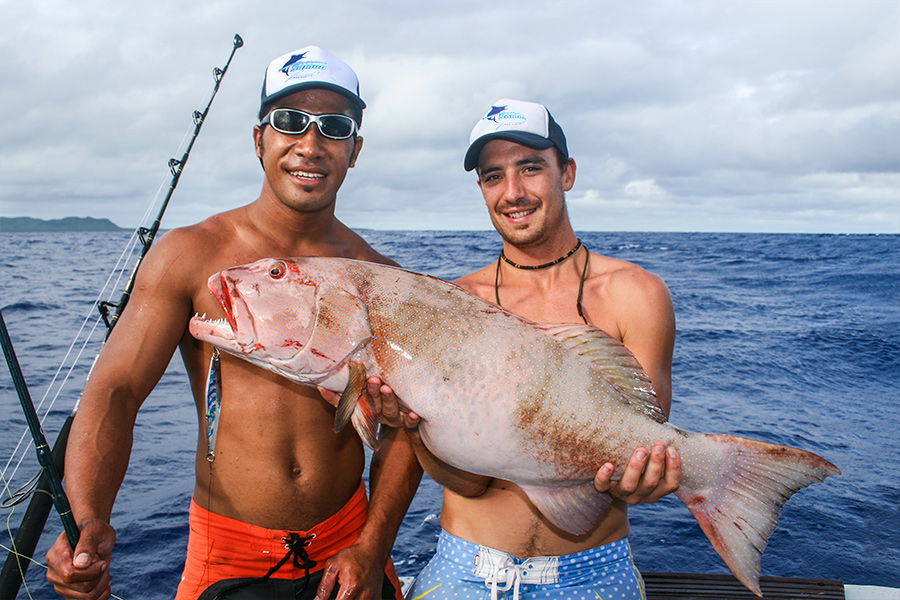
The coral trout is a voracious predator that fights hard and tastes amazing!
9: Spanish mackerel
These toothy predators provide the best of both worlds: they are really fun to catch and taste A-M-A-Z-I-N-G!
Most of my Spanish mackerel encounters have occurred while trolling bibbed and bibless minnows around various Fijian islands, including a couple of solid ones around 40lb (18kg). They are definitely worth waiting for. In addition to occasionally providing spectacular strikes that see them firing over six metres up into the air with your lure in their mouth, they also take off at high speed afterwards – if they haven’t snipped the lure off with their sharp teeth! Having said that, my most memorable experiences have been while fishing topwater poppers and stickbaits around deep water pins for giant trevally. Again, the strike can be similar to a missile launch, or like hooking a whirling dervish, with a lightning-fast strike followed by explosions of foam and a berserk Spaniard spinning and crashing around before frequently departing unhooked!
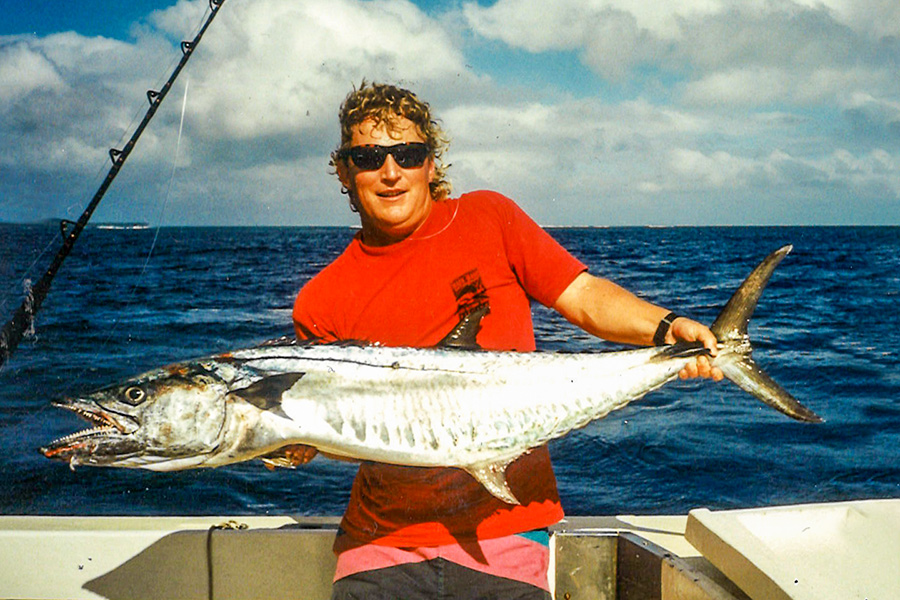
The strike from a Spanish mackerel on a top-water lure can be very memorable, and they are delicious too.
8: Wahoo
Wahoo are like Spanish mackerel in several ways, possessing slim, streamlined bodies and razor-sharp teeth, and making jaw-dropping aerial strikes that see them launching several metres up in the air occasionally, sometimes connected to a rod and reel, sometimes not. But it is the run afterwards that really sets the wahoo apart. It’s not just fast, it’s supersonic!
Indeed, upon hooking my first decent wahoo, I could only watch in awe as my spool unloaded hundreds of metres of 24kg line so fast I thought my drag had failed… so I put my thumb down to help slow it. Big mistake. The resulting thin stream of smoke mainly consisted of scorched and powdered skin, leaving me without a thumbprint for several months! Some anglers might be relieved to know after those first one or two blistering runs the wahoo is pretty much done, generally planning in steadily for gaffing afterwards.
Another memorable encounter occurred in Vanuatu after hooking a monster wahoo on heavy marlin gear over a deep-sea mount. The fish took off like a bullet, removing an incredible 700-750 metres of 37kg line within a couple of minutes. However, this impressive effort turned out to be partly due to the 100lb-plus wahoo’s will to live, with the fight ending in an explosion of foam, blood and writhing bodies!
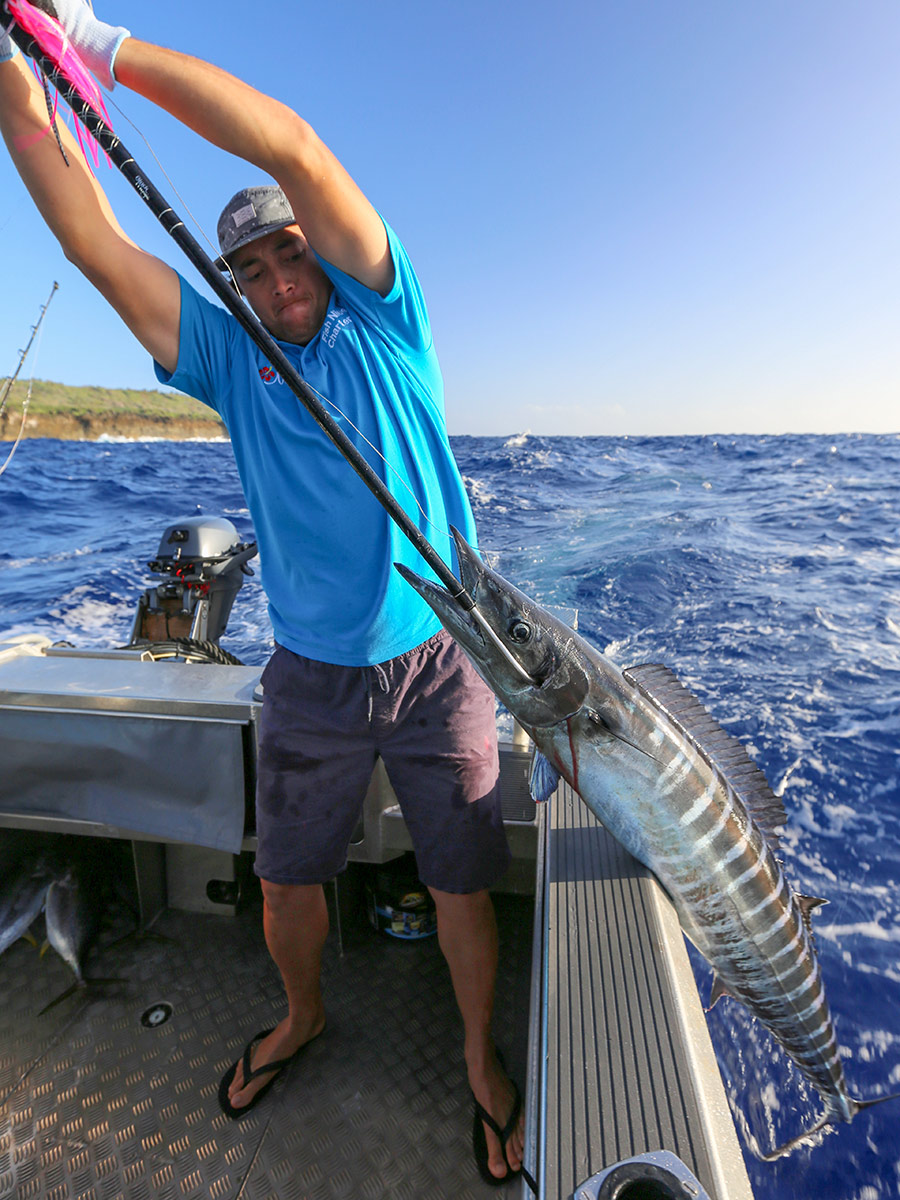
The wahoo’s slender, streamlined form helps to make it unbeaten for speed – their first run is often jaw-droppingly fast.
7: Mahimahi
Mahimahi are close to being the perfect fish. They are reasonably numerous, usually hungry, grow quickly, can be caught using various methods, look great and provide some of the tastiest fillets in the sea. However, despite their sensational culinary qualities, it’s the fight that draws me to them. These fish pull remarkably hard for their size, jump high and often, and don’t give up easily. In short, if mahimahi grew to the size of marlin, they would be one of the most challenging fish on the planet to land!
Mahimahi are also one of the most dangerous. Their fast-twitch power and never-say-die inclination frequently see poorly secured fish bouncing around decks uncontrollably to regularly hook their captors when multiple hooks are used. That’s a rather unpleasant situation to be in when bigger mahimahi keep jumping around afterwards!
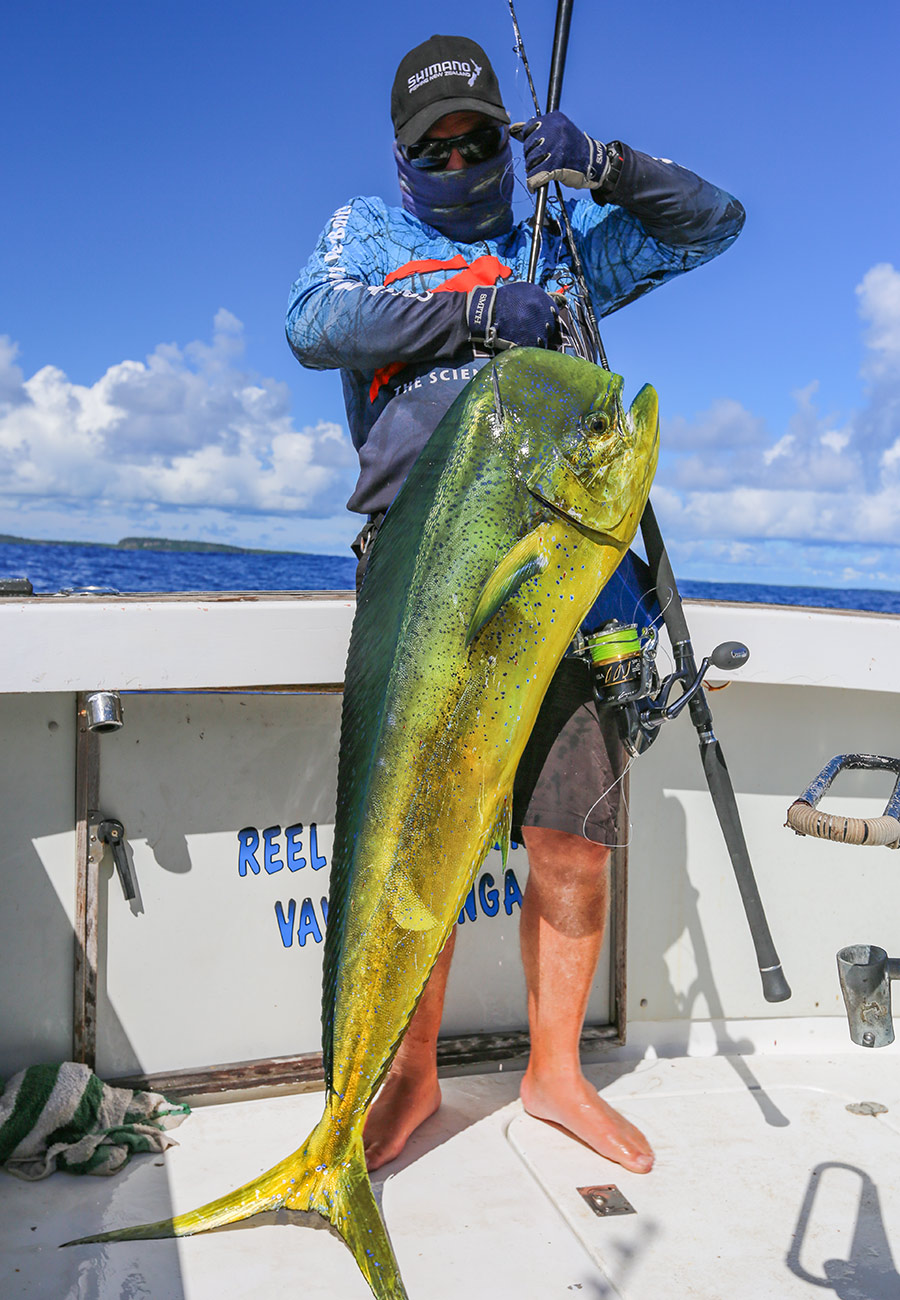
Mahimahi are potentially the perfect fish – what a shame they don’t grow bigger.
6: Sailfish
It’s easy to pass over sailfish when comparing their size to marlin, with most weighing around 20-50kg. But target them using 6-15kg tackle or a salt-fly outfit and they become very worthwhile opponents!
Smaller trolling lures and baits are used when fishing for sailfish, but turning interested fish into hooked ones can still be tricky. This challenge is part of the appeal. Then, when it all comes together, the fireworks start. Sailfish are equal-fastest fish in the sea along with wahoo, so line usually melts off the reel at an incredible rate, while at the same time, anglers are treated to the craziest acrobatics show, thanks to their seemingly inexhaustible energy, producing tail-walking galore and jump after jump after jump, before often dogging deeper down and stubbornly refusing to come up! Fortunately for anglers, sailfish are not especially good to eat so tend to be released, leaving them in the water to be caught again perhaps!
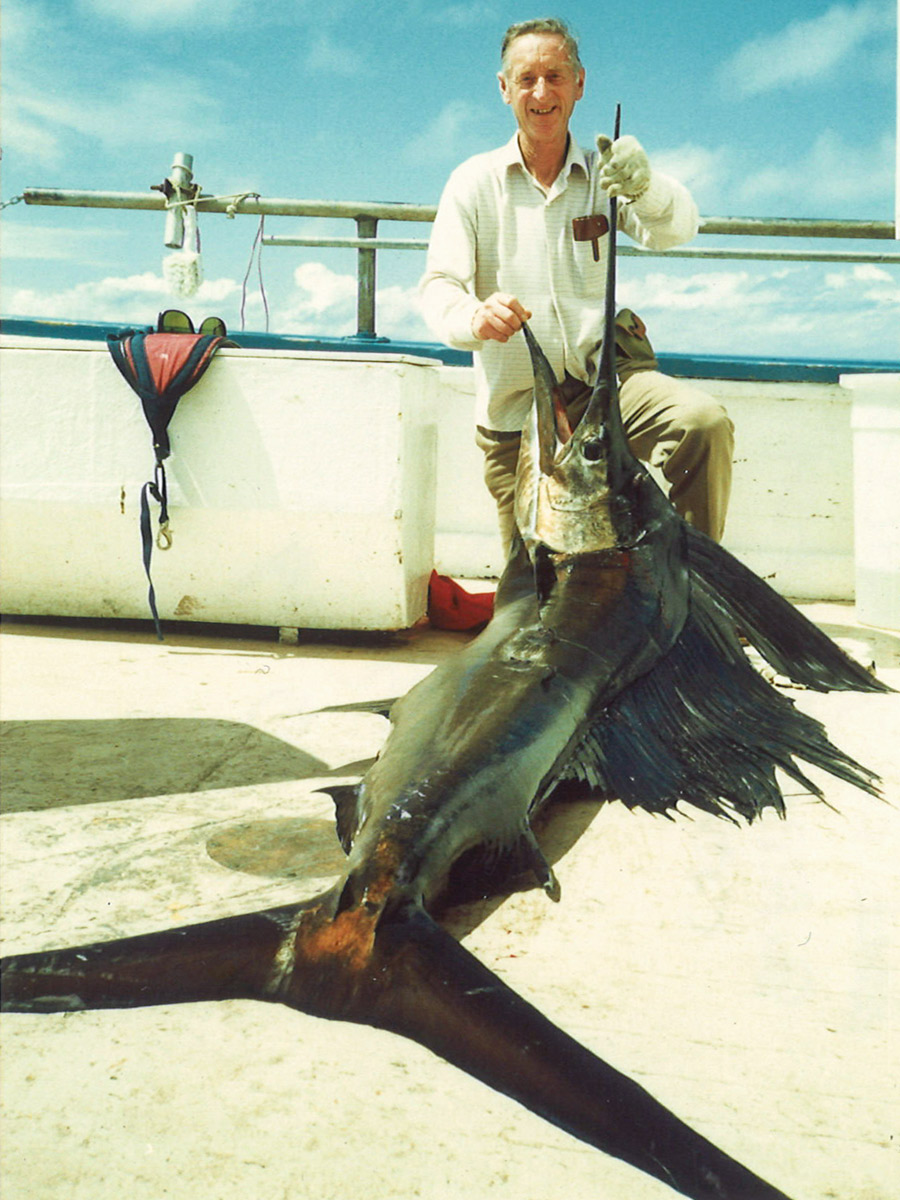
This 58kg Tongan sailfish fought like a demon and was taken back for the local villagers to share.

September 2023 - Mark Kitteridge
New Zealand Fishing News Magazine.
Copyright: NZ Fishing Media Ltd.
Re-publishing elsewhere is prohibited
Recent Forum Posts Visit Forum

Trailer wheel clamp
in The Boat Shed5 hours ago
krow
I like the SAS wheel clamp. I've had no issues with the lock....

Shane Jones
in Fisheries Management7 hours ago
Fish Addict
The recreational sector can expect no favours from politicians. They know all too well who butters their bread and it ain't the recs. No different over...

Foton tunland v9
in The Briny Bar8 hours ago
Ho Dee
not fishing related and delete if required but was wondering if any has one of these or someone who has just wanting so e real world...

Bluefin Tuna at the cavs.
in The Briny Bar55 hours ago
smudge
Despite my years of fishing I haven't really fished many places, my focus has always been on Auckland's west coast and out toward Great Barrier. I...
Casting gloves
in Popper and Topwater Fishing99 hours ago
Mc Tool
100 bucks for a lure 😬. Watching one of them flying over the horizon without the line attached would be " character building " for sure...
I thought Id post some nice photo's , join...
in The Briny Bar150 hours ago
Alan L
That is a very cool pic Krow.The Far North is very cool, the Far far North even cooler. Mint looking day.Alan...

Mc Tools berley mincer
in The Briny Bar158 hours ago
SaltyC
Good size, they scrap well. Got an 18kg one up in Vava'u back a few years ago fishing off squeaky Going's boat. That was quite a...

Out with the "Twelves"
in Fishing Reports212 hours ago
Pcj
I should be able to get out end of October. The nephew been out virtually every weekend over winter and has done well. It seems the...
Manukau Harbour & West Coast fishing
in Fishing Reports220 hours ago
smudge
Nice work Schecter, I think snapper may be around sooner than you think. Well I am hoping so...
Whangarei Harbour report.
in Fishing Reports652 hours ago
krow
180 +m is where I've had to be lately. A lot less low foul around these parts and some of it shallower that looks like Tarakihi...
Popular Articles

Softbait Fishing - Part 1 - gear selection
John Eichlesheim writes an article about selecting the right equipment for softbait fishing... Read More >
Softbait fishing Pt 2 - tips and tricks
Techniques, tips and tricks of softbait fishing – getting the most from your soft baits.... Read More >

Surfcasting - setting yourself up
Gary Kemsley helps sort out the necessary gear for intending surf fishers.... Read More >

Squid - How to catch them
Squid fishing is a rapidly growing aspect of fishing - Paul Senior shares some hints and tips to get started.... Read More >
Fishing Reports Visit Reports
Outer Hauraki Gulf Fishing Report 17/09/26
Spring wind the handbrake. Spring is starting to make its presence felt in the outer... Read More >
Top of the South Fishing Report - 17/09/26
Early snapper in Tasman Bay. Well, spring is finally here, and the days are getting... Read More >
Bream Bay Fishing Report - 17/09/26
Good snapper catches reported. After Tangaroa turned off the fish tap for a month or... Read More >
Bay of Islands Fishing Report - 17/09/26
Pacific bluefin tuna for the lucky few. The last fortnight has seen more fishable days... Read More >
Comments