
NZ Scallops Part 3: Lifecycle
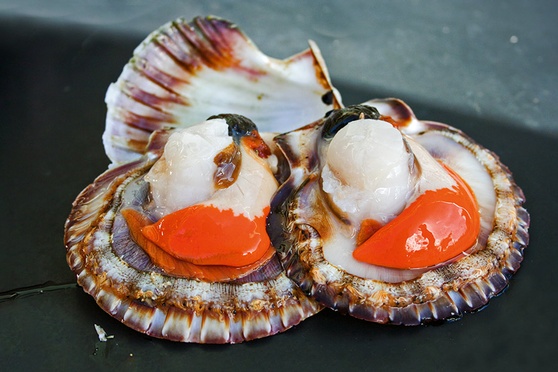
Ben Carey finishes his series on scallops with a quick overview of their lifecycle.
Many factors determine the survival of scallop spat, including the sea conditions and the predators that eat them, such as snapper, starfish, crabs and even octopus.
One of the main predators of small scallop spat is starfish – they love eating them. The next time you find starfish on your scallop bed or in your dredge, definitely go and have a nosy and check it out! They actually digest the spat whole by latching onto the scallop and smothering it internally, eating it from the inside out – muscle, roe, guts, skirt and all. They don’t seem to attach themselves to the really big ones, just the small spat (a 50-cent sized piece if you would call it that). Interestingly, if there are lots of scallops in an area, there will be very little in the way of starfish.
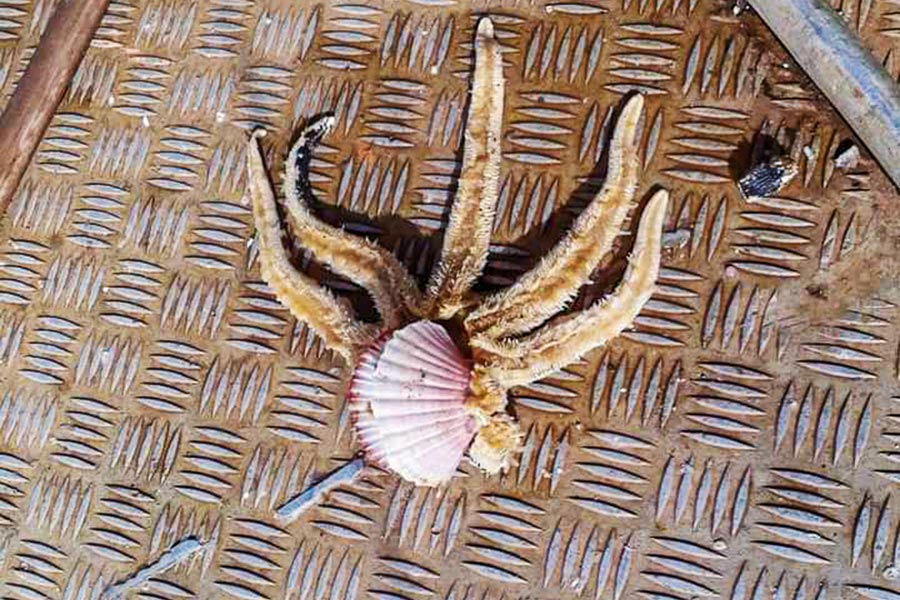
Starfish are the scallops 'public enemy #1'.
Where the spat land is another big determining factor in their survival rate. Spat grow best when they settle on clean surfaces free of mud and silt, and we all know that spat love a clear and sandy bottom. If the currents push the scallop larvae well out to sea, they may well be lost forever.
Scallop growth rates
Whether people realise it or not, scallops are actually very fast-growing and short-lived – so much so that a small 50-cent sized spat can grow to a 90mm+ scallop in just one year.
On average, a single 90mm scallop has taken one year to grow to this size, before slowing down and growing at a rate of about 5mm per year. This puts a 100mm scallop at about three years old – but this isn’t a hard and fast rule as some grow even faster. As a matter of fact, in places such as Little Barrier Island in the outer Hauraki Gulf, small spat can grow into a 100mm+ scallop in one year!
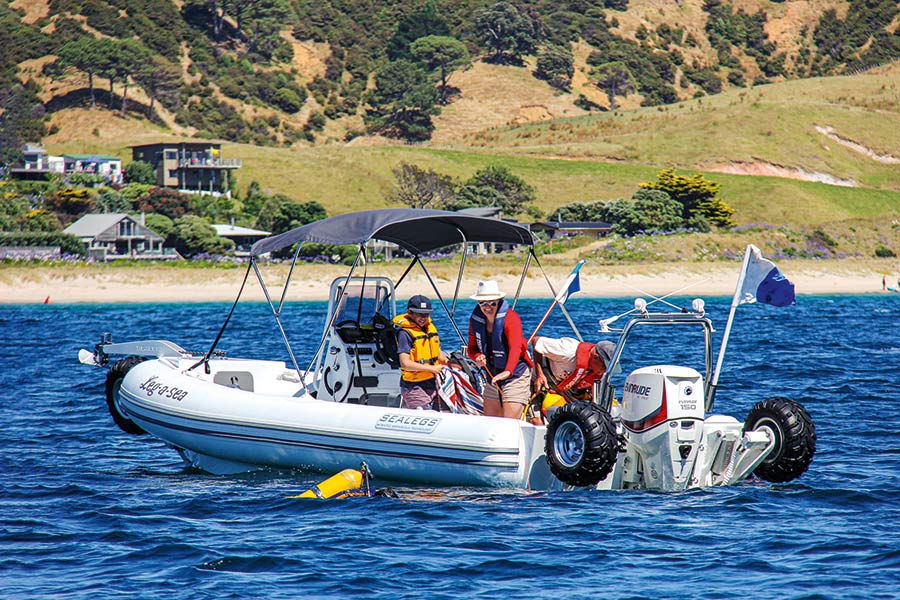
Coromandel scallops take around three years to grow to 100mm.
Scallops become sexually mature and start spawning when they are around 70mm in length, at around eight months of age. When a scallop reaches about 150mm (typically 9-10 years old), they stop growing and start dying.
The 2012 deepwater bed that was found in the Hauraki Gulf saw the in-season commercial catch limit increase from 22 tonnes to 325 tonnes. Interestingly, this bed was actually found by a commercial snapper longline fisherman of all people. He had scallops coming up on his backbone and hooks, so let the commercial scallop fleet come in to check it out. It was full of big scallops; however, the bed itself was at the end of its days and dying off quite quickly as the spat landed in an area of mud and silt. Over the following two years, the bed became full of dead shells.
Whether it was actually one big mother-bed which provided the larvae and recruitment for the Hauraki Gulf and/or the Coromandel fishery is yet to be seen, but what we do know is that these fisheries are in some degree of trouble.
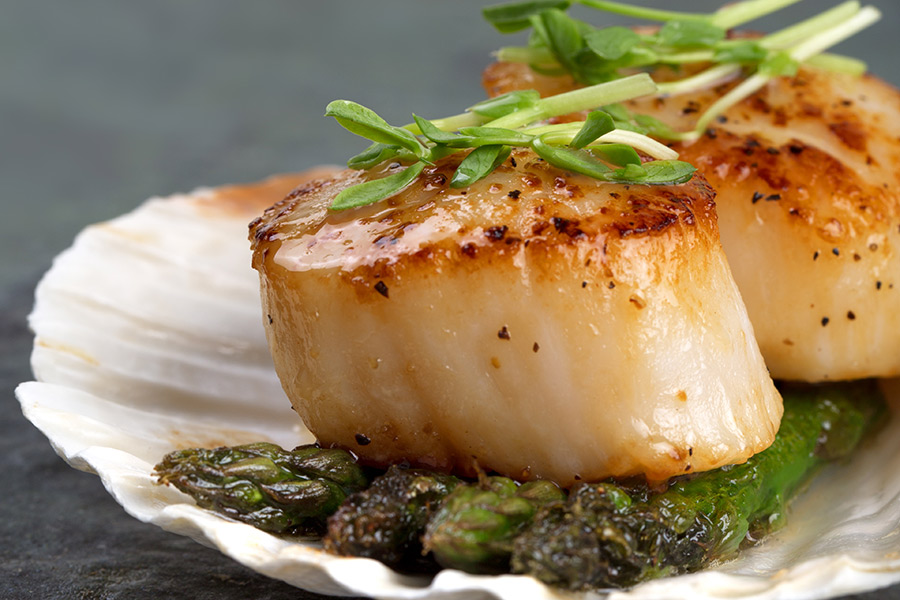
A tasty treat, but one we must be careful to preserve for future generations.
Scallop spat reseed other beds. What we have to remember is that not all scallop larvae will settle on another bed directly next to it. Larvae travel many miles to scallop beds in other regions, which just goes to show how much we still have to learn about this species.
So there you have it – a little information about scallops. Hopefully, this series has provided you with a bit of insight into these tasty little morsels.
|
|
This article is reproduced with permission of |

Recent Forum Posts Visit Forum

Foton tunland v9
in The Briny Bar11 minutes ago
Ho Dee
not fishing related and delete if required but was wondering if any has one of these or someone who has just wanting so e real world...

Trailer wheel clamp
in The Boat Shed42 minutes ago
Pcj
Doesnt dry out like crc.I use it on my trailer lock...

Shane Jones
in Fisheries Management27 hours ago
Tzer
Far cry to the twats at Liegasea/NZSFC were proposing of 5 Tarakihi person in their submission for the central management area and this is what our...

Bluefin Tuna at the cavs.
in The Briny Bar47 hours ago
smudge
Despite my years of fishing I haven't really fished many places, my focus has always been on Auckland's west coast and out toward Great Barrier. I...

Casting gloves
in Popper and Topwater Fishing91 hours ago
Mc Tool
100 bucks for a lure 😬. Watching one of them flying over the horizon without the line attached would be " character building " for sure...
I thought Id post some nice photo's , join...
in The Briny Bar142 hours ago
Alan L
That is a very cool pic Krow.The Far North is very cool, the Far far North even cooler. Mint looking day.Alan...

Mc Tools berley mincer
in The Briny Bar150 hours ago
SaltyC
Good size, they scrap well. Got an 18kg one up in Vava'u back a few years ago fishing off squeaky Going's boat. That was quite a...
Out with the "Twelves"
in Fishing Reports204 hours ago
Pcj
I should be able to get out end of October. The nephew been out virtually every weekend over winter and has done well. It seems the...
Manukau Harbour & West Coast fishing
in Fishing Reports212 hours ago
smudge
Nice work Schecter, I think snapper may be around sooner than you think. Well I am hoping so...

Whangarei Harbour report.
in Fishing Reports644 hours ago
krow
180 +m is where I've had to be lately. A lot less low foul around these parts and some of it shallower that looks like Tarakihi...

Popular Articles

Softbait Fishing - Part 1 - gear selection
John Eichlesheim writes an article about selecting the right equipment for softbait fishing... Read More >
Softbait fishing Pt 2 - tips and tricks
Techniques, tips and tricks of softbait fishing – getting the most from your soft baits.... Read More >

Surfcasting - setting yourself up
Gary Kemsley helps sort out the necessary gear for intending surf fishers.... Read More >

Squid - How to catch them
Squid fishing is a rapidly growing aspect of fishing - Paul Senior shares some hints and tips to get started.... Read More >
Fishing Reports Visit Reports
Outer Hauraki Gulf Fishing Report 17/09/26
Spring wind the handbrake. Spring is starting to make its presence felt in the outer... Read More >
Top of the South Fishing Report - 17/09/26
Early snapper in Tasman Bay. Well, spring is finally here, and the days are getting... Read More >
Bream Bay Fishing Report - 17/09/26
Good snapper catches reported. After Tangaroa turned off the fish tap for a month or... Read More >
Bay of Islands Fishing Report - 17/09/26
Pacific bluefin tuna for the lucky few. The last fortnight has seen more fishable days... Read More >
Comments