
NZ's landbased gamefishing potential remains untapped
Despite its popularity, landbased gamefishing has yet to reach its full potential, concluded Paul Embling in 2000. Has anything changed?
Landbased game fishing is about the pursuit of game fish from a shore-based position. It is rather a broad and confusing term in some respects. Few would consider trout, salmon, and koi carp as landbased game targets, but in a sense they are. The same could be said of surfcasting and rock straylining for snapper, tope, eagle rays and trevs – to name a few.
All are top fish, which I certainly enjoy catching, but for me the term ‘landbased game fishing’ has always been pretty clear-cut in its definition: the pursuit of pelagics — tuna, open water sharks, yellowtail kingfish and billfish.
In this sense LBG’s potential in New Zealand yet to be fully realised. Sure, kingfish – and to a lesser extent whaler sharks – are pretty much wired and fished for frequently because of their accessibility, but very few anglers bother to target the pelagics.
Choosing suitable locations
.jpg) I would have to say that land-basing for the pelagics, while it’s one of the most satisfying and rewarding styles of fishing when it all comes together, is also by far and away the most frustrating. And there are many factors that contribute to this.
Certain elements like current, sufficient water depth, little boat traffic, accessibility and a clear playing space are pretty important for consistent success. If we exclude some locations where we target kingies and bronzies, ledges that meet these criteria are relatively few and far between. Those that do exist tend to be very exposed and are more often than not unfishable. Other ledges are ruined by the close proximity of craypots and/or too much boat traffic.
Often live baits are hard to catch and it is wise to transport baits onto the ledges as a backup system — a hard call, especially if you’ve driven for a few hours. But at least if you do this you’re set the moment you hit the rocks and bait can be minimised.
On top of this, there is also the extra gear needed for the larger fish, which adds to the hassle: flying gaffs, big fixed-head gaffs, kites, harness and gimbals, ropes and storage for livebait — they’re all essential equipment.
Combine all these things with long fishless days in a noisy, uncomfortable environment and it’s no wonder very few people give up their snapper and kahawai fishing. LBG’s certainly not relaxing, but it is exciting – if you’ve ever seen a 300-pound whaler nailing a free-swimming kahawai in crystal-clear water, a pack attack of marauding yellow-tailed kingies, a somersaulting mako, or a 250-lb black marlin head shaking as it proceeds to spool you on 24kg, you’ll understand that driving drug.
New Zealand anglers are a bunch of sheep — in other words they all copy one another. Most sheep-like are the ones that get into the sport later in life and fish for only a few species. It often amazes me how many of these folk will call a less usual fish ‘rubbish’ without ever seeing one, let alone catching it.
My advice to a young angler would be not to listen to anyone and to make up your mind on each species; otherwise you’ll miss out on so much.
Important landbased target species
Mako shark
Major LB areas: offshore rocks and headlands – the Mercs, Cape Brett, Cape Karikari.
Best time: November to May.
Best baits — live kingfish, big slimy mackerel and dead baits of skipjack.
Fight: unpredictable. Many individuals refuse to do anything at all, but others will fight like demons with long, fast runs, somersaults and deep, powerful pulling. Zane Grey called makos “NZ’s premier game fish” and if you have seen these babies boogie you’ll understand why: nothing jumps as high and is so spectacular as a mako in full fight.
Captures — A small handful of rats are caught some years. Most of them are accidentally taken on live baits meant for kingfish. The largest I have heard of caught from the shore over here was an unconfirmed 70kg fish from Cape Brett, but New Zealand could perhaps be the landbased mako capital of the world.
Hammerhead sharks
Major LB areas: Juveniles turn up all over the place, but the big boys tend to stick to deeper offshore waters – the Mercs, Cape Brett, Cape Karikari and East Cape.
Best time: December to April.
Best baits: live baits of slimies, koheru, yellowtail mackerel, small kahawai and kingfish. More often than not they will refuse dead baits.
Fight: tough and very underrated. I would rate hammers as one of the better fighting sharks performing long, fast surface and mid-water runs and often avoiding the depths, making it an ideal target for LBG anglers.
Captures: tiny pups are caught by surfcasters, particularly on live baits, but I am unaware of large or even average-sized specimens being taken from the shore except the occasional average-sized, kite-caught fish on longlines.
.jpg)
Bronze whaler (narrow tooth) sharks
Major LB areas: predominately found in the top half of the North Island including all the major harbours on both coasts. Later in the season when temperatures are higher they can often be found offshore around deep ledges.
Best time: late October to May, particularly mid-November to mid-January.
Best baits: live kingfish and grey mullet, dead tuna, fresh eagle rays and conger eels. Snapper can bea problem demolishing baits. If this happens, a few filleted snapper carcasses in the water will often deter them.
Fight: bronze whalers are difficult fish to land. A bronzie puts up surface runs with broaching and deep dives to the bottom where it often stays. Off deepwater ledges they canl be one of the hardest big game fish to land, as their size, deep, dirty fighting tactics and stubbornness often brings them into contact with the reefs.
Captures: bronze whalers weighing over 250kg have been taken from the shore and a number of individuals of this size are taken each year.
Blue sharks
Major LB areas: common right around New Zealand. Generally open water pelagics, blue sharks prefer deeper water including all the prominent headlands sticking into deep water – East Cape, Cape Brett, Cape Karikari and the Mercs. The South Island should have some spots, too. Pups are occasionally found close to shore.
Best time: November to June and possibly all year depending on water conditions.
Best baits: live baits and dead tuna.
Fight: blue sharks don’t have the build and body weight to do much on standard LBG gear. Still, the odd one can be quite dogged and stubborn. On light tackle they can be worthy opponents.
Thresher sharks
Major LB areas: NZ-wide with juveniles turning up regularly in inshore waters. Larger individuals favour deeper water off all prominent headlands.
Best time: late March-December, particularly spring. Threshers follow pilchard schools.
Best baits: juvenile kahawai, koheru, yellowtail, slimy mackerel, pilchards and saury. They feed predominantly on pilchards.
Fight: described by many experienced skippers as the best fighting fish of all, even surpassing broadbill and bluefin. Perhaps the ultimate fish to catch from the shore, threshers are surpassed in my book only by broadbill. Threshers combine long, fast runs with spectacular leaps and quick changes of direction.
Captures: A number of individuals get caught every year. All are small pups taken by anglers who don’t appreciate what they have caught. Most are caught surfcasting and none that I know of have been larger than 12kg.
Striped marlin
Major LB areas: Cape Karikari, Cape Brett, the Mercs and East Cape.
Best time: January to May.
Best baits: live koheru, slimies, grey mullet, small kingies and spotty kahawai.
Fight: a spectacular, visual and very strong fighter that makes long, fast runs, often accompanied by tail walking. They will often sound.
Captures: none [still true in 2013]. A handful of individuals have been hooked from Cape Karikari and Cape Brett and from beaches using kites.
Black marlin
Major LB areas: Cape Karikari, Cape Brett and the points in between. Also the Mercs and East Cape. The West Coast could throw up some surprises, too because blacks are often found closer inshore than stripies.
Best time: Dec-June.
Best baits: same as striped marlin.
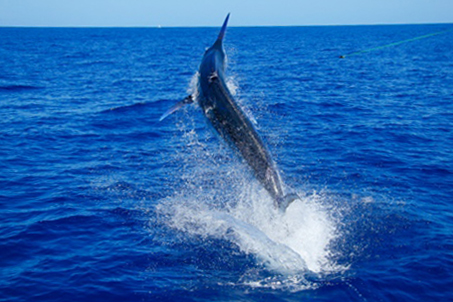
Fight: a tougher opponent than stripies and perhaps not quite as spectacular. Combines head shaking and jumps with long, powerful runs. Along with threshers and extra-big tuna, they are among the Holy Grail of New Zealand LBG.
Captures: None [still true today]. Only two confirmed hook-ups that I know of and three possibles. All of these have been lost.
.jpg)
Yellowfin
Location: East Cape and the Mercs probably have the most potential, although both Cape Brett and Cape Karikari have yielded captures.
Best time: Jan-April.
Baits: small live baits of slimies, koheru, and yellowtail.
Fight: very tough, long, hard surface runs followed by deep-down slugging as they arc around, putting them in possible range of reefs.
Captures to date: one off Cape Brett, a 20-pounder (10kg), and reportedly a couple of 40lb (18kg) models years ago from Cape Karikari. Unconfirmed reports also mention tiny fin being caught from The Mercs in 2000 and a 40-pound-plus model was taken by a surfcaster in the Bay of Plenty in the late 90s.
.jpg)
Yellowtail kingfish
Major LB areas: Predominantly the North Island, particularly the top half. Very common.
Best time: all year, but Jan, Feb, and March are best months with large numbers everywhere. The colder months see fewer but bigger fish.
Best baits: live piper, grey mullet, koheru, slimies, kahawai, pilchards and yellowtail mackerel.
Fight: a difficult, tough opponent that dives and fights deep. Perhaps the toughest in relation to its size of any game fish. Only silver trevally is more snag-orientated.
Broadbill
Don’t laugh! A mouse was been taken in Australia in the 90s, so anything’s possible.
Blue marlin
Unlikely, but not impossible. Blues rarely comes close to shore but small blues have reportedly been caught in Hawaii.
Bluefin tuna
Fiordland, home of the bait-munching barracouta. No bluefin have been landed there although a few southern blues have been taken in Aussie, including a couple off wharves.
Albacore
One was taken landbased from New Plymouth and several others have been reportedly hooked.
Skipjack tuna
A handful of individuals get taken by spinning every year, particularly in autumn. A 9kg monster was taken from Oke Bay, in the Bay of Islands, in the late 90s on bait.
Porbeagle sharks
A neat-looking cold water shark. A handful of these sharks, taken in Ireland 40-odd years ago, are the only landbased captures I’ve heard of.
Whites sharks
One was reportedly taken on a live kahawai at Spirits Bay, and a handful of juveniles have been taken on kites and Kontikis. [Now protected.]
Tiger sharks
Unlikely. Most New Zealand tigers stick to deep water. However, a small specimen (5-foot, 1.7m) was caught from a boat in Matauri Bay close to shore. The biggest tiger on regulation tackle, a 1788-lber, was taken from a jetty in South Carolina.
Big-eyed thresher shark
Highly unlikely as none have been taken landbased anywhere in the world that I am aware of.
Silky sharks
Possible from deepwater ledges. None has been taken here yet, although differentiating silkys from narrowtooth sharks (bronzies) is hard, so there may have been captures that have been misidentified.
Dusky sharks
Very big whalers that can in excess of 400kg. Only one boat-caught specimen has been taken in New Zealand, and none off the rocks. Here again, identification is often a problem, although duskys are significantly different to both silky and narrowtooth sharks. They’re often caught landbased overseas.
A Blast From The Past!
|
January 2000 1998 - by Paul Embling |

Popular Articles

Softbait Fishing - Part 1 - gear selection
John Eichlesheim writes an article about selecting the right equipment for softbait fishing... Read More >
Softbait fishing Pt 2 - tips and tricks
Techniques, tips and tricks of softbait fishing – getting the most from your soft baits.... Read More >

Surfcasting - setting yourself up
Gary Kemsley helps sort out the necessary gear for intending surf fishers.... Read More >

Squid - How to catch them
Squid fishing is a rapidly growing aspect of fishing - Paul Senior shares some hints and tips to get started.... Read More >
Fishing Reports Visit Reports
Bream Bay Fishing Report - 29/10/26
'Softly softly' approach to workups. Now is the time most inshore snapper fishers dream of... Read More >
Rotorua Fishing Report - 29/10/26
Fantastic fishing set to only get better! The fishing around the Rotorua region has been... Read More >
Eastern Coromandel Fishing Report - 29/10/26
Kingfish, snapper and crayfish on the menu. The anticipation is building as we find ourselves... Read More >
Tauranga Fishing Report - 29/10/26
Fishing and diving heating up. Let’s start on a positive note this week, as water... Read More >
Comments