
Northern Scallop Beds Collapse

For a long time, the rumours that scallops are dwindling were just that – rumours. But we now have irrefutable science that is echoing what the community has been saying: New Zealand’s last viable scallop beds are on the verge of collapse.
In 2021, public pressure and community actions led Fisheries New Zealand to commission NIWA to carry out a scallop stock assessment of scallop beds around the nation.

Scallops are likely to be off everyone’s menus for several years while the beds are rested. Photo: Carlos Martinez
The disheartening results show that scallop fisheries in Northland (SCA 1) and the Coromandel (SCACS) are declining, with fishable populations in both commercial and non-commercial scallop beds being close to the lowest ever recorded levels.
With this knowledge, Fisheries New Zealand have advised action is immediately required. At current levels, the existing biomass cannot support a scallop fishery.
The science confirms that scallop dredging is having a detrimental effect on seafloor ecosystems, with over 6,500 commercial scallop dredging events in 2019/2020 – and that’s only in the Hauraki Gulf Marine Park.
LegaSea is concerned that commercial harvesting of scallops has been mismanaged. Since 2014, commercial catch has averaged 44% of the Total Allowable Commercial Catch (TACC), and there has been no synchronous reduction in the TACC of 50,000 kg of scallop meat weight.
Northern commercial scallop fisheries use a self-tipping box dredge, which has a toothed bar digging 5cm into the seafloor, damaging and/or killing up to 50% of uncaught scallops and many other species that live in productive high-current areas.
Every tow is damaging the seafloor and the life it supports, and more meaningful action needs to be taken to protect marine communities and restore abundance for future generations.
Lack of initiative
In January 2022, Ngāti Manuhiri placed a rāhui on all scallop harvesting from Bream Tail down to the Okura River mouth, encompassing Great Barrier and Little Barrier Islands. The rāhui applies to commercial, recreational, and customary harvest of scallops.
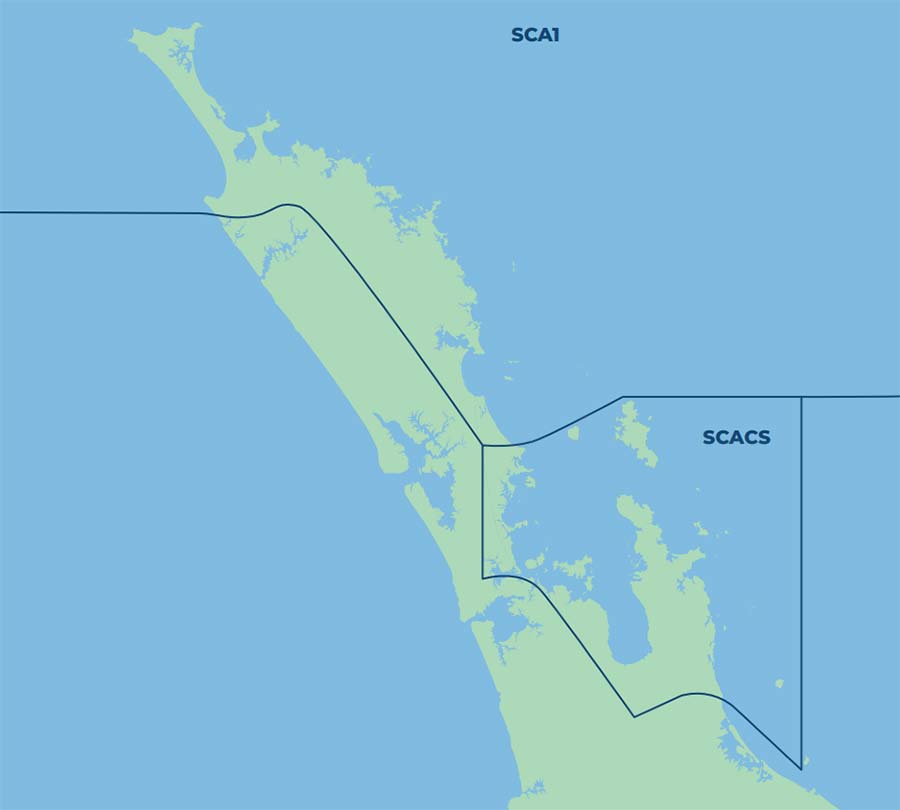
Almost all of the SCACS area has legislated or voluntary bans on the taking of scallops and it is looking more and more likely this will be extended to the SCA1 (Northland) scallop fishery in the near future.
This is the latest in a chain of scallop-related community actions, heightened by continual lack of initiative by the Government.
Community activism and rāhui have given us plenty of reason to celebrate. It shows the Hauraki Gulf community cares deeply about the wellbeing of the marine environment, and that public pressure can create management changes.
But it is not enough that communities have reached a stage where they’ve taken matters into their own hands. The real issue doesn’t just impact scallops. There is systemic failure in the Quota Management System.
Despite numerous community requests for scientific studies into scallop abundance (or lack thereof), 2021 was the first time in over 10 years that Fisheries New Zealand actually conducted a survey into the issue.
It is not enough that the Government sits back and signs off on continuous s186A applications (temporary closures), only to further intensify scallop fishing efforts in other areas. As East Coromandel scallop beds are now off-limits, declining scallop hotspots around the Hauraki Gulf islands are now primary targets.
We’re lucky these rāhui have bought us time to generate awareness around the mismanagement of scallops and shown the Minister that top-down action needs to be taken to create meaningful change.
LegaSea is one of many community voices calling for a more holistic approach to fisheries management in New Zealand. Alongside the NZ Sport Fishing Council, we have formed the Hauraki Gulf Alliance, which calls for an end to “mobile bottom contact” fishing methods that are actively destroying seabed communities in the Hauraki Gulf Marine Park.
If you care about the future of the Gulf, please stand by for your opportunity to support a thriving, more abundant Hauraki Gulf Marine Park.
Main Photo: Mark Kitteridge

April 2022 - Trish Rea
New Zealand Fishing News Magazine.
Copyright: NZ Fishing Media Ltd.
Re-publishing elsewhere is prohibited
Recent Forum Posts Visit Forum

Trailer wheel clamp
in The Boat Shed5 hours ago
Mc Tool
either crc long life or 556 marine are way better ...

Shane Jones
in Fisheries Management10 hours ago
Tzer
From what I see too even commercial in WA aren’t getting any favours from politicians there. I think here our advocacy groups like Liegasea aren’t doing...

Foton tunland v9
in The Briny Bar20 hours ago
Ho Dee
not fishing related and delete if required but was wondering if any has one of these or someone who has just wanting so e real world...

Bluefin Tuna at the cavs.
in The Briny Bar67 hours ago
smudge
Despite my years of fishing I haven't really fished many places, my focus has always been on Auckland's west coast and out toward Great Barrier. I...
Casting gloves
in Popper and Topwater Fishing112 hours ago
Mc Tool
100 bucks for a lure 😬. Watching one of them flying over the horizon without the line attached would be " character building " for sure...
I thought Id post some nice photo's , join...
in The Briny Bar163 hours ago
Alan L
That is a very cool pic Krow.The Far North is very cool, the Far far North even cooler. Mint looking day.Alan...

Mc Tools berley mincer
in The Briny Bar170 hours ago
SaltyC
Good size, they scrap well. Got an 18kg one up in Vava'u back a few years ago fishing off squeaky Going's boat. That was quite a...

Out with the "Twelves"
in Fishing Reports224 hours ago
Pcj
I should be able to get out end of October. The nephew been out virtually every weekend over winter and has done well. It seems the...
Manukau Harbour & West Coast fishing
in Fishing Reports232 hours ago
smudge
Nice work Schecter, I think snapper may be around sooner than you think. Well I am hoping so...

Whangarei Harbour report.
in Fishing Reports664 hours ago
krow
180 +m is where I've had to be lately. A lot less low foul around these parts and some of it shallower that looks like Tarakihi...
Popular Articles

Softbait Fishing - Part 1 - gear selection
John Eichlesheim writes an article about selecting the right equipment for softbait fishing... Read More >
Softbait fishing Pt 2 - tips and tricks
Techniques, tips and tricks of softbait fishing – getting the most from your soft baits.... Read More >

Surfcasting - setting yourself up
Gary Kemsley helps sort out the necessary gear for intending surf fishers.... Read More >

Squid - How to catch them
Squid fishing is a rapidly growing aspect of fishing - Paul Senior shares some hints and tips to get started.... Read More >
Fishing Reports Visit Reports
Outer Hauraki Gulf Fishing Report 17/09/26
Spring wind the handbrake. Spring is starting to make its presence felt in the outer... Read More >
Top of the South Fishing Report - 17/09/26
Early snapper in Tasman Bay. Well, spring is finally here, and the days are getting... Read More >
Bream Bay Fishing Report - 17/09/26
Good snapper catches reported. After Tangaroa turned off the fish tap for a month or... Read More >
Bay of Islands Fishing Report - 17/09/26
Pacific bluefin tuna for the lucky few. The last fortnight has seen more fishable days... Read More >
Comments