
New Zealand catch history Part 2
- 1 Comment

As last month’s edition of Fishing News went to press, we received a copy of a landmark report, New Zealand’s part of an international study on the true level of worldwide fisheries catches. Sam Mossman looks at the stunning revelations of this study, it’s implications, and the resulting media storm.
In compiling Reconstruction of marine fisheries catches for New Zealand (1950-2010), New Zealand researchers – led by Dr Glenn Simmons of the University of Auckland and overseas experts – drew on an extensive body of documentation including: stock-assessment reports; peer-reviewed literature; unpublished reports and information obtained under the Official Information Act; as well as 308 confidential interviews with industry experts and personnel with first-hand knowledge of fishing and reporting practices. The authors combined this data with official catch data to statistically ‘reconstruct’ a more comprehensive, robust catch estimate. This report was blind peer-reviewed by international experts and published in Nature Communications, a publication ranked in the top three of the world’s science primary research journals.
As summed up in our June edition (pp92-93) the main findings for NZ were:
- New Zealand’s reconstructed marine catch totalled 38.1 million tonnes between 1950 and 2010, which is 2.7 times the 14 million tonnes reported to the United Nations agency FAO
- Since the Quota Management System (QMS) was introduced in 1986, the total catch is conservatively estimated to be 2.1 times that reported to the FAO
- Unreported commercial catch and discards account for the vast majority of the discrepancy
- Recreational and customary catch was 0.51 million tonnes, or 1.3 per cent
- Only an estimated 42.5 per cent of industrial catch by New Zealand-flagged vessels was reported
- 42 per cent of the industrial catch was caught by foreign-flagged vessels, which dominated the catching of hoki, squid, jack mackerels, barracouta and southern blue whiting – some of the most misreported and discarded species. What a tangled web we weave...
The findings also reveal how the QMS, despite its intentions and international reputation, actually undermines sustainable fisheries management by inadvertently incentivising misreporting and dumping.
To understand the critical importance of these findings, we need a quick, greatly simplified rundown of some recent fisheries history:
Following centuries of low-level Maori commercial and subsistence fishing, European commercial fishing started to build early last century. Restricted licensing was introduced in 1937 but removed in 1964 to encourage major expansion through open access. The government further encouraged commercial fishing by concessionary loans and export incentives, resulting in the industry significantly expanding.
With innovations in fishing technology and the introduction of pair-trawling, along with added pressure from foreign fishing fleets (this was before the 200-mile EEZ was introduced – 400 foreign boats took over 360,000 tonnes of fish from our waters in 1977 alone), by the mid-1970s overfishing had become a serious problem, with too many boats chasing too few fish.
Despite restrictions being reintroduced, by the early 1980s coastal fisheries were in a state of crisis from depleted stock. Long story short, this eventually resulted in the introduction of a comprehensive Quota Management System (QMS) underpinned by individual transferable quotas (ITQs) in 1986. The goal was to implement a competitive market-based system that encouraged the sustainable harvesting of maximum value from fisheries.
So the QMS was set in place, but many overfished species have rebuilt at glacial pace, and some not at all. Many of today’s anglers will not realise this because of what is called the ‘sliding baseline’ effect – people accept what they grew up with as the norm, not knowing what fish populations were like in their father’s day.
This Catch Reconstruction research can give us a reason why the rebuild of many stocks has been poor – the catch mortality and discard of fish by the commercial fishing industry has actually been 2.7 times greater than the ‘official’ figures!
There can be many reasons for unreported commercial catch including:
- Misidentified commercial landings
- Under-reported weights
- Conversion factor error and fraud
- Commercial amateur landings
- Commercial catch consumed on-board
- Under-reported fish converted to fishmeal
- Black market landings
- Fish smaller than the minimum legal size
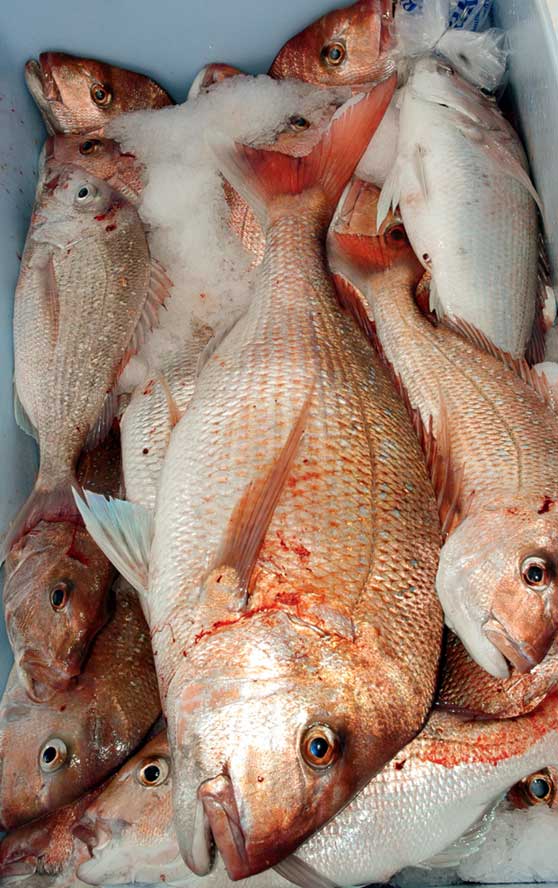
- Dumped or high-graded commercial catch.
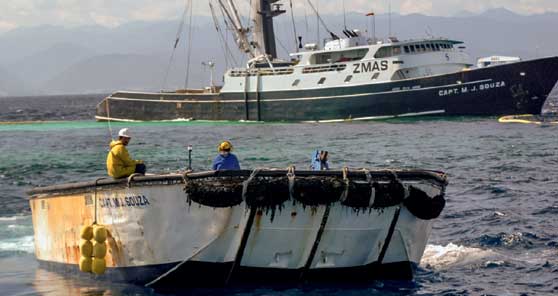
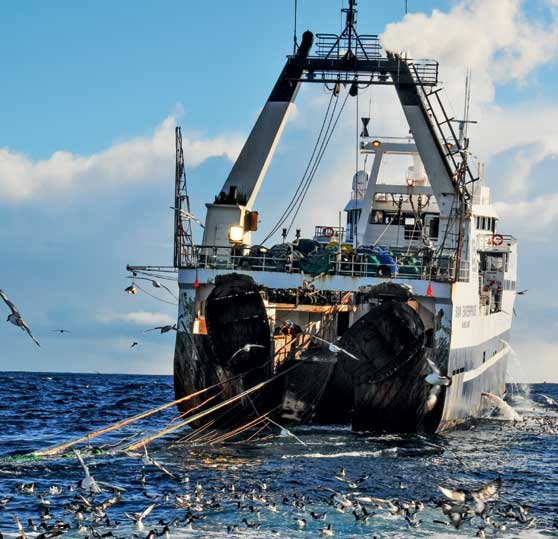
This last is particularly injurious, and joint venture boats – foreign boats and crews contracted by New Zealand quota holders to catch fish in our EEZ – appear to have been particularly reckless and wasteful with New Zealand’s fish stocks.
The scams, the frauds, the rorts and downright illegal behaviour detailed in the report are so extensive that I have not the room to detail them here, but it is enough to make a grown man despair.
Those who want to read the full report can find it at http://www.seaaroundus.org/doc/publications/wp/2016/Simmons_2016.pdf.
This matters. The recreational fishing public (who want to see more fish in the water) and the general public (who pay inflated prices to buy commercially-caught fish) both have a dog in this fight. In the words of the Catch Reconstruction paper’s authors in a recent piece published in the NZ Herald:
‘Our catch reconstruction, which provides the best estimate to date of what’s really occurring at sea, indicates that more than half of the fish caught in our waters by commercial fishers is not reported. That is a massive waste in itself, and New Zealand could earn money from those [dumped] fish. It’s also a bad look. And crucially, it undermines the Quota Management System because catch (and effort) data is critical for determining the amount of fish allowed to be caught each year.
We are not saying that the QMS is the cause of the problem. We are saying that the QMS doesn’t solve all the problems and introduces new ones. This is an opportunity for all stakeholders… to devise a smarter way of managing our fisheries.’
PUT SIMPLY, if the figures used to calculate the Total Allowable Catch are so wildly incorrect, it throws the whole QMS into doubt. MoF, then MAF, then Mfish and now the MPI, have for many years touted the QMS as ‘world leading’, so the revelation that it has serious flaws has seen a lot of butt-covering going on.
Rather than ‘own’ the report and use it as a basis to reform the QMS and help to set our fisheries management right, the pushback from those with a vested interest in the existing system has been fierce. Despite the Catch Reconstruction paper being the most in-depth study ever done on the subject, completed by highlyrespected researchers using scientifically sound methods, and being internationally peer-reviewed and published in one of the world’s top three scientific journals, the minister, fisheries officials and commercial industry leaders have all attempted to muddy the waters by discrediting the figures and the way they were arrived at.
Dirty deeds
But the devil is often in the detail, and the real story was buried deeper in the paper – sections from recently leaked internal MPI reports on dumping and discarding called Operation Achilles and Operation Hippocamp. These reports can be found at http://www.fishing.net.nz/fishingadvice/general-articles/tangled-web/.
Although they seem more concerned with the public relations effects than the actual problems caused in our fisheries, in these reports MPI’s own investigators (emphasis mine) highlight the potential damage of these practices to New Zealand unless effective action is taken to resolve the QMS problems:
‘It is more than sustainability. It is more than the fact that we are relying on misleading and incorrect data to sustain our fisheries. The most pressing reason for urgent action is that we have compelling visual evidence of serious offending [emphasis mine] recorded on a media that could become available (for whatever reason) to outside persons and organizations. Some of these people and organizations could have strong vested interests in this information and make this material quickly available to the public via internet related media i.e. ‘you-tube’ etc.’
‘The resulting damage that could be caused not just to MPI but to the New Zealand fishing industry and economy as a whole could be extensive. The sight of large, perfectly good fish being systematically discarded in such large quantities could have a huge negative effect, as it could easily stir up an emotive backlash from not only the New Zealand public, but from international quarters as well. These images could quickly negate the ‘green sustainable’ image that we as a country portray. This combined with the fact that we have known about these dumpings/discarding issues for many years, and would appear to have done little to combat it, would be very difficult to explain and be unpleasant at best.’
Nothing to see here
The MPI claims it ‘has nothing to hide’ but other embarrassing revelations from their own reports seem to indicate that despite on-board cameras recording Hector’s dolphin deaths and blatant illegal fish dumping, the MPI did not take the matter to court as it happened during a camera trial, and they didn’t think the evidence would be admissible. However, the ministry’s own investigator stated:
“As I understand it, the ministry has previously ignored offending [dumping]… because an assurance had been given to vessels prior to observers boarding that such offending would be disregarded and no prosecution taken.”
These, and many other damning statements from the ministry’s own reports (apparently there is a third report called ‘Operation Overdue’ which is a similarly ‘hot potato’) call the MPI’s stewardship of the country’s fisheries into serious doubt and cast a huge shadow over the practices and ethics of some parts of the commercial industry.
The Minister of Primary Industries, Nathan Guy, said that his ministry had not briefed him on these reports.
Hearts and minds
A report prepared by the Westpac Bank for the commercial fishing sector, called ‘Industry insights’, was released at the end of March this year (importantly, before the ‘Catch Reconstruction’ paper was published). Under the heading ‘A more expensive social licence’ it states in part:
Several years ago, one of the biggest challenges to the New Zealand Fishing, Aquaculture and Seafood sector was showing overseas customers that our seafood was harvested sustainably. Today, that challenge has largely been met, and instead the sector is being challenged to show New Zealanders why it should be allowed to operate here.
At the same time that recreational fishing is growing strongly, the seafood sector’s social licence to operate is becoming harder to maintain. Often-misinformed views of commercial fishing as “pillaging the seas” as one industry source put it, rather than being subject to a stringent QMS, are pervasive. Loose regulations on over-fishing seen overseas are assumed by many to apply here. Recreational fishers are increasingly coming into conflict with commercial fishers.
The catch reconstruction report certainly calls the ‘sustainable harvest’ issue into doubt and consequently the Marine Stewardship Council certification of several species. Some major fish buyers around the world are very sensitive to public criticism over this issue. Environmentalists are already actively campaigning to have the McDonalds chain stop buying New Zealand fish.
The second issue that the Westpac report identifies is interesting: the commercial industry’s ‘Social Licence to Operate’ (SLO). This term is sometimes used in reference to extractive industries (including fishing) and generally thought of as ‘the measure of confidence and trust society has in a given business to behave in a legitimate, transparent, accountable and sociallyacceptable way’.
Some sectors of the commercial fishing industry seem to be sensitive to the SLO concept (consider some of the media and public advertising campaigns we have seen over the last couple of years that have attempted to improve the image of the industry), and MPI Director-General Martyn Dunne recently stated:
“I place a high priority on the ministry having strong credibility with the public when it comes to our role as the regulator of fisheries in New Zealand and our role in holding people to account when illegal activity takes place. Each year, the ministry prosecutes in excess of 300 cases in the fisheries sector and issues over 3000 infringements.”
Given the public backlash against the industry and the ministry, the minister needed to be seen to be taking some sort of action. Nathan Guy announced that he would fast-track the installation of camera-monitoring equipment on commercial boats (although MPI don’t currently seem to be sure that such camera evidence is admissible in court – the reason they used for not prosecuting the fishermen recorded dumping fish in the camera trial).
This seemed to be a forward step, until it was revealed by Greenpeace that the company engaged to install and monitor the trial camera surveillance and report to the MPI, Trident, is in fact, owned by the fishing companies themselves. Sanford owns 42%, Moana Fishing 27%, with a further 12 fishing industry-involved companies owning lesser percentages. Trident is required to monitor the fishing activity in SNA1, review camera footage, and report to MPI monthly.
It is well-known that Peter Goodfellow is a director of Sanford Ltd, and his family holds substantial shares in the Sanford business. He is also the president of the New Zealand National Party.
Greenpeace also revealed that Trident’s registered office and contact address is level 6, 135 Victoria Street, Wellington. This is the address of Seafood New Zealand (Seafic), a powerful seafoodindustry-funded lobby group. It is also the address of FishServe, an administrative support service for the fishing industry, owned by Seafic. Seafic is also contracted to provide administrative support for Trident.
“Trident appears to be anything but an independent and objective watchdog for the industry,” says Russel Norman, Executive Director of Greenpeace New Zealand. “This is like the fox guarding the henhouse. The government has awarded the contract to monitor fishing companies to an entity owned and controlled by the very same fishing companies”.
Martyn Dunne and Nathan Guy also announced the appointment of a Queen’s Counsel to conduct an inquiry following the revelations that officials in MPI decided not to prosecute these same commercial fishermen.
But, critically, MPI is to appoint its own investigator, and the terms of reference really only cover a sideshow to what appears to be a systemic failure of both the Quota Management System and the MPI.
Full Commission of Inquiry needed
When the terms of reference for the inquiry were released, recreational fishing group LegaSea said that these do not go far enough. LegaSea spokesman Scott Macindoe says the minister needs to launch a truly independent inquiry and ‘not allow MPI to run further rings around the New Zealand public’.
“Given that the ministry commissioned the original operations, then decided not to prosecute those responsible for the illegal dumping and blatant wastage, it is not appropriate for MPI to be so closely involved. Prior to this information being leaked, MPI had failed to act on its own investigations into the matter and had failed to inform its minister.
“Sunlight is the best disinfectant and the minister needs to shine a big light into the inner workings of MPI. How can the public restore their faith in this organisation and its ability to oversee New Zealand’s fishing assets when it looks like they are colluding with industry to hide the truth?”
Not satisfied with the simple inquiry proposed, LegaSea is calling for a full Commission of Inquiry to be held because the issue is too great for a departmentally-controlled investigation, and MPI appears to have granted lawbreakers immunity from prosecution.
|
|
This article is reproduced with permission of |

Recent Forum Posts Visit Forum

2026 Grunter Hunter
in The Briny Bar26 minutes ago
smudge
Hehe I didn't even come close Kevin! My best was 30g short of averaqge weight. Well done to forum member Wayno who is the first to...

Saltwater Flyfishing Gear
in Buy Sell Trade or Exchange2 hours ago
Kevin.S
Continuing my big clear out I'm also getting rid of my salt fly gear as it isn't getting used, here's a rough list Sage Xi2 890-4, Airflo...
FC 595 For Sale
in Buy Sell Trade or Exchange55 hours ago
Kevin.S
I have reluctantly decided to sell my boat. It really is not getting enough use to justify keeping it. It is a 2016 FC 595 with...

Manukau Harbour & West Coast fishing
in Fishing Reports94 hours ago
smudge
That's a great catch Schecter! Kayak fishers do it so much harder than anyone else. It would be an absolute pleasure to hand over the $5k...

Knife sharpeners
in The Briny Bar142 hours ago
krow
I'm about to order a couple from Amazon. Check your PM Smudge...
1989 Evinrude 90hp V4
in The Boat Shed143 hours ago
bricker
Inherited the above outboard on a boat - is in very good order with little use. The serial number is A1351974. Is there a way of...

Auckland Yakkers
in Yak Yak Yak221 hours ago
BananaBoat
Out from Mission bay this evening. Went to the red marker by Mission & Kohi. Never fished this area beforeHad a quick looksie for some structure....
Yellowfin
in The Briny Bar238 hours ago
krow
I heard there were Yellowfin East of the chicks yesterday but I'd suggest this is unusual this late in the season as the water is cooling....

Mac'nificent Autumn Fishing....Mokau!
in Fishing Reports264 hours ago
Snappa Geoff
Thankyou for the replies guys... Tagging some bigger fish is a good idea Krow! but it doesn't interest me enough to get involved....
Popular Articles

Softbait Fishing - Part 1 - gear selection
John Eichlesheim writes an article about selecting the right equipment for softbait fishing... Read More >
Softbait fishing Pt 2 - tips and tricks
Techniques, tips and tricks of softbait fishing – getting the most from your soft baits.... Read More >

Surfcasting - setting yourself up
Gary Kemsley helps sort out the necessary gear for intending surf fishers.... Read More >

Squid - How to catch them
Squid fishing is a rapidly growing aspect of fishing - Paul Senior shares some hints and tips to get started.... Read More >
Fishing Reports Visit Reports
Tauranga Fishing Report - 28/05/26
Tarakihi on the bite Trips are few and far between at this time of year,... Read More >
Canterbury Fishing Report - 28/05/26
Fresh and salt turning it on! It is not very often I get to say... Read More >
Bay of Islands Fishing Report - 28/05/26
Lures paying dividends We finally had a break in the SE winds that have been... Read More >
Manukau/West Coast Fishing Report - 28/05/26
Snapper and gurnard in the harbour The weather has finally taken a turn for the... Read More >
Comments