
Mercury levels in fish
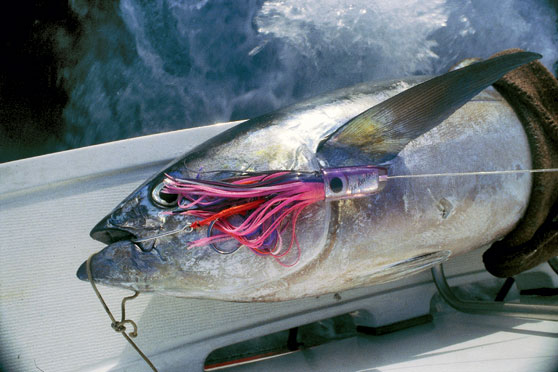
Most of us have heard something about the dangers of mercury in fish. Sam Mossman takes a deeper look at the subject and its implications for Kiwi fish consumers.
Like many Westerners of my age, I first became aware of the dangers of mercury buildup in fish back in the 1970s, when the cause of the deadliest case of mercury poisoning the world has ever known – at Minamata, Japan – became apparent to the wider world.
Between 1932 and 1968 the Chisso chemical factory in Minamata released large quantities of industrial waste water into the sea that was badly contaminated with highly toxic methylmercury. This poison built up in local fish and other sea life, then in local people who consumed the fish. The effects of the resulting mercury poisoning became known as ‘Minamata Disease’.
Those afflicted developed skeletal-muscular deformities and lost the ability to perform motor functions such as walking and using their hands. Many also lost vision, hearing and speech capabilities. Severe cases of poisoning resulted in insanity, paralysis, coma and then death within weeks.
Around 1800 people died because of the initial poisoning, but unborn children were also poisoned in the wombs of mothers exposed to mercury poisoning, displaying severe birth defects and neurological problems.
Cats helped make clear the link to the poisonous seafood by feasting on dead fish and then staggering about before dying in what was dubbed ‘cat dancing’. The death of these cats (as well as fish and birds) helped pinpoint the cause of human ailments, but the process was a lengthy one.
The true toll of death and deformity will probably never be known, but certainly extends into the tens of thousands. And, apart from the human toll, the incident remains notorious for not only the poisoning itself, but also for the appalling tactics that the Chisso company used to try and suppress the cause of the poisoning and its aftermath, along with the apparent indifference of the authorities. It is a heartbreaking story, but we don’t have space to explore it in any depth here. (Google ‘Minamata’ if you want to know more.)
Japan’s government didn’t acknowledge that the factory’s methylmercury caused the mass poisoning until 1968, and the Chisso corporation only accepted responsibility for it after losing a 1973 lawsuit brought by the victims. Since then, the Japanese government has begrudgingly certified about 3,000 patients and gives medical aid to over 10,000 others who exhibit conditions, including sensory disorders.
Ancient history? Well, no. The legal wrangling over compensation continues to this day, and an international treaty called the ‘Minamata Convention on Mercury’ designed to protect human health and the environment from manmade emissions and releases of mercury and mercury compounds, only became active on August 16 of this year.
Fish is fine, but…
Nutritionist Victor Lindlahr famously said, “You are what you eat.” But before we go any further, let us get one thing clear: fish, and seafood in general, is great food – an excellent source of protein, low in saturated fat and containing the essential omega-3 fatty acids, iodine and some vitamins. It is also delicious, and I personally eat fish about three times a week when it is available. However, most fish also contain mercury, some species more than others.
It is not my intent to put anybody off eating this nutritious natural bounty, but caution is advised in the amount consumed with some species of fish. Most people are not exposed to mercury levels high enough to harm the nervous system as the body excretes it over time, so accumulation is usually not a problem unless very large amounts of the wrong species are ingested. However, unborn babies are potentially more sensitive to the harmful effects of mercury and their exposure – via their mothers – should be limited. The Food Safety Authority also recommends that if you eat a lot of fish, you should restrict consumption of certain species high in mercury.
How does mercury poisoning happen?
In oceans, freshwater or soil, biochemical and bacterial processes can transform elemental mercury (Hg) into methylmercury (MeHg). Methylmercury absorbs into the body much more easily than inorganic mercury, breaks through the body’s normal barriers to toxins, and remains in the body far longer than elemental mercury.
This form of mercury accumulates in living organisms, beginning at the foot of a food chain with plants, plankton or other small organisms that passively absorb it. Each time a larger animal eats these species and is in turn eaten, mercury accumulates and migrates to the top of the food chain through a process called biomagnification.
The process puts top-level predatory fish – and people who eat them – at the greatest risk for exposure. In humans, as already described, mercury compromises the central nervous system, kidneys, and brain; in high doses it can be fatal. Apart from those who work directly with mercury, pregnant women, the babies they are carrying, and young children are at the highest risk.
Mercury in New Zealand
Some industries, especially pulp and paper mills and mining,can produce man-made mercury pollution, but it seems that most natural mercury in New Zealand is associated with geothermal and volcanic activity. Notable mercury deposits are found in Northland (a mercury mine was operated near Ngawha Hot Springs, Northland, between 1928 and 1934). The waters around the active volcano at White Island have produced a few samples of fish with high mercury levels as well.
Another example of this association is that freshwater fish (such as trout) which live in lakes and rivers supplied by geothermal water (including the Rotorua lakes – especially Lake Rotomahana and the Waikato River below Broadlands) may accumulate high levels of mercury. (Note that there are several pulp and paper mills in these areas which may be sources of mercury, too.) Fish caught in parts of the Rotorua region can have methylmercury levels up to 10 times higher than their marine counterparts, so it is a good idea to limit the amount of trout eaten from this area.

Size matters
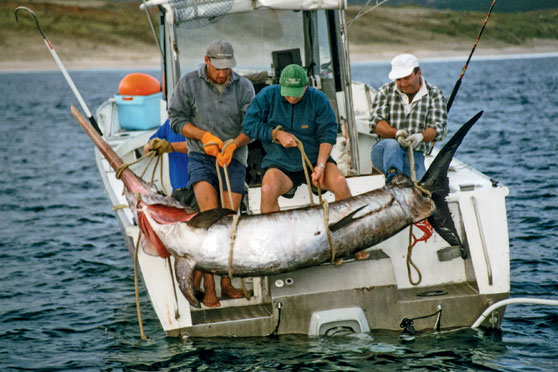
Most species of fish accumulate only low levels of mercury over their lifetime, but predatory fish at the top of the food chain, such as tuna, sharks, marlin and swordfish, tend to accumulate higher levels of mercury by eating other fish that already have mercury in their bodies.
In fish species that live for a long time, higher mercury levels are often found in older fish than in the younger ones. School sharks, for example, are known to live for up to 50 years and are also predatory. They have amongst the higher levels of mercury found in our fish.
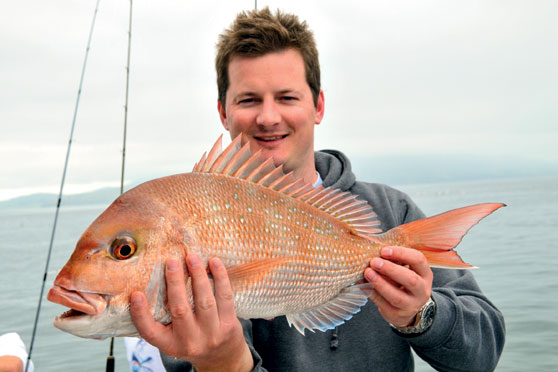
A study done on mercury in snapper found that the biggest, oldest fish had higher levels, per kilogram, than smaller, younger fish. This adds another motivation for the practice of returning big fish and keeping smaller, younger ‘pannies’ for the table.
In general, Kiwis’ greatest exposure to mercury – up to 54% of estimated total exposure – comes from eating fish, especially long-lived predatory marine fish, or freshwater fish caught in geothermal regions. As an aside, the other pathway for significant exposure to mercury in New Zealand is from amalgam dental fillings (20 to 34 percent of total exposure).
Mercury in our fish
After the sickening Minamata disaster in Japan, much more international research was done on mercury and its effects on humans. Some key studies were undertaken in New Zealand, mostly led by internationally respected Professor Tord Kjellstrom.
In those days, school shark (greyboy, flake) was the commonly-used species in New Zealand’s fish and chips, leading to the term of ‘shark and taties’ for this staple takeaway meal. In one study, mercury levels tested in takeaway fish in South Auckland were shown to be highest in school shark meat, leading Australia to temporarily ban imports of this fish from New Zealand in 1972. School sharks are not used in fish and chips these days. Another study of women who consumed a lot of fish showed high levels of mercury (as measured in hair samples) and, importantly, if they were pregnant the children who had been exposed to mercury in the womb scored lower in scholastic and psychological tests (administered when the children were six and seven years old) than a ‘control’ group of children with mothers who had low mercury levels.

Gamefish
With the advent of ‘new’ recreational fisheries in recent years (such as the West Coast Pacific bluefin, daytime dropping for broadbill, and southern bluefin off Waihau Bay), we have seen a big upswing of captures of big game species from private boats. The excitement of the capture can overcome anglers and crews, and perhaps more of these gamefish fish are brought to shore than should be.
While it is great to share the catch with family and friends, even a modest gamefish can provide a lot of meat, sometimes more than people really want. This can lead to high consumption levels of fish that already has a high mercury content because of its size and species.
A couple of examples: a NZ Herald article in 2011 reported that: Aucklander Hayden Poole – an avid fisherman – was shocked when a doctor’s report revealed his mercury levels to be more than four times the recommended human limit. “Sitting at work a few months ago, I noticed tingly fingertips and they were a little bit numb,” he says. Mr Poole says he’d eaten canned tuna and game fish several times a week for months on end – at times eating up to seven servings of fish a week, almost triple the recommended limit set by the Food Safety Authority. A tingling sensation under the skin is one of the first warning signs of abnormally high mercury toxicity. John Reeve, the Ministry of Agriculture and Forestry’s principal advisor on toxicology, says game fish were likely the culprit. “The higher up the food chain [the fish] are, the higher the level of mercury there will be in the fish – and it also depends on [the fishes’] age,” he says. Predatory fish, such as swordfish, marlin, shark and tuna, all come under the category of game fish. The official recommendation for New Zealanders is to eat two to three servings of fish a week, as set by the NZFSA. They suggest a lot more restraint with game fish, recommending just one serving a week or fortnight of game fish with no other servings of fish in that time. [This is] a lesson Mr Poole says he is taking on board, cutting down his fish intake dramatically to help flush his system.
In another case, Kiwi charter skipper Tony Orton has had his own brush with mercury. Tony was working overseas as a charter skipper at the time, and started feeling a bit out of sorts. His symptoms included: a lack of energy; feeling irritable, rundown, and depressed; and suffering lower back pain. He ran across someone who was undergoing detox for mercury poisoning (caused by amalgam fillings in his teeth) with similar symptoms, so went and had a test for mercury. He was horrified to find that his mercury level was 10-12 times the usual level and only very slightly below the toxic level.
As Tony had very few amalgam fillings in his teeth, he looked at the other main accepted source of exposure to mercury – eating seafood. At the time, as a boat skipper, he had a heavy consumption of seafood, including a lot of yellowfin and bluefin tuna – high-level predators known to accumulate mercury in their systems.
Mercury is only slowly eliminated from humans. To detox, Tony stopped eating fish for a year. His mercury levels decreased in a linear fashion, then the process seemed to speed up after about eight months. After two years his levels were finally down to near normal and his symptoms have disappeared. Tony is now eating fish again, but only ‘white fish’ like snapper and tarakihi, avoiding ‘high-risk’ predatory species known to accumulate mercury in their bodies, such as marlin, tuna, swordfish and shark.
The wider Pacific
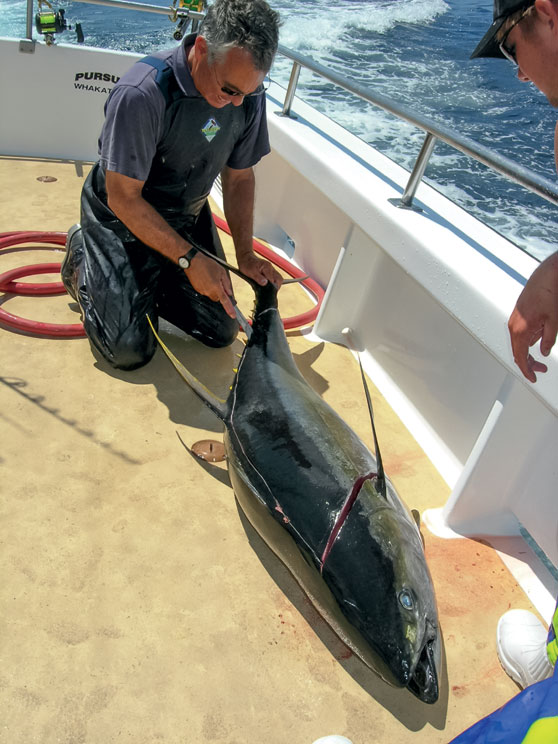
There is little mention of yellowfin tuna in reports and consumption recommendations for New Zealand, as tests have not been done here for this once plentiful, but now uncommon, species. This is not the case for other regions of the Pacific, however. Tests on yellowfin (ahi) caught near Hawaii show that while there was no detectable rise between 1971 and 1998, the mercury content in yellowfin tuna has been rising at 3.8% per year since 1998 until the most recent tests in 2008. In fact, overall mercury levels are increasing globally in ocean water, but the Hawaiian study was the first to show a consequent increase in mercury in an open-water fish.
Researchers have also confirmed that the mercury found in the fish caught near Hawaii likely travelled through the air for thousands of miles before being deposited in the ocean by rainfall. They noted that the North Pacific fisheries are downwind from rapidly-industrialising nations such as China and India, and a study in 2013 used a kind of isotope ‘fingerprinting’ to determine that a substantial portion of the methylmercury found in nine species of fish from the deep northern Pacific Ocean came from these Asian sources. These nations rely heavily on coal-burning power plants, which are a major source of mercury pollution. (China is currently making serious moves into solar power, so there is some hope the situation may improve.)
Most recently, a pilot study by the Biodiversity Research Institute and the UN Environment Programme, released earlier this year, revealed high levels of mercury in hair samples of women of child-bearing age from the Cook Islands, the Marshall Islands, Tuvalu and Kiribati. This was attributed to a fish-rich diet, and the researchers recommended that the local people should eat smaller inshore fish, rather than the larger offshore pelagics.
However, at least at Rarotonga in the Cooks group, many inshore reef fish are already implicated in ciguatera poisoning, which arrived at that island in just the last decade. Fish is critical to the island’s diet, but it seems their choices are becoming more and more limited.
Minimising mercury
I didn’t write this piece to freak anybody out and don’t have any intention, or see the need, for reducing my personal fish intake. Rather, I was motivated to look into the subject upon hearing one or two people, who had killed several broadbill, were eating a lot of it, as were their families.
Following some basic principles should avoid any problems, and these coincidentally fit in well with modern conservation practices.
• Minimise the amount of gamefish (marlin, broadbill, tuna, shark) you eat. A modest portion every couple of weeks is okay. Practice more release or tag-and-release of these species.
• Avoid eating large old specimens of any species; instead, target younger, medium-sized fish and release the big breeders.
• Watch which species you eat.
• Limit the amount of trout you eat from thermal or volcanic regions.
• Pregnant women and small children should be particularly careful about how much and how often they consume gamefish or trout from thermal regions.
Apart from that, bon appetit!
| No restriction necessary | 3 – 4 servings per week acceptable |
1 serving per 1 – 2 weeks acceptable |
| Anchovy Arrow squid Barracouta Blue cod Brill/turbot Brown trout from Lake Ellesmere Cockles Eel, long or short finned Elephant fish Flounders Gurnard Hoki John dory Monkfish or stargazer Mussels (green and blue) Orange perch Oysters (Bluff* and Pacific) Parore Rainbow trout from non-geothermal regions Salmon (farmed) Scallops Skipjack tuna Sole (except lemon sole) Southern blue whiting Surf clams (eg tuatua) Tarakihi Toothfish (Antarctic) Warehou (common, silver and white) Whitebait/inanga |
Albacore tuna
|
Dogfish (excluding rig)
|
NZFSA recommended maximum fish intake of various NZ fish species
To the ‘high mercury’ column below, I reckon it would be fair to assume that
northern pacific bluefin tuna, black marlin, blue marlin and large yellowfin should
also be added.
| New Zealand recommended consumption A serving is approximately 150g (about two fish fingers). People can safely eat two to three serves a week of most types of fish. However, because of the presence of higher levels of mercury in some fish, a few types should be limited in the diet, especially women who are pregnant. Pregnant women, women planning pregnancy and young children should not eat shark (flake), broadbill, marlin and swordfish more than once a fortnight, and should not eat any other fish during that fortnight. Orange roughy and imported farmed catfish (basa) should be eaten no more than once a week, and no other fish should be eaten during that week. The general population should also only eat shark (flake), broadbill, marlin and swordfish once per week and no other fish that week. The named fish may contain more mercury than other species, because they are long-living fish and/ or predators and can accumulate higher levels of mercury by eating other fish. |
|
|
This article is reproduced with permission of |

Recent Forum Posts Visit Forum

Shane Jones
in Fisheries Management10 hours ago
Pcj
But reality is maybe 4 from legasea and the NZSFC .Rather than asking what fishos want they blindly go ahead with their own ideas and...

Trailer wheel clamp
in The Boat Shed21 hours ago
Mc Tool
either crc long life or 556 marine are way better ...

Foton tunland v9
in The Briny Bar37 hours ago
Ho Dee
not fishing related and delete if required but was wondering if any has one of these or someone who has just wanting so e real world...

Bluefin Tuna at the cavs.
in The Briny Bar83 hours ago
smudge
Despite my years of fishing I haven't really fished many places, my focus has always been on Auckland's west coast and out toward Great Barrier. I...
Casting gloves
in Popper and Topwater Fishing128 hours ago
Mc Tool
100 bucks for a lure 😬. Watching one of them flying over the horizon without the line attached would be " character building " for sure...
I thought Id post some nice photo's , join...
in The Briny Bar179 hours ago
Alan L
That is a very cool pic Krow.The Far North is very cool, the Far far North even cooler. Mint looking day.Alan...

Mc Tools berley mincer
in The Briny Bar187 hours ago
SaltyC
Good size, they scrap well. Got an 18kg one up in Vava'u back a few years ago fishing off squeaky Going's boat. That was quite a...
Out with the "Twelves"
in Fishing Reports241 hours ago
Pcj
I should be able to get out end of October. The nephew been out virtually every weekend over winter and has done well. It seems the...
Manukau Harbour & West Coast fishing
in Fishing Reports249 hours ago
smudge
Nice work Schecter, I think snapper may be around sooner than you think. Well I am hoping so...

Whangarei Harbour report.
in Fishing Reports681 hours ago
krow
180 +m is where I've had to be lately. A lot less low foul around these parts and some of it shallower that looks like Tarakihi...

Popular Articles

Softbait Fishing - Part 1 - gear selection
John Eichlesheim writes an article about selecting the right equipment for softbait fishing... Read More >
Softbait fishing Pt 2 - tips and tricks
Techniques, tips and tricks of softbait fishing – getting the most from your soft baits.... Read More >

Surfcasting - setting yourself up
Gary Kemsley helps sort out the necessary gear for intending surf fishers.... Read More >

Squid - How to catch them
Squid fishing is a rapidly growing aspect of fishing - Paul Senior shares some hints and tips to get started.... Read More >
Fishing Reports Visit Reports
Outer Hauraki Gulf Fishing Report 17/09/26
Spring wind the handbrake. Spring is starting to make its presence felt in the outer... Read More >
Top of the South Fishing Report - 17/09/26
Early snapper in Tasman Bay. Well, spring is finally here, and the days are getting... Read More >
Bream Bay Fishing Report - 17/09/26
Good snapper catches reported. After Tangaroa turned off the fish tap for a month or... Read More >
Bay of Islands Fishing Report - 17/09/26
Pacific bluefin tuna for the lucky few. The last fortnight has seen more fishable days... Read More >
Comments