
Kingfish - How Smart Are They
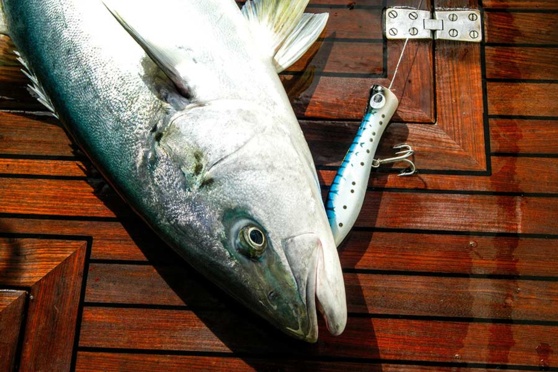
How smart are kingfish? Sam Mossman muses on fishing cycles, age, and the intelligence of kingies.
I recently passed the milestone of 60 years since catching my first fish and found there are pluses and minuses to this aging thing. On the downside, the body does not bounce back so easily from the punishment of hard days at sea, and my capacity to do the ‘hard yards’ of fishing, such as spending long hours casting and retrieving big surface lures or mechanical jigging, is reduced.
The upside, besides not being dead, is that I don’t really need to beat myself up these days. There is a proverb that goes, “Old age and treachery will always beat youth and strength.” These days I am often content just to fish for a feed without feeling the need to drag monsters into the boat or fill the bin to its legal capacity, as I might once have done. Likewise, I am happy to use effective fishing techniques that are easier on the body. For example, live baiting is a lot less labour intensive than jigging or popper fishing if I want a kingfish for the smoker.
Another benefit of having gone around the track a few times is that you have been here long enough to start to see the bigger patterns. I don’t want to sound like a really old fart, but one of these patterns is that there is little that is truly new in fishing. Sure, there are refinements in tackle and technique that will see a surge in popularity of a certain type of fishing for a while, but often the basics have all been done before.
What goes round, comes round
Take, for example, jigging for kingfish. I can remember at least three cycles of this activity. The first kicked off around 1980 with the arrival of big American lures called, collectively, ‘Irons’, which were introduced pretty much simultaneously by visiting Australian fishermen in the Bay of Islands and American tourist fishermen in the Bay of Plenty. The Americans had been using the technique in their home fishery since at least the 1950s and then taught it to the Aussies. The method was stunningly successful on the local kingfish populations initially but the tackle available then was not ideal, the technique was hard physically and constant pressure on the kingies saw results – and angler interest – drop away.
The next cycle was in the early 1990’s, boosted by the development of Kiwi made jigs like ‘Branks’, ‘Lethal Lures’ and ‘Grim Reapers’, all produced in Auckland and patterned after Norwegian-style lures. Although initially designed for smaller fish like snapper and trevally, kingfish liked the larger sizes. They had a thinner profile than Irons and were easier to work through the water at speed, but tended to target smaller kingfish. Again, the tackle of the day was not ideal and although the method was popular for a few years, once the early, easy results faded, so did angling effort.
The next time round, starting about 2003, the new cycle of kingfish jigging was inspired by Japanese angling techniques. The new iteration, called ‘mechanical jigging’, surfed in on a wave of technology – GSP braid lines, new near-unbreakable graphite rods, super strong jigging reels, and gorgeously finished long jigs armed with the then odd-looking assist hooks. This new craze hit Australia first and encountering some there, I brought some of the first ‘knife jigs’ with assist hooks back to NZ to try. They were brilliant and it didn’t take long for tackle companies (Chris Wong of BCS lead the charge) to start importing the new technology and away we went!
The new technology solved a lot of the issues of the previous jigging iterations and this time round, anglers have stuck at it for longer, especially at remote kingfish Valhallas like White Island, the Three Kings, and the Ranfurly Bank, where there is a fair chance of getting some decent action in return for the expense and physical effort.
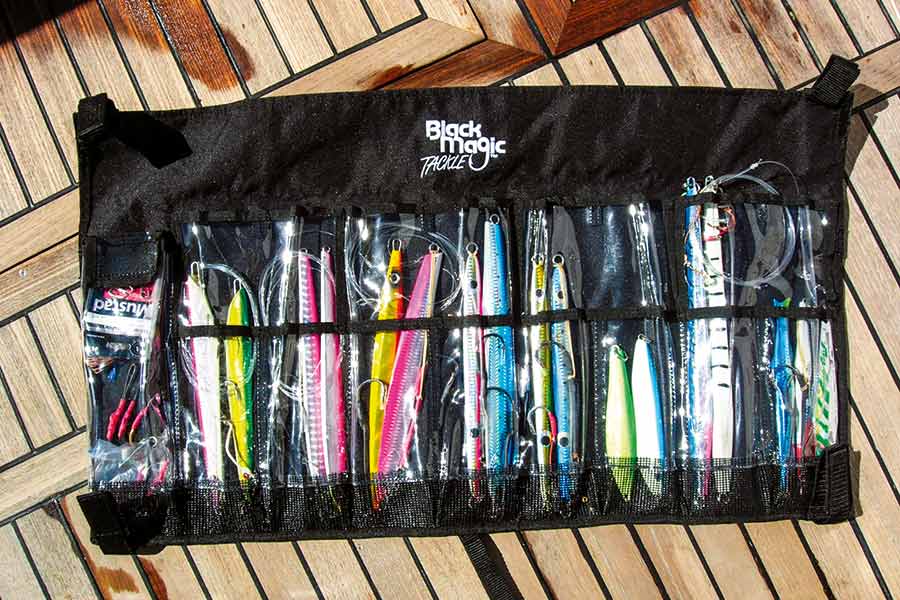
A wave of new technology included gorgeously finished long jigs armed with assist hooks.
Like jigging, there have been a couple of cycles of fishing for kingfish on surface lures, which initially took the form of casting poppers. The second time round we had high tech Japanese technology available and after poppers began to lose their fish-catching powers, along came stickbaits – initially highly effective until their powers, too, started to drop.
One technique that has remained popular and effective on kingfish long term is live baiting. Although catching and keeping live baits requires more application than using lures, it is very effective and doesn’t require the physical effort and coordination of jigging or casting with big tackle. However, even live baiting has gone through many progressive refinements over the last decades.
Now-retired Bay of Plenty charter skipper Rick Pollock once told me that when he first started fishing the then near-untouched kingfish populations at White Island, his clients could use a shark hook on the end of a length of dog chain as terminal tackle, with a whole fillet of skipjack or albacore as bait, and hook plenty of the big, uneducated kingfish. Thanks to the careful recreational management of this fishery the kingfish populations are still in great shape, but baiting techniques have had to evolve to maintain results on bigger fish. Lighter leaders, smaller hooks and jack mackerel live baits are all part of this, which are certainly big changes from a big hunk of dead fish on a chain!
Educated kingfish
Do kingfish wise up to certain techniques or lures and get harder to catch on them? It certainly seems to be the case in my experience. Kingfish that make certain wharves their home see a lot of tackle and can be very challenging to hook. Some mates and I once spent three days fishing from the Te Hapua wharf in the Far North. We could see the kings in the water but although they were only ‘rats’, they were so well educated that even free-lined live piper on relatively light gear could not tempt them.
At spots where the kingfish have had much less pressure they can still show signs of learning from experience. I have regularly found when jigging a school of kingfish over a structure that the strikes often slow, then stop after I catch a several fish on a specific jig. If I then change the lure to one of a different colour, size or action, I am back in business, at least for a while…
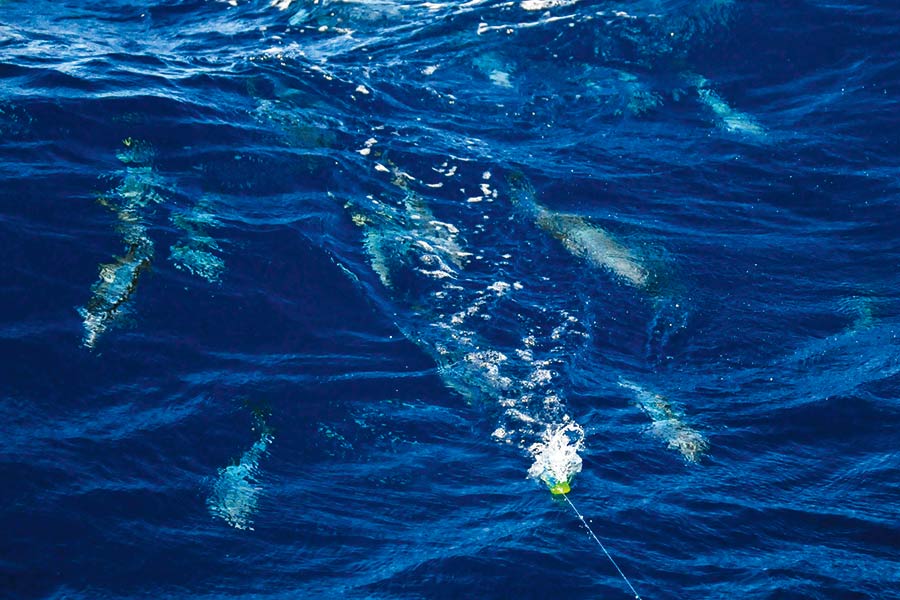
Kingfish soon get used to a specific lure. After a few were caught on this popper the rest of the school were content just to follow it in without striking.
Even remote hotspots have seen some changes in kingfish behaviour. When recreational fishing first starts in a region that has seen little pressure it can provide easy pickings on big, uneducated fish for a period. When boats started regularly fishing the King and Middlesex Banks (near the Three Kings Islands) in the early and mid-1980s, to troll a set of big marlin lures over the banks was to invite a ‘full house’ of big kingfish. It’s not that easy anymore. The Banks (and the nearby Princes Group) are still fabulous spots for big kingfish, but you need to work a bit harder for your hook-ups now.
There is little doubt in my mind that fishing pressure can cause kingfish to ‘wise up’, but what is the mechanism? Obviously, it is not the singular experience of each fish as you don’t hook every fish in the school. And some fish don’t seem to learn – there are records of at least one kingfish at White Island that has been caught, tagged and released five times! It must be a particularly dim specimen, or maybe one that is into body piercing!
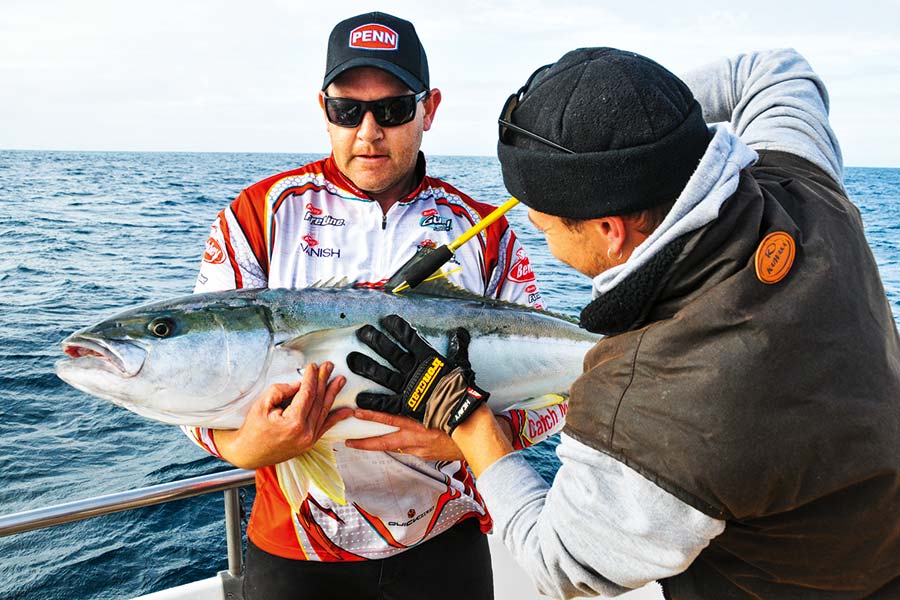
At least one kingfish at White Island has been caught, tagged. and released five times.
It seems too much to believe that there is a collective ‘hive’ memory amongst kingfish, but maybe they do take their feeding cues from other members of the school. I could believe that if some members of the school, after having a few cracks at a flashy hunk of metal or a popper splashing across the surface and finding that it is not good to eat, will stop chasing it, causing other members of the school to do the same thing.
Or maybe we just catch the dumb ones first, while other individuals have a higher sense of caution and are harder to hook? Logically, these more cautious fish are the ones that get to pass their genes on, resulting in harder-to-catch fish over time. In humans, we call this ‘the Darwin effect’.
The arms race
But it is not always remote, seldom-fished places that are the hotspots. Sometimes, a ‘new’ technique will be applied to a handy population of fish that has seen little pressure in the past. An example of this was when surfcasting tackle developments coincided with the return of many war-weary veterans after WWII. Much of the inshore zone beyond the surf had seen virtually no pressure before as boats could not get right in close and there was a limit to how far you could cast a handline.
Fishing author, the late Ray Doogue, was one of these returned servicemen who took up surfcasting on his return to New Zealand as an antidote after spending a miserable time as a POW in the Second World War. He noted in his book Sea Anglers’ Guide that “The first summer I fished from the beach I kept a close record of my catches and from Christmas to the end of April I averaged eight snapper plus a good number of kahawai, gurnard and other fish for each visit to the beach.” That is an amazing average for a (then) inexperienced angler wandering down to his local beach with the basic surfcasting gear of the time.
A similar effect was produced by the development of electric kontikis. The zone outside the reach of surfcasters but inshore from where many commercial boats work was suddenly accessible to a longline system with 25 hooks and considerable catching power. The results were impressive. Another example is when soft-baiting first allowed access to near untouched populations of snapper in heavy foul that could not previously be accessed with conventional bait techniques because of snagging.
If a fishery that has not been pressured (at least for a decent period) is tapped into with good results, the word will soon spread and many more anglers get into it. Then eventually results drop away, followed by a drop in angling effort.

Very big kings, like this 44kg specimen, can be caught on jigs at isolated spots where fishing pressure is limited.
It is interesting to note that the three iterations of kingfish jigging mentioned earlier occurred at about ten-year intervals. Consider that in ten years a kingfish grows from larval to about 90cm, meaning that in a decade an area could have developed a whole new crop of legal kingfish that have not been exposed to such things as jigs. These relatively naive fish then produce great fishing on the ‘new’ method for a while.
If jigging results then fall away (but good populations of kingfish remain as shown by divers, live baiters etc) this might indicate that the ‘new’ fish have become used to jigs and will strike at them less often. So it could be inferred that the fish have become educated (indicating a certain degree of intelligence) or maybe that the ‘dumb’ ones have mostly been caught (indicating differing levels of intelligence between individual fish).
This tendency of fish to get used to particular lures and techniques leads to the fishy equivalent of an arms race. To keep catching fish, the tackle and techniques of successful anglers become more and more refined: leaders are finer, hooks are smaller, noisy poppers are succeeded by quieter stick-baits, new jigs that the fish haven’t seen before are developed and differing jigging actions are developed to maintain good success rates (especially on larger fish).
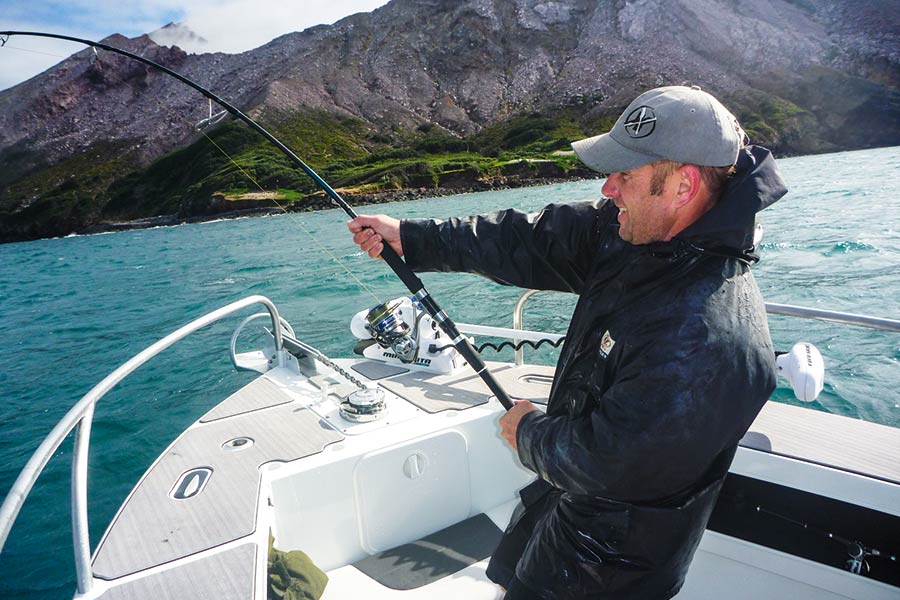
After poppers began to lose their fish-catching powers, along came stickbaits.
This is all conjecture of course, and I have no real scientific evidence to qualify it. It is interesting to think about though, and while lure fishing can be a lot of fun, for consistent results on bigger kingfish it is hard to beat a live bait.

October 2021 - Sam Mossman
New Zealand Fishing News Magazine.
Copyright: NZ Fishing Media Ltd.
Re-publishing elsewhere is prohibited
Recent Forum Posts Visit Forum

Bluefin Tuna at the cavs.
in The Briny Bar2 hours ago
Telecaster
Epic - well within range of my 12 footer...

I thought Id post some nice photo's , join...
in The Briny Bar3 hours ago
Alan L
That is a very cool pic Krow.The Far North is very cool, the Far far North even cooler. Mint looking day.Alan...

Mc Tools berley mincer
in The Briny Bar10 hours ago
SaltyC
Good size, they scrap well. Got an 18kg one up in Vava'u back a few years ago fishing off squeaky Going's boat. That was quite a...

Out with the "Twelves"
in Fishing Reports65 hours ago
Pcj
I should be able to get out end of October. The nephew been out virtually every weekend over winter and has done well. It seems the...

Manukau Harbour & West Coast fishing
in Fishing Reports72 hours ago
smudge
Nice work Schecter, I think snapper may be around sooner than you think. Well I am hoping so...

Whangarei Harbour report.
in Fishing Reports505 hours ago
krow
180 +m is where I've had to be lately. A lot less low foul around these parts and some of it shallower that looks like Tarakihi...
Whangarei Harbour Scallops
in Fisheries Management615 hours ago
Pcj
Reopening WhangÄ쳌rei Harbour to recreational scallop fishingTÄ“nÄ쳌 koeFisheries New Zealand is seeking feedback from tangata whenua, stakeholders, and the public on whether WhangÄ쳌rei Harbour should be...

SNA1 Recc fishing cops the blame.
in Fisheries Management710 hours ago
Tzer
What Liegasea won’t tell you is that some of their own fisheries contractors were co-authors of this study for fear of being called hypocrites, one of...

here is one for you Tonto
in The Work-Up753 hours ago
Tonto2
Boat maintenance happening as we speak, hoping to get into late November...
Fish Bat, Waddie, Priest - Blackwood (Sold)
in Buy Sell Trade or Exchange794 hours ago
smudge
Puriri is the stuffs alright...

Popular Articles

Softbait Fishing - Part 1 - gear selection
John Eichlesheim writes an article about selecting the right equipment for softbait fishing... Read More >
Softbait fishing Pt 2 - tips and tricks
Techniques, tips and tricks of softbait fishing – getting the most from your soft baits.... Read More >

Surfcasting - setting yourself up
Gary Kemsley helps sort out the necessary gear for intending surf fishers.... Read More >

Squid - How to catch them
Squid fishing is a rapidly growing aspect of fishing - Paul Senior shares some hints and tips to get started.... Read More >
Fishing Reports Visit Reports
Outer Hauraki Gulf Fishing Report 17/09/26
Spring wind the handbrake. Spring is starting to make its presence felt in the outer... Read More >
Top of the South Fishing Report - 17/09/26
Early snapper in Tasman Bay. Well, spring is finally here, and the days are getting... Read More >
Bream Bay Fishing Report - 17/09/26
Good snapper catches reported. After Tangaroa turned off the fish tap for a month or... Read More >
Bay of Islands Fishing Report - 17/09/26
Pacific bluefin tuna for the lucky few. The last fortnight has seen more fishable days... Read More >
Comments