
Keep it Simple Stupid

Rigging game lures can be as simple or as complicated as you want to make it. Anglers are inventive creatures and if they think they can create a way of rigging a lure to give them a hook-up advantage, they will do it.
When I first started gamefishing with Dave Arrell, his lures were all snooded to the hooks and there wasn’t a crimp in sight. Capt. Steve Campbell, who I’ve fished with chasing blues and other pelagics out of Vava’u, Tonga, prefers to include a section of stainless wire set into the rig that holds the hooks rigidly in position.
Those who have read Capt. Steve’s informative book Blue Marlin Magic will appreciate he was an accurate record keeper, detailing each bite and subsequent catch as to lure type, position in spread and rig, so he has the numbers to back up his theories.
Fishing with the late Bill Hall, often credited as the person who introduced lure fishing to New Zealand after spending time in Hawaii, I learned that the bite would be different at various stages through the season. I recall Bill ringing me in the office one season to discuss his latest article and was lamenting the fact he had had ‘a hundred bites but I can’t get a bloody hook to stick into one of the bastards’- Bill didn’t mince his words! He had tried stiff rigs, chain rigs, double-hook rigs – you name it, Bill had run it. Ironically, he was reaching out to me, a gamefishing novice by his lofty standards, for advice. I had been fishing in his Bay of islands waters and had just returned from a successful tournament where we tagged the first marlin on our new project boat, a Ramco 580.
Bill asked what we had caught it on – I gave him the info, saying the lure had been very simply rigged with a single 8/0 hook, following advice from another well-known BoI skipper Bruce Martin who had said he often reduced his hook size early in the season as the fish were smaller and less aggressive on the bite. Two days later I got a call from Bill who said he had thought about what I had told time and went back to a single hook rig and had put two stripies on the deck that day. Simple is often best.
With that in mind and armed with some new rigging componentry from Edge, Burnsco’s in-store brand, and with some help from fishing buddy Tony Orton, I photographed an uncomplicated rigging option that has put me in good stead over many years, both here and overseas. This is far from the only way to rig a game lure, but it is one that works for me and follows the KISS theory – keep it simple stupid!
(2).JPG) Step 1:Assemble all the bits and pieces you will need for the job – crimpers, heat gun (a lighter would have done the trick), moto cutters, crimps (either metal or alloy, depending on your preference), sleeves, leader protector, beads, precut trace (the length will depend on whether you are running conventional full length or wind-on traces), shrink wrap tube and hooks. Keep them close at hand.
Step 1:Assemble all the bits and pieces you will need for the job – crimpers, heat gun (a lighter would have done the trick), moto cutters, crimps (either metal or alloy, depending on your preference), sleeves, leader protector, beads, precut trace (the length will depend on whether you are running conventional full length or wind-on traces), shrink wrap tube and hooks. Keep them close at hand.
.JPG) Step 2: Thread the leader material through the shrink wrap, two crimps, followed by the hook and leader protector before returning it back through the crimps and the shrink wrap. Leave enough of a tag end to comfortably reach the back of the lure head.
Step 2: Thread the leader material through the shrink wrap, two crimps, followed by the hook and leader protector before returning it back through the crimps and the shrink wrap. Leave enough of a tag end to comfortably reach the back of the lure head.
.JPG) Step 3: Snub the bottom crimp firmly up against the lure protector and crimp off.
Step 3: Snub the bottom crimp firmly up against the lure protector and crimp off.
.JPG) Step 4: Lay the two leader lines along the skirt of the lure, leaving the hook in a position you want it running at in the skirt, and cut the tag end off.
Step 4: Lay the two leader lines along the skirt of the lure, leaving the hook in a position you want it running at in the skirt, and cut the tag end off.
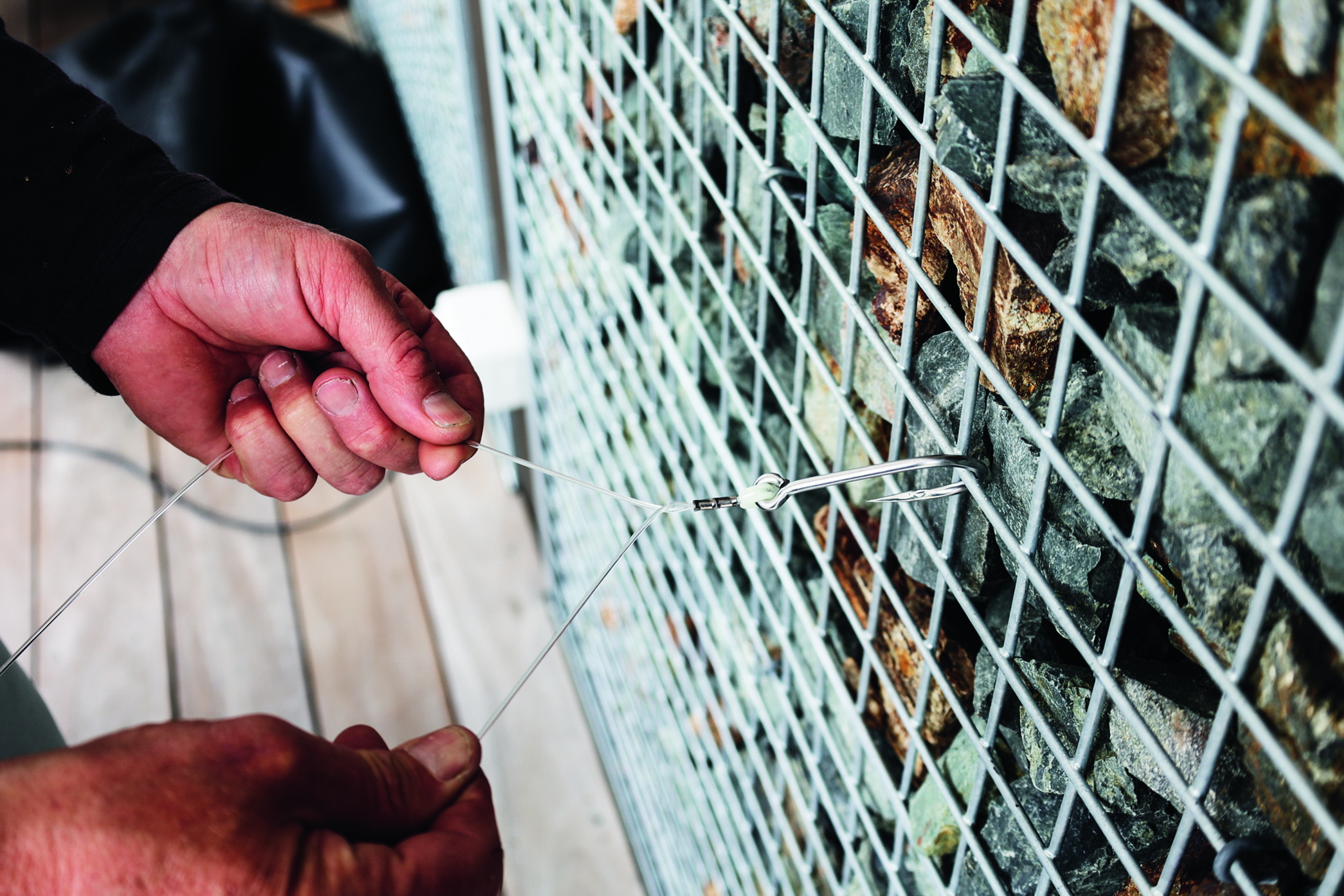
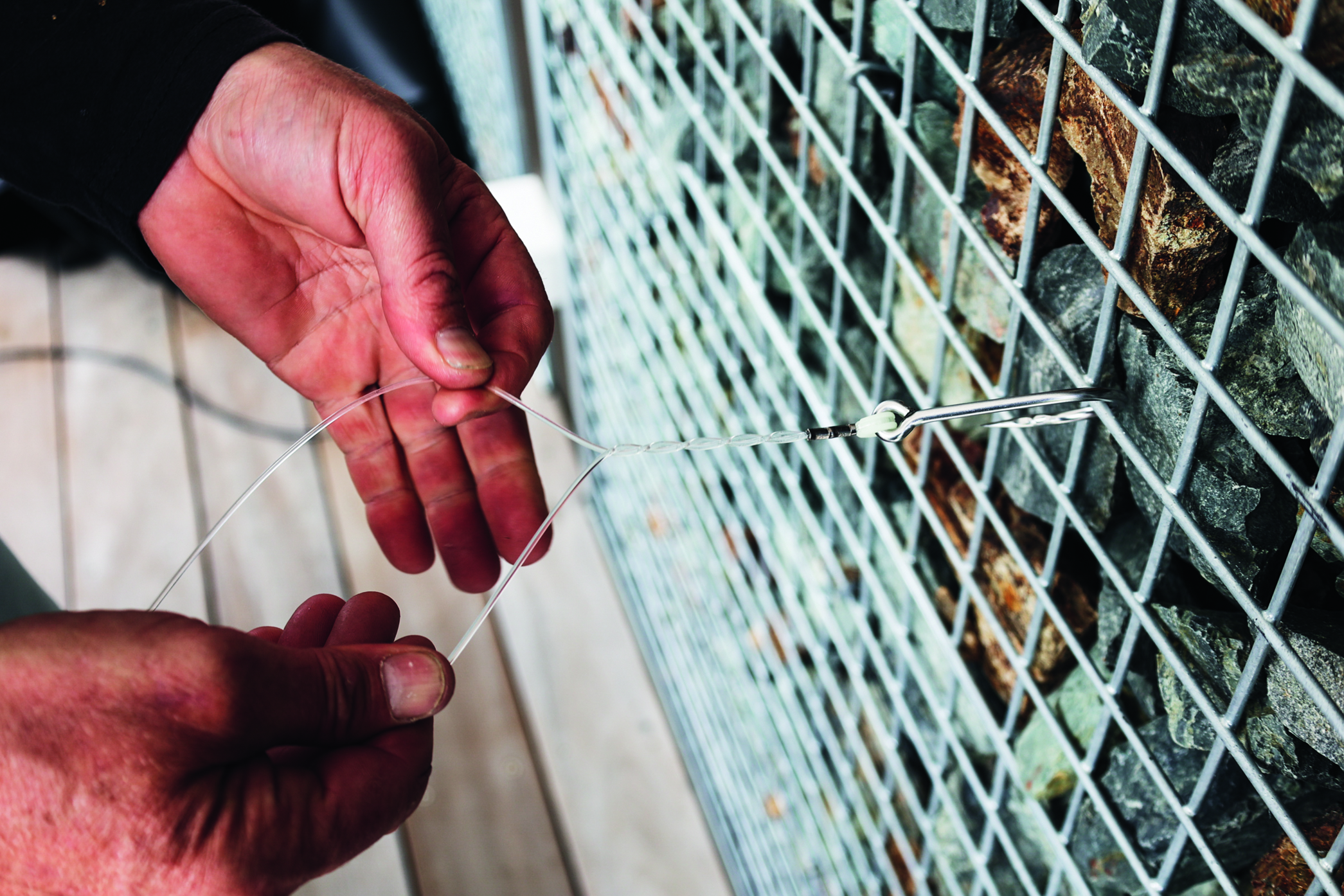
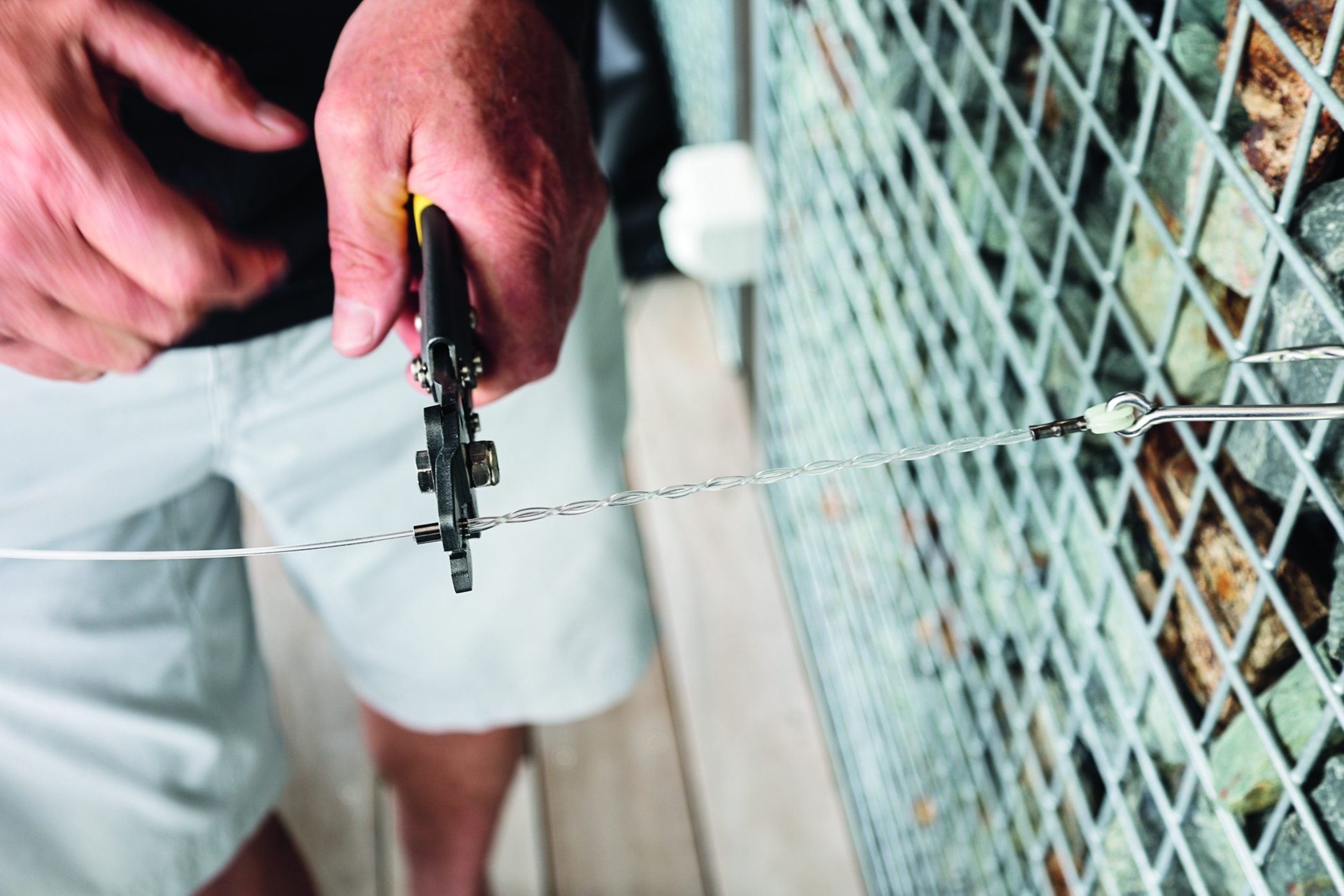 Step 5: Securing the hook to prevent it twisting – some people have a loop secured to their workshop wall to do this job – take the leader in one hand and the tag end in the other and go right over left, then left over right for the length of the tag end, before crimping it off. This has effectively stiffened the rig and it ensures the hook runs perfectly in the skirt.
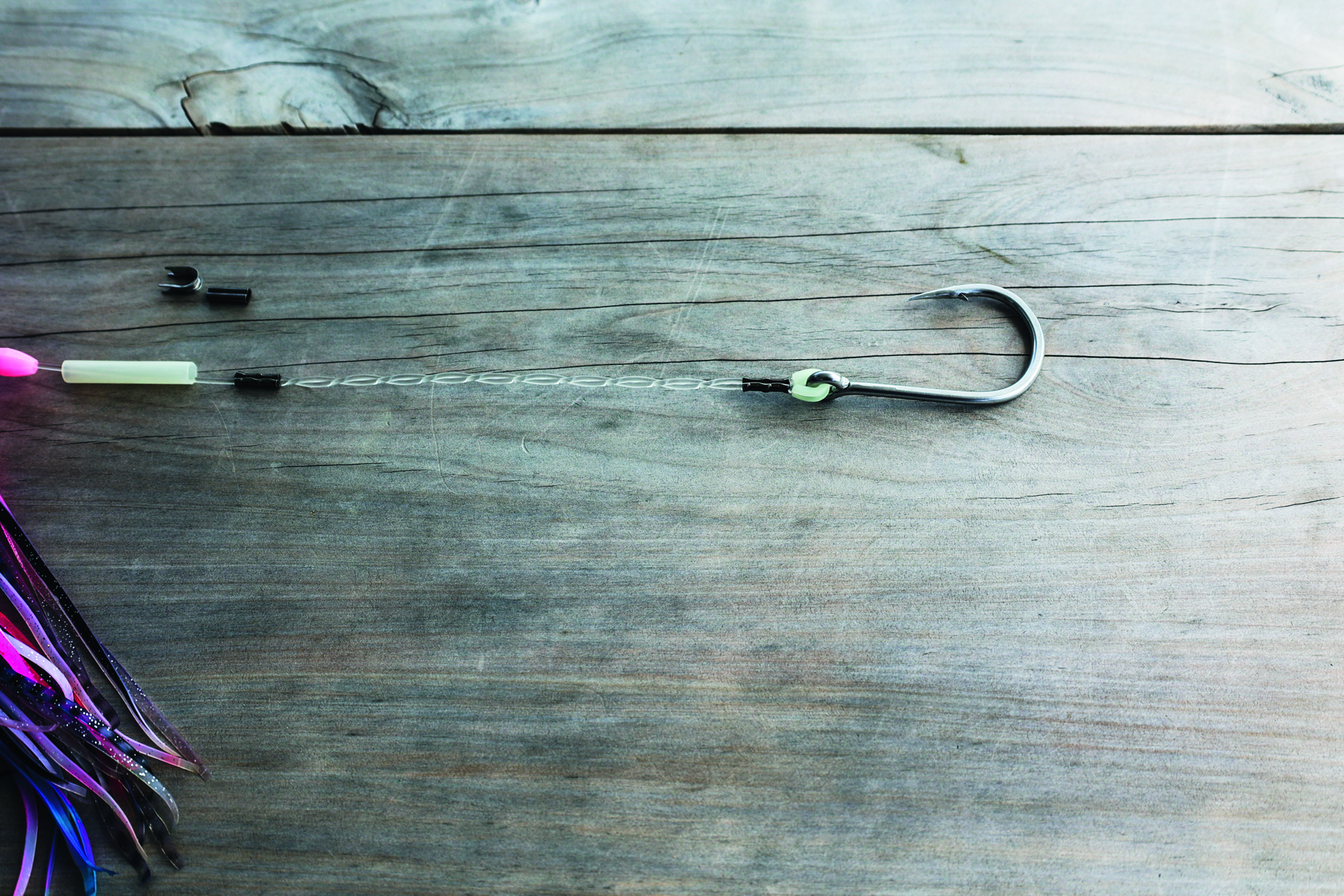 Step 6: Lay the rigged section out – if done right it should lay nice and flat on the work bench – and push the shrink wrap down to the hook end then over it.
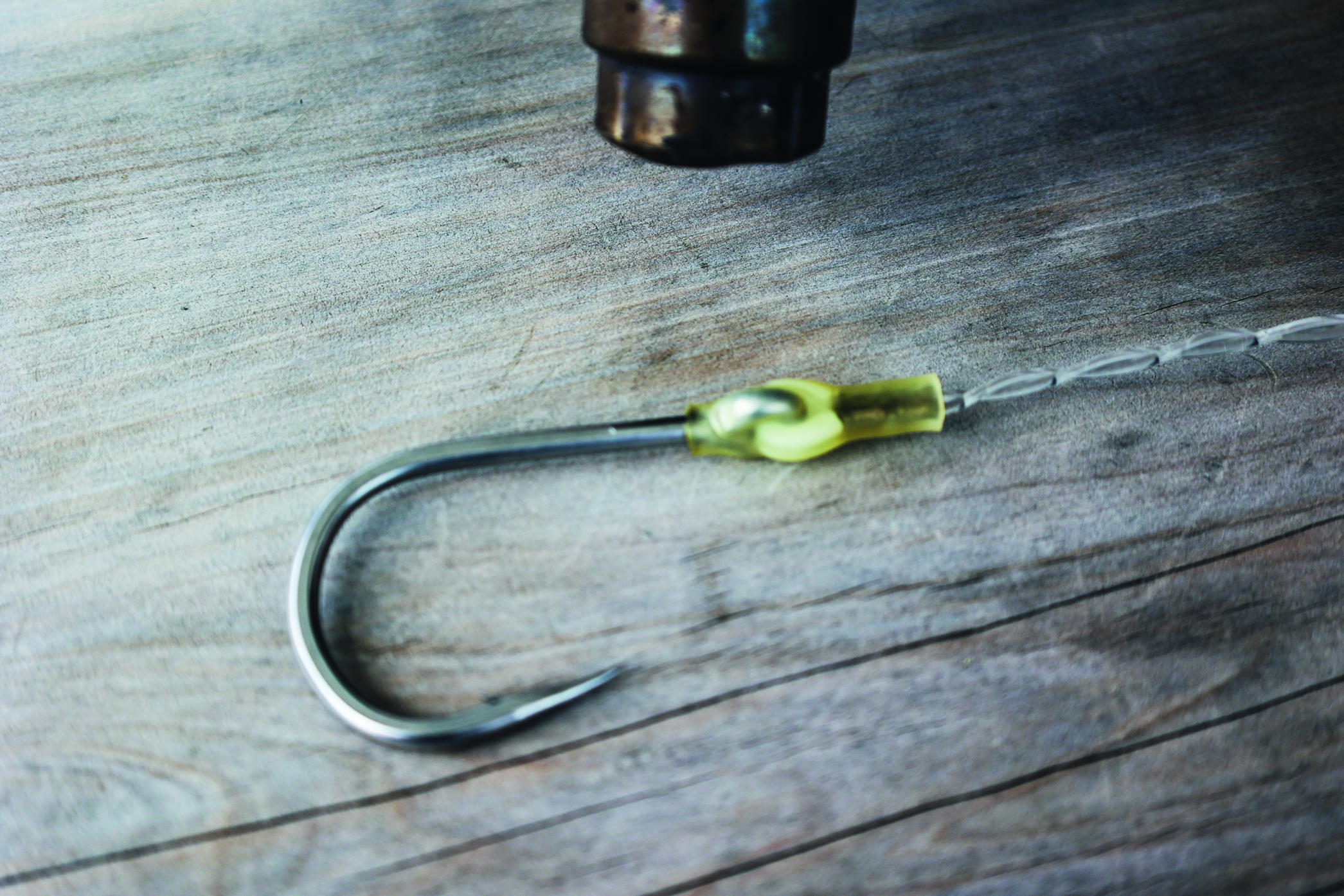 Step 7: Using a heat source – gun or cigarette/barbecue lighter – shrink the wrap over the hook and protector to further help stiffen the rig as well as protect the leader/head connection. Heat the end of the tag end as added security, creating a ‘blob’ that when cooled cannot be pulled through the crimp
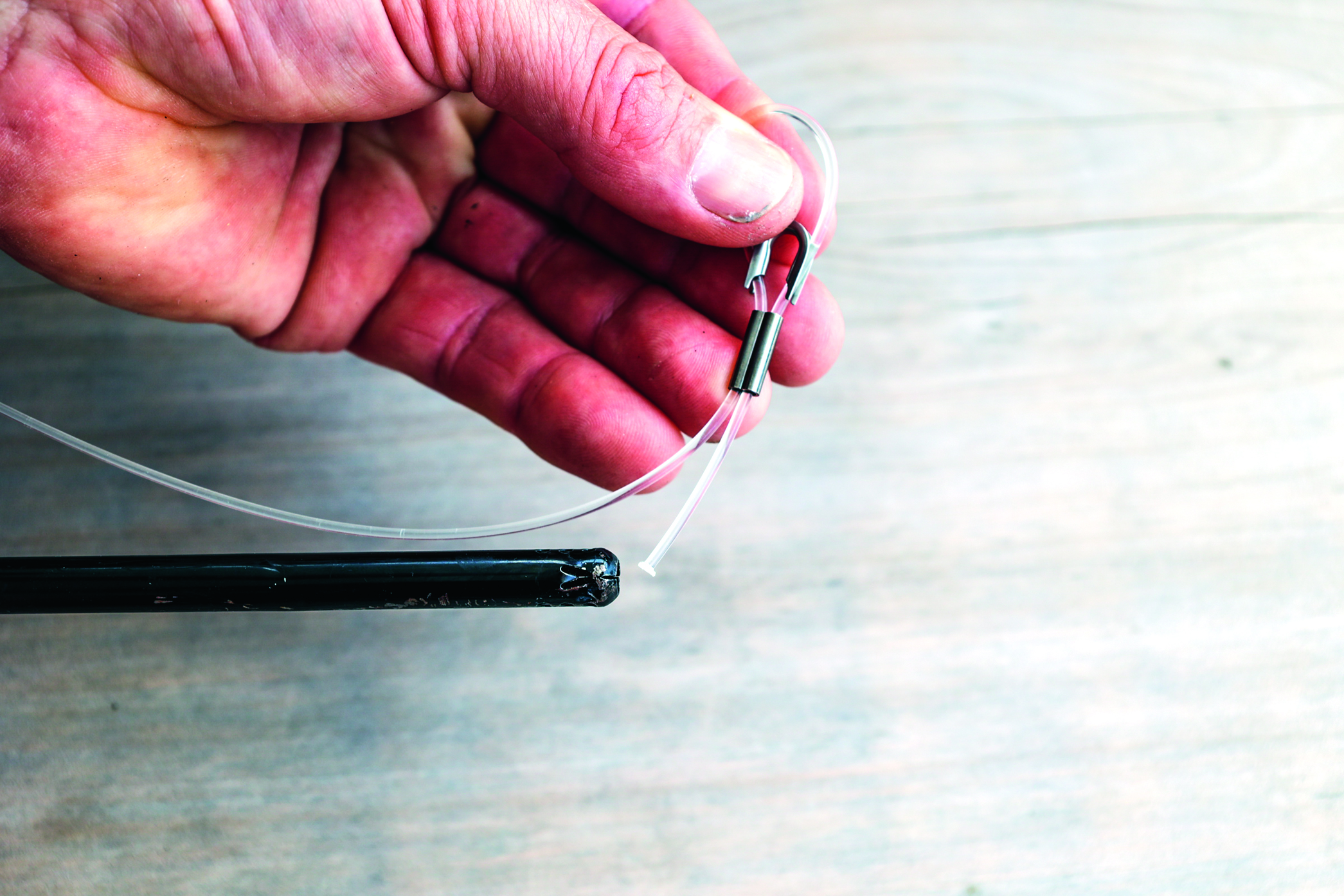
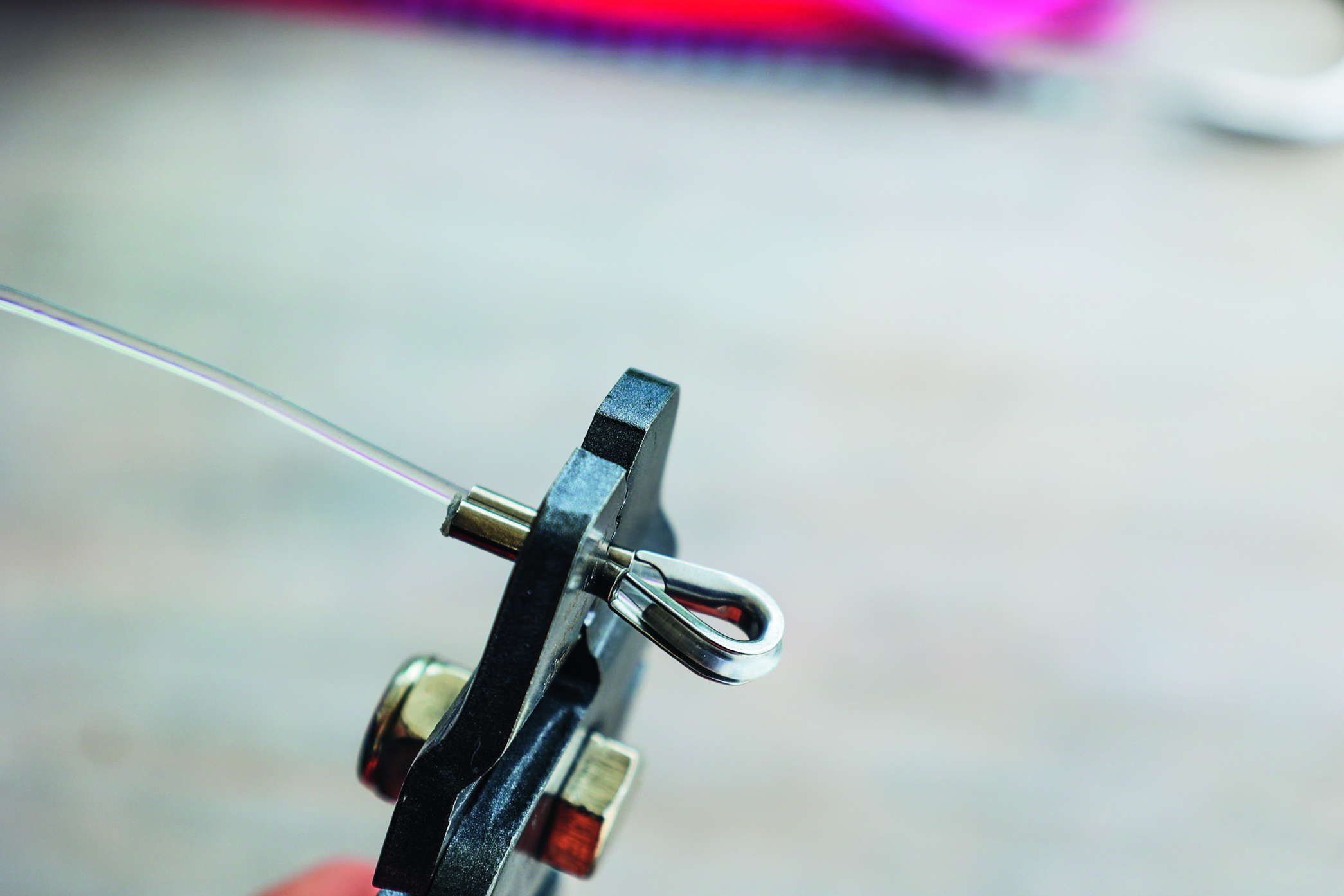 Step 8: Using a metal trace protector this time and a crimp, create a loop in the end of the leader through which the swivel will eventual connect everything to the main line. ‘Blob’ the end of the leader with your heat source before pulling everything up firmly around the protector.
Recent Forum Posts Visit Forum

Foton tunland v9
in The Briny Bar2 minutes ago
Ho Dee
not fishing related and delete if required but was wondering if any has one of these or someone who has just wanting so e real world...

Trailer wheel clamp
in The Boat Shed33 minutes ago
Pcj
Doesnt dry out like crc.I use it on my trailer lock...

Shane Jones
in Fisheries Management27 hours ago
Tzer
Far cry to the twats at Liegasea/NZSFC were proposing of 5 Tarakihi person in their submission for the central management area and this is what our...

Bluefin Tuna at the cavs.
in The Briny Bar46 hours ago
smudge
Despite my years of fishing I haven't really fished many places, my focus has always been on Auckland's west coast and out toward Great Barrier. I...

Casting gloves
in Popper and Topwater Fishing91 hours ago
Mc Tool
100 bucks for a lure 😬. Watching one of them flying over the horizon without the line attached would be " character building " for sure...
I thought Id post some nice photo's , join...
in The Briny Bar142 hours ago
Alan L
That is a very cool pic Krow.The Far North is very cool, the Far far North even cooler. Mint looking day.Alan...

Mc Tools berley mincer
in The Briny Bar150 hours ago
SaltyC
Good size, they scrap well. Got an 18kg one up in Vava'u back a few years ago fishing off squeaky Going's boat. That was quite a...
Out with the "Twelves"
in Fishing Reports204 hours ago
Pcj
I should be able to get out end of October. The nephew been out virtually every weekend over winter and has done well. It seems the...
Manukau Harbour & West Coast fishing
in Fishing Reports212 hours ago
smudge
Nice work Schecter, I think snapper may be around sooner than you think. Well I am hoping so...

Whangarei Harbour report.
in Fishing Reports644 hours ago
krow
180 +m is where I've had to be lately. A lot less low foul around these parts and some of it shallower that looks like Tarakihi...

Popular Articles

Softbait Fishing - Part 1 - gear selection
John Eichlesheim writes an article about selecting the right equipment for softbait fishing... Read More >
Softbait fishing Pt 2 - tips and tricks
Techniques, tips and tricks of softbait fishing – getting the most from your soft baits.... Read More >

Surfcasting - setting yourself up
Gary Kemsley helps sort out the necessary gear for intending surf fishers.... Read More >

Squid - How to catch them
Squid fishing is a rapidly growing aspect of fishing - Paul Senior shares some hints and tips to get started.... Read More >
Fishing Reports Visit Reports
Outer Hauraki Gulf Fishing Report 17/09/26
Spring wind the handbrake. Spring is starting to make its presence felt in the outer... Read More >
Top of the South Fishing Report - 17/09/26
Early snapper in Tasman Bay. Well, spring is finally here, and the days are getting... Read More >
Bream Bay Fishing Report - 17/09/26
Good snapper catches reported. After Tangaroa turned off the fish tap for a month or... Read More >
Bay of Islands Fishing Report - 17/09/26
Pacific bluefin tuna for the lucky few. The last fortnight has seen more fishable days... Read More >
Comments