
How to protect your sticks
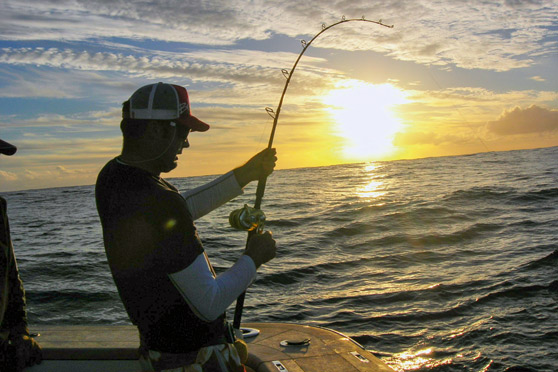
When rods fail, it is not always the blank that breaks; sometimes components fail or the construction methods are inadequate.
Component failure was the cause of one hilarious (at least to the onlookers) episode that took place near White Island. We were jigging for kingfish, and one of the team, who shall remain nameless, was using a new jig rod with a plastic gimbal nock.
He hooked up on a good fish, jammed the rod butt into his gimbal belt, and being a powerful young chap, put some serious pressure on the kingie to try and get its head up. Almost immediately, the plastic gimbal nock’s two bottom tangs snapped off, allowing the rod butt to pop out of the gimbal belt and fly up to smack the angler in the face with the reel, hard, with his chin also knocking it out of gear. The resulting backlash was of Bob Marley proportions, jamming the reel and bringing the rod slamming down on the gunwale, the line instantly snapping!
This all took place in a handful of seconds and was one of the finest pieces of fishing slapstick I have ever witnessed, all thanks to that rod company trying to save a couple of bucks by using a cheap, inadequate rod component.
The eyes have it
Rod guides are always at risk, as they protrude out from the rod. A couple of things you can do include: avoid knocking the guides around in general, and if you use the guides as a spot to secure a hook or lure, place the hook through the side of the guide frame, not through the ceramic ring, to avoid damaging or popping the ring out of the frame.
Guides can also be damaged when people use them to get a good grip on a rod when trying to twist free a stuck ferrule. Some rods incorporate a section of nonslip finish near the ferrule to improve your grip, which is great if the line doesn’t touch it under pressure. When ferrules are badly stuck, I use a device called a grooming glove. These are a type of rubber mitt with small protrusions, used for grooming horses, and may be cheaply bought from equestrian supply stores. They allow a really strong, non-slip grip to be made on the rod without holding onto the guides.
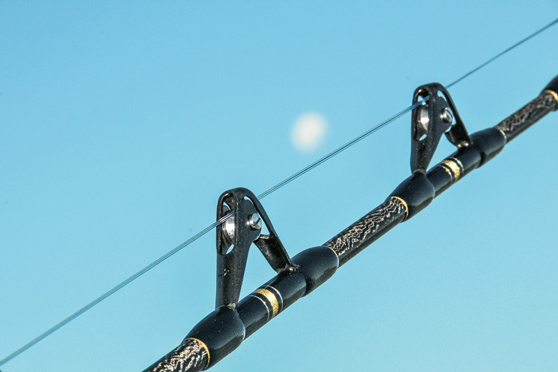
The feet of rod guides are often ground to a gradual slope so the binding thread can climb smoothly up the foot when the guide’s being bound to the rod. If the grinding of the guide foot is done carelessly, it can leave a metal burr hanging off the end, which digs into the blank when the binding is done. You can’t see this, as it is hidden under the binding, but if your rod breaks exactly at the end of the guide foot, this is a possible cause. A layer of protective binding between the guide foot and the blank (called ‘underbinding’) can help protect the rod, but also adds weight to light rods and can make the action a bit soggy.
Most rods are designed to be specifically fished ‘over’ or ‘under’. ‘Over’ rods, such as baitcasters, game rods and other rods where the reel is used on top of the rod, often have double-footed guides, usually ‘bridge’ types that have further bracing between the two feet. Naturally, such a guide is stiffer than the rod, but because each guide foot bends away from the rod when under load, it does not dig into the blank. Guides on these types of rod are often underbound for added protection, but if used upside down (i.e. with the guides under the rod) the stiffness of the bridged guides may cause them to dig into the rod blank and damage it, potentially leading to eventual breakage. The guides on most rods designed to fish ‘under’ are usually single-foot guides with no bracing (except sometimes the bottom ‘stripping’ guide), so they bend with the rod.
Down the tubes
Any angler who travels regularly with their own tackle is likely to have a horror story to tell about damage or drama involving their rods.
I have plenty myself. Without rod tubes – sturdy plastic or aluminium tubes to protect your rods when travelling – it is highly unlikely they will get to the destination undamaged. Indeed, some of the ‘baggage throwers’ at airports seem to treat my various rod tubes with their ‘fragile’ stickers as a particular challenge. One well-travelled tube is on its fifth set of end caps, and one airline managed a notable double on a trip to Norfolk Island, breaking the top of the tube on the way up and the base on the way home. Fortunately, the rods all survived.
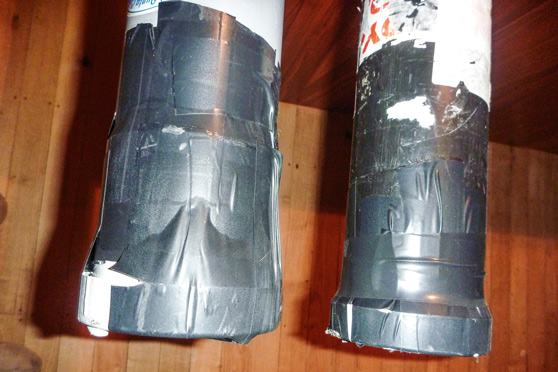
Professionally-made tubes, such as those by Plano and Flambeau, are often adjustable for length in a telescopic fashion. I have one such tube that has travelled the world for over two decades. In this time I have had the end caps smashed four times (I replace them with heavy plumbing end-caps now). Tape is your friend: tape on the end caps, and be sure to tape over the adjustment catch for the telescopic extension.
The latter advice is the result of another bad experience, with the adjustment catch popping open in transit, allowing the tube to be jammed down until the rods popped the end out, with five being broken. Some kind airline employee replaced the broken rods in the tube, shut it all up again and kept quiet about it. I only discovered the damage upon unpacking the tube a week later, by which stage the airline refused any liability as I hadn’t reported it immediately.
But this experience aside, judging from the damage my tubes have suffered over the years, they have saved the lives of many of my rods which, after all, is what they are there for.
You can make your own one-piece rod tube out of plastic pipe (heavy stuff, not lightweight downpipe) and matching plumbing fittings such as end caps and inspection caps. I glue and pop-rivet a cap on one end and either use a screw-on inspection cap or press-on end cap on the other end. Either way, tape them closed (use lots of tape), but drill a small hole in one end so they don’t pressurise in flight and get jammed on. Don’t fit a lock, as airline security can get snaky about it, especially the Americans, who have on occasion smashed open the tube’s end cap, even when it was only taped on to enable easy inspection.
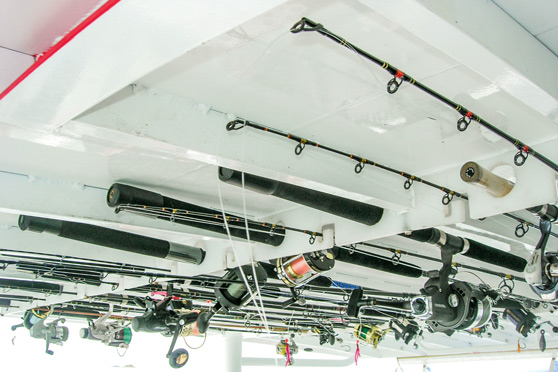
When packing the rods into a tube for a trip, pad the former by putting them in rod bags or wrapping them with clothing such as spare socks or T-shirts, then tape or strap them all together (there is strength in unity). Finally, pad the end/s of the bundle so the rods cannot slide up and down inside the tube and mash a tip under rough handling. Most of the damage done to my rods has been at the hands of airlines.
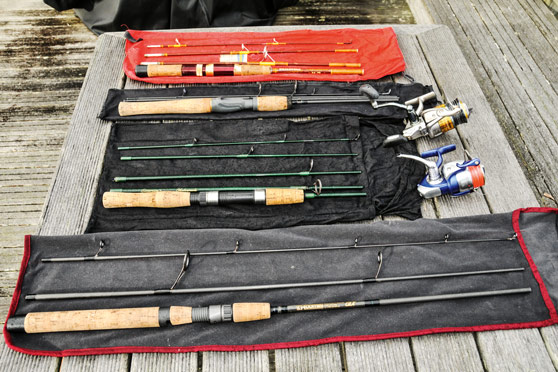
When transporting rods, compactness is an advantage. Many of my spin rods are two-piece models, the advantages for stowage and transport being obvious. Multi-piece (three to five pieces usually) ‘backpacker’ rods can be taken down even shorter and may fit inside a pack or bag, further protecting them, and also avoiding airline charges for an extra piece of baggage if transported in a separate tube.
Finally, if travelling off the beaten track, a small rod-and-reel repair kit comes along with me. This enables guides and tips to be replaced, basic reel servicing to be made, loose gimbal nocks and reel seats to be glued etc, and has saved the day for me and fellow anglers on many occasions, especially in more remote areas.
Keep it clean
Finally, after use, rods should get a wash in the shower. If you are bait fishing, especially with baits such as skipjack or pilchards, your hands can transfer a lot of muck to the grips. This makes them look and smell bad, become slippery, and the smell can attract rodents (or pets), which may chew them up. Salt will also add to corrosion issues with metal fittings. After washing all the salt off the rod, I use a green pot-scourer to quickly scrub the grips down with the help of a little soap or shampoo … because they’re worth it!
|
|
This article is reproduced with permission of |

Recent Forum Posts Visit Forum

Trailer wheel clamp
in The Boat Shed12 minutes ago
Pcj
Doesnt dry out like crc.I use it on my trailer lock...

Shane Jones
in Fisheries Management26 hours ago
Tzer
Far cry to the twats at Liegasea/NZSFC were proposing of 5 Tarakihi person in their submission for the central management area and this is what our...

Bluefin Tuna at the cavs.
in The Briny Bar46 hours ago
smudge
Despite my years of fishing I haven't really fished many places, my focus has always been on Auckland's west coast and out toward Great Barrier. I...

Casting gloves
in Popper and Topwater Fishing91 hours ago
Mc Tool
100 bucks for a lure 😬. Watching one of them flying over the horizon without the line attached would be " character building " for sure...
I thought Id post some nice photo's , join...
in The Briny Bar142 hours ago
Alan L
That is a very cool pic Krow.The Far North is very cool, the Far far North even cooler. Mint looking day.Alan...

Mc Tools berley mincer
in The Briny Bar149 hours ago
SaltyC
Good size, they scrap well. Got an 18kg one up in Vava'u back a few years ago fishing off squeaky Going's boat. That was quite a...
Out with the "Twelves"
in Fishing Reports203 hours ago
Pcj
I should be able to get out end of October. The nephew been out virtually every weekend over winter and has done well. It seems the...
Manukau Harbour & West Coast fishing
in Fishing Reports211 hours ago
smudge
Nice work Schecter, I think snapper may be around sooner than you think. Well I am hoping so...

Whangarei Harbour report.
in Fishing Reports643 hours ago
krow
180 +m is where I've had to be lately. A lot less low foul around these parts and some of it shallower that looks like Tarakihi...
Whangarei Harbour Scallops
in Fisheries Management753 hours ago
Pcj
Reopening WhangÄ쳌rei Harbour to recreational scallop fishingTÄ“nÄ쳌 koeFisheries New Zealand is seeking feedback from tangata whenua, stakeholders, and the public on whether WhangÄ쳌rei Harbour should be...
Popular Articles

Softbait Fishing - Part 1 - gear selection
John Eichlesheim writes an article about selecting the right equipment for softbait fishing... Read More >
Softbait fishing Pt 2 - tips and tricks
Techniques, tips and tricks of softbait fishing – getting the most from your soft baits.... Read More >

Surfcasting - setting yourself up
Gary Kemsley helps sort out the necessary gear for intending surf fishers.... Read More >

Squid - How to catch them
Squid fishing is a rapidly growing aspect of fishing - Paul Senior shares some hints and tips to get started.... Read More >
Fishing Reports Visit Reports
Outer Hauraki Gulf Fishing Report 17/09/26
Spring wind the handbrake. Spring is starting to make its presence felt in the outer... Read More >
Top of the South Fishing Report - 17/09/26
Early snapper in Tasman Bay. Well, spring is finally here, and the days are getting... Read More >
Bream Bay Fishing Report - 17/09/26
Good snapper catches reported. After Tangaroa turned off the fish tap for a month or... Read More >
Bay of Islands Fishing Report - 17/09/26
Pacific bluefin tuna for the lucky few. The last fortnight has seen more fishable days... Read More >
Comments