
How snapper stocks are being managed
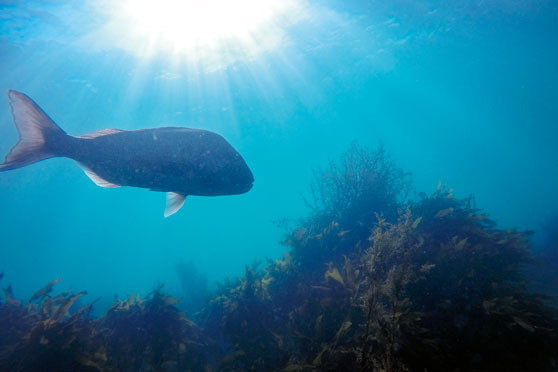
Snapper, Chrysophrys auratus, is New Zealand’s most valuable commercial coastal marine species. The high abundance around the populous regions of northern New Zealand means it is also the nation’s most important recreational species.
The snapper fishery in New Zealand is therefore one of the largest and most valuable coastal fisheries to the country. Snapper are demersal fish, most abundant in depths of 15-60m but can be found down to depths of 200m. In northern inshore communities they are the dominant fish, occupying a wide range of habitats.
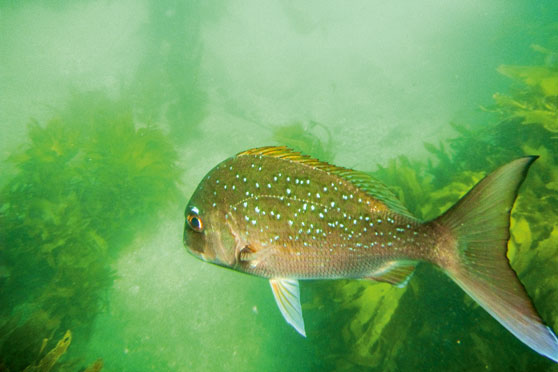
An important aspect to incorporate in to the management of this species is their dispersal throughout their lifecycle and their seasonality. Spawning grounds correspond closely with the nursery grounds of young snapper where they school in shallow water and sheltered areas. Large schools of mature snapper congregate before spawning, with spawning season extending from November through to January – March in some areas and years.
The fish then disperse, often to inshore feeding grounds then to deeper waters in winter where the fish become more widespread. These seasonal movements may be a contributing factor to the amount of recreational catch in certain areas throughout the year. The Hauraki Gulf’s ‘work-up’ season is a prime example.
Stock Assessment and Management
The snapper fishery is split in to six management areas around New Zealand and its offshore islands, with the species being a major target on both coasts of the North Island.
The SNA 1 stock extends over a large area of the north-eastern coast from North Cape to Cape Runaway in the Bay of Plenty. The largest volume of catch, both commercial and non-commercial, comes from this Quota Management Area (QMA). Most of the snapper stocks in New Zealand have been significantly exploited for over a century, with high fishing pressure causing concern that SNA 1 has been put under stress. In the past, snapper had been fished extensively without the restrictions of the Quota Management System (QMS) until 1986. Before this, the national commercial landings peaked in the 1970’s at approximately 18000t per annum. While commercial exploitation of snapper was constrained by quota, recreational exploitation is regulated by individual bag limits and minimum-legal sizes.
In recent years the total commercial catch of snapper has been 7000t with 70% of this catch coming from SNA 1. Recreational fishing is also an important component of the total catch in SNA 1. In recent years this was estimated to be approximately 30% of the total catch. The bag limit has been reduced and the minimum legal size has been increased for recreational fishers since the introduction of the QMS.
Nationally, the bag limit was originally set at 30 per person and a minimum legal size (MLS) of 25cm in 1985. The daily bag limit for SNA 1 now being seven per angler and a minimum size limit of 30cm. Bag limits have been reduced against the backdrop of sustainability measures required for the fishery in SNA 1. Combined with a TAC of 8050t and a recreational allowance of 3050t, fisheries management aims to move the population to a size that will support maximum sustainable yield (MSY). MSY is the maximum amount of fish that can be caught without causing any long-term depletion to the stock.
In New Zealand the main organisations which are responsible for applying stock assessment and implementing management strategies are the National Institute of Water and Atmospheric Research (NIWA) and Ministry for Primary Industries (MPI). NIWA assesses many of the fish stocks around New Zealand as part of their work for the Ministry for Primary Industries.
They employ various sampling techniques to collect data on industry, recreational and customary catch, catch and effort data, scientific sample voyages and biological information. These stock assessments provide a scientific basis for the management options that are developed by MPI and other organisations.
One form of data collection which is used to gain information on recreational catch is boat ramp surveying. This sampling method is conducted at various boat ramps around New Zealand, gaining recreational catch information for specific stocks, often focusing on species under concern.
Stock assessments and reports are important for fishery managers as it provides useful stock status information and total catch estimates. These reports provide comparable data and give an indication for what management action is required in order to protect our snapper stocks for the future.
What Can WE Do?
As recreational fishers, we can have a large impact on species stock numbers and dynamics, especially snapper. In terms of commercial fishing, we don’t often have a lot of say when it comes to quota and stock management. So, what can we do to minimise long term effects on our snapper stocks/fish stocks in general?
Fish sustainably. Seven snapper per person is a lot of food, if they are decentsized fish. Only keep as many as you NEED, don’t always fish to the limits.
Utilise your catch. Fish can go a lot further than many people portray. Instead of throwing away those frames and heads, use them or give them away. Soup, stew, broth or smoked frames/ heads create another meal, other than just the fillets. Utilising your fish = potentially keeping less individual fish.
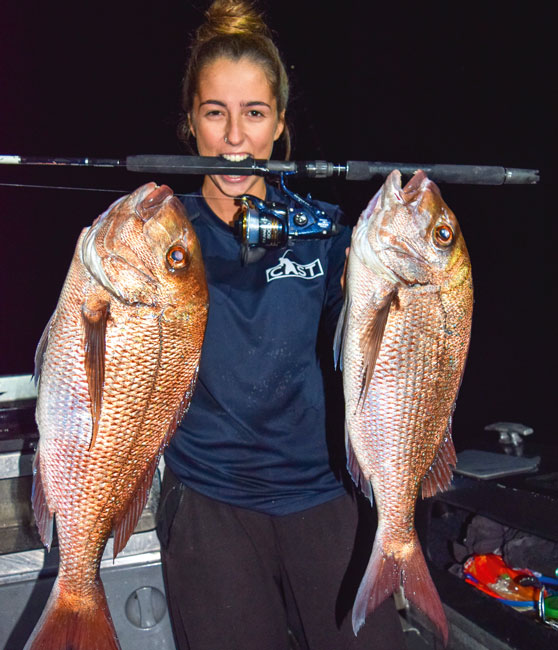
Release the breeders. There seems to be much controversy around this idea. But the fact is, bigger snapper produce many more eggs than smaller specimens and have the potential to pass on more favourable growth and survival genes/ traits. Sure, it can be great to keep your first 20 pounder, but it’s also great watching those beautiful big breeders swim away in good shape.
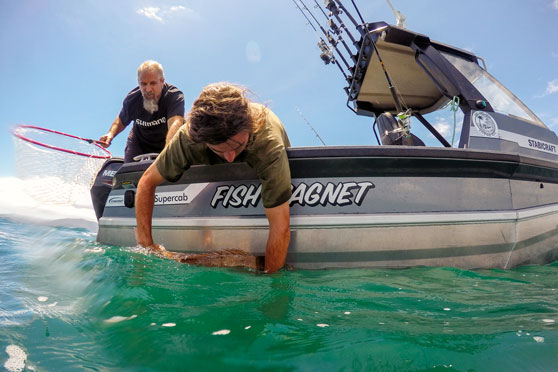
Fish smarter. Using appropriate tackle such as circle hooks and bigger hook sizes improves the chances of survival for those fish you do throw back. Releasing fish in a healthy state is vital to their survival; venting fish when necessary, reviving them correctly and minimal, gentle handling all increase their chances.
|
----- Advertisement -----
|
This article is reproduced with permission of |

Recent Forum Posts Visit Forum

Shane Jones
in Fisheries Management2 hours ago
Fish Addict
Yes the announcement by the Fisheries Minister in late 2025 certainly blindsided a few of the pros.Whilst Legasea may have its flaws the big plus is...
Trailer wheel clamp
in The Boat Shed8 hours ago
Mc Tool
either crc long life or 556 marine are way better ...

Foton tunland v9
in The Briny Bar23 hours ago
Ho Dee
not fishing related and delete if required but was wondering if any has one of these or someone who has just wanting so e real world...

Bluefin Tuna at the cavs.
in The Briny Bar70 hours ago
smudge
Despite my years of fishing I haven't really fished many places, my focus has always been on Auckland's west coast and out toward Great Barrier. I...
Casting gloves
in Popper and Topwater Fishing115 hours ago
Mc Tool
100 bucks for a lure 😬. Watching one of them flying over the horizon without the line attached would be " character building " for sure...
I thought Id post some nice photo's , join...
in The Briny Bar166 hours ago
Alan L
That is a very cool pic Krow.The Far North is very cool, the Far far North even cooler. Mint looking day.Alan...

Mc Tools berley mincer
in The Briny Bar173 hours ago
SaltyC
Good size, they scrap well. Got an 18kg one up in Vava'u back a few years ago fishing off squeaky Going's boat. That was quite a...

Out with the "Twelves"
in Fishing Reports227 hours ago
Pcj
I should be able to get out end of October. The nephew been out virtually every weekend over winter and has done well. It seems the...
Manukau Harbour & West Coast fishing
in Fishing Reports235 hours ago
smudge
Nice work Schecter, I think snapper may be around sooner than you think. Well I am hoping so...

Whangarei Harbour report.
in Fishing Reports667 hours ago
krow
180 +m is where I've had to be lately. A lot less low foul around these parts and some of it shallower that looks like Tarakihi...
Popular Articles

Softbait Fishing - Part 1 - gear selection
John Eichlesheim writes an article about selecting the right equipment for softbait fishing... Read More >
Softbait fishing Pt 2 - tips and tricks
Techniques, tips and tricks of softbait fishing – getting the most from your soft baits.... Read More >

Surfcasting - setting yourself up
Gary Kemsley helps sort out the necessary gear for intending surf fishers.... Read More >

Squid - How to catch them
Squid fishing is a rapidly growing aspect of fishing - Paul Senior shares some hints and tips to get started.... Read More >
Fishing Reports Visit Reports
Outer Hauraki Gulf Fishing Report 17/09/26
Spring wind the handbrake. Spring is starting to make its presence felt in the outer... Read More >
Top of the South Fishing Report - 17/09/26
Early snapper in Tasman Bay. Well, spring is finally here, and the days are getting... Read More >
Bream Bay Fishing Report - 17/09/26
Good snapper catches reported. After Tangaroa turned off the fish tap for a month or... Read More >
Bay of Islands Fishing Report - 17/09/26
Pacific bluefin tuna for the lucky few. The last fortnight has seen more fishable days... Read More >
Comments