
Handling and Releasing your Catch

As a nation we often look to the leaders in the various sectors for guidance and fishing is no exception. However, Mark Kitteridge suggests our ‘fishing leaders’ need to up their game when it comes to fish care.
I’m sorry, but these days when I watch the many television shows, videos and live broadcasts hosted by various fishing celebrities, I find my blood boiling.
Here they are, talking about the fantastic fish they’re holding, its habits and interesting biological features, all the while gripping it in warm, dry hands as the poor creature continues to gasp and gasp and gasp. Unfortunately, the anglers involved seem oblivious to the fact that every passing moment makes their prize catch’s subsequent survival less likely following release.
Don’t get me wrong, many of these representatives also do great work drawing attention to the need to look after our fisheries and environment (often while still holding that poor water-starved fish), but the viewers are noting what these fishing heroes do as much as what they say!
Letting go
We all know how important releasing fish is to the long-term well-being of our fishery. After all, as a group, recreational anglers add up to a substantial number (reportedly over a million), so every fish killed or successfully released per person combines to have a dramatic impact overall. This also means a lot of people need to be educated as to what practices are best used for optimal release success – which is where the high-profile anglers come in: we all need to lead by example through the various media platforms to achieve this goal. And this includes me. I’m not perfect either, but I really do try to be a good ambassador.
Just why we release fish can be for a number of reasons, including: being under the legal size; to stay within the legal species limit; being too big (so a prime breeder or maybe not offering great eating); or simply because the act of fishing is much more attractive than killing something.
However, if anglers aren’t considerate of their catch before letting them go, this is often a wasted, wasteful and even cruel exercise.
I believe three especially bad practices are responsible for causing unnecessary fish mortality following release (in no particular order):
• Burning or injuring the fish through poor handling
• Releasing fish with non-venting swim bladders into too deep water
• The use of J-type hooks with bait.
Burn baby, burn!
Most fish are cold blooded, so touching them with our warm, dry hands (or the boat’s deck or the summer-heated rocks or beach) can be enough to remove their protective mucus and cause nasty burns that lead to potentially lethal infections. As already mentioned, I see this scenario far too often among the fishing celebrities; it suggests a lack of respect for fish as living creatures and that the anglers involved are just ‘going through the right motions’.
I will always remember catching a john dory on Mangonui Wharf and releasing it into the local aquarium just metres away. After three days a perfect hand print appeared on its side, which progressed into fungal growths and death a few days later. I have also seen a handprint on a trout and large areas of rashy infection on kingfish that I strongly suspect were caused by the hot deck of boats. (Further, NIWA’s Principal Fisheries Scientist Bruce Hartill told me he’s seen snapper in holding nets with handprints on them, too, so having scales is no protection.)
LegaSea recommends simply wetting your hands prior to releasing fish (this is even better than handling them with a wet cloth, which I find hard to work out), so that’s what I try to do (or wet my light, UV-protective gloves). However, taking the hook out while the fish remains in the water is better still, or, if the fish is small, inverting the hook and shaking it off over the water.
Other things to avoid when handling fish for release:
• Gaffing fish in the body; carefully place the gaff hook in the jaw if you must
• Holding them by the tail, as this dislocates their spine
• Touching their eyes, as these are very susceptible to harm out of water
• Holding fish with your hands inside their gills, as they’re easily damaged
• Squeezing the fish firmly against your body to stop it wriggling while you remove the hook
• Using landing nets with large-meshed, coarse-nylon netting, which removes protective slime and damages fins (look for nets with tight-meshed rubber netting instead)
• Holding the catch out of water for too long (it’s the fish equivalent to us having our head held underwater!); keep trophy fish in the water while cameras and measures etc are readied so time spent out of water is kept to a minimum.
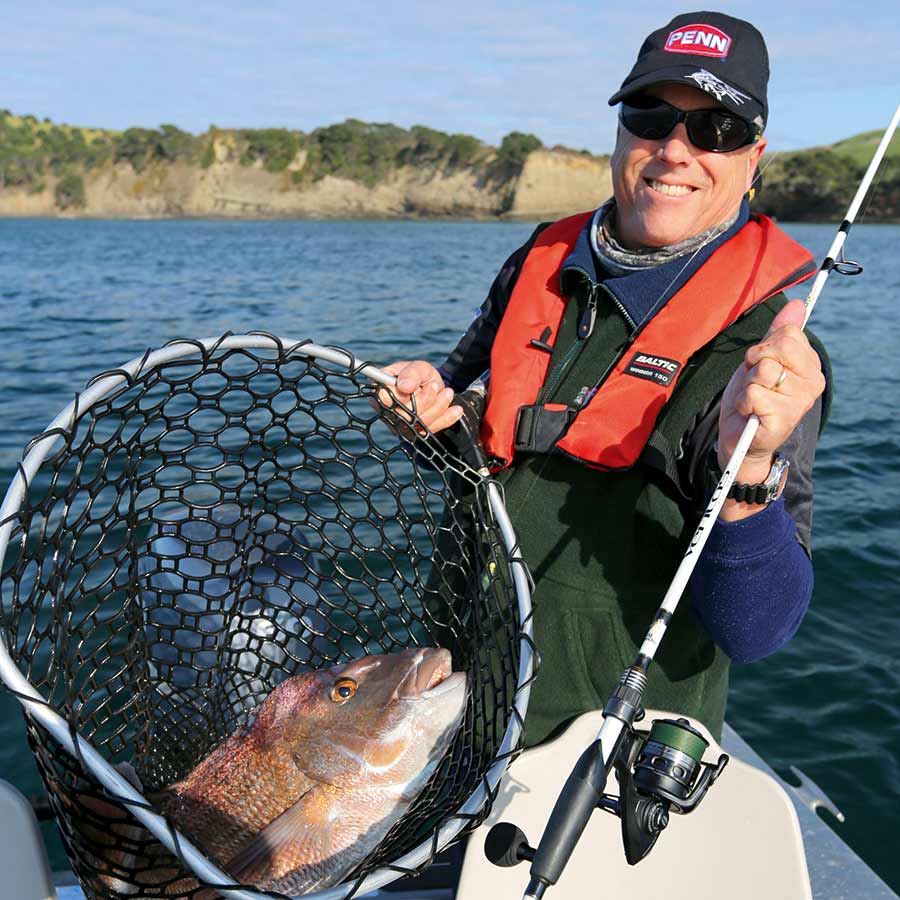
Rubber-meshed landing nets are kinder on fish (and don’t snag hooks either).
Deep water means keeping all legal fish!
I’ll put my own hand up here – I’ve certainly been guilty of letting large numbers of snapper go in deep water in the past (over 30 metres), hoping to eventually encounter an especially large specimen for a ‘moment of glory’ – along with every other keen angler who fishes the work-ups I’d imagine. However, recent research suggests this is not a responsible thing to do if we are to keep our fishery in good shape.
Although these snapper apparently swim off in various states of health when released in deep water and are often hardy enough to survive the ruptured swim bladders caused by expanding gases (embolism) on the ascent, they also tend to get the ‘bends’ and often die from this afterwards. The deeper the water, the higher the mortality rate.
I discussed this aspect with NIWA’s Bruce Hartill. It seems that the physics of partial gas expansion apply to fish as much as to human beings (although fish might have some adaptations that make them a bit more susceptible). So, just like a diver, the important issue is how quickly the released fish can get back down deep enough to recompress (including any swim-bladder gases that may have escaped into the gut cavity during ascension expansion).
This means recovery is much harder for fish species with a non-venting swim bladder, which becomes excessively buoyant and prevents them from reaching a depth that allows adequate recompression to occur on time, if at all.
Bruce also said that if the expanding gases have everted the stomach, the inside of the gills becomes masked, reducing the water’s oxygenated flow and potentially leading to suffocation.
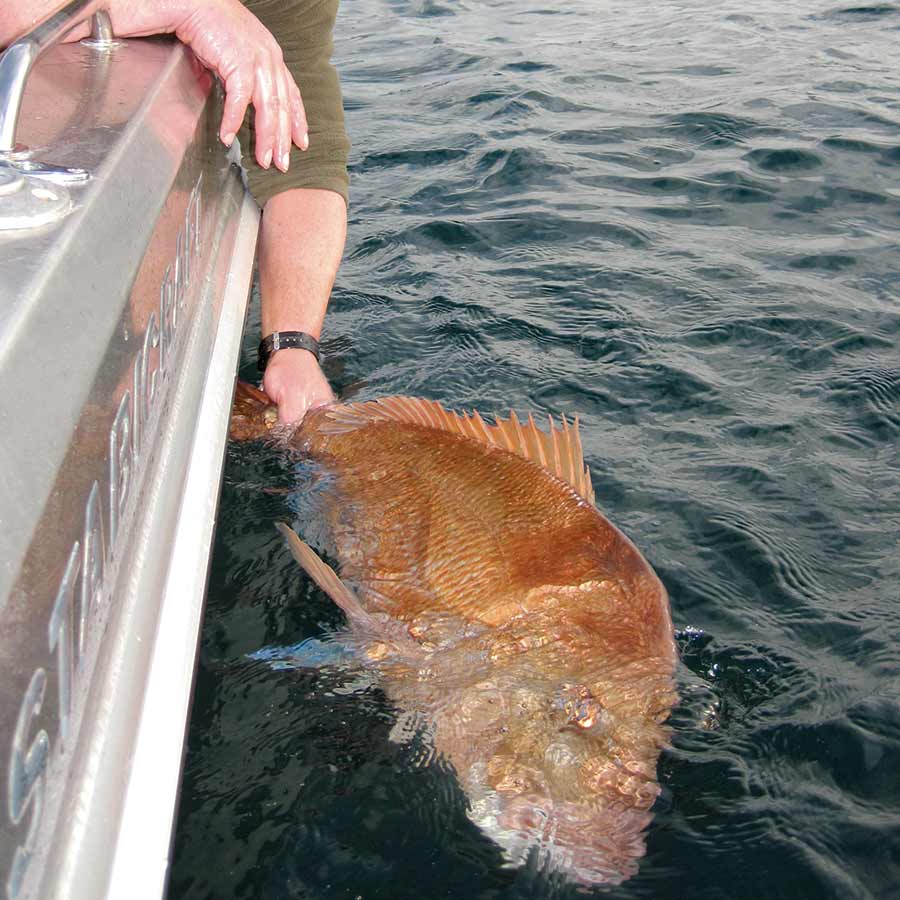
Letting fish go can be a massive buzz, but if it’s likely to die afterwards, it’s a wasteful exercise.
Getting back down
So how can we get snapper down to the depth necessary for likely recovery to occur?
According to Bruce, venting the snapper’s swim bladder with specialist needles isn’t the silver bullet I’d hoped it might be. He said NIWA’s research staff are highly trained and know exactly what to do, but still get the venting location wrong sometimes, accidentally piercing vital organs such as the liver. Also, the venting process takes time and can be a source of infection if the needle is not regularly cleaned.
Instead, Bruce believes using a release weight is currently the best option. It consists of an upside-down, barbless hook (or shaped piece of wire) attached to a heavy sinker connected by a cord line. The release-weight’s hook is placed through the fish’s lower lip, ideally while still in the water, then lowered to the bottom. Once there, the pressure returns to normal and the fish either swims off the hook or is released once the angler starts retrieving the weight.
Consequently, if you’re not prepared to go to these lengths, please stop fishing for snapper upon catching and keeping your legal limit. Otherwise, you’re simply damaging our snapper stocks to feed your ego.
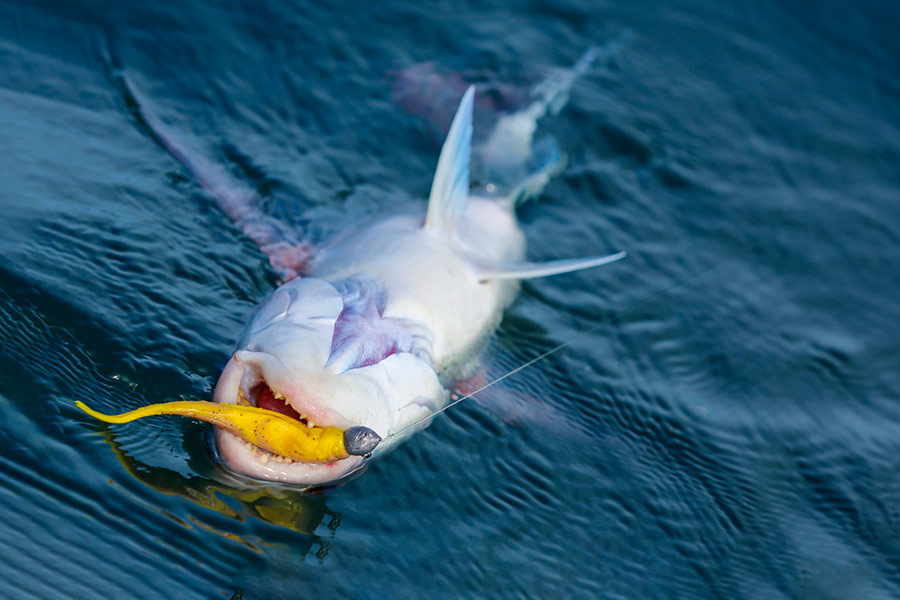
This fat, air-filled belly indicates barotrauma; a venting tool might get the job done in experienced hands, but a release weight appears to be a more effective and forgiving device.
Other fishing options
Catching your limit of snapper doesn’t necessarily mean you have to go home though. For example, kingfish have a high release success rate when caught in all depths, so targeting them instead is an option (but still don’t muck around too long with pics, weighing, measuring etc). Or maybe try for species such as gurnard or tarakihi – or go in much shallower, where releasing snapper can be much more successful.
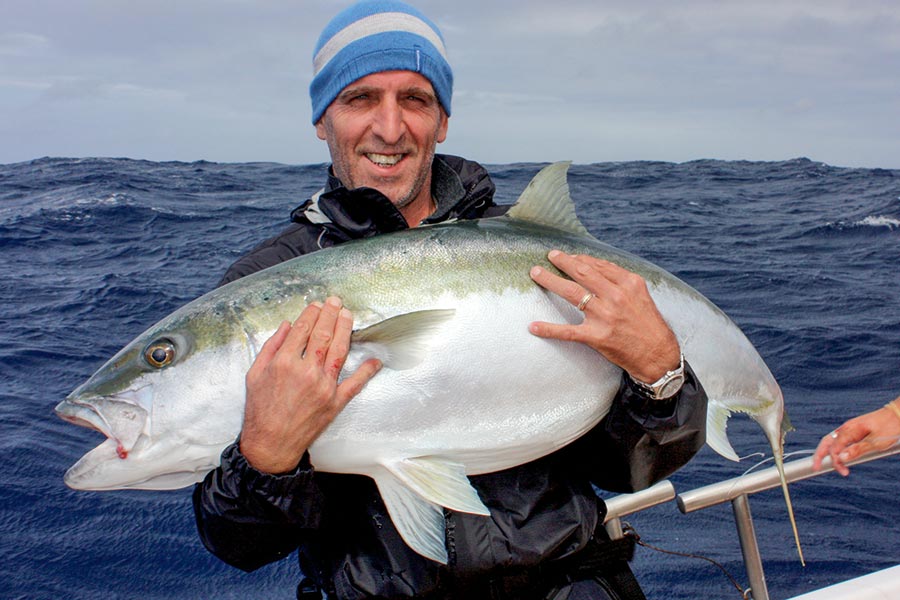
If pics and/or measurements are wanted, it pays to leave the fish in the water while getting everything ready, then support the catch by cradling it at both ends.
Use circle hooks or lures!
Unfortunately, J-type hooks often catch deep inside fish that take the bait, especially when the smaller hook sizes with offset barbs are deployed.
Yes, it is possible to cut the hook off as close as possible to the fish’s mouth and still let it go, but the embedded hook can: make feeding difficult or impossible afterwards; cause infection or blood poisoning; damage the delicate gills; or puncture the nearby heart.
On the other hand, in-line circle hooks almost never snag up internally, instead sliding up to catch around the jaw latch, which also makes them accessible for relatively easy release.
Similarly, the use of lures results in fish that are nearly always lip hooked, enabling them to be kept or quickly let go. Just avoid double and treble hooks, as they are more likely to badly injure fish.
In all cases, consider making your hooks barbless by squashing the barb down; you’ll be surprised how few fish get away if the pressure is kept on, and releasing them in tip-top shape afterwards is made super easy.
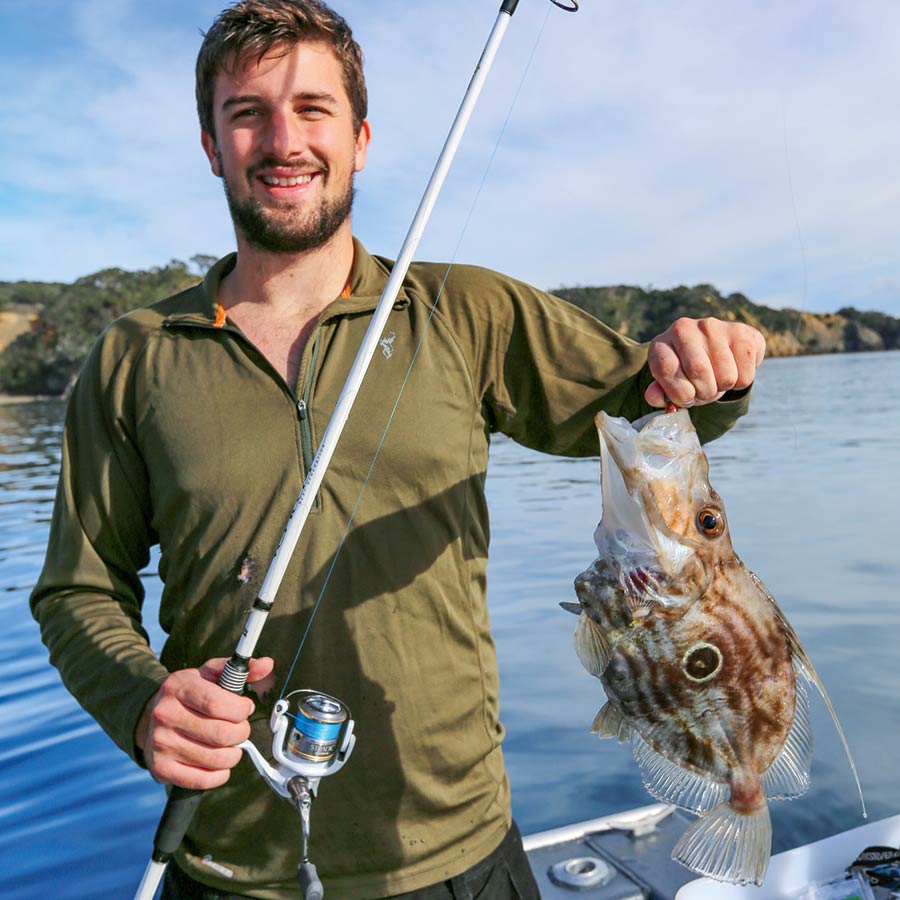
Unscaled fish such as john dory and gurnard seem especially susceptible to handling damage, so try inverting the hook and shaking them free without touching them.
Finally, a plea to all those high-profile anglers who enjoy a decent following whether it be on the big screen or a little one: I believe it is our responsibility to show real respect to the fish in our oceans, especially those destined for release. And if you can’t be bothered ‘going to all the trouble’ of doing it properly so they survive afterwards, please don’t share your experiences with your viewers.

February 2022 - Mark Kitteridge
New Zealand Fishing News Magazine.
Copyright: NZ Fishing Media Ltd.
Re-publishing elsewhere is prohibited
Recent Forum Posts Visit Forum

Shane Jones
in Fisheries Management16 hours ago
Tzer
Far cry to the twats at Liegasea/NZSFC were proposing of 5 Tarakihi person in their submission for the central management area and this is what our...

Bluefin Tuna at the cavs.
in The Briny Bar36 hours ago
smudge
Despite my years of fishing I haven't really fished many places, my focus has always been on Auckland's west coast and out toward Great Barrier. I...

Casting gloves
in Popper and Topwater Fishing80 hours ago
Mc Tool
100 bucks for a lure 😬. Watching one of them flying over the horizon without the line attached would be " character building " for sure...
I thought Id post some nice photo's , join...
in The Briny Bar131 hours ago
Alan L
That is a very cool pic Krow.The Far North is very cool, the Far far North even cooler. Mint looking day.Alan...

Mc Tools berley mincer
in The Briny Bar139 hours ago
SaltyC
Good size, they scrap well. Got an 18kg one up in Vava'u back a few years ago fishing off squeaky Going's boat. That was quite a...

Out with the "Twelves"
in Fishing Reports193 hours ago
Pcj
I should be able to get out end of October. The nephew been out virtually every weekend over winter and has done well. It seems the...
Manukau Harbour & West Coast fishing
in Fishing Reports201 hours ago
smudge
Nice work Schecter, I think snapper may be around sooner than you think. Well I am hoping so...

Whangarei Harbour report.
in Fishing Reports633 hours ago
krow
180 +m is where I've had to be lately. A lot less low foul around these parts and some of it shallower that looks like Tarakihi...
Whangarei Harbour Scallops
in Fisheries Management743 hours ago
Pcj
Reopening WhangÄ쳌rei Harbour to recreational scallop fishingTÄ“nÄ쳌 koeFisheries New Zealand is seeking feedback from tangata whenua, stakeholders, and the public on whether WhangÄ쳌rei Harbour should be...
SNA1 Recc fishing cops the blame.
in Fisheries Management839 hours ago
Tzer
What Liegasea won’t tell you is that some of their own fisheries contractors were co-authors of this study for fear of being called hypocrites, one of...
Popular Articles

Softbait Fishing - Part 1 - gear selection
John Eichlesheim writes an article about selecting the right equipment for softbait fishing... Read More >
Softbait fishing Pt 2 - tips and tricks
Techniques, tips and tricks of softbait fishing – getting the most from your soft baits.... Read More >

Surfcasting - setting yourself up
Gary Kemsley helps sort out the necessary gear for intending surf fishers.... Read More >

Squid - How to catch them
Squid fishing is a rapidly growing aspect of fishing - Paul Senior shares some hints and tips to get started.... Read More >
Fishing Reports Visit Reports
Outer Hauraki Gulf Fishing Report 17/09/26
Spring wind the handbrake. Spring is starting to make its presence felt in the outer... Read More >
Top of the South Fishing Report - 17/09/26
Early snapper in Tasman Bay. Well, spring is finally here, and the days are getting... Read More >
Bream Bay Fishing Report - 17/09/26
Good snapper catches reported. After Tangaroa turned off the fish tap for a month or... Read More >
Bay of Islands Fishing Report - 17/09/26
Pacific bluefin tuna for the lucky few. The last fortnight has seen more fishable days... Read More >
Comments