
Fishing tackle technology
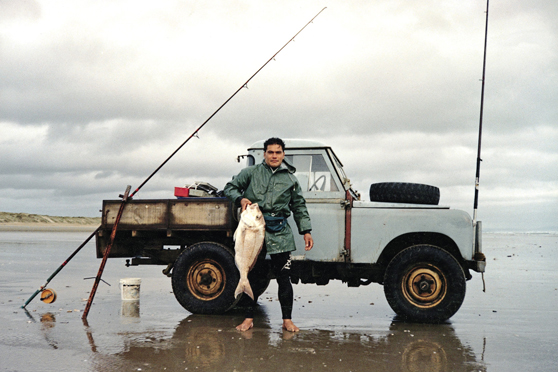
Thankfully, time and technology keep marching onwards in the recreational fishing industry, hand in hand. What would our catch rate be now if we were all still using the same tackle in use 50 years ago!
I know many anglers will be keen to say that plenty of fish were caught back then on the old tackle – and they’d be right! However, I venture to suggest that this was mostly due to the fact that there were many more fish around back then than anything else. Unfortunately, I think the times when you could decide to have fish for tea, then just go and toss a hand-lined bait into the surf are long gone.
Last month we had a look at rods, reels and marking spots. The revolution didn’t stop there, though, so now we’ll cover some tackle items.
Lines
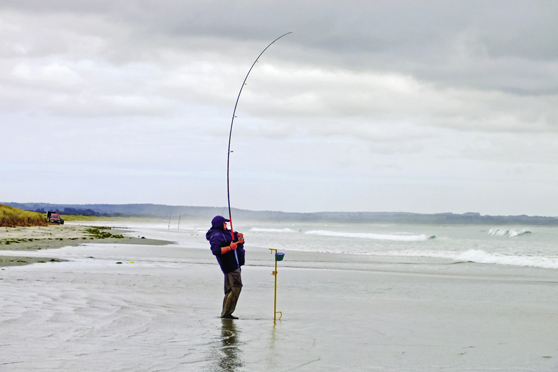 Plant vines apart, the earliest form of fishing line was created from the longest undamaged hairs cut from the horse’s tail. These were plaited and wound together into a line long enough for fishing, and considered the ‘primo stuff’. I can’t imagine it was very strong, though, and it was also prone to fraying, reducing its useful life. Worse, imagine having to start every fishing expedition by chasing your horse around the paddock waving a pair of scissors!
Silk and linen lines followed, and while these were better, they required a lot of maintenance, needing to be wound off the spool and dried after use to prevent them rotting.
Then DuPont revolutionised the fishing industry with the invention of nylon monofilament line in 1954. This material lasted much longer than earlier materials and was easier to handle. The lower maintenance, however, was offset somewhat by nylon’s tendency to stretch – a lot in some cases.
Fortunately, manufacturers recognised nylon’s distinct advantages, and moved on to co-polymer and specific-use lines. Softer, thinner lines were made for better casting distances, whilst tougher lines took care of unforgiving, hard-use situations.
In 1987 Dutch State Mines company produced a line called Spectra. Ultra-thin for its breaking strain, it had virtually no stretch under load, making it ideal for use as fishing line.
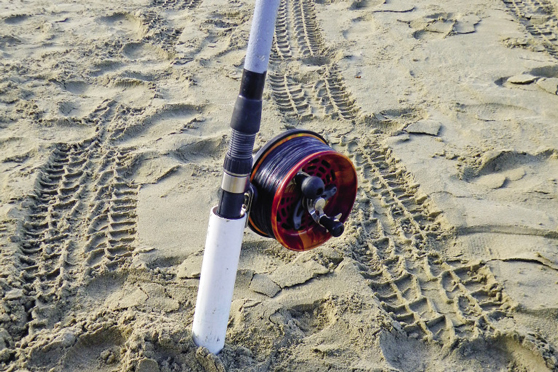 Initially, many old wives’ tales were told about the supposed disadvantages of using Spectra-based lines. For example, line guides were going to be cut to pieces by these lines, so special coatings were going to have to be developed to stop this happening. Perhaps the silliest old wives’ tale was one that Granny would be proud of: Spectra lines would cut through nylon lines like a hot knife through butter! In truth, the only situation where braid/fused lines sometimes cut mono is when BOTH lines are under load with big fish or perhaps are snagged. Otherwise, all you get is a tangle.
Beach spikes
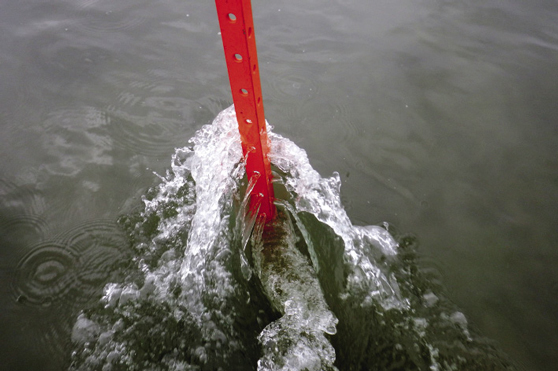 Ah, I fondly remember the days when I made my own beach spikes out of reinforcing steel bar and bits of galvanised steam pipe. In the measurements of the day, the piece of reinforcing steel was about a yard long.
One piece of the steam pipe was about two inches long and welded about halfway down the bar. The other piece was shorter and welded about an inch from the top of the bar. This inch was so you could bash the living hell out of it with a big rock to get it down into the shingle.
After a bit of use the beach spike would season or ‘weather in’. That’s the polite way of saying it rusted! You could tell if someone fished a lot by how badly rusted his beach spike was and how mushroomed 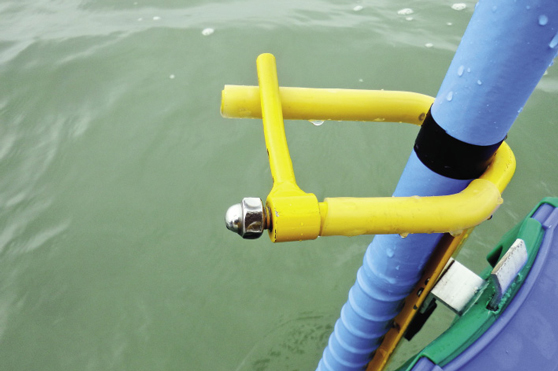 the top bit was from all the bashing – a kind of badge of rank for surfcasters.
Nowadays, beach spikes are professionally made from all sorts of materials, including stainless steel, galvanised steel, aluminium, and even plastic.
My own beach spike is powder-coated angle aluminium with two holders at the top for my two rods (no running between beach spikes for me!). I’ve drilled holes in the ‘spike’ length to allow the ebbing and flowing water to pass through, relieving a bit of pressure.
Hooks
Now here’s a subject a whole room full of people could argue about – and at the end of a day still not have reached agreement!
 The first manmade hooks were no more than a piece of wood or bone sharpened at each end. More correctly called gob sticks or gorges, the line was tied to the middle. Then, when a fish took the bait the line was jerked, hopefully jamming the stick crossways in the fish’s mouth.
The first proper hook shapes were carved from bone, shell or hard wood. Some were little more than a sharp thorn from a bush or tree attached to one end of a stick or piece of bone.
Larger hooks were often made from a jaw bone, sometimes human (it must have been a bit of a worry for anyone with a perfectly-shaped jaw bone when on overnight trips with their keen fishing mates!).
The discovery of steel saw the first hook shapes as we know them today, and allowed manufacturers to go ballistic creating all sorts of shapes and sizes – to the present day, where we now have an almost uncountable number of patterns for all sorts of situations and uses.
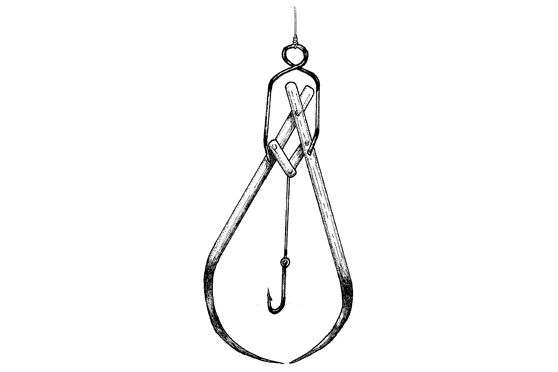
Probably the most bizarre hook setup I’ve ever seen was an American invention called The Sure-Catch Fish Hook. The idea was that you opened up two large sharp prongs and baited a normal hook tied to a trigger mechanism. When a fish took the bait the mechanism was activated, sending the two prongs slamming into the fish’s head (you wouldn’t like to try and set this mamma up after a long hard night on the sauce, would you?). Thankfully, this idea died a natural death as it was not a very sporting way to catch a fish – but at least you didn’t need a sinker to cast it!
NOW I’VE RUN OUT of space again, so I’ll leave transport, kontikis and fishing knives until next month.
|
|
This article is reproduced with permission of |

Recent Forum Posts Visit Forum

Shane Jones
in Fisheries Management6 hours ago
Pcj
But reality is maybe 4 from legasea and the NZSFC .Rather than asking what fishos want they blindly go ahead with their own ideas and...

Trailer wheel clamp
in The Boat Shed17 hours ago
Mc Tool
either crc long life or 556 marine are way better ...

Foton tunland v9
in The Briny Bar33 hours ago
Ho Dee
not fishing related and delete if required but was wondering if any has one of these or someone who has just wanting so e real world...

Bluefin Tuna at the cavs.
in The Briny Bar79 hours ago
smudge
Despite my years of fishing I haven't really fished many places, my focus has always been on Auckland's west coast and out toward Great Barrier. I...
Casting gloves
in Popper and Topwater Fishing124 hours ago
Mc Tool
100 bucks for a lure 😬. Watching one of them flying over the horizon without the line attached would be " character building " for sure...
I thought Id post some nice photo's , join...
in The Briny Bar175 hours ago
Alan L
That is a very cool pic Krow.The Far North is very cool, the Far far North even cooler. Mint looking day.Alan...

Mc Tools berley mincer
in The Briny Bar183 hours ago
SaltyC
Good size, they scrap well. Got an 18kg one up in Vava'u back a few years ago fishing off squeaky Going's boat. That was quite a...
Out with the "Twelves"
in Fishing Reports237 hours ago
Pcj
I should be able to get out end of October. The nephew been out virtually every weekend over winter and has done well. It seems the...
Manukau Harbour & West Coast fishing
in Fishing Reports245 hours ago
smudge
Nice work Schecter, I think snapper may be around sooner than you think. Well I am hoping so...

Whangarei Harbour report.
in Fishing Reports677 hours ago
krow
180 +m is where I've had to be lately. A lot less low foul around these parts and some of it shallower that looks like Tarakihi...
Popular Articles

Softbait Fishing - Part 1 - gear selection
John Eichlesheim writes an article about selecting the right equipment for softbait fishing... Read More >
Softbait fishing Pt 2 - tips and tricks
Techniques, tips and tricks of softbait fishing – getting the most from your soft baits.... Read More >

Surfcasting - setting yourself up
Gary Kemsley helps sort out the necessary gear for intending surf fishers.... Read More >

Squid - How to catch them
Squid fishing is a rapidly growing aspect of fishing - Paul Senior shares some hints and tips to get started.... Read More >
Fishing Reports Visit Reports
Outer Hauraki Gulf Fishing Report 17/09/26
Spring wind the handbrake. Spring is starting to make its presence felt in the outer... Read More >
Top of the South Fishing Report - 17/09/26
Early snapper in Tasman Bay. Well, spring is finally here, and the days are getting... Read More >
Bream Bay Fishing Report - 17/09/26
Good snapper catches reported. After Tangaroa turned off the fish tap for a month or... Read More >
Bay of Islands Fishing Report - 17/09/26
Pacific bluefin tuna for the lucky few. The last fortnight has seen more fishable days... Read More >
Comments