
Fishing Flood Structure
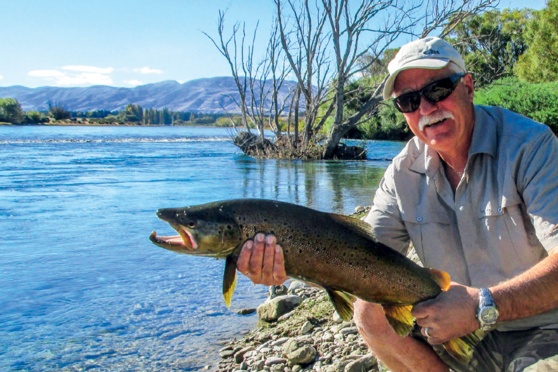
Freshwater rivers, particularly big freshwater rivers, have structure, which is usually created through big floods. The recent Canterbury floods that hit the two branches of the Ashburton River are a case in point. Mid Canterbury was devastated. They nearly turned the Ashburton Bridge into a bit of destroyed debris.
Since moving back to Central Otago, I have found a lot of my river fishing time is spent on big rivers since they are handy and I concentrate a lot of my fishing effort around post flood structures I encounter. Top of my ‘mean size rivers’ pile is the Clutha River (MataAu), which is the highest volume river in New Zealand, and the swiftest, with a catchment of 21,960 square kilometres discharging a mean flow of 614 cubic metres per second. Second is the Pomahaka River which is in South Otago. A tributary of the Clutha River, it flows south for 80km from the Old Man Range of mountains to join the Clutha about 15km west of Balclutha and near Clydevale. Third is the Taieri River which is the fourth-longest river in New Zealand, being an impressive 288 kilometres in length.
When angry, all three tear the bankside landscape up and do some serious moving around of soil, property and trees. This seems to happen a lot more these days, and the experts are predicting that more regular big floods are just one symptom of an ailing climate.
In these three rivers, the main types of structure I target are sunken trees, river boulders, lee water behind islands, and open water amongst thick stands of bankside willows and weed banks. The main trout species caught across the three rivers is brown trout, though I also catch rainbows in the Clutha and Pomahaka, and occasional perch in all of them.
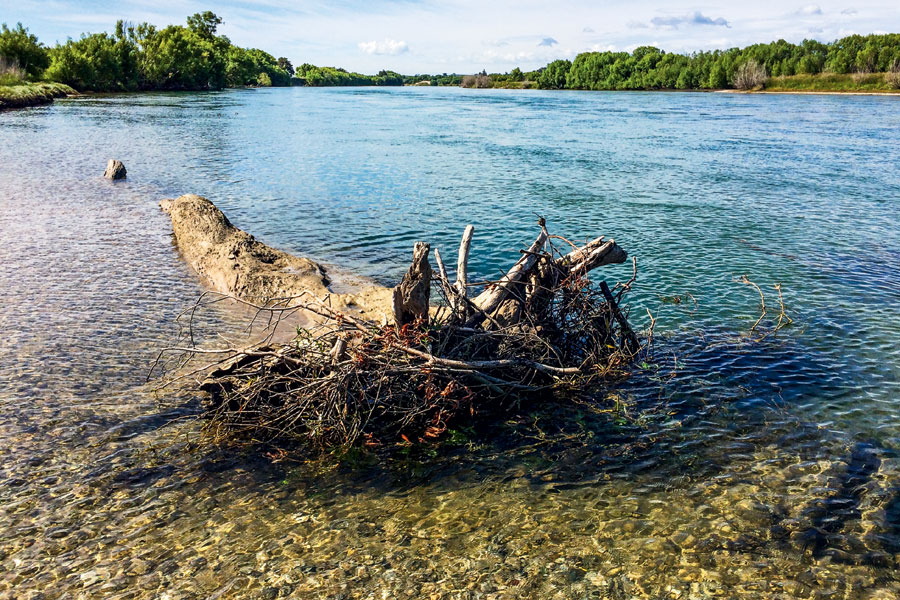
The Clutha is always fast and always boisterous, so you are always seeking structure or a braid to give you an edge. The other factor is flow but that is out of your control as it is up and down like a yo-yo. The piece of structure I remember most was a huge willow that sat in the main Clutha some ten metres out from the bank. The river current hammered it but for five or so years it stayed firm, providing deep, slow water behind its bulk. I regularly caught trout here year after year, but sadly this year the top has gone and only a few remnant sticks poke up. I would flick a 13g Kobra behind the tree and slowly wind it back into the slow water where it got smashed. RIP tree.
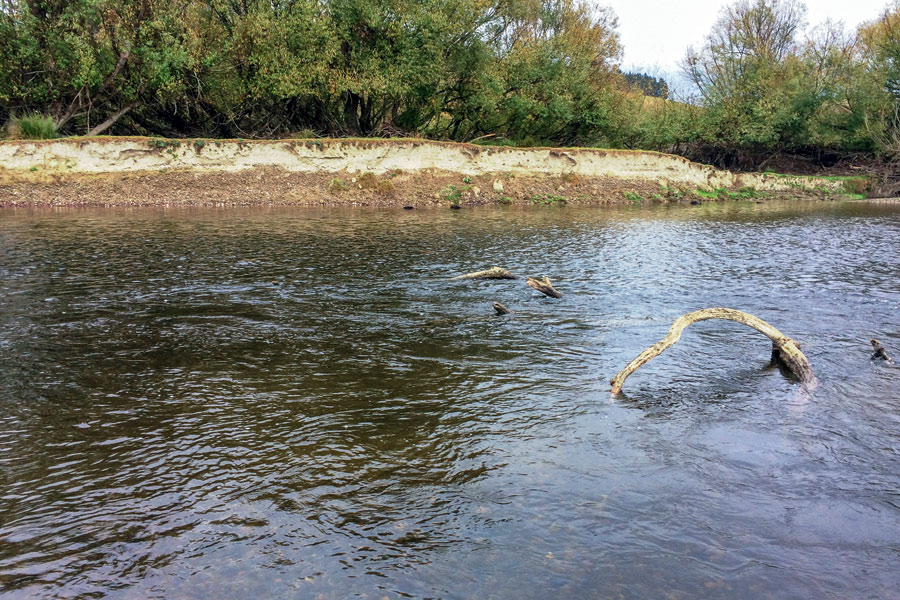
The Pomahaka River is mostly sluggish, dark and brooding, but browns love it and will be found in willow pools and behind trees washed down in the floods. As it’s slower and shallower than the Clutha, I tend to use 7g spinners as my go to weapon here, though I have seen fly anglers do well also. The damage done by floods in this river is spectacular though I seldom hook up on snags when retrieving. I think the floods were so powerful they cleaned the riverbed of all items. The only trees left mid-stream are monsters who eventually will surrender. It’s only a matter of time.
Another structure this river has is a strange bedrock pattern in the lower reaches which channels water at speed but also creates holes that fish lie in. My brother did well with a weighted nymph in this region, while spinners got swept over the top.
The Taieri River at low flow is a lazy brown river meandering its way to the sea, but in flood it too flexes mighty muscles. The main structure I target here is also flood debris and mid-stream tree carcasses. At the tail end of last season I landed a big brown just where you would expect him to be. A tree stump reached out into the main river, creating slow water in its lee. I edged out over the water and cast the spinner downstream and slowly let it weave its magic. Right below my feet, a gold blur came out from the bank and hammered it. I actually got splashed by the surface impact. He tried to get back into his lair but with tension on full, I dragged him away from safety. I landed him soon after, then took a quick photo and let him go.

The soft-plastic range is great for fishing structure as often the lee water is deep. Perch in particular love them and will burst out from cover to swallow them up. Catch one and you are certain to catch more until the eel police turn up and move the school on.
The main danger of fishing around structure is the same one that marine anglers face: bust offs. Powerful fish will head for the rough stuff and tangle you up. Taieri trout are masters of it and ‘whack and run’ is their speciality. On light gear, there is very little you can do about it and even less when they burrow amongst the sticks. Snags are less of a problem as fast rivers are constantly moving the river obstacles along or burying them under silt.
I find casting behind structure then swinging my lure through the prime water during the retrieve works well for me. Hits can be explosive as the structure predator is in ambush mode and is wired to kill.
Recent Forum Posts Visit Forum

Shane Jones
in Fisheries Management21 hours ago
Tzer
Far cry to the twats at Liegasea/NZSFC were proposing of 5 Tarakihi person in their submission for the central management area and this is what our...

Bluefin Tuna at the cavs.
in The Briny Bar41 hours ago
smudge
Despite my years of fishing I haven't really fished many places, my focus has always been on Auckland's west coast and out toward Great Barrier. I...

Casting gloves
in Popper and Topwater Fishing85 hours ago
Mc Tool
100 bucks for a lure 😬. Watching one of them flying over the horizon without the line attached would be " character building " for sure...
I thought Id post some nice photo's , join...
in The Briny Bar137 hours ago
Alan L
That is a very cool pic Krow.The Far North is very cool, the Far far North even cooler. Mint looking day.Alan...

Mc Tools berley mincer
in The Briny Bar144 hours ago
SaltyC
Good size, they scrap well. Got an 18kg one up in Vava'u back a few years ago fishing off squeaky Going's boat. That was quite a...

Out with the "Twelves"
in Fishing Reports198 hours ago
Pcj
I should be able to get out end of October. The nephew been out virtually every weekend over winter and has done well. It seems the...
Manukau Harbour & West Coast fishing
in Fishing Reports206 hours ago
smudge
Nice work Schecter, I think snapper may be around sooner than you think. Well I am hoping so...

Whangarei Harbour report.
in Fishing Reports638 hours ago
krow
180 +m is where I've had to be lately. A lot less low foul around these parts and some of it shallower that looks like Tarakihi...
Whangarei Harbour Scallops
in Fisheries Management748 hours ago
Pcj
Reopening WhangÄ쳌rei Harbour to recreational scallop fishingTÄ“nÄ쳌 koeFisheries New Zealand is seeking feedback from tangata whenua, stakeholders, and the public on whether WhangÄ쳌rei Harbour should be...
SNA1 Recc fishing cops the blame.
in Fisheries Management844 hours ago
Tzer
What Liegasea won’t tell you is that some of their own fisheries contractors were co-authors of this study for fear of being called hypocrites, one of...
Popular Articles

Softbait Fishing - Part 1 - gear selection
John Eichlesheim writes an article about selecting the right equipment for softbait fishing... Read More >
Softbait fishing Pt 2 - tips and tricks
Techniques, tips and tricks of softbait fishing – getting the most from your soft baits.... Read More >

Surfcasting - setting yourself up
Gary Kemsley helps sort out the necessary gear for intending surf fishers.... Read More >

Squid - How to catch them
Squid fishing is a rapidly growing aspect of fishing - Paul Senior shares some hints and tips to get started.... Read More >
Fishing Reports Visit Reports
Outer Hauraki Gulf Fishing Report 17/09/26
Spring wind the handbrake. Spring is starting to make its presence felt in the outer... Read More >
Top of the South Fishing Report - 17/09/26
Early snapper in Tasman Bay. Well, spring is finally here, and the days are getting... Read More >
Bream Bay Fishing Report - 17/09/26
Good snapper catches reported. After Tangaroa turned off the fish tap for a month or... Read More >
Bay of Islands Fishing Report - 17/09/26
Pacific bluefin tuna for the lucky few. The last fortnight has seen more fishable days... Read More >
Comments