
Fisheries Reform Q&A with Shane Jones
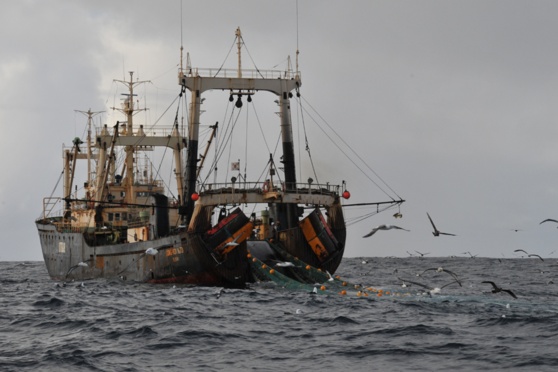
After publishing a scathing review of Shane Jones’ proposed fisheries management reforms in the winter issue of this magazine, the Minister for Oceans and Fisheries’ office reached out for a right of reply. As a fair and equitable publication, we felt it was only proper to see what the self-anointed “apostle of industry” had to say to the recreational fishing community. Editor Nick Jones asked the Minister some hard questions.
Q: You created the Seafood Industry Forum to help develop these reform proposals, yet the recreational sector still lacks formal representation or a mandated advisory body within the decision-making structure of Fisheries NZ. Were recreational fishing groups consulted during the drafting of the fisheries reform proposals? If so, how was their input incorporated?
A: In February 2024, I established the Seafood Industry Forum to identify barriers and opportunities for sector growth. This was specifically focused on getting feedback and input from the fishing industry to develop proposals to make the industry more efficient.
Since the changes predominantly affect the livelihoods of commercial fishers, it was appropriate to seek their feedback.
This is part of the Government’s commitment to lifting New Zealand’s productivity and economic growth to increase opportunities and prosperity for all New Zealanders, and to remove regulations that impede the productivity and potential of the seafood sector while ensuring sustainability.
Operational and regulatory cost pressures were reported by the Forum as holding industry back and making it difficult to invest in growth and innovation. The proposals look to address this.
I value feedback from the many other New Zealanders who use the resource, including recreational fishers. Recreational fishers come from all walks of life and do not have a single representative body, but officials reached out to both recreational fishing lobby groups and more grass roots organisations such as boat clubs, in addition to a broader public consultation. I understand officials have received detailed feedback from recreational fishers as part of this process. That input will be carefully considered before any decisions on the proposals are made. I also sought out recreational fishers for their views and held meetings with some of their representative groups this year.
Q: Will increasing the scope for unwanted fish to be thrown over the side discourage commercial operators from fishing in a smarter, more targeted manner?
A: The proposed change is to enable fishers to return species in the Quota Management System (QMS) to the sea if they are monitored by on-board cameras or observers.
Any monitored returns would count against the fisher’s annual catch entitlement (ACE), or be subject to deemed values, just as if the fisher had taken the fish to shore. This means that there is still an incentive for the fisher to fish selectively for the fish they want to land.
Returning more fish to the sea under monitored returns means a greater proportion of crew time would be involved in the sorting and discarding process. This adds to fishing costs and means the fisher does not receive any revenue from landing and selling fish, therefore providing an additional financial incentive for fishers to retain catch and fish selectively. As an added benefit, it will also lead to less unwanted fish in landfills. This is a timely, commonsense change as we now have the technology to monitor discards efficiently.
Q: Will the stockpiling of annual catch entitlements, instead of reducing catch limits when fish stocks are struggling, simply kick the can down the road?
A: No. From a sustainability perspective, the effect of ACE shelving is the same as a total allowable commercial catch (TACC) reduction of the same amount. If shelving is insufficient to ensure sustainability, or if a sustainability risk persists over time, other options such as a total allowable catch (TAC) reduction would be considered.
ACE shelving simply provides fisheries managers with another tool to balance sustainability with use. It’s important that fishery management decisions are made using the best available information, and any ACE shelving is part of this, so it’s right that it should be available to be considered when making management decisions for the fishery.
Q: It’s taken decades of work to finally get cameras on fishing vessels. Why restrict public transparency of commercial fishing operations now if there’s nothing to hide?
A: There are no proposals to restrict public transparency of the data gained from on-board cameras. The proposal would simply mean that footage itself would not be subject to being released under the Official Information Act.
The footage collected is of ordinary New Zealanders at their place of work. I think it is right that their privacy and sensitive commercial information is protected. The change proposed will also prevent footage of legal fishing activity being used to damage the reputation of the fishing industry.
The proposals do not at all change the fact that footage is still monitored and reviewed by MPI/Fisheries New Zealand officials, and that data will continue to be used to inform fisheries management and compliance purposes. This data will also continue to be made publicly available in aggregate form.
Q: There’s a history of stocks going downhill (or oscillating around overfished levels) while under the Quota Management System (QMS). The theory of maximum sustainable yield (MSY) manages stocks close to the tipping point (10-40% potential biomass), and there are many stocks for which limited information is available to estimate biomass. Would there be less need for constant changes to catch limits if stocks were managed at higher biomass levels?
A: Maximum Sustainable Yield (MSY) is used to manage fisheries around the world, and New Zealand’s approach is in line with international best practice. By default, the MSY is around 40% of unfished biomass.
It provides a useful reference point to balance sustainability with use and has provided excellent results for New Zealand over time. The vast majority (87.7%) of scientifically evaluated stocks are at or above sustainable fisheries management levels. The remainder have plans in place to get them there. Scientifically evaluated stocks account for 80% of the total tonnage of landings from our wild caught fisheries and include most of the main commercial fish species.
Since the introduction of the QMS nearly four decades ago, there have been substantial improvements in the verified information about commercial fishing activity through electronic catch and position reporting and the introduction of on-board cameras.
We have an opportunity to harness this improved data to make our fisheries system more effective and efficient, while continuing to ensure healthy, sustainable fisheries that provide for all New Zealanders now and in the future.
Q: I see you’ve recently made conservative management decisions around crayfish (despite industry pushing hard for catch limit increases in CRA2, for example) following the recent Northland court cases. Are you concerned that setting catch limits in advance for up to five years, with no public consultation during that period, could lead to more court rulings critical of Ministry advice and/or Ministerial decision-making?
A: I’m confident that if the best scientific information is used, and the right decision is made, there is no greater risk of adverse legal outcomes than if management decisions are made annually.
The proposals increase efficiency and flexibility but do not override sustainability. If new information shows the original multi-year decision is no longer suitable, there would be the ability to make a new decision and carry out further public consultation as part of the sustainability rounds process.
Q: Will there be more scientific research to balance the reduced accountability of decision-making?
A: It’s incorrect to say that the proposals will result in a reduced accountability of decision-making.
We invest around $20 million on fisheries research every year; about half of this cost is recovered from industry. We are constantly looking for more cost-effective methods to obtain more science to inform fisheries decisions.
The proposal for a new catch limit-setting provision for low- knowledge stocks may also create an incentive for industry to invest in research for these stocks.
Q: Public confidence in fisheries management appears to be eroding with the growing consolidation of commercial quota into a few large companies and the perception that commercial fishing interests have a disproportionate influence over fisheries management. Are you concerned that these reforms have reduced public confidence even further?
A: I don’t see any evidence to back up your statement.
Many people have strong feelings about these changes, and our fisheries in general. Unfortunately, there has been a lot of misinformation about these proposed reforms, which has clouded the issue.
The proposed changes are designed to make the fisheries system more responsive, certain, and efficient, and enhance value to fishers while ensuring sustainability of these important resources.
I’m confident that the vast majority of New Zealanders agree with me that we want our fishing industry to succeed and grow, increasing the jobs it provides from the 9,000 currently, and the $1.6 billion in exports it brings into our country.
The proposals included are about increasing the efficiency and effectiveness of our fisheries management system. This will enable the growth we want to see, while maintaining the long-term sustainability of our fisheries for the future.
Q: We’re seeing more and more community/council-led conservation efforts in the marine space (e.g. Hauraki Gulf marine protected areas, Motiti protection areas, regional plans, rahui, mātaitai) aimed at addressing localised depletion and/or habitat degradation. Why are the proposed reforms silent on the interaction between community/council-led conservation efforts and the QMS when confusion prevails around the overlap here?
A: There are many areas of New Zealand’s marine area that are closed to fishing, including marine reserves, marine protected areas (MPAs), mātaitai, temporary closures to support rahui, and others. These are important tools, and the processes to put these marine protection initiatives in place provide for local communities and tangata whenua to have their say.
However, the overlap in ability to control fishing activity, particularly the overlap between central and local government tools, can lead to confusion, duplication in effort, and the progression of fragmented marine protection rules.
As part of the Resource Management reform programme, I am progressing changes that will clarify the overlap in roles between the Fisheries Act and the Resource Management Act. These changes will increase certainty and efficiency whilst ensuring that fishing rights and interests are properly considered in council planning processes.
Q: Given that you place so much emphasis on economic considerations, why was an economic assessment quantifying the benefits of recreational fishing to New Zealand’s economy not commissioned to inform the proposals?
A: I acknowledge the contribution recreational fishing makes to local economies. There is no reason to think that recreational fishing would be negatively affected by these proposals. The changes are focused on making commercial fishing more efficient and cost-effective.
The proposals are expected to enhance the Government’s ability to deliver outcomes like abundant fisheries, a healthy marine environment, and economic, cultural and social benefits from the utilisation of fisheries resources.
Q: Will there be an independent review or audit of the reforms two to three years after implementation, with public reporting?
A: There is substantial reporting on the performance of our fisheries systems currently, and this will continue. This reporting informs the ongoing development of our fisheries management system.
- NZ Fishing News
Recent Forum Posts Visit Forum

FC 595 For Sale
in Buy Sell Trade or Exchange35 hours ago
Kevin.S
I have reluctantly decided to sell my boat. It really is not getting enough use to justify keeping it. It is a 2016 FC 595 with...

2026 Grunter Hunter
in The Briny Bar51 hours ago
smudge
Bugger, the only way we can swap tickets is like for like and while a couple have come up they have been club member tickets. Hope...

Manukau Harbour & West Coast fishing
in Fishing Reports74 hours ago
smudge
That's a great catch Schecter! Kayak fishers do it so much harder than anyone else. It would be an absolute pleasure to hand over the $5k...

Knife sharpeners
in The Briny Bar122 hours ago
krow
I'm about to order a couple from Amazon. Check your PM Smudge...
1989 Evinrude 90hp V4
in The Boat Shed123 hours ago
bricker
Inherited the above outboard on a boat - is in very good order with little use. The serial number is A1351974. Is there a way of...

Auckland Yakkers
in Yak Yak Yak200 hours ago
BananaBoat
Out from Mission bay this evening. Went to the red marker by Mission & Kohi. Never fished this area beforeHad a quick looksie for some structure....
Yellowfin
in The Briny Bar217 hours ago
krow
I heard there were Yellowfin East of the chicks yesterday but I'd suggest this is unusual this late in the season as the water is cooling....

Mac'nificent Autumn Fishing....Mokau!
in Fishing Reports244 hours ago
Snappa Geoff
Thankyou for the replies guys... Tagging some bigger fish is a good idea Krow! but it doesn't interest me enough to get involved....
Yozuri crystal minnow deep diver lure 6"?
in Popper and Topwater Fishing284 hours ago
SeniorInvissibl
Anyone ever used this lure before to provide feedback? I've never used yozuri before.The package states it dives to 20 feet, I'm using it to troll...
Popular Articles

Softbait Fishing - Part 1 - gear selection
John Eichlesheim writes an article about selecting the right equipment for softbait fishing... Read More >
Softbait fishing Pt 2 - tips and tricks
Techniques, tips and tricks of softbait fishing – getting the most from your soft baits.... Read More >

Surfcasting - setting yourself up
Gary Kemsley helps sort out the necessary gear for intending surf fishers.... Read More >

Squid - How to catch them
Squid fishing is a rapidly growing aspect of fishing - Paul Senior shares some hints and tips to get started.... Read More >
Fishing Reports Visit Reports
Tauranga Fishing Report - 28/05/26
Tarakihi on the bite Trips are few and far between at this time of year,... Read More >
Canterbury Fishing Report - 28/05/26
Fresh and salt turning it on! It is not very often I get to say... Read More >
Bay of Islands Fishing Report - 28/05/26
Lures paying dividends We finally had a break in the SE winds that have been... Read More >
Manukau/West Coast Fishing Report - 28/05/26
Snapper and gurnard in the harbour The weather has finally taken a turn for the... Read More >
Comments