
Fish Where the Fish Are
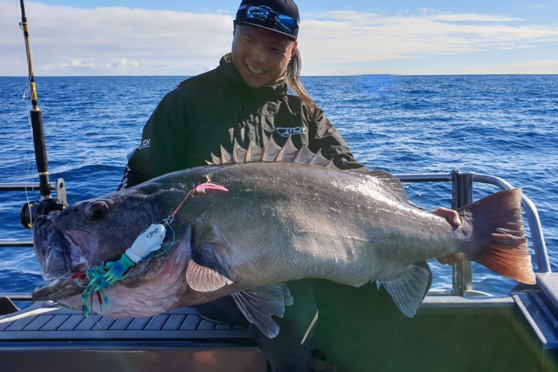
Fish where the fish are, and if you want to catch big fish, fish where big fish live. Is this statement condescending, patronising even? Not really. The gaping hole in most BBQ lean-tos and, in particular, online fishing discussions about how and where to catch fish is essentially a roaring silence when it comes to the crux of the matter. The very thing needed to actually catch fish is missing, not the latest peer group approval of ‘what colour is working’ or the mythical ‘never-fail lure’ and so on (you’ve heard many more no doubt). You can’t catch fish at home, or on the computer – that’s phishing, not fishing.
Even thumping great workup information can be inaccurate for various reasons and when accurate, the info spread far and wide is often not appreciated by many anglers – in that it can take so much away from the experience, the challenge, the thrill of discovery, and the personal efforts you have put in to find a workup without a flotilla present. Perhaps reflective of the modern-day instant gratification (millennial-ism?) approach to so many things, without consideration of the impact. And of course, communication now is instant – you can be on various social media platforms once out on the water and rely on others telling you exactly where to go at that time, GPS coordinates within metres, instant messaging and social media ad-nauseam.
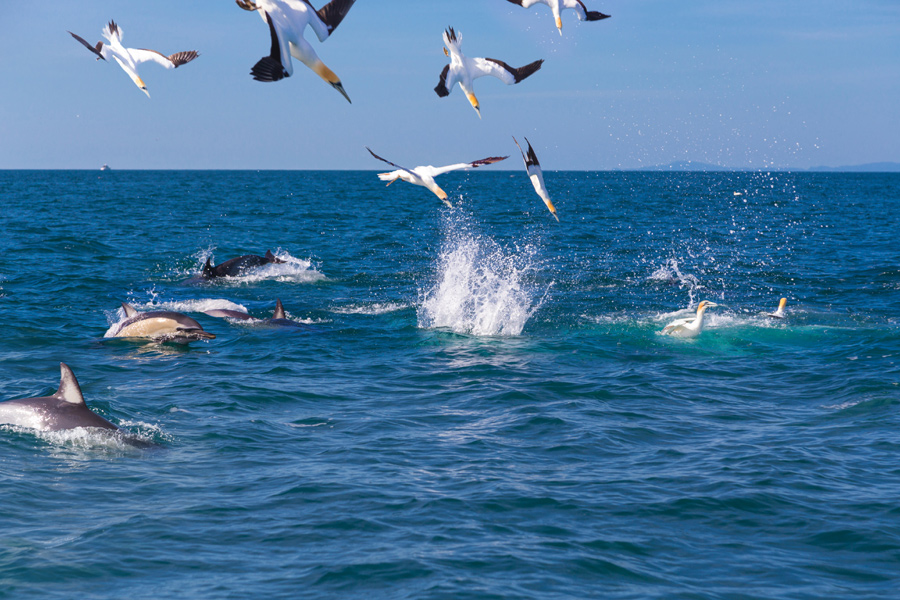 Fishing the down-current areas of workups (usually where the tide is taking the remnants and wounded baitfish) is often more productive for consistent and larger snapper than close to the excitement and adrenaline of the white water.
But I digress a little. Habitat – short and long-term hangouts – hold true for land animals and sea creatures alike. Marlin are prime examples of fishing where the fish are, visiting our shores annually and then departing elsewhere. Trolling the winter months is near pointless; they simply aren’t here. They are hunting their food and thriving in their travelling habitat amongst liveable water temperatures at the time, hundreds or thousands of nautical miles offshore. Even in summer, prime time, we can troll the Rangitoto Channel to our hearts' content, but catching a marlin? One in a million or more, it’s a better chance to win Lotto. Although over the past 20-plus years I have seen the occasional marlin off Waiheke, Flat Rock, Anchorite and Tiri, this is a very rare thrill indeed, and only in prime summer conditions. But out along the magical 200m-400m mark in summer all around the North Island, get those lures out – you’re in the zone, fishing where the big fish are. Being involved in a fishing club and mutually sharing general information with other anglers (successes and failures) in regard to the general whereabouts of marlin at the time is a great quid pro quo system – input and output among fellow anglers.
A similar theme applies to kingfish and our adored snapper. Fishing under the Auckland Harbour Bridge in mid-summer is a good place to be catching snapper, with decent numbers swimming past here to breed in the warm shallows notably in January and February. The best tackle to use is comparatively lightweight – microjigs of 10-20g, or smaller softbaits up to 5” on little jigheads ¼ to ½ oz, cast with longer 7’ rods using spin reels, and leaders of 10-15lb. You can feel like a masterful fishing hero with a charging snapper on light line, rod bent parabolically with the traffic crawling along gazing in amazement at you and your prowess, right there, in the CBD. However, try the same place six months later, and you’ll more likely catch a cold than a good snapper.
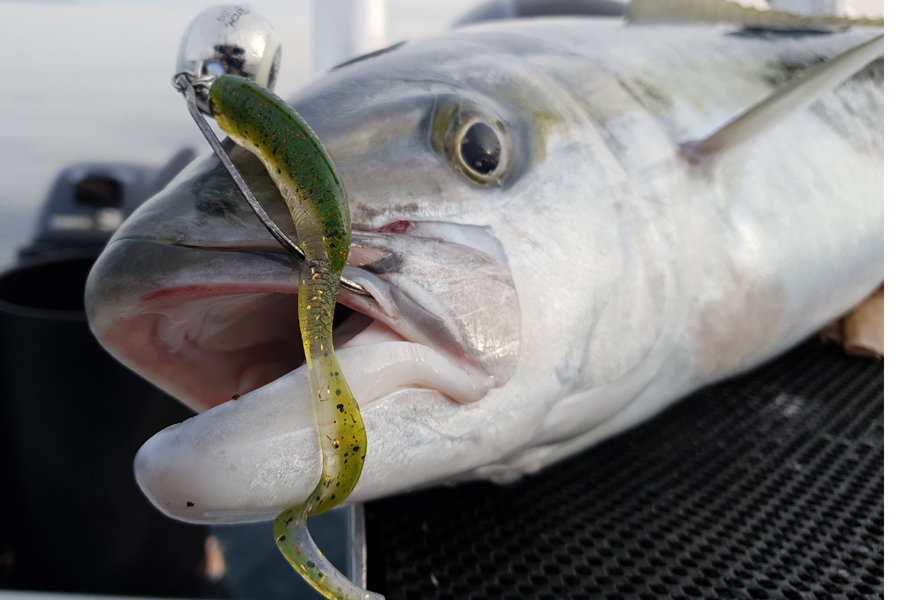 Fish slowly descending lures higher up in the water column if you want kingfish.
BBQs, bar-leaner discussions, and in particular social media tend to focus on everything but the presence of fish. Discussions about lure colour shape, brand, size, unique technique, what a mate uses, boat size, fishing mojo, ego, reputation – all manner of things, including the classic, “I’ve never caught anything on this lure,” seem to take precedence.
Anglers tend to blame everything ad infinitum, but were the fish there to be caught at the time? How about the classic, “West coast fish don’t bite jigs,” adamantly proclaimed on more than one occasion often when someone is adept at a particular style of fishing say, and throws down in near-contempt a completely different method of catching fish, and expects instantaneous, outstanding results. Then they assert they have ‘proven’ it doesn’t work (within a few minutes) and bleat on comfortably in their story of opinion and predisposition once again at ensuing BBQs or seminars.
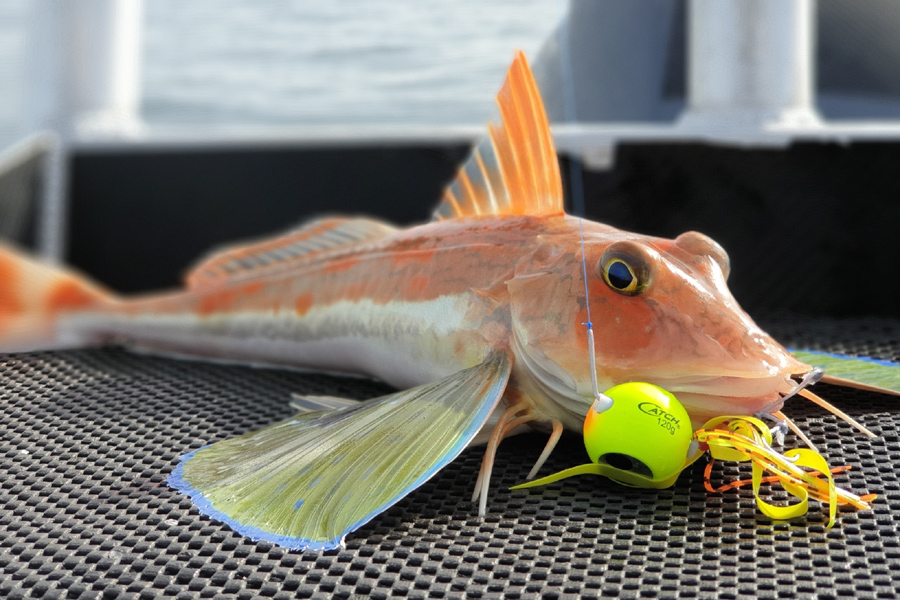 Try heavier lures close to the bottom for demersal fish such as gurnard.
Anyway, back to fish habitat rather than human habit. The more often a particular area or habitat is fished, the less fish, and the less likely you are to catch bigger fish. For example, Shearers Rock just off eastern Tiritiri Matangi island looks ideal for solid snapper most of the year and plenty of marauding kingfish when studying a chart looking for hotspot habitats within reach of smaller trailerboats. There’s good current, pinnacles rising up to near the surface, and weedy and rocky areas close to open water that suggest all manner of fish. But due to the sheer numbers of anglers there, pretty much every day of the year, pre-dawn to post-dusk, the fish numbers are generally low and the fish also smaller, logically. There must be an amazing amount of snagged tackle camouflaging the rock itself, too.
So we can extend the adage – to catch big fish, you must fish where the big fish live. Kingfish are a prime target and a good example of this. To catch those brutally big, arm-wrenching, mean green machines go to where they hang out, such as the Three Kings, Ranfurly Banks, and even the ‘far side’ of Great Barrier Island. Good, hard-to-access fishing grounds where you don’t want to get caught with a knife at a gunfight. Bigger stronger reels with drags of 25-40kg for instance (whether overhead or spin), braid rating of at least 37kg, leader minimums of 150lb and much more, swinging seriously big livies or jigs up to 500g even, and well tied PR and chain knots – no place for Granny. These places require well-equipped, often bigger boats, and a captain who knows what they are doing. They can be dangerous places in themselves – as can be the trip there and, most importantly, back. Reputable charter operators are a good choice for fishing these hallowed grounds because they take you to where the big fish live.
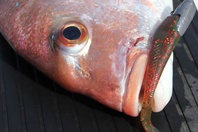
.jpg) Fish move with the seasons – one day’s hotspot may be barren on the next trip.
Fish move with the seasons – one day’s hotspot may be barren on the next trip.
While it may seem overly simplistic, going to where fish are in situ, or passing through when you are there, is critical to fishing success. Whether that is Spot X, finding somewhere new, identifying seasonal habitats or permanent habitats, or finding food sources like baitfish for bigger fish typically by using your sounder. Fishing the down-current areas of workups (usually where the tide is taking the remnants and wounded baitfish) for instance is often more productive for consistent and larger snapper than close to the excitement and adrenaline of the white water. The workup comprises a barrage of birds and mammals pounding a baitball and feeding furiously. Big snapper will readily follow on behind this moving food caravan down closer to the sea floor, sometimes hundreds of metres behind. The white water itself has baitfish, birds, dolphins, prolific kahawai, and probably a shark or two. Kingfish will lurk around the perimeter and underneath the workup for sure but will also hang back in the general area as well – worth targeting especially when workups are widespread, fast-moving or on-again/off-again style.
Targeting the general area with smaller, flatter, slower descending jigs can be a good option to try as kingfish cruise the area, not just the temporary hotspot. Slow-pitch is a technique gaining popularity in New Zealand and rightly so – it targets snapper, kingfish and many more species present, and is a highly effective, fun and thrilling way to catch fish. Jigs in the 100gm-300gm bracket on similarly rated rods work these fluttering lures beautifully providing ultra-sensitive and immediate feedback to the angler – no wonder it’s so popular. Slow-pitching jigs is a fantastic option to use whether there are workups around you, or nowhere near at all. Slow-pitching is simple, easy and with only a very basic understanding of it you’re away laughing with a bent rod. A plethora of knowledge is readily available and most experienced and knowledgeable fishermen are helpful especially when teaching young or novice anglers.
As I have ended many lure fishing presentations and seminars: “Find the fish, the rest is just good conversation.”
- By Grant 'Espresso' Bittle
Recent Forum Posts Visit Forum

Shane Jones
in Fisheries Management20 hours ago
Tzer
Far cry to the twats at Liegasea/NZSFC were proposing of 5 Tarakihi person in their submission for the central management area and this is what our...

Bluefin Tuna at the cavs.
in The Briny Bar40 hours ago
smudge
Despite my years of fishing I haven't really fished many places, my focus has always been on Auckland's west coast and out toward Great Barrier. I...

Casting gloves
in Popper and Topwater Fishing85 hours ago
Mc Tool
100 bucks for a lure 😬. Watching one of them flying over the horizon without the line attached would be " character building " for sure...
I thought Id post some nice photo's , join...
in The Briny Bar136 hours ago
Alan L
That is a very cool pic Krow.The Far North is very cool, the Far far North even cooler. Mint looking day.Alan...

Mc Tools berley mincer
in The Briny Bar143 hours ago
SaltyC
Good size, they scrap well. Got an 18kg one up in Vava'u back a few years ago fishing off squeaky Going's boat. That was quite a...

Out with the "Twelves"
in Fishing Reports197 hours ago
Pcj
I should be able to get out end of October. The nephew been out virtually every weekend over winter and has done well. It seems the...
Manukau Harbour & West Coast fishing
in Fishing Reports205 hours ago
smudge
Nice work Schecter, I think snapper may be around sooner than you think. Well I am hoping so...

Whangarei Harbour report.
in Fishing Reports637 hours ago
krow
180 +m is where I've had to be lately. A lot less low foul around these parts and some of it shallower that looks like Tarakihi...
Whangarei Harbour Scallops
in Fisheries Management747 hours ago
Pcj
Reopening WhangÄ쳌rei Harbour to recreational scallop fishingTÄ“nÄ쳌 koeFisheries New Zealand is seeking feedback from tangata whenua, stakeholders, and the public on whether WhangÄ쳌rei Harbour should be...
SNA1 Recc fishing cops the blame.
in Fisheries Management843 hours ago
Tzer
What Liegasea won’t tell you is that some of their own fisheries contractors were co-authors of this study for fear of being called hypocrites, one of...

Popular Articles

Softbait Fishing - Part 1 - gear selection
John Eichlesheim writes an article about selecting the right equipment for softbait fishing... Read More >
Softbait fishing Pt 2 - tips and tricks
Techniques, tips and tricks of softbait fishing – getting the most from your soft baits.... Read More >

Surfcasting - setting yourself up
Gary Kemsley helps sort out the necessary gear for intending surf fishers.... Read More >

Squid - How to catch them
Squid fishing is a rapidly growing aspect of fishing - Paul Senior shares some hints and tips to get started.... Read More >
Fishing Reports Visit Reports
Outer Hauraki Gulf Fishing Report 17/09/26
Spring wind the handbrake. Spring is starting to make its presence felt in the outer... Read More >
Top of the South Fishing Report - 17/09/26
Early snapper in Tasman Bay. Well, spring is finally here, and the days are getting... Read More >
Bream Bay Fishing Report - 17/09/26
Good snapper catches reported. After Tangaroa turned off the fish tap for a month or... Read More >
Bay of Islands Fishing Report - 17/09/26
Pacific bluefin tuna for the lucky few. The last fortnight has seen more fishable days... Read More >
Comments