
Fish Replicas and Taxidermy

Like many of us, Rob Fort now prefers to release his bigger fish and even refuses to shoot them with a spear. However, there are some catches which deserve to be immortalised, and others that simply won’t swim back down. Rob provides some sound advice on the two ways to mount your trophy fish.
From a young age, my interest in fish not only involved the act of fishing with a line and spear but also keeping them in aquariums. However, taxidermy and replica fish never caught my eye until I speared a snapper over 20lb. The fish came in at 27lb and was put in the freezer for about a year. When I first speared the snapper, an element of guilt stayed in the back of my mind, which inspired me to immortalise the fish by making a replica. As a professional artist, this task was undertaken by myself and was successful despite the methods used at the time. With over forty years’ experience in airbrushing, my paintwork features photo-realistic finishes, which gives an excellent result on replica fish.
The results of my work certainly created a lot of interest, as well as orders to make more. The most surprising aspect is the appreciation people show towards their trophy fish, especially if the replica is made well. Since owning one, it’s now clear what the attraction is for most: it essentially immortalises the fish forever. For me, however, having the snapper replicas means more than just signifying that special day; it also helps to start conversations about topics like catch and release. My own personal stance on fish of this calibre has changed as a result also, and I now leave big snapper alone when spearfishing and release them when using a rod and reel. In fact, I take pride in showing respect to these strong survivors of the ocean, who in many cases have been around as long as us. It makes sense to let those bigger fish go so they can continue to breed, which will ensure those strong genetics stay in the gene pool.
In my opinion, it’s the way of the future, and this is where fish replicas could play their part. Reading Tony Orton’s article ‘Conservation Mounts’, published in the September issue of NZ Fishing News, about the potential for making replicas of fish to facilitate catch and release, certainly struck a familiar cord. On the surface, it is a very good idea and there is no doubt that other replica fish makers will have a collection of moulds in various sizes and species. Compiling a database of these replica moulds could work but would still require individuals posting them up on their website.
Two Options: Replicas and Taxidermy
When considering the options, it’s important to note the difference between a fish replica and one that is produced using taxidermy techniques. Taxidermy uses original parts of the fish like the skin and head, so this means they can’t be produced again unless a mould is taken of the finished fish. Taxidermy fish also utilise the natural colour scheme of the existing fish, which can fade over time. The opposite is the case with fish replicas which rely on the artist to make them look realistic with paint. Replicas can stay in perfect condition for many decades, depending on the quality of paint materials used. Some taxidermy fish like trout are also repainted to bring the fish to life, which means they will last longer.
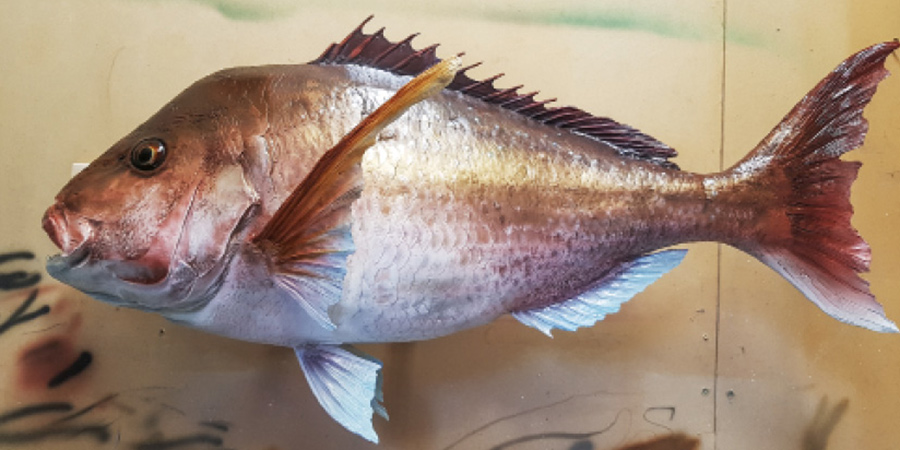
A decent paint job can be the difference between a good and poor fish replica.
Recently, this topic came up in a conversation I had with the members of a freshwater trout fishing club. They wanted the option to let fish over 10lbs go, yet still be able to get a replica made to commemorate the capture. In the case of producing replica trout, it seems that most have been done using taxidermy, which means there is a lack of moulds to make replicas. Unless the members with existing fish mounts allow moulds to be made from them, then the only option is to provide the actual fish so a collection of moulds can be produced.
There are also other things to consider with replicas, like the cost to make the original mould (this is often subsidised by the replica maker). A lot of time is spent producing a decent mould, and in the case of replicas, the mould can often be made to last only one time and may not survive the replica making process. Using less materials also cuts the cost and saves the maker dollars, which can result in some moulds getting broken during their release from the fish replica. These moulds are discarded once used, but modern materials are making this less common. Silicone is one of these materials, and it offers many advantages, including better detail compared to fiberglass. With silicone, it’s possible to mould tricky areas like the mouth, and many replicas can be produced from the same mould. Silicone also provides a safe way to take moulds of existing taxidermy fish like trout, without causing damage to it. So, the option is definitely there for replicas to be made of released fish.
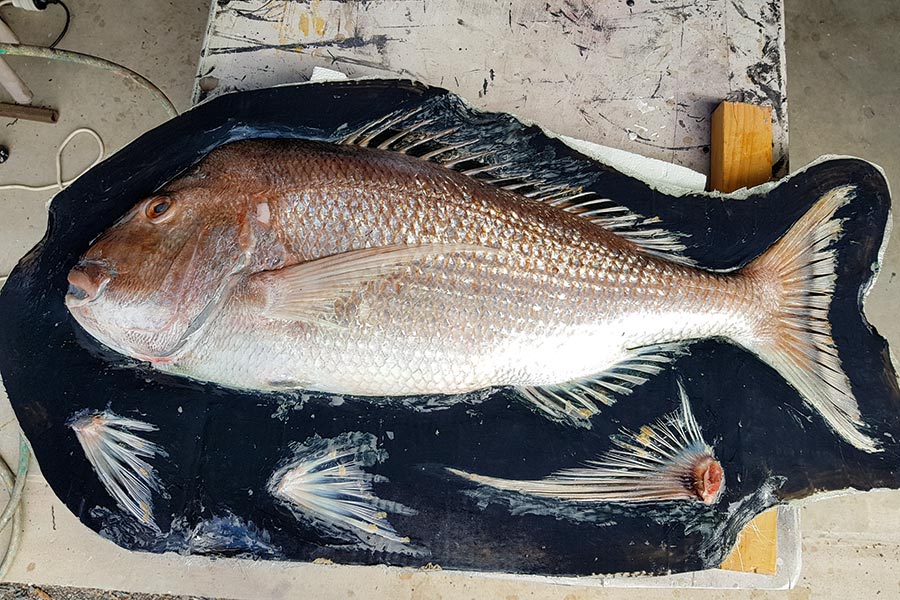
A snapper during the mould making procces.
As far as making the replica cheaper in the long run through reusing moulds, this still comes down to the person producing them and as mentioned, the mould making process is often subsidised. It is also worth considering that you are investing in a work of art that is original and unique in its own right, so producing them cheaper is not an option if you want a top job. If you can, try not to let cost be the deciding factor when it comes to getting the replica made. After all, it’s hard to put a price on being able to give back to the natural environment by conserving these larger fish.
Keeping the fish
Even when an angler has the best intentions, sometimes fish just don’t make it for whatever reason. If this happens or you decide to keep a trophy that could potentially be made in to a replica, it’s important to do things right. First, take plenty of photos with the fish showing its best side, including close-ups of the head areas. A fish’s colour will change, so capturing the original colour in the first ten minutes is crucial to get all the details. Try not to handle the fish too much and when you do, cradle it with wet hands. Avoid both grabbing the tail area with your hand and lifting it without supporting another part of the fish, as this is a sure way to lose scales. The best way to lift it is to support the fish under its belly and the area just before its tail. Take care not to damage any fins also as this can influence the end result. Larger pelagic fish are even more fragile and their fine scales are easily damaged, so great care is important when handling them.
Once you have taken a number of photos, place the fish in an ice slurry with the best side facing up. If the fish is too big for the chilly bin, cover it with wet towels and keep it cool as best you can. The next step is to get the fish to the replica maker or taxidermist and if it’s possible, do so while the fish is in a fresh state. Taking a mould of the fish when fresh will produce the best possible replica, although it’s not the end of the world if this isn’t an option. Putting it in the freezer is the other alternative; however, it’s best not to leave it frozen for too long. An acceptable amount of time for a fish to remain in the freezer is six months, with one year still okay and in some cases even longer than this depending on how well it has been looked after beforehand.
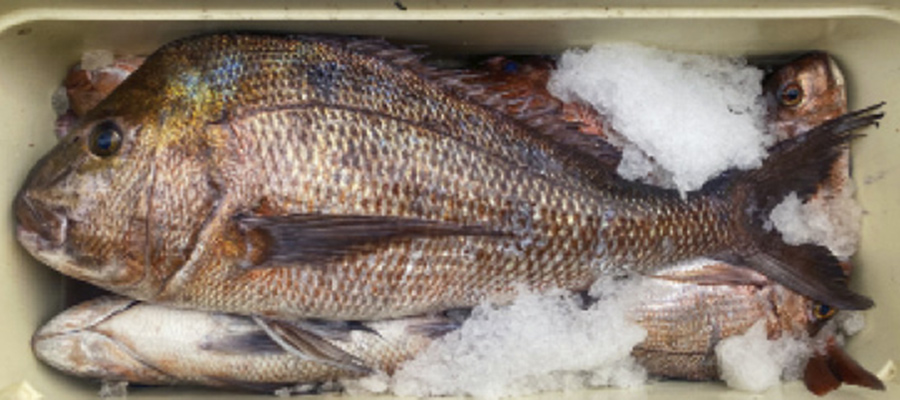
Take care of your fish, placing the best side up if you want to get it made into a replica.
If you’re planning on freezing a fish, preparation is key. The first thing you’ll need to do is grab a piece of plywood or thick cardboard that is the same size as the fish. This will support your catch during its time in the freezer. Some old bedsheets or towels will also be required, as well as plastic bags or wrap to finish off and protect the fish properly. Soak the bedsheet using saltwater if possible, then double up the sheet before laying it on a flat surface. Now place the fish down on the sheet with the best side facing up. Fold in the fins so they sit flat against the body, ensuring the tail fin is lying flat without any folds or creases. Now fold one side of the sheet or towel over the fish, making sure it sits nicely against the body and fins without any air between them. Finish by folding the other side of the sheet in the same way as the first. You will end up with the fish completely wrapped in wet cloth which will protect it against possible freezer burn. Now carefully place the wrapped fish into plastic for extra protection before placing it on the plywood or cardboard. The final thing to do is to secure it to the plywood or cardboard by either using plastic wrap or packing tape. Once this is done, then it’s ready to go in the freezer. During the first thirty six hours, try not to disturb the fish too much and avoid placing anything on top of it as this could put a dent in the body shape.
When everything is done correctly as described above, your fish will be preserved in its original state. Whether you are making a replica or getting it taxidermied, this will make the process easier and provide better results.
If you are one of those anglers who likes to see trophy fish released, then having a replica done using existing moulds is certainly viable. If you are keen to explore this option, then talk with those who make fish replicas to see what can be done. If more anglers choose to make replicas, the demand created will ensure this option becomes more available in the future and, in turn, assist with the future of the bigger fish stocks.
Preparing A Fish For Moulding Or Taxidermy
• Take plenty of photos of the fish before release, or in the first 10 minutes after boating.
• Get the fish on ice as quickly as possible, with its best side facing up.
• When back home, lay the fish flat and gently, but snugly wrap it with a wet bed sheet to protect from freezer burn.
• Wrap again, this time with plastic to further protect from freezer burn.
• Lay fish on a piece of wood or cardboard to maintain the fish’s shape.
• Place into the freezer.
|
|
This article is reproduced with permission of |

Recent Forum Posts Visit Forum

Shimano 3500 baitrunner
in Buy Sell Trade or Exchange26 hours ago
0nlanders_Nz
Hello, I have come across to on the cash converters website search fishing reels $35 on there...
Manu bay boat ramp
in The Boat Shed31 hours ago
610gc
Hey teamhas any one tried the Manu bay boat ramp since the repairs?Is it any better to use?thank you ...

Out with the "Twelves"
in Fishing Reports35 hours ago
Telecaster
Popped out at about 3:30pm yesterday with a mate, usual zone and method. 10 snapper and 5 gurnard. The biggest snap we got (55cm) was definitely...

Netting flounder in Tauranga harbour
in The Briny Bar70 hours ago
Tonto2
I have 2 granddaughters in Otemotai, one of them went floundering with her school and set a net and caught flounder. Now they want me to...
Wanted 10500 fin-nor reel
in Buy Sell Trade or Exchange82 hours ago
0nlanders_Nz
I am looking for a fin-nor 10500 fishing reel if any one has, please message me...
Wanted to Buy
in Buy Sell Trade or Exchange105 hours ago
honestbruce
Seen your post and that would work but its not up my alley or ability to make one. Dont have the means to manufacture here in...

Manukau Harbour & West Coast fishing
in Fishing Reports119 hours ago
smudge
Just a heads up. Sunday through to Tuesday next week is looking ok for over the coast. at this stage. If it is fishable I will...
Knife sharpeners
in The Briny Bar119 hours ago
smudge
I'm a big fan of Jason Abbot. A real down to earth approach. My son is a butcher and can put a mean edge on a...
Trailer wheel clamp
in The Boat Shed127 hours ago
610gc
Thanks team ill give that a goif that doesn't work is the a better option of the wheel clamp that people recmend...

Shane Jones
in Fisheries Management146 hours ago
Pcj
Taking my limit. Not high grading legal it comes home...
Popular Articles

Softbait Fishing - Part 1 - gear selection
John Eichlesheim writes an article about selecting the right equipment for softbait fishing... Read More >
Softbait fishing Pt 2 - tips and tricks
Techniques, tips and tricks of softbait fishing – getting the most from your soft baits.... Read More >

Surfcasting - setting yourself up
Gary Kemsley helps sort out the necessary gear for intending surf fishers.... Read More >

Squid - How to catch them
Squid fishing is a rapidly growing aspect of fishing - Paul Senior shares some hints and tips to get started.... Read More >
Fishing Reports Visit Reports
Canterbury Fishing Report - 01/10/26
Freshwater season underway. Wow, it’s October already, and our freshwater season is underway, and the... Read More >
Top of the South Fishing Report - 01/10/26
Snapper about but not yet firing. It’s certainly nice to see daylight savings upon us... Read More >
Hauraki Gulf Fishing Report 01/10/26
Big reds in the shallows. The weather has made getting out on the water challenging... Read More >
Bay of Islands Fishing Report - 01/10/26
Snapper moving in. A few Pacific bluefin are still gracing the weigh stations with last... Read More >
Comments