
Ducks, Geese, Deer and Trout
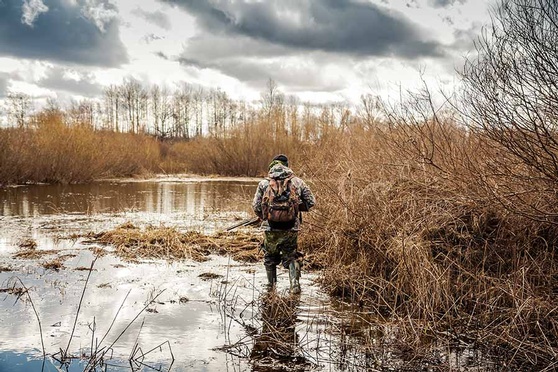
Whether you are an angler targeting spawning trout, a hunter stalking rutting deer species or a shooter waiting for incoming mallards, there is excitement aplenty in autumn, writes Greg Morton.
Autumn is my favourite season of the year because it is the time when all game is active. Recently I fished the Pomahaka River in West Otago and though I was two weeks shy of the duck shooting season, could not believe the number of mallards, paradise ducks and Canada geese I observed. The mallard ducks in particular were black on the water, and the geese and parries I flushed off a riverside pasture numbered in the hundreds. The air was full of beating wings, quacks, squawks and honks. It looks like lockdown last year and a good breeding season has meant a duck and goose explosion.
According to monitoring completed by Fish and Game, mallard numbers are up 10 percent. “Parts of the Clutha and Pomahaka rivers had some of the highest recorded concentrations of ducks since 2015,” said Otago Fish and Game officer Bruce Quirey. He also said that one river section had almost doubled its previous highest count.
Based on his comments, I think the area he was talking about was where I was fishing. The daily bag limit for ducks in Otago is 25 a day.
Deer are another attraction close to here: both red and fallow. The evening before my fishing trip I had hunted for a fallow buck on a nearby farm and though he had proved elusive, I got the drop on a black fallow doe and her young offspring. It’s not often I get to practice ‘catch and release’ with my rifle but because of her smallish youngster, I photographed them instead of harvesting mum.
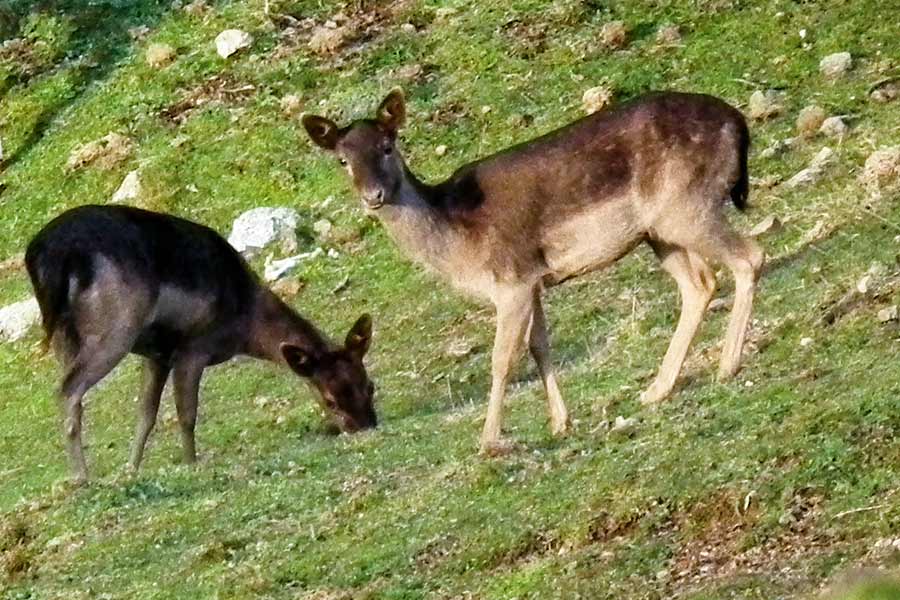
A fallow doe and her offspring the writer decided to photograph instead of shoot.
West Otago is a hunting, shooting and angling paradise, with small community towns, a low human population and well regarded rivers and forests. State Highway 90 runs north-south through a large valley system linking SH 1 near Gore and SH 8 at Raes Junction. The dominating Blue Mountain range (nicknamed the Blueys) near Tapanui is recognised as the historical home to quality black coloured fallow deer.
Once the cloud of ducks and geese above my head had dissipated, I focussed back on the fishing. The Pommy was very low and sluggish but the odd rise meant some fish had survived the big floods back in January. Tree debris littered the banks, but the streambed was clean.
The Pomahaka River’s water colour is dark so you seldom see trout until they hit your offering or when they follow a lure into the shallows. Being late April, I was hoping I might encounter a big Clutha River sea run trout on his spawning run. I fish this river with a white, brown or black spinner as they provide a good silhouette. The first few casts with the white spinner were underwhelming but as I worked my way along a fishy looking stretch, I began to see trout showing interest in its presence. A few followed it in, a couple nipped it and one small fish was momentarily hooked before spitting it out.
Half an hour later I got a good strike but it too escaped so it was time for a change. I removed the white spinner and tied on a brown one of the same Mepps style. Three casts later it was whacked and this fish was a fighter. It ripped off line with ease and then began jumping. At this point his identity was revealed and surprisingly, it was a 1.5kg rainbow jack in early spawning colours. Being well hooked, his efforts to escape were in vain and I eventually landed him. I unhooked him and slid him back into the water.
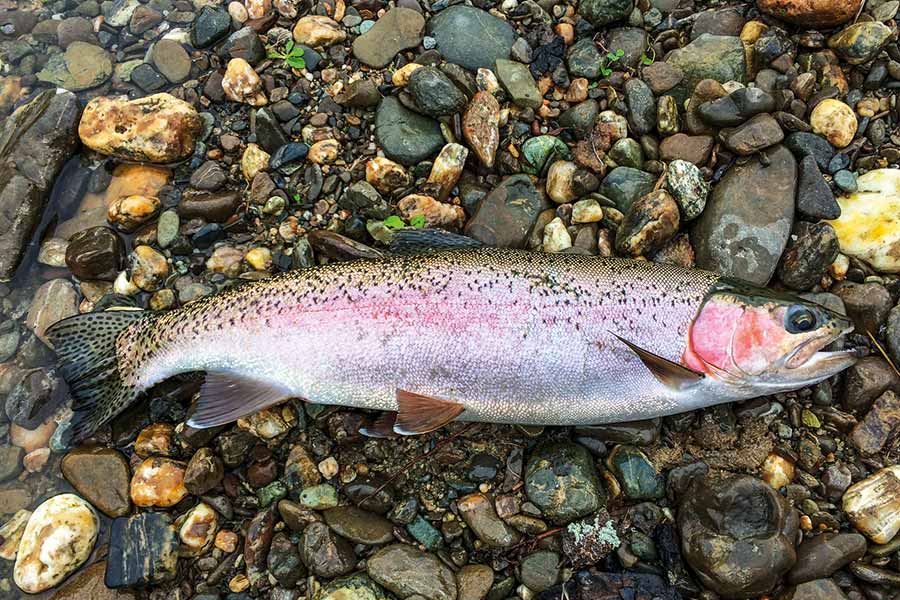
A Pomahaka rainbow trout in early spawning colours.
Success had taken a while but sometimes all that is needed on the day is a colour change. Soon after I came across a pool that just cried, “Trout living here”. It was on a bend, where shallow water hit a submerged tree then became deep, slow flowing water. My first cast was hit instantly and though slightly bigger than the rainbow, this fat brown trout was much easier to land. He too was released quickly.
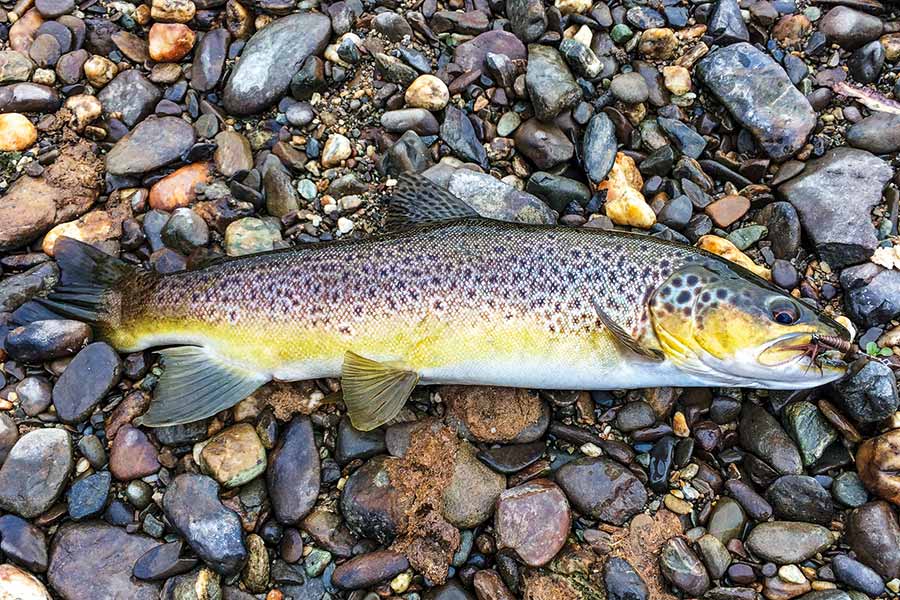
A change in lure colour quickly produced fish for the writer.
The river had taken a real pounding from the earlier floods and the trout too would have suffered. One dark brown trout I came across nestled against the bank was either a victim of spawning or the angry river. He carried many scars and I think he’d be lucky to make it through winter.
I carried on upstream and came across a new pool created by the floods. Previously the best lie here was impossible to access but now the glide was on my side and casting out was easy. Just like fly fishing, your first cast is often your best chance of success and sure enough, a feisty 1kg brown grabbed it and quickly came to the net. My next cast also attracted action and three times on the retrieve something disrupted its swimming action. There was no hook-up though and as it came into sight, I could see a very big brown trout shadowing it. It saw me as well and sank into the depths, not to be seen again. Its size hinted at sea-runner parentage.
The eye of the same pool was deeper, so to get my lure down I tried a new trick. About 40 centimetres up from my spinner, I added a three-way small swivel and from the bottom eye attached a small weight. I thought it would tangle in flight but instead it worked as intended and was grabbed by my second rainbow of the day. He was a twin of the earlier one and like him was released. West Otago had produced the goods again.

June 2021 - Greg Morton
New Zealand Fishing News Magazine.
Copyright: NZ Fishing Media Ltd.
Re-publishing elsewhere is prohibited
Recent Forum Posts Visit Forum

Trailer wheel clamp
in The Boat Shed34 minutes ago
610gc
Hey teamI have a wheel clamp like the one below on the boat trailer. its getting harder and harder to unlockI've sprayed it with CRC on...

Shane Jones
in Fisheries Management24 hours ago
Tzer
Far cry to the twats at Liegasea/NZSFC were proposing of 5 Tarakihi person in their submission for the central management area and this is what our...

Bluefin Tuna at the cavs.
in The Briny Bar44 hours ago
smudge
Despite my years of fishing I haven't really fished many places, my focus has always been on Auckland's west coast and out toward Great Barrier. I...
Casting gloves
in Popper and Topwater Fishing88 hours ago
Mc Tool
100 bucks for a lure 😬. Watching one of them flying over the horizon without the line attached would be " character building " for sure...
I thought Id post some nice photo's , join...
in The Briny Bar139 hours ago
Alan L
That is a very cool pic Krow.The Far North is very cool, the Far far North even cooler. Mint looking day.Alan...

Mc Tools berley mincer
in The Briny Bar147 hours ago
SaltyC
Good size, they scrap well. Got an 18kg one up in Vava'u back a few years ago fishing off squeaky Going's boat. That was quite a...

Out with the "Twelves"
in Fishing Reports201 hours ago
Pcj
I should be able to get out end of October. The nephew been out virtually every weekend over winter and has done well. It seems the...
Manukau Harbour & West Coast fishing
in Fishing Reports209 hours ago
smudge
Nice work Schecter, I think snapper may be around sooner than you think. Well I am hoping so...

Whangarei Harbour report.
in Fishing Reports641 hours ago
krow
180 +m is where I've had to be lately. A lot less low foul around these parts and some of it shallower that looks like Tarakihi...
Whangarei Harbour Scallops
in Fisheries Management751 hours ago
Pcj
Reopening WhangÄ쳌rei Harbour to recreational scallop fishingTÄ“nÄ쳌 koeFisheries New Zealand is seeking feedback from tangata whenua, stakeholders, and the public on whether WhangÄ쳌rei Harbour should be...
Popular Articles

Softbait Fishing - Part 1 - gear selection
John Eichlesheim writes an article about selecting the right equipment for softbait fishing... Read More >
Softbait fishing Pt 2 - tips and tricks
Techniques, tips and tricks of softbait fishing – getting the most from your soft baits.... Read More >

Surfcasting - setting yourself up
Gary Kemsley helps sort out the necessary gear for intending surf fishers.... Read More >

Squid - How to catch them
Squid fishing is a rapidly growing aspect of fishing - Paul Senior shares some hints and tips to get started.... Read More >
Fishing Reports Visit Reports
Outer Hauraki Gulf Fishing Report 17/09/26
Spring wind the handbrake. Spring is starting to make its presence felt in the outer... Read More >
Top of the South Fishing Report - 17/09/26
Early snapper in Tasman Bay. Well, spring is finally here, and the days are getting... Read More >
Bream Bay Fishing Report - 17/09/26
Good snapper catches reported. After Tangaroa turned off the fish tap for a month or... Read More >
Bay of Islands Fishing Report - 17/09/26
Pacific bluefin tuna for the lucky few. The last fortnight has seen more fishable days... Read More >
Comments