
Do snapper shrink?
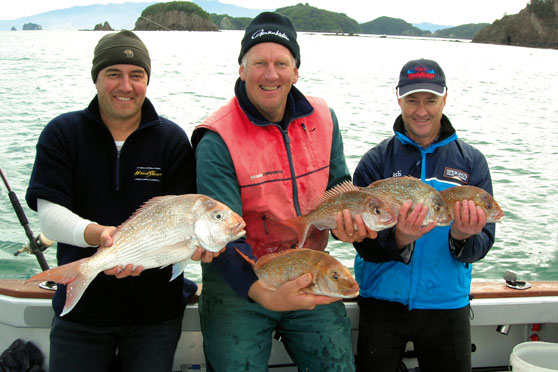
It is not uncommon for fishermen to bump up the size of the fish they catch – a bit anyway – when telling their mates about a fishing trip, but Sam Mossman asks the question: can snapper actually shrink after capture?
Last summer I was fishing with a mate in the Waitemata Harbour. We were targeting ‘pannie’ snapper for the table by stray-lining with bait, using circle hooks to maximise mouth hook-ups so we could release any undersized fish with minimal damage.
As we all know, several years ago the minimum legal length for recreationally-caught snapper was raised from 270mm to 300mm, measured from the tip of the nose to the middle ray or ‘V’ in the tail. After the dust settled, people adjusted to the new reality of length measurement relatively painlessly, as many anglers had already decided that a 270mm snapper did not provide a worthwhile fillet so had a personal 300mm minimum size anyway. This also used to have the added benefit of providing 30mm of leeway between legal fish and ‘throwbacks’, avoiding any potential issues with undersized fish.
After the regulation change, my regular fishing mates and I adopted a new ‘boat’ minimum for snapper of around 310mm, again allowing us some leeway over the legal minimum. On one day last year, our catch mostly consisted of 320mm to 360mm snapper – reasonable table fish for the Waitemata Harbour – until my buddy caught a slightly smaller fish.
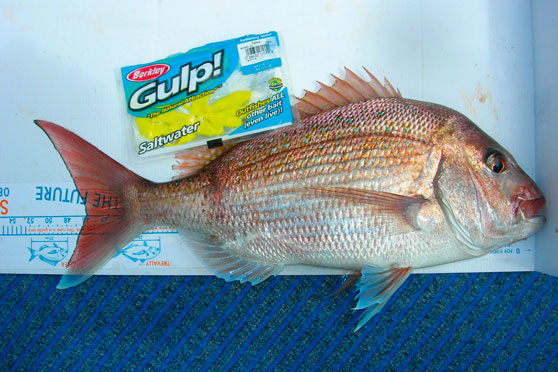
As occasionally happens, even when using circle hooks, the fish was deep-hooked and unlikely to survive. It was smaller than we would usually keep, but my companion didn’t want to waste it by releasing it to probably die, if he could legally keep it, so measured the snapper very carefully, several times over. I watched him do it, and the measurement was exactly 302mm, smaller than he would usually take, but still of legal size. It was killed with an iki spike and put in an ice slurry to chill it quickly, so that its flesh would be in the best possible condition. Any of you with a bit of narrative foresight can probably figure out what happened next...
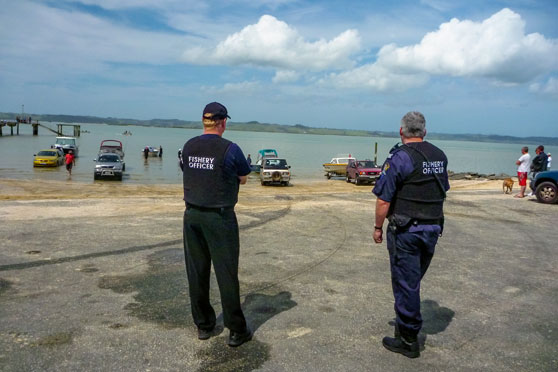
Upon returning to the ramp, a couple of fisheries officers were checking catches. We were quite happy for them to look at ours – I like to see some enforcement going on – but when they put the smallest fish on their ruler, to my companion’s horror, it only went 298mm! Talk about embarrassed. My friend is as law-abiding as they come, and thought he was doing all the right things.
Of course, being two millimetres short on one fish out of the whole catch is hardly the crime of the century. In the face of the evidence, my companion put his hand up for it, thinking he had just made a mistake, and the fisheries officer did the right thing and issued a warning, then let him go on his way. But it got me thinking: I had watched my friend measure the fish at capture and agreed with his result. We checked his fish measure and it was accurate. Could the fish have actually shrunk?
Honey, I shrunk the snapper!
I decided to follow this up, as this could have important implications for recreational fishers: the potential for accidental offending, fines and gear seizure, not to mention considerable embarrassment.
Another regular fishing mate, Mike, helped me out with a basic experiment. We would go and target some pannie snapper, iki them, measure them carefully (with an accurate steel engineering ruler) on capture, and several times after that, after being stored in an ice slurry. At least that would tell us if iced snapper did shrink and give some sort of ball-park figure as to how much.
I wanted to work with smaller (but still legal) snapper; for the result to be pertinent the fish needed to be not too far away from the minimum legal size, but obviously not illegal after potential shrinkage, either!
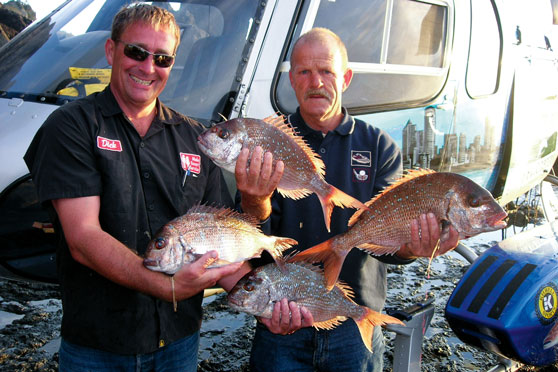
The nearby Auckland Harbour was loaded with mid-summer pannies and was an ideal venue, so we popped out for a few hours on a Sunday morning. We took ten fish as a sample (to make the math easy), all between 308 and 356mm. After determining they were legal-sized, I ikied them, tagged them, carefully measured them, recorded the results, then iced them down in a slurry.
It was a hot day, so we endeavoured to keep the measure at a reasonably constant temperature to avoid complications with the metal expanding or contracting and altering the readings. The sea temperature in the harbour, after a string of blistering days, was 25.3 degrees by the boat’s instruments.
The amount of time the fish were in the slurry (before they had their second measurement) varied from about five hours for the first taken to two hours for the last caught, but a third measurement after another four hours evened things out. All measurements are fork-length (from the nose to the ‘V’ of the tail) in millimetres.
Although I do not claim that these measurements are definitive – after all, they were not taken with proper lab equipment and there were probably a number of variables I have not considered here – they are certainly indicative, and a number of things may be fairly gleaned from them:
Snapper DO shrink after death, when iced down
They shrink at different rates
In general (but not always), most shrinkage takes place within several hours death/ icing, then slows.
The average shrinkage of these specimens was 3.2mm, or about 1% of the fish’s length.
What are the implications of all this?
The obvious one is that if you take a snapper, say two or three millimetres over legal size, properly iki’ it, and chill it (as fishermen are constantly advised to do), it can easily become an undersized, illegal snapper by the time you get back to the ramp a few hours later, just through natural shrinkage. This can easily cop you a $250 dollar fine, or at a minimum, a warning, considerable embarrassment, and probably get your name in the ‘naughty-boys’ book.
Should you have been fishing in an area where there are a lot of fish just over the legal size and have a catch of, say, 20 such fish on board (legal numbers for a crew of three in SNA1), it could be much worse. The regulations for SNA1 say:
A person must not—
(a) take any snapper that is less than 30cm in length from the Auckland (East) FMA; or
(b) possess any snapper that is less than 30cm in length taken from within the Auckland (East) FMA.
A person who contravenes subclause (a) or (b) commits an offence and is liable on conviction to a fine not exceeding $10,000.
There is also potential for your boat, car and gear to be confiscated, along with the ignominy of being hauled through the courts and branded as a poacher in public. The catch-all is in the part that says it is illegal to possess any snapper less than 30cm, regardless of its actual length when you caught it. And after a rough scout around, I could find no regulation that directed fisheries officers, the MPI or the courts to allow fish shrinkage as any sort of defence.
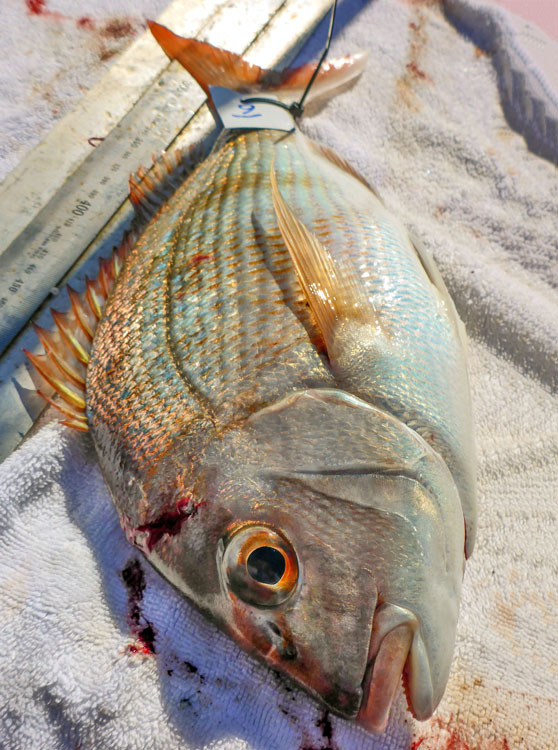
You can’t really blame the MPI for staying silent about this subject (although I’m guessing they are aware of it). There is no mention of the topic in the fisheries regulations, and having to consider potential fish shrinkage would make policing the fishery even more difficult than it already is, opening a real can of worms.
So, to stay out of trouble in SNA1, I suggest you ignore one of the guidelines in the MPI brochure for recreational fishermen, the one that says: Stick to the legal size limits for your fishing area. You are taking a risk if you do. Effectively, to stay on the safe side, the minimum size limit for snapper in SNA1 is really 310mm, not 300mm.
|
|
This article is reproduced with permission of |

Recent Forum Posts Visit Forum

Trailer wheel clamp
in The Boat Shed1 hour ago
610gc
Hey teamI have a wheel clamp like the one below on the boat trailer. its getting harder and harder to unlockI've sprayed it with CRC on...

Shane Jones
in Fisheries Management24 hours ago
Tzer
Far cry to the twats at Liegasea/NZSFC were proposing of 5 Tarakihi person in their submission for the central management area and this is what our...

Bluefin Tuna at the cavs.
in The Briny Bar44 hours ago
smudge
Despite my years of fishing I haven't really fished many places, my focus has always been on Auckland's west coast and out toward Great Barrier. I...
Casting gloves
in Popper and Topwater Fishing89 hours ago
Mc Tool
100 bucks for a lure 😬. Watching one of them flying over the horizon without the line attached would be " character building " for sure...
I thought Id post some nice photo's , join...
in The Briny Bar140 hours ago
Alan L
That is a very cool pic Krow.The Far North is very cool, the Far far North even cooler. Mint looking day.Alan...

Mc Tools berley mincer
in The Briny Bar147 hours ago
SaltyC
Good size, they scrap well. Got an 18kg one up in Vava'u back a few years ago fishing off squeaky Going's boat. That was quite a...

Out with the "Twelves"
in Fishing Reports201 hours ago
Pcj
I should be able to get out end of October. The nephew been out virtually every weekend over winter and has done well. It seems the...
Manukau Harbour & West Coast fishing
in Fishing Reports209 hours ago
smudge
Nice work Schecter, I think snapper may be around sooner than you think. Well I am hoping so...

Whangarei Harbour report.
in Fishing Reports641 hours ago
krow
180 +m is where I've had to be lately. A lot less low foul around these parts and some of it shallower that looks like Tarakihi...
Whangarei Harbour Scallops
in Fisheries Management751 hours ago
Pcj
Reopening WhangÄ쳌rei Harbour to recreational scallop fishingTÄ“nÄ쳌 koeFisheries New Zealand is seeking feedback from tangata whenua, stakeholders, and the public on whether WhangÄ쳌rei Harbour should be...
Popular Articles

Softbait Fishing - Part 1 - gear selection
John Eichlesheim writes an article about selecting the right equipment for softbait fishing... Read More >
Softbait fishing Pt 2 - tips and tricks
Techniques, tips and tricks of softbait fishing – getting the most from your soft baits.... Read More >

Surfcasting - setting yourself up
Gary Kemsley helps sort out the necessary gear for intending surf fishers.... Read More >

Squid - How to catch them
Squid fishing is a rapidly growing aspect of fishing - Paul Senior shares some hints and tips to get started.... Read More >
Fishing Reports Visit Reports
Outer Hauraki Gulf Fishing Report 17/09/26
Spring wind the handbrake. Spring is starting to make its presence felt in the outer... Read More >
Top of the South Fishing Report - 17/09/26
Early snapper in Tasman Bay. Well, spring is finally here, and the days are getting... Read More >
Bream Bay Fishing Report - 17/09/26
Good snapper catches reported. After Tangaroa turned off the fish tap for a month or... Read More >
Bay of Islands Fishing Report - 17/09/26
Pacific bluefin tuna for the lucky few. The last fortnight has seen more fishable days... Read More >
Comments