
Do Fish Feel Pain?
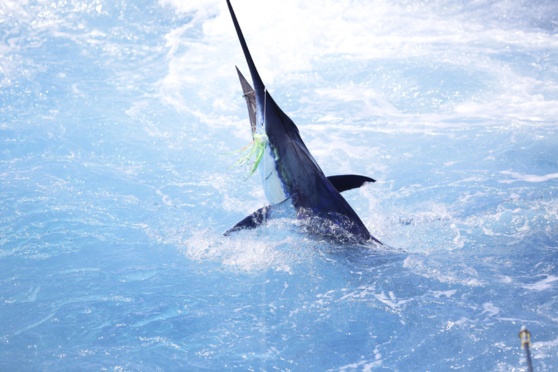
“Fish feel pain!” (FFP) is the battle cry of the anti-fishing lobby. It’s their dogma. In some places, questioning it publicly unleashes a storm of abuse, and, typically, the questioner is ridiculed and called a denialist or just plain obstinate or stupid. The anti-fishing campaign is based on animal rights philosophy, which is embedded in a more general movement for a ‘better, just, cruelty-free world’.
Why does this matter?
All over the globe, jurisdictions such as New Zealand, the United Kingdom, the European Union, and Colombia recognise fish as being ‘sentient’, tacitly assuming that they are capable of feeling pain. This means those jurisdictions have a legal basis for banning recreational fishing. How so?
If fish feel pain, then recreational fishing is cruel because it inflicts unnecessary and avoidable pain – and cruelty to animals is an offence. All you need to enforce this line of argument is the political will and a governing majority. It can also be achieved in gradual stages. For example, in Switzerland, Germany and Colombia, the intentional catch and release of legally sized fish is an offence. From that position, it’s only a small step to assert that recreational fishing itself involves the infliction of unnecessary and avoidable pain and is therefore legally and morally indefensible.
Do fish feel pain?
The fact is that the generic claim that fish do feel pain is meaningless. There are 30,000 or so fish species out there, and only a handful – if that – have been researched. The rainbow trout is one of these. In 2003, research by Dr Lynne Sneddon found that rainbow trout have nociceptors. Nociceptors are the first link in a being’s pain network. If you burn your finger on a hot plate, the nociceptors in your finger pick up this information and send the bad news to your spinal cord, which triggers the withdrawal reflex. The human brain then confirms the bad news, and you go, “Ouch!”. It is vital to understand that nociception is not pain – there are no such things as ‘pain receptors’, contrary to what is often claimed in the FFP rhetoric.
In the 2003 experiment, the rainbow trout had bee venom injected into their lips, and they showed some behavioural changes for a while. Based on this result and some later general observations about fish (e.g., fish are clever, fish have a good memory, fish have an emotional life, fish show avoidance behaviour, fish can perform stunning feats), animal rights scientists and philosophers claim that fish do feel pain.
That 2003 experiment made world headlines. However, journalism, both then and now, has been more interested in the reactions of anglers than in the actual evidence for fish feeling pain. For example, an article in The Independent (McCarthy, 2003) was titled ‘Anglers on the hook as study says fish feel pain’.
Stress is not pain
The density of those nociceptors in the rainbow trout wasn’t noted in the headlines, but it is a critical piece of information. In humans, normal nociception involves a nociceptor density of 80% (and a person who suffers from absolute pain insensitivity has a nociceptor density of 24%). In contrast, the rainbow trout’s nociceptor density is only 4% and some other fish, such as mantas or sharks, have no nociceptors at all. Therefore, by no stretch of the imagination is a human being’s experience of being ‘on the hook (lip)’ going to be anything like that of a rainbow trout that is on the hook. Common sense observation backs up the science regarding low nociceptor density in rainbow trout; in real life, rainbow trout (and other fish) pull away from the angler when they are hooked – but if they really felt human-like pain, they would swim towards the angler in an attempt to reduce their pain. Let’s be clear: fish are definitely stressed when they are hooked, but stress is not pain.
The truth hidden in plain sight
The reaction of the 2003 experiment’s control group is another point that went practically unnoticed by the mainstream media. The rainbow trout in the control group were injected with a harmless saline solution, rather than bee venom – and they exhibited no behavioural changes. Doesn’t this indicate the truth of the experiment, albeit hidden in plain sight? The needle in the lip, which is like the fishing hook, created no reaction in the control group fish at all.
Another episode in the FFP saga was played out in 2008, when a team of scientists (Newby and Stevens, 2008) replicated Sneddon’s 2003 experiment but couldn’t confirm her findings. Of course, there was no worldwide wave of headlines saying, ‘Anglers off the hook, fish do not feel pain’. Clearly, good news doesn’t sell newspapers.
The fish super-brain
Brain size doesn’t seem to matter to those who believe that fish do feel pain. The human brain has 86 billion neurons at its disposal, linking all the areas and functions of the brain. The zebrafish brain has only 100,000. In addition, the fish brain lacks a neocortex, which in humans is an essential part of the pain matrix. FFP believers, including both scientist-activists and philosophers, claim that the absence of a neocortex in fish is immaterial because other parts of the fish brain are said to produce pain. In other words, they say that although the human brain and the fish brain are significantly different from each other, they produce the same or similar results. This means the fish brain must be a super-brain to produce 100% pain output with its minimal 4% nociceptive input!
Harry Herring
Why do I call those scientist-activists and philosophers ‘FFP believers’? Because they can only believe that fish feel pain – they can’t possibly know what the fish feels because they are not fish. The International Association for the Study of Pain (IASP) defines pain as “an unpleasant sensory and emotional experience associated with… actual or potential tissue damage.”
It adds, “Pain is always a personal experience.” This is a key point: only humans can verbally describe their pain experiences and, even then, nobody else can really know what an individual’s pain experience feels like because it is unique to that person.
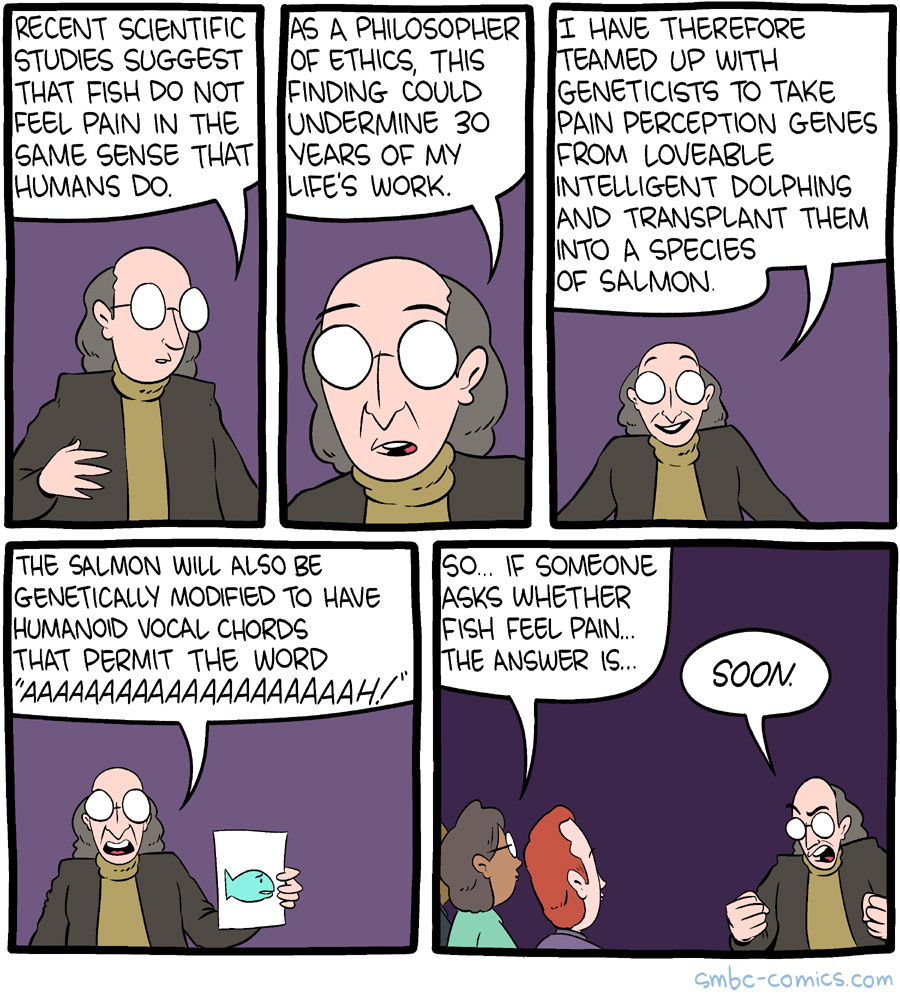
© Zach Weinersmith, smbc-comics.com
The experience of pain requires a being to have an identity, a conscious awareness of itself – like me being me, and knowing that it is me. There are millions of fish in a shoal of herrings. According to FFP believers, to experience pain, each of those herrings must have a unique identity, like you and me. Harry Herring knows that he is Harry Herring, and when gulped down by a whale and painfully dying in the whale’s gastric juices, he feels pain and suffers as the one and only Harry Herring.
The problem for FFP believers is that whatever is said about fish pain is irreducibly human. We just don’t know what it is like to be Harry Herring. Is Harry Herring a scaled-down human being – a miniature human disguised as a herring? FFP believers recognise that there is a problem in their rationale, and their way out of it is to say, “Fish do feel pain. It’s likely different from what humans feel, but it is still a kind of pain.” I take it that ‘different’ means different in kind and not different in degree, because the latter would mean that fish are indeed humans in disguise (and vice versa).
If you think for a minute about the structure of what FFP believers are putting forward, you will need a lot of imagination to make sense of it. Try it:
• Humans feel pain.
• Fish feel pain.
• Fish pain is different from human pain.
• Fish pain is still a kind of pain.
Or try this:
• Fish feel pain.
• Humans feel pain.
• Human pain is different from fish pain.
• Human pain is still a kind of pain.
Either way, we still do not know what fish pain is, but that doesn’t prevent FFP believers from making the circular and nonsensical claim that fish feel ‘a kind of pain’.
It seems to be in the nature of the FFP debate that there is always a next level. Here it is: after 20 years of fish pain research, two leading FFP believers/scientists stated the following in 2023:
“Pain assessment cannot be generalised because it is expressed differently between individual animals. This means there is no gold standard indicator to measure pain in animals or indeed fish. Responses to painful treatment will differ between species and between individuals, as well as be specific to each type of pain.”
We have absolutely no clue what the supposed fish pain is, and on top of that, it can’t be generalised or specified. Try to get your head around that! It is shocking that lawmakers could be persuaded on such a thin basis to legislate that fish, crabs, lobsters and prawns are ‘sentient’ in the sense of being capable of feeling pain. It’s all the more amazing because presumed pain isn’t really helpful for improving their welfare. Measurable welfare indicators that would seem more conducive to the welfare of fish, crabs, lobsters and prawns might be the absence of disease and good levels of growth, reproduction and fitness.
There is a reality beyond the lab
Just think about all the fish that munch on sea urchins. They are not bothered at all by the spikes penetrating their lips. If pain were involved, there would be no feasting on sea urchins. Or think of perch: you catch one, you release it, and hardly back in the water, the same perch attacks your bait again. But the most amazing example of fish being oblivious to pain or, indeed, what is happening to them, are fish that are maimed by cormorants or other predators and continue to feed and live as if nothing happened. ‘A kind of pain’ – really? Or take salmon – while there is no human match for their navigational abilities, their amazing ability to find their way without instruments doesn’t mean they’re capable of feeling pain. Indeed, what would be the point of feeling pain for a salmon? Salmon are fearless in their odyssey and show no avoidance behaviour when facing danger.
There is a practical reality beyond the lab and experiments. When a fish is hooked, it does not fight the pain of that experience – if it did, it would swim towards the angler. Rather, the fish tries to escape the restraint that has been imposed on it, just the same as any other wild animal would.
Nevertheless, practical experience and common sense do not characterise the FFP debate, which is dominated by the research labs and university philosophy departments. Let’s briefly recap what FFP science says about fish experiencing ‘a kind of pain’, offering the following three main points:
1. Nociceptors are present in the fish brain (4% density in rainbow trout, 80% in humans).
2. The fish brain, which has far fewer neurons than the human brain (100,000 in fish, 86 billion in humans), must be a super-brain to produce the same experience of pain as the human brain.
3. In the 2003 experiment, the fish that were injected with bee venom exhibited behavioural changes, which could indicate that they felt pain. However, these findings could not be replicated in a later experiment.
The scientists also note that, generally, fish exhibit avoidance behaviour, learning ability and social behaviour. These add-ons embellish the vivid FFP picture but do not add any substance to it.
Peter Singer, the western world’s leading animal rights philosopher, is a firm FFP believer. When asked what fish pain means in practical terms, he answered, “The ideal next step would be to stop catching them and eating them.”
That is utterly misanthropic. The livelihood of three billion people depends on fish and fishing, but his statement implies that people don’t matter as much as the suffering of fish. Even if spoken only hypothetically, it reveals an attitude of moral superiority, entitlement and disregard for these three billion people.
Singer’s book Animal Liberation really brought the animal rights movement to life in 1975, and he is rightly hailed as the ‘founding father of animal rights’. He describes himself as a ‘consequentialist’. The gist of his persuasion is that the best course of action to take in any area depends exclusively on what produces the best consequences for all who are affected by those actions. Please note: there is no ‘right’ or ‘wrong’ in Singer’s consequentialism, nor any moral or legal values. Only the consequences matter.
So, no pain, no problem – really?
According to Singer’s rationale, the situation is as follows:
• Whatever does not feel pain and suffer has no interests that we need to consider.
No pain, no problem. So, according to Singer, fishing is a strict no-no, while violating a corpse is OK. Singer does not advocate such practices – he merely says there are no moral problems if no suffering is involved. Draw your own conclusions.
• Whatever feels pain or suffers does have interests that we must consider.
• Beings that have equal interests should be treated with equal consideration.
The ‘best consequences’, then, are those that minimise or produce the least pain and suffering for all, regardless of species. This means ‘anything goes’. It just depends on how you load the dice. In the case of recreational fishing, the animal rights argument runs like this:
• Fish feel pain.
• Stopping fishing minimises pain in the world of fish.
• The suffering of the fish outweighs the suffering of the angler who is banned from fishing.
• Stopping fishing produces the least pain and suffering and is therefore the best choice.
Necessity usually boosts this line of argument – the angler does not need to go fishing, so there is no survival or other core need at stake. Necessity, however, is a cheap argument. It lets you question and pulverise anything you want to, arguing everything back to the Stone Age in no time at all. Is poetry necessary for survival? No. Is football necessary? No. Are private jets flying to climate summits necessary? No. Are philosophy departments at universities necessary? No. Is music necessary? No. Yet many of the things that are not ‘necessary’ are the essence of culture. It turns out that very few things are strictly necessary.
It is worth noting that this pain-centred approach divides the living world into two classes: beings that are like us (feel pain), and beings that are not like us (do not feel pain). Tough for the have-nots, as they are not seen as having any moral relevance whatsoever. That means we have absolutely no moral obligation to most life on earth because no pain equals no interests. What does this mean in the real world? Take, for example, butterflies. Assuming that they do not feel pain, you could catch one, break its legs, pull out the antennae, and poke into its eyes. You could mutilate and maltreat it any way you like. No pain, no problem – really?
Philosophical junk
Animal rights today is a multifaceted ideology and movement, but at the root of it is Singer’s pain-centred consequentialism. Over time, the animal liberation/animal rights movement has co-opted ideas like intrinsic value, compassion, empathy, traditional animal welfare, racism and gender. The most important recent development has been that of law theory, which is not bound by philosophical or any other logic and can fuse even the most contradictory, absurd and inconsistent ideas. It enables the formation of hybrid views and allows us to gloss over the radical origins of the animal liberation/animal rights movement.
Since 1975, Singer’s books have sold millions of copies, and his ideas are part of the curriculum of many colleges and universities. I would not be surprised if even the kindergartens of the western world incorporate Singer’s philosophy of consequentialism into their programmes. Generations of students have been exposed to his ideas. These students have later become teachers, lawyers, doctors, scientists, journalists and, of course, politicians; that is, opinion leaders in their communities. Thus, animal rights ideas have ‘trickled down’ from Singer’s academic ivory towers into everyday life.
This explains why fish sentience, based on thin scientific evidence and philosophical arguments, has become enshrined in law in many countries. The animal rights movement has conquered the world, using the same strategies as fast-food chains: branding, messaging, selling ‘junk’ – and people love it. As with marketing fast food, animal rights philosophy is easy to understand, and as just about anything goes, you can’t get it wrong. Also, animal rights have emotional appeal – who doesn’t love furry and cuddly animals? Funding the FFP rhetoric is easy for the animal rights movement, and they have youth, intelligence, motivation, a mission and money on their side, particularly in the US and Europe.
Making things ‘easy to understand’ means that animal rights enthusiasts reduce recreational fishing to just the angler–fish interaction. Nothing else matters; not even the environment, socio-economic benefits, habitat protection, habitat restoration, waterway clean-ups, citizen science, biodiversity – all of that is morally irrelevant. The only thing that matters is the idea of fish suffering at the hands of cruel anglers. Pain-centred anti-fishing arguments have kept the public debate focused on the angler and the fish because that hides the fact that animal rights and environmentalism are basically incompatible. The environment, a habitat or an ecosystem does not feel pain and suffer; therefore, it has no interests and is of no moral concern.
No pain, no cruelty, no problem – or is there?
The FFP belief is essential to the anti-fishing movement: without it, the ‘cruel angler’ smear collapses. No pain, no cruelty. Various websites and articles say that scientists have ‘reached a consensus’, agreeing on the idea that fish do feel pain. This might be true among FFP believers, but not in the wider world, where there is substantial scientific scepticism regarding the FFP claim. Besides, a consensus can be found for just about anything – remember the consensus among doctors in the 1950s that smoking was good for you, and a bit later, the scientific consensus that a new ice age was imminent?
On the basis of the available evidence, it would be reasonable to assume that rainbow trout do not (or might not) feel pain. The only argument that the FFP believers can mount is that fish feel ‘a kind of pain’.
If fish do not feel pain, we find ourselves in a morally demanding and interesting situation – we must think outside the ‘pain and cruelty’ box. That means taking into account the entire process of life, which is exactly what individual anglers, angling clubs and angling organisations are trying to do by promoting, protecting and enhancing fish welfare. As with the welfare of people, the most important and basic factor in fish welfare is a healthy environment. And what is good for fish (healthy water) is also good for people. A further benefit is that a healthy environment is always an aesthetic pleasure and benefits all people, not just anglers.
In the wider scheme of moral progress, anglers and hunters are often seen as obstacles on the march to a better, just, all-inclusive and cruelty-free world. The activities of recreational fishing and hunting are seen as being reactionary bastions of unreason – in the western world, mostly involving people who are male, white and middle-aged.
It is important to understand that anti-fishing sentiment is not about fish but about you. As an angler, you are the wrong kind of person and mindset – a moral misfit who has ‘no place in the modern world’ (a favourite phrase of activists). Or, as Singer puts it, “Animal liberation is human liberation.”
If you liberate yourself from fishing – that is, brainwash yourself – you liberate yourself and thereby become vegan and a better human being, and the world is a better place. “Bullshit!” you say, and I couldn’t agree more. And we are aligned with American philosopher Harry Frankfurt, whose 2005 book On Bullshit noted, “One of the most salient features of our culture is that there is so much bullshit.” Bullshitting is an attitude that disregards fact or truth. Anything goes.
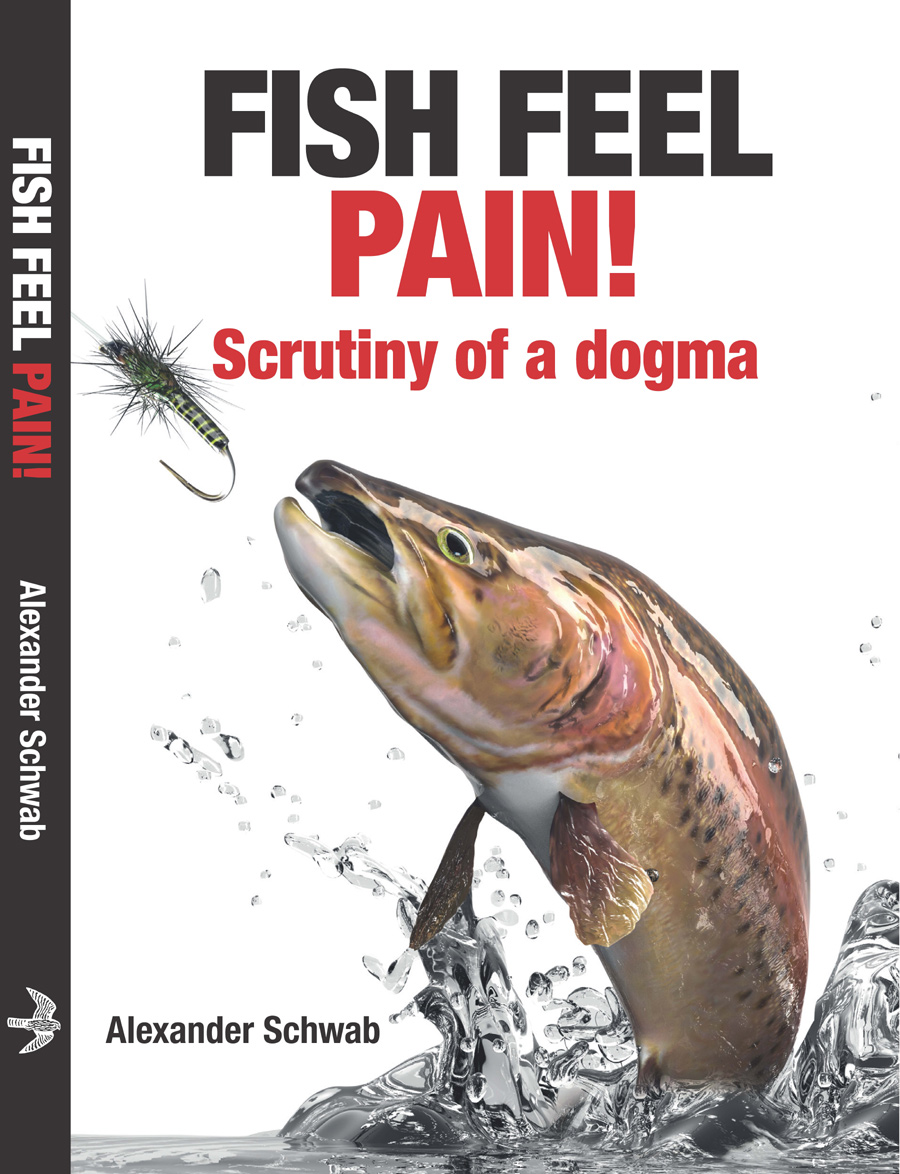
Alex is the author of many articles and books. Among them Hook, Line and Thinker – Angling and Ethics (Merlin Unwin Books 2003). He got stuck in Aotearoa New Zealand by Covid and lives in sunny Nelson. He thinks perch is the most underrated freshwater fish. You can contact Alex at: www.philosofish.com
We have copies of Alex’s latest book, Fish Feel Pain! Scrutiny of a Dogma, to give away for the best letters to the editor in 2025. Send your letter to [email protected] for consideration.
- By Alex Schwab
Recent Forum Posts Visit Forum

Shane Jones
in Fisheries Management19 hours ago
Tzer
Far cry to the twats at Liegasea/NZSFC were proposing of 5 Tarakihi person in their submission for the central management area and this is what our...

Bluefin Tuna at the cavs.
in The Briny Bar39 hours ago
smudge
Despite my years of fishing I haven't really fished many places, my focus has always been on Auckland's west coast and out toward Great Barrier. I...

Casting gloves
in Popper and Topwater Fishing84 hours ago
Mc Tool
100 bucks for a lure 😬. Watching one of them flying over the horizon without the line attached would be " character building " for sure...
I thought Id post some nice photo's , join...
in The Briny Bar135 hours ago
Alan L
That is a very cool pic Krow.The Far North is very cool, the Far far North even cooler. Mint looking day.Alan...

Mc Tools berley mincer
in The Briny Bar142 hours ago
SaltyC
Good size, they scrap well. Got an 18kg one up in Vava'u back a few years ago fishing off squeaky Going's boat. That was quite a...

Out with the "Twelves"
in Fishing Reports196 hours ago
Pcj
I should be able to get out end of October. The nephew been out virtually every weekend over winter and has done well. It seems the...
Manukau Harbour & West Coast fishing
in Fishing Reports204 hours ago
smudge
Nice work Schecter, I think snapper may be around sooner than you think. Well I am hoping so...

Whangarei Harbour report.
in Fishing Reports636 hours ago
krow
180 +m is where I've had to be lately. A lot less low foul around these parts and some of it shallower that looks like Tarakihi...
Whangarei Harbour Scallops
in Fisheries Management746 hours ago
Pcj
Reopening WhangÄ쳌rei Harbour to recreational scallop fishingTÄ“nÄ쳌 koeFisheries New Zealand is seeking feedback from tangata whenua, stakeholders, and the public on whether WhangÄ쳌rei Harbour should be...
SNA1 Recc fishing cops the blame.
in Fisheries Management842 hours ago
Tzer
What Liegasea won’t tell you is that some of their own fisheries contractors were co-authors of this study for fear of being called hypocrites, one of...
Popular Articles

Softbait Fishing - Part 1 - gear selection
John Eichlesheim writes an article about selecting the right equipment for softbait fishing... Read More >
Softbait fishing Pt 2 - tips and tricks
Techniques, tips and tricks of softbait fishing – getting the most from your soft baits.... Read More >

Surfcasting - setting yourself up
Gary Kemsley helps sort out the necessary gear for intending surf fishers.... Read More >

Squid - How to catch them
Squid fishing is a rapidly growing aspect of fishing - Paul Senior shares some hints and tips to get started.... Read More >
Fishing Reports Visit Reports
Outer Hauraki Gulf Fishing Report 17/09/26
Spring wind the handbrake. Spring is starting to make its presence felt in the outer... Read More >
Top of the South Fishing Report - 17/09/26
Early snapper in Tasman Bay. Well, spring is finally here, and the days are getting... Read More >
Bream Bay Fishing Report - 17/09/26
Good snapper catches reported. After Tangaroa turned off the fish tap for a month or... Read More >
Bay of Islands Fishing Report - 17/09/26
Pacific bluefin tuna for the lucky few. The last fortnight has seen more fishable days... Read More >
Comments