
Do fish become lure shy
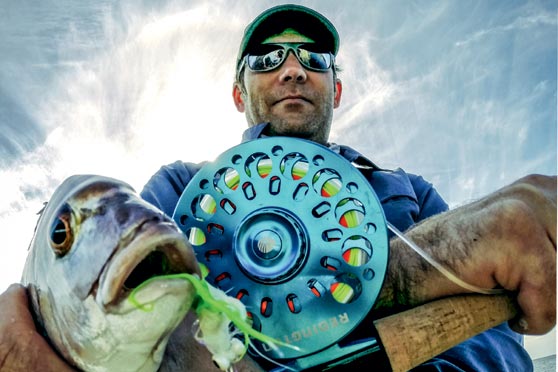
I recently read an excellent article by Neil Wagener in NZ Fisher #50 (www.nzfisher.co.nz) titled ‘Are we training fish to avoid lures?’ The basic premise of Wagener’s article is that fish become conditioned to lures the more they see them, and if hooked, landed and released during this process, then the negative association is reinforced.
The consequence for the angler is that fish become harder to catch because they become wary of lures. Wagener cites experiments conducted by Pure Fishing and independent researchers, as well as anecdotal evidence from local charter skippers, to support the hypothesis that the more fish see lures or are hooked on lures, the warier and harder they are to catch.
This apparently explains why kingfish around White Island and snapper in the Hauraki Gulf are now more difficult to catch than they were five years ago. The argument is well constructed and very
persuasive. It could potentially hold true for flies as well as lures.
However, I’m not at all convinced that this is the case, and I’m always skeptical when research conducted by tackle companies is cited. Unfortunately, much of this in-house research is not
conducted scientifically, is hardly ever peer reviewed, and rarely published in reputable scientific journals. When the tackle company research mentioned suggests that fish become wary and
more lures are needed to counter this wariness, it does make you wonder whether there is an ulterior motive.
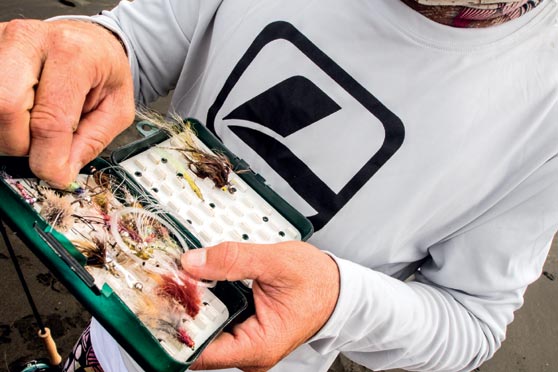
It may just be that individual fish are predisposed to be easy or hard to catch. In New Zealand those fish that are easy to catch are almost certain to pay for their mistakes with their lives, since most
anglers are fishing for the table. The remaining fish are those that were always going to be more difficult to catch.
The other issue that raises its head here is anthropomorphism: the attribution of human characteristics to fish. Fish that are hard to catch suddenly become remarkably wary and cunning, when they simply don’t have the intelligence to be that clever. Most of us have made the same statements about fish we have spotted and failed to catch. If we fail to catch a fish several times, then its IQ suddenly matches that of Einstein when discussing the experience with other anglers afterwards – despite having a brain the size of a pea.
Having said that, it is easy enough to accept that trout in ‘catch and release’ back-country rivers may become harder to catch due to the increased angling pressure – but perhaps this has more to
do with how often they encounter anglers, rather than a wariness of certain fly patterns.
Not so long ago I read a brilliant article on MidCurrent called ‘All fish are not created equal’ by Simon Blanford (http://midcurrent.com/science/all-fish-are-not-created-equal/). This is what he had
to say:
Now here’s the interesting part: while we conjecture and theorise about these post-graduates (really difficult fish), we rarely consider whether individual fish are predisposed to be easy or hard to catch.
That is, are some fish, from the egg, having never seen an artificial fly before – much less been caught on one — harder to catch than others that have grown up under the same conditions?
Fisheries biologists have been interested in this question for many years, and there are reports on the subject going back to the 1930s. Then, in the late 1970s, a study was carried out on a lake in
Illinois, a study originally designed to look at whether catch and release would lead to lower catch rates because of ‘learnt hook avoidance’ by largemouth bass.
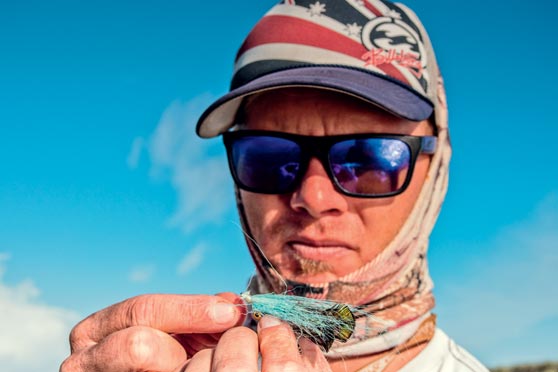
What they showed was something slightly unexpected: over the five-year study period during which bass were being caught regularly, there was large variation in the number of times individual fish were landed. One bass was caught twelve times in one year and another fifteen. At the other end of the scale there were fish that were never caught, not once, during the whole study period. Given the level of angling, the accessibility of the lake, and the fact that these fish had no initial experience of being fished for prior to the experiment starting, this was surprising.
The result got the biologists thinking. From a fisheries management point of view (and in the opinion of some anglers), the fact that there are fish that are difficult – or even impossible – to catch from the outset is not necessarily a good thing. It makes those fish inaccessible to anglers.
The variation in catchability demonstrated by the bass could not be explained simply by prior experience or strain. The data actually suggested there could be some underlying trait, some
more fundamental difference in make-up, between these two kinds of fish. If so, it meant that the trait could be selected by careful segregation and breeding. In other words, it might be possible to
rear one line of fish that is highly vulnerable and another line that’s relatively immune to angling.
The fishery management possibilities with lines of fish that are easy or difficult to catch are clear – so that is what they set out to do. From the study above, the biologists took bass that had never
been caught and those that had been caught four times or more, separated each group into their own ponds, allowed them to breed, let their offspring grow up for three or four years, moved them
to new ponds, fished for them, recorded what was caught and how many times, drained the ponds, separated them by capture frequency again, and repeated the whole process another two times. It took fourteen years to get the results for just three generations of bass, but the outcome was as clear as they could have wished.
Over the selected generations the offspring of bass that had rarely been caught were even harder to catch than their parents. Conversely, the offspring of bass that had been caught a number of
times were even easier to catch than their parents. This was a clear demonstration that there is not only an initial variation in a fish’s response to angling, but also that the variation can be selected to
increase or decrease.
What was driving this difference? Was it feeding behaviour? Was the low-vulnerability group not stimulated to strike at prey in the way we associate with this species? Did they mooch along feeding on plainer food items, with the high-jinks of the bass bug apparently just background noise? Did they perhaps become vegetarian?
It turns out that the two lines differed markedly in their ‘pace of life’. The fish that were hardest to catch had lower metabolic rates compared to those that were easy to catch. The hard-to-catch bass
also had higher food conversion efficiencies; more of what they ate was used for growth rather than burned away on fast living. As a result they grew more quickly, ironically making the ones that are
harder to catch also bigger.
Additionally, these bass, to go with their low metabolic rates, didn’t show the classic fast-startle response (the rapid swimming burst fish use to escape predators or attack prey) that we would
expect to see from such a confirmed predator. They didn’t exactly amble, but nor did they give it the big hurry-up either. This was in stark contrast to bass in the easy-to-catch group, which shot-off in
quick energetic bursts in response to every bit of persuasion.
Nevertheless, the easily catchable, live-fast-and-die-young bass (there was a suggestion that survival in vulnerable fish was lower) turned out to be better parents than the laid-back group. They
fanned their nests (to provide oxygen and keep the eggs clear of algae, bacteria etc) at a higher rate than the hard-to-catch bass; stayed at the nest for longer; were more vigilant; and attacked and drove off intruders more aggressively.
Ultimately, which fish (and, don’t forget, it is a continuum not simply that there are two categories of fish, one ‘easy’ and the other ‘difficult’) are ultimately more successful depends on a myriad of factors specific to each body of water. And though these studies dealt with bass, the results are applicable to different species of fish, since the same variation in pace of life has been shown for a range of other creatures.
In the end, the fact that there clearly is a basis for differential susceptibility to angling in the absence of experience is rather neat.
And it provides a possible explanation for our often intimated sense that there are ‘easy’ and ‘difficult’ fish in our target waters. It seems I am wrong to consider the fish as an amorphous mass
hidden beneath the surface. Whether I look out over a lake, a river or even an estuary, slough, beach or flat — whether I am fishing for trout, carp or bass or redfish, bonefish or permit — I have to allow that some fish will be easier to catch than others. There will be some who launch themselves at the fly I present and then there will be a bunch that simply don’t — those that don’t care a wit about the real jungle cock I laboriously and expensively added to my fly.

Blanford’s eloquent article probably explains what is going on around White Island and in the Hauraki Gulf. The ‘easy’ active fish have been removed by anglers and those that remain are the ones with a slower pace of life that were always going to be less likely to take a lure. (The obvious message here is for everyone to limit their catch so there are still some ‘easy’ fish to go around.)
There is also a huge variety of factors which govern when fish feed, and it may just be that the fish visible on the sounder are satiated from a feeding session earlier in the day and are just not
hungry. It could be water temperature, atmospheric conditions or the presence of an apex predator is discouraging feeding.
Unfortunately, as we cannot interview fish in a qualitative experiment to learn their inner secrets, we are never going to know the reasons why they choose to take a lure or fly. We can experiment and hypothesise but never know for sure. This is just one of the imponderable facts about fishing. It is what makes the sport so alluring.
All is not lost, though. It is possible to catch the harder fish if you can identify when and how they feed. For big, difficult trout that is in the hours of darkness. More about that later...
|
|
This article is reproduced with permission of |

Recent Forum Posts Visit Forum

Trailer wheel clamp
in The Boat Shed11 minutes ago
Pcj
Doesnt dry out like crc.I use it on my trailer lock...

Shane Jones
in Fisheries Management26 hours ago
Tzer
Far cry to the twats at Liegasea/NZSFC were proposing of 5 Tarakihi person in their submission for the central management area and this is what our...

Bluefin Tuna at the cavs.
in The Briny Bar46 hours ago
smudge
Despite my years of fishing I haven't really fished many places, my focus has always been on Auckland's west coast and out toward Great Barrier. I...

Casting gloves
in Popper and Topwater Fishing91 hours ago
Mc Tool
100 bucks for a lure 😬. Watching one of them flying over the horizon without the line attached would be " character building " for sure...
I thought Id post some nice photo's , join...
in The Briny Bar142 hours ago
Alan L
That is a very cool pic Krow.The Far North is very cool, the Far far North even cooler. Mint looking day.Alan...

Mc Tools berley mincer
in The Briny Bar149 hours ago
SaltyC
Good size, they scrap well. Got an 18kg one up in Vava'u back a few years ago fishing off squeaky Going's boat. That was quite a...
Out with the "Twelves"
in Fishing Reports203 hours ago
Pcj
I should be able to get out end of October. The nephew been out virtually every weekend over winter and has done well. It seems the...
Manukau Harbour & West Coast fishing
in Fishing Reports211 hours ago
smudge
Nice work Schecter, I think snapper may be around sooner than you think. Well I am hoping so...

Whangarei Harbour report.
in Fishing Reports643 hours ago
krow
180 +m is where I've had to be lately. A lot less low foul around these parts and some of it shallower that looks like Tarakihi...
Whangarei Harbour Scallops
in Fisheries Management753 hours ago
Pcj
Reopening WhangÄ쳌rei Harbour to recreational scallop fishingTÄ“nÄ쳌 koeFisheries New Zealand is seeking feedback from tangata whenua, stakeholders, and the public on whether WhangÄ쳌rei Harbour should be...
Popular Articles

Softbait Fishing - Part 1 - gear selection
John Eichlesheim writes an article about selecting the right equipment for softbait fishing... Read More >
Softbait fishing Pt 2 - tips and tricks
Techniques, tips and tricks of softbait fishing – getting the most from your soft baits.... Read More >

Surfcasting - setting yourself up
Gary Kemsley helps sort out the necessary gear for intending surf fishers.... Read More >

Squid - How to catch them
Squid fishing is a rapidly growing aspect of fishing - Paul Senior shares some hints and tips to get started.... Read More >
Fishing Reports Visit Reports
Outer Hauraki Gulf Fishing Report 17/09/26
Spring wind the handbrake. Spring is starting to make its presence felt in the outer... Read More >
Top of the South Fishing Report - 17/09/26
Early snapper in Tasman Bay. Well, spring is finally here, and the days are getting... Read More >
Bream Bay Fishing Report - 17/09/26
Good snapper catches reported. After Tangaroa turned off the fish tap for a month or... Read More >
Bay of Islands Fishing Report - 17/09/26
Pacific bluefin tuna for the lucky few. The last fortnight has seen more fishable days... Read More >
Comments