
Choosing The Best Trace Weight

Do you really need heavy leaders to catch snapper, or are they counterproductive? Grant Bittle gives his thoughts on the matter.
Hangovers. No one likes them, yet for many they are a recurring theme, even with the best of intentions. Are you carrying around past fishing baggage, lingering hangovers? Are you using heavy leaders to stop big snapper busting you off? Are you still able to lift a snapper out of the water with your leader and have no chance of it snapping?
Heavy leaders can be an unnecessary and counter-productive hangover from bait fishing. When using bait, a snapper tries its best to eat and swallow it – the ‘get in my belly’ approach. Berley and strayline is the technique of feeding a snapper food until it eats/swallows your bait, putting the leader right in the firing line of those mussel- crunching jaws and sharp teeth.
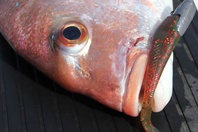
But this is not so with lures – far from it. Using lures, fish are hooked in the mouth 99% of the time, making for an easy and successful release if desired. Both the lure itself and assist hook cord (if used) are an effective barrier between snapper teeth and the leader. With well over half of all snapper caught on the stinger (rear) hook with this style of rig, the snappers teeth are a long way from the leader.
Even without a stinger assist hook, the snapper’s teeth are well away from the leader as soon as they are hooked-up. Even a short assist like an inchiku or Kabura keeps the teeth away from the leader. As for metal jigs – most are rigged with a split ring to a solid ring of the hook at least (often with swivels, clips and more). Because the fish is usually hooked in the mouth, the fish’s teeth are actually a good distance from the leader. This is especially the case when keeping at least a little bit of drag or line pressure on the fish. It may shake, rattle and roll its head, and you’ll feel every movement along your braid, but the thrashing around and head shakes can actually help keep the fish’s teeth away from that leader. The point of all this is that with modern lure rigs it is rare for a fish to get its teeth near a leader, so the use of lighter mono or fluorocarbon leaders is unlikely to result in bite-offs but can provide a lot more hook-ups.
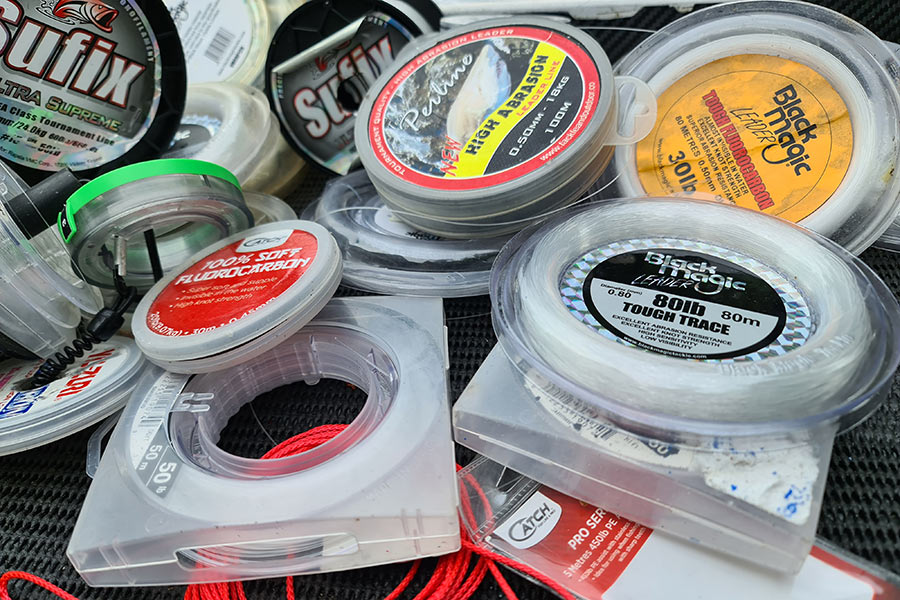
The range of leader materials available gives anglers plenty of choice.
Pros and cons
Not using heavy enough leader is a common worry of many snapper hunters – fear of getting spanked goes back a long way! But, in fact, there are a lot of downsides to using heavy leaders. A heavy leader is obvious to fish and can result in no bites. Smaller soft-baits and micro jigs won’t sink well with a heavy leader and line, either. Casting a heavy leader with a light lure isn’t going to end well at times. A light lure simply doesn’t have enough weight or momentum to carry a heavy leader and line very far. Thick leaders can also result in big ugly knots and tags that can make a great lure turn in a below average action.
For best results, use thinner leader. Be sure your soft-bait is straight on the lead-head, and it helps to have the leader-to-line knot outside the top guide for casting. This helps stop ‘wind’ knots. Also avoid big tag ends on your knots. Trim them properly for both casting distance and a straighter, non-spiralling retrieve in the water.
The number one excuse to use heavy leader is to allow enough drag pressure to ‘turn the fish’s head’ and avoid getting reefed. Given that there is a lot of open bottom in the Hauraki Gulf, the majority of snapper are caught well away from kelp forests and razor-sharp rock ledges. In open water, heavy leaders are more likely a compensation for dodgy rigging, lack of tackle maintenance, poorly tied knots, line damage from a nick in the rod guide, or a notchy drag.
The more pressure you put on a fish, the more it’ll fight back. It’s a natural response. It is better to use the technique of setting the hook, then using light drag with your lighter line and leader to lead the fish whenever possible. Let it run – this is what tires the fish and adjust your drag during the fight as required. Lighter leaders hook, and subsequently land, more fish.
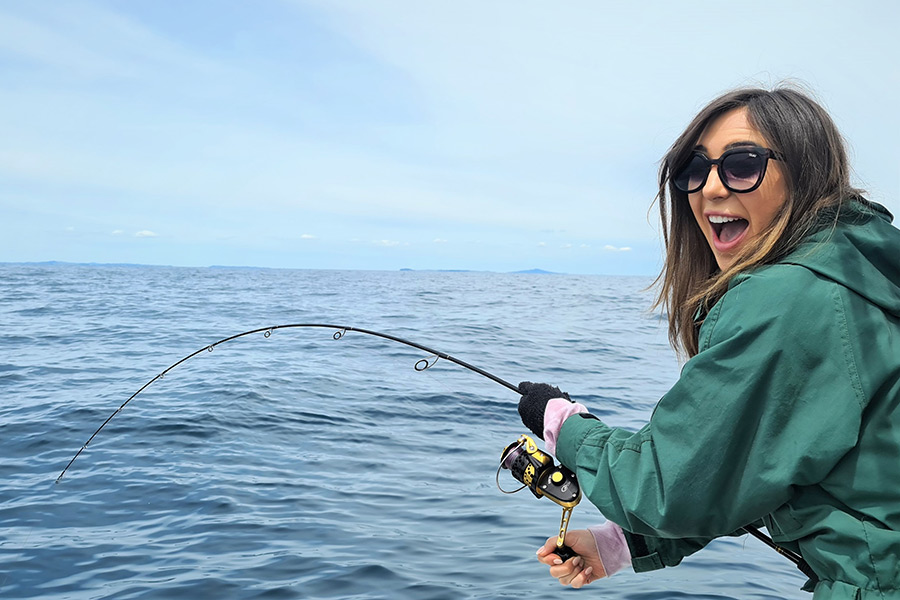
Light leaders simply hook more fish, particularly when it's slow going!
The exceptions
Of course, there are times that heavier leaders are necessary. When the snapper are hungry and the bite is on, big fish are on the prowl. This situation would probably require much heavier leader (and line), up to 24kg say, especially in gnarly terrain or when sharks are around competing for your catch. If the fish are on the go, you can still get bites on heavier leaders.
What about land-based fishing? It depends on your fishing territory. On a beautiful sandy surf beach, a lighter leader is much better for distance casting and sensitivity, and therefore hook-up rates improve noticeably. But in reefy, gnarly, kelp and rocks, it’s time to go a lot heavier and to fluorocarbon for its abrasion resistance.
If there are toothy critters around, try using a short, heavy bite leader such as a wire trace or PE covered wire trace (it can be knotted like mono) – 200mm of heavy bite leader should do the trick.
In deeper water (say 50m or more), leader thickness plays a lesser part in terms of visibility – it’s darker down there and much harder for fish to see and detect the leader, so it’s not as critical.
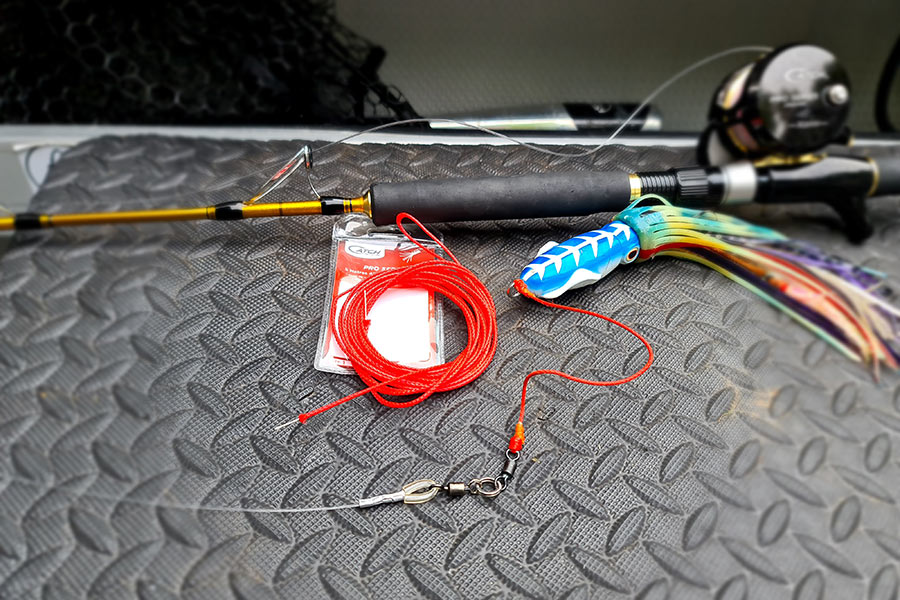
PE coated stainless steel bite leaders provide extra protection from toothy critters.
Balance in all things
Balance your tackle – leader to lure size and weight is the key. You’ll probably need to change your leader or lures throughout tide, perhaps from light to heavy and back again. Here’s an example for fishing out off the coast in popular snapper areas (mainly open areas with a sandy/muddy bottom).
Start with a 10kg mono or fluorocarbon leader. Your braid mainline will probably be rated at below that. As most brands significantly over-test, it is safe to say 4-5kg braid is more like fishing with 10kg. So, a 6kg braid mainline with a 10kg mono leader is actually a well-matched combination. Use a rod and reel size matched to your lure weight. My rule of thumb for choosing a suitable lure weight is: twice the depth in metres = gram weight of lure. For example, if it is 30m deep, you’d be starting with a 60g lure.
My preferred knots for lighter tackle are: an Albright knot (which is great for quick, easy lighter leader weights up to, say, 40lb); the PR knot is my favourite for braid to heavier leader; and the FG knot is a good alternative. The back-to-back uni-knot is good, and fast to tie on a rocking boat/kayak/ski.
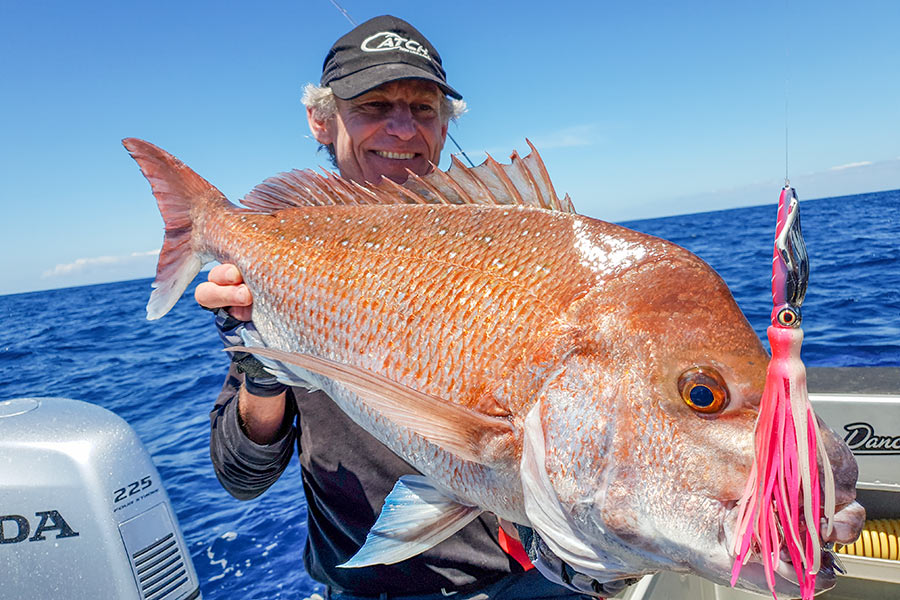
In open waters, lighter leaders can be an advantage.
I normally have three rigs ready:
Light: micro jig rod/lightweight soft bait rod (for up to 60g lures), 3-5kg braid (which actually tests at around 5-10kg) with a 5-7kg leader.
Medium: the main snapper go-to is a 50-150g lure rated rod with a 2000 or 3000 sized reel, 10kg braid, and 10kg leader.
Heavy: the rod is rated to 250g jigs with a 2000-4000 sized reel, and 15-24kg line and leader.
The fish will let you know which one to use on the day!

August 2022 - Grant Bittle
New Zealand Fishing News Magazine.
Copyright: NZ Fishing Media Ltd.
Re-publishing elsewhere is prohibited
Recent Forum Posts Visit Forum

Shane Jones
in Fisheries Management21 hours ago
Tzer
Far cry to the twats at Liegasea/NZSFC were proposing of 5 Tarakihi person in their submission for the central management area and this is what our...

Bluefin Tuna at the cavs.
in The Briny Bar41 hours ago
smudge
Despite my years of fishing I haven't really fished many places, my focus has always been on Auckland's west coast and out toward Great Barrier. I...

Casting gloves
in Popper and Topwater Fishing86 hours ago
Mc Tool
100 bucks for a lure 😬. Watching one of them flying over the horizon without the line attached would be " character building " for sure...
I thought Id post some nice photo's , join...
in The Briny Bar137 hours ago
Alan L
That is a very cool pic Krow.The Far North is very cool, the Far far North even cooler. Mint looking day.Alan...

Mc Tools berley mincer
in The Briny Bar144 hours ago
SaltyC
Good size, they scrap well. Got an 18kg one up in Vava'u back a few years ago fishing off squeaky Going's boat. That was quite a...

Out with the "Twelves"
in Fishing Reports198 hours ago
Pcj
I should be able to get out end of October. The nephew been out virtually every weekend over winter and has done well. It seems the...
Manukau Harbour & West Coast fishing
in Fishing Reports206 hours ago
smudge
Nice work Schecter, I think snapper may be around sooner than you think. Well I am hoping so...

Whangarei Harbour report.
in Fishing Reports638 hours ago
krow
180 +m is where I've had to be lately. A lot less low foul around these parts and some of it shallower that looks like Tarakihi...
Whangarei Harbour Scallops
in Fisheries Management748 hours ago
Pcj
Reopening WhangÄ쳌rei Harbour to recreational scallop fishingTÄ“nÄ쳌 koeFisheries New Zealand is seeking feedback from tangata whenua, stakeholders, and the public on whether WhangÄ쳌rei Harbour should be...
SNA1 Recc fishing cops the blame.
in Fisheries Management844 hours ago
Tzer
What Liegasea won’t tell you is that some of their own fisheries contractors were co-authors of this study for fear of being called hypocrites, one of...

Popular Articles

Softbait Fishing - Part 1 - gear selection
John Eichlesheim writes an article about selecting the right equipment for softbait fishing... Read More >
Softbait fishing Pt 2 - tips and tricks
Techniques, tips and tricks of softbait fishing – getting the most from your soft baits.... Read More >

Surfcasting - setting yourself up
Gary Kemsley helps sort out the necessary gear for intending surf fishers.... Read More >

Squid - How to catch them
Squid fishing is a rapidly growing aspect of fishing - Paul Senior shares some hints and tips to get started.... Read More >
Fishing Reports Visit Reports
Outer Hauraki Gulf Fishing Report 17/09/26
Spring wind the handbrake. Spring is starting to make its presence felt in the outer... Read More >
Top of the South Fishing Report - 17/09/26
Early snapper in Tasman Bay. Well, spring is finally here, and the days are getting... Read More >
Bream Bay Fishing Report - 17/09/26
Good snapper catches reported. After Tangaroa turned off the fish tap for a month or... Read More >
Bay of Islands Fishing Report - 17/09/26
Pacific bluefin tuna for the lucky few. The last fortnight has seen more fishable days... Read More >
Comments