
Can you eat baitfish?
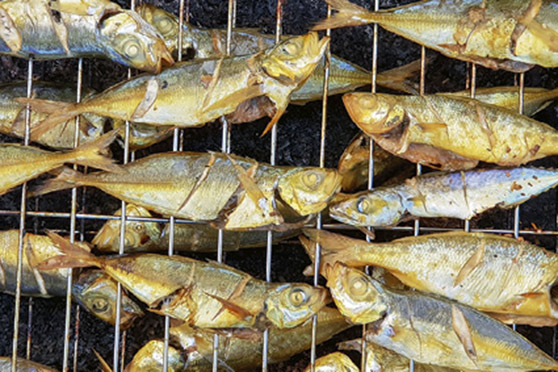
Over the years, Peter Langlands has come to appreciate the flavour of baitfish more. He shares how to catch and prepare them to eat.
So-called “baitfish” are a collection of smaller fish common in our coastal waters, many of which occur in large numbers in estuaries and harbours and so are readily available to catch for land-based or small-boat anglers. For me, the accessibility of baitfish is a big drawcard as I enjoy spending time in these environments and can often fish for a few hours with minimal preparation.
Species
The “go to” baitfish in NZ is the humble yet tasty yelloweye mullet. It is common throughout the country and can be found in good numbers almost year-round. Jack mackerel is also a commonly-caught baitfish in the warmer months and is particularly common throughout the North Island and top of the South Island. The blue mackerel or slimy – my favourite to eat – is a warmer water fish but is often caught over the summer and early autumn in clear water harbours around the North Island and top of the South Island. Garfish is another common baitfish and, while fickle to catch on bait, can often be taken in good numbers by beach seining or throw netting. Pilchards and anchovies are also outstanding when fresh but cannot be relied upon as their numbers often fluctuate and they tend to be more common in the northern half of New Zealand. When all is said and done, large spotties are certainly worth keeping as they have a nice white fillet. These are a good standby species to catch, especially when tramping and are after some fresh fish protein.
 Yelloweye mullet is one of the most numerous and widespread baitfish and good eating.
When fishing for baitfish, take care to release any undersized fish caught. Many of the baitfish species do not have minimum sizes but often small snapper and trevally will be caught and must be released. Take care to minimize handling of these fish, and if handling them use a damp towel and release them into the water straight away.
 Make sure that you release undersized fish quickly and handle with wet hands or a damp towel.
Catching
The key to catching baitfish is to use lots of fine berley. Stay at the same spot and let fish numbers build up. When fishing in harbours and estuaries I often fish at the top of the tide, two hours either side of high tide. With some species, especially the mackerels, there can also be a full-on bite time around the change of light. Sabiki rigs are often the best system for catching baitfish and I like to use either size 12 or 14 hooks. For some species, such as garfish, using a lightly-weighted sabiki rig under a float can be effective as they are often too shy to hit a bait that’s attached to a heavy weight. I like to bait my sabikis with very thinly cut pieces of bait taken from the belly of an oily fish (such as a fresh kahawai) as these baits are quite hard and stay on the hook well.
After the baitfish have formed a dense shoal around the berley pot, I will periodically use a throw net to catch more fish. Throw netting is a lot of fun and can be very effective for catching large numbers of smaller baitfish and for species that are shy to take baits – such as grey mullet.
Preparation
With many baitfish it is important to scale them soon after capture. If you allow the fish to dry out, then the scales can be very hard to remove. Gutting the fish soon after capture is also important (I keep the guts to add to a berley mix I use). As a rule of thumb, I leave the head on fish less than 7 cm long and remove the head from larger fish (again keeping the heads for bait – the heads from many baitfish are a prime bait to use). For baitfish smaller than 15 centimetres I lay the gutted fish on a board with its belly flaps spread and roll a bottle along the length of the fish. I then carefully and slowly pull out the backbone and rib bones, creating a butterfly fillet with the skin on but scaled. It does take some practice. I like to leave the skin on as there is a lot of flavour in the fat layer just under the skin on many baitfish and the skin crisps up nicely when the fish is cooked in hot oil. For baitfish larger than 15 centimetres I will often fillet them and then coat the fillets in flour, egg and breadcrumbs and fry them up. The new small and thin bladed kitchen knives available from supermarkets make a top filleting knife for baitfish and only cost about $3.
 Put baitfish on ice and treat them well to maintain the delicate flavours.
Cooking
Many baitfish are already full of flavour so it pays to undercook them a tad to maximize their natural taste. I have found a mix of olive oil and butter to be the best oil combination for cooking fish with. A light dusting of seasoned flour will crisp the skin up when cooking. A selection of herbs can add to the flavour and presentation. The fragrant flavour of Italian parsley (which I often forage from wild plants growing along the coastline) is a favourite. A squeeze of lemon seals the deal.
Many baitfish are suited to marinating, rather than cooking, and often I will soak baitfish fillets in a white vinegar for 12 hours. I then drain away the vinegar and preserve the fish in olive oil.
Larger baitfish (over 20 centimetres) can be split on the bone and then put in the hot smoker. Jack mackerel are a favourite to hot smoke whole and make a tasty and convenient snack.
If you have cooked or smoked baitfish whole on the bone, then just take the time to slowly peel the meat off the bones. I often use my fingers to pick the meat away from the bones and use a dipping bowl with lemon juice and water to wash my fingers.
A salsa verde or some aioli are good company for oily baitfish.
Health benefits
Overall, baitfish are very healthy to eat. Many are fast growing and short lived, so they do not have the issue of heavy metal or toxic residue build up that larger predatory fish have. While small, baitfish can be caught in big enough quantities to make a decent meal. Many are very high in omega-3 oils and have a number of other nutritional benefits. Of course, these oils also make many of the species very tasty to eat, but this also means they must be eaten fresh as the oils in them go rancid very quickly (a good reason to put baitfish straight on ice when catching them). As such, catching your own baitfish is always best – you will get them fresh with the full flavour and health benefits.
Summary
While some people question taking such small fish, I remind them that whitebait is our national dish and whitebait are smaller than marine baitfish. I also think that by harvesting baitfish other than whitebait, the pressure is taken off the whitebait resource. Personally, I think there is more flavour in marine baitfish than whitebait! I simply love the diversity of flavours and enjoy eating as many species as possible. There’s nothing wrong with a large juicy snapper fillet but often when the fishing for larger fish slows down or I am land based in the city, I will head down to the local wharf and spend a few hours catching some tasty baitfish. The reality is that you must catch many of the fish yourself as there is no or very little commercial supply of them (e.g. small slimy mackerel are a favourite of mine flavour wise but not commercially available fresh in NZ). Finally, catching baitfish is fun, often rewarding and a good way to relax at the end of the day (which is when the fishing will be best). It is also a good way to spend some quality time with the kids!
|
|
This article is reproduced with permission of |

Recent Forum Posts Visit Forum

Trailer wheel clamp
in The Boat Shed33 minutes ago
610gc
Hey teamI have a wheel clamp like the one below on the boat trailer. its getting harder and harder to unlockI've sprayed it with CRC on...

Shane Jones
in Fisheries Management24 hours ago
Tzer
Far cry to the twats at Liegasea/NZSFC were proposing of 5 Tarakihi person in their submission for the central management area and this is what our...

Bluefin Tuna at the cavs.
in The Briny Bar44 hours ago
smudge
Despite my years of fishing I haven't really fished many places, my focus has always been on Auckland's west coast and out toward Great Barrier. I...
Casting gloves
in Popper and Topwater Fishing88 hours ago
Mc Tool
100 bucks for a lure 😬. Watching one of them flying over the horizon without the line attached would be " character building " for sure...
I thought Id post some nice photo's , join...
in The Briny Bar139 hours ago
Alan L
That is a very cool pic Krow.The Far North is very cool, the Far far North even cooler. Mint looking day.Alan...

Mc Tools berley mincer
in The Briny Bar147 hours ago
SaltyC
Good size, they scrap well. Got an 18kg one up in Vava'u back a few years ago fishing off squeaky Going's boat. That was quite a...

Out with the "Twelves"
in Fishing Reports201 hours ago
Pcj
I should be able to get out end of October. The nephew been out virtually every weekend over winter and has done well. It seems the...
Manukau Harbour & West Coast fishing
in Fishing Reports209 hours ago
smudge
Nice work Schecter, I think snapper may be around sooner than you think. Well I am hoping so...

Whangarei Harbour report.
in Fishing Reports641 hours ago
krow
180 +m is where I've had to be lately. A lot less low foul around these parts and some of it shallower that looks like Tarakihi...
Whangarei Harbour Scallops
in Fisheries Management751 hours ago
Pcj
Reopening WhangÄ쳌rei Harbour to recreational scallop fishingTÄ“nÄ쳌 koeFisheries New Zealand is seeking feedback from tangata whenua, stakeholders, and the public on whether WhangÄ쳌rei Harbour should be...
Popular Articles

Softbait Fishing - Part 1 - gear selection
John Eichlesheim writes an article about selecting the right equipment for softbait fishing... Read More >
Softbait fishing Pt 2 - tips and tricks
Techniques, tips and tricks of softbait fishing – getting the most from your soft baits.... Read More >

Surfcasting - setting yourself up
Gary Kemsley helps sort out the necessary gear for intending surf fishers.... Read More >

Squid - How to catch them
Squid fishing is a rapidly growing aspect of fishing - Paul Senior shares some hints and tips to get started.... Read More >
Fishing Reports Visit Reports
Outer Hauraki Gulf Fishing Report 17/09/26
Spring wind the handbrake. Spring is starting to make its presence felt in the outer... Read More >
Top of the South Fishing Report - 17/09/26
Early snapper in Tasman Bay. Well, spring is finally here, and the days are getting... Read More >
Bream Bay Fishing Report - 17/09/26
Good snapper catches reported. After Tangaroa turned off the fish tap for a month or... Read More >
Bay of Islands Fishing Report - 17/09/26
Pacific bluefin tuna for the lucky few. The last fortnight has seen more fishable days... Read More >
Comments