
Can we eat that??? Part One
With food prices soaring and the sky-rocketing cost of fuel also set to push commercial fish prices through the roof in the near future, for the average bread-and-butter fisherman, coming home with 'a feed' suddenly starts to loom larger in the list of motivations for going fishing.
There are many reasons for going fishing: love of the sea, love of boating, bonding with family and friends, enjoyment of the environment, the thrill of fighting a fish, and the satisfaction of hunter-gather urges that are still hard-wired into most of us, to name a few.
Inextricably mixed with all this is the satisfaction and culinary enjoyment of harvesting and consuming your own high-quality seafood. As financial pressures increase for many, this last aspect is becoming an important justification (especially to a non-fishing partner) for spending the decreasing discretionary dollars in the family budget on a fishing trip.
Although you shouldn't have to justify your recreation in dollar-return terms (for example, amateur players don't expect to make a profit out of a game of golf or tennis), with fish now getting into the realms of luxury food, it is easy to do. For example, I saw snapper at over $33 a kilo in the supermarket the other day, making three kilos of fillets equivalent to about 50 litres of fuel, although at the current rate of change, this comparison could be out of date by the time you read it.
So, coming home with a feed of fish may be of increasing importance to those with a tight budget. But the preferred species of table fish don't always play ball - and to be fair, the world doesn't begin and end with snapper, gurnard, tarakihi, hapuku and blue cod. Other regionally popular table fish include trumpeter, warehou and blue moki - more readily available in more southern parts of the country - and john dory, more common in the north.
An adaptable angler can take advantage of the opportunities provided by the sea at the time. Some relatively common species able to be taken on rod and line, while unregarded by some, make great eating. Here are a few of them.
Piper
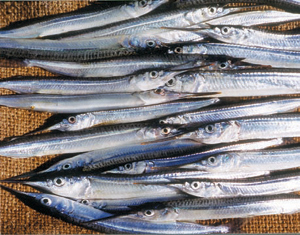 These common inshore fish may be easily caught from estuaries, harbours, wharves and along coastlines right around the country, most especially in the summer months.
They can sometimes be caught in bulk by dragging fine seine nets through sandy bays, but catching them on rod and line is good fun.
Any cheap, light spin set can be used for the purpose. Last time I visited a local wharf to fish for piper I saw a bloke fishing with a bamboo pole cut from someone's garden, a length of nylon tied directly to the tip (no reel) and an old wine cork for a float. This rig would have cost under a dollar all up, and he was catching as many as anyone!
Standard set-up is a small (around size 14) hook on a metre of 3-4kg mono under quill-type float. A split-shot can be added 200mm above the hook if the current is strong. The hook is baited with a small sliver of just about any fish bait. Some specialists even breed their own maggots for this purpose, but this is not really necessary. Watch the float, and if it is pulled down, rises up or moves to the side, strike quickly.
Piper are tasty eating. Gut them and remove the scales by rubbing them with your fingers under a running tap. Make a small slot in the wrist of the tail with a knife point and poke the beak through, before dusting the resulting looped fish in flour and frying in butter. When you straighten out the fish after cooking, the flesh should pretty-much fall off the bones.
Leatherjackets
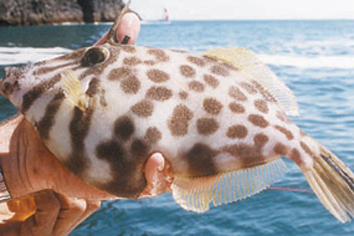
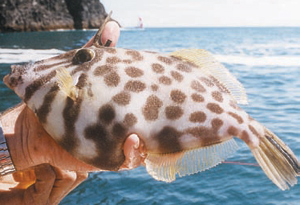 These fish are the bane of soft-bait fishermen, and as that technique finds popular acceptance, anglers are beginning to discover just how prevalent these fish are. The narrow, deep gouge marks left in your soft-plastic tails when fishing over reefy country are mostly caused by these little sods.
Occasionally you will foul hook a leatherjacket on gear meant for other species, but if you want to target them, use small (size 12-10) strong hooks and small baits. Don't use light, soft 'sprat hooks', as these fish have jaws like mini-boltcutters, and I have seen them chop right through fine hooks.
After capture, be careful of the dorsal spine (which gives these fish their family name of 'triggerfish) and cut the whole head off. The rough skin can then be grasped and peeled backwards off the fish, like pulling off a sock. These fish taste delicious and are sometimes sold commercially under the name of 'creamfish'.
These two similar-looking species are common in our waters and are both members of the scorpionfish family. The granddady is also called a maori chief and is common in reefy northern waters, where it can grow to 5kg. They are unusual in that they give birth to live larval young, rather than ejecting eggs.
These aggressive ambush hunters have huge mouths and are easily caught with baits or jigged lures. They should be handled with care as their head and fin spines are toxic and cause painful wounds. I normally hold them by gripping the lower jaw and allowing the fish's body weight to force the mouth open while I unhook it.
New Zealand anglers mostly return grandaddys as they are considered 'trash fish' and usually caught by accident when targeting other species. Asian anglers know different though, and prize these fish for their pure white, tasty flesh.
Sea perch are more common to the south. They too are members of the scorpionfish clan, and are also known as jock stewarts or scarpies. They share many attributes with their cousins, but have fewer spines on the head and are yellow-brown in colour with dark bands. Once dismissed as a tablefish, they are in fact good eating and becoming more accepted now, especially by South Island anglers.
Porae
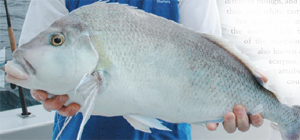 Called 'morwong' in Australia, porae is a species that is becoming a more regular catch in recent times, perhaps because they seem particularly susceptible to soft-plastic lures. They look a lot like their close-cousin the tarakihi, except with a blue-green/coppery colour to the back and without the dark saddle to the neck.
They are found in the northern half of the North Island, especially the east coast, where they favour areas on and around reefy ground. Attractive fish, they grow to around 8kg and can really fight - probably a bit better than a snapper of similar size.
 Like tarakihi, these are delicious eating fish, and one of my favourites. A peculiarity is a little patch of brown muscle on the top of the shoulder when filleted. This is standard; it is not a bruise or infection and does not taste different to the other flesh. I would pick one of these over a snapper any day.
Golden snapper
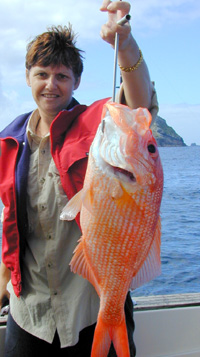
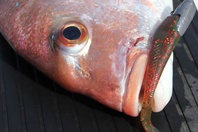
Also known as red snapper or nannygai - their Australian name - goldies are most common in the northern half of the North Island and are not relatives of our common snapper. Gorgeously coloured in gold, red and orange (see lead picture), these are a 'sharp' fish and should be handled carefully. Running your hand against the grain of the scales will see some pretty radical exfoliation.
They have big, light-sensitive eyes that allow them to feed after dark, and in shallower areas they tend to hang out in dim caves during the daylight hours. In deeper, darker waters they are found out in the open during the day.
Aggressive feeders, they will take a cut bait, jigged lure or soft-bait, and I have even taken them flyfishing after dark. They average less than a kilo, but can range up to about 5kg, and fight well. These are a top tablefish with snow-white flesh. I would put them right up there with hapuku and john dory in the eating stakes.
Spotted dogs
No, not Dalmations, but spotted dogfish, also called spotted smoothhounds, gummy sharks or (commercially) rig or lemon fish.
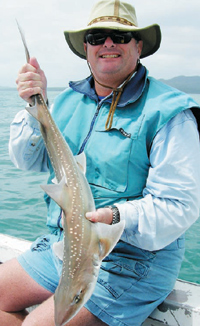
These are common during the warmer months in inshore waters with sedimentary bottoms, especially when conditions have roiled up the water, exposing their favourite foods of crab or shellfish. Surfcasters often target these fish by using crab or crayfish baits and inshore boaties can do the same.
Trunk these fish on capture, taking off the head, fins and gut. They are very easy to fillet, have no bones in the fillets and are very tasty indeed. In the past they were a standard of the fish-and-chip trade, and older readers have probably eaten a lot more of them than they realise.
Wrasses
There are a good range of wrasses in New Zealand waters, and they are sometimes mistakenly called 'parrotfish', although this is a different (but similar looking) family altogether and virtually never encountered in New Zealand.
Members of the wrasse family include the common spotty (paketi), the red pigfish, banded wrasse, scarlet wrasse, green wrasse, girdled wrasse, sandagers wrasse and a number of others. Although seldom targeted (except by kids fishing from rocks and wharves), they are often caught by accident.
Some species (especially pigfish in the north and banded wrasse in the south) grow to a reasonable size, will take lures and flies as well as baits, and can pull a bit.
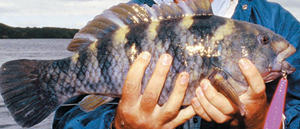 Once, as kids, my old mate Dave Yule and I made a catch of various wrasses off the rocks at the beach we were staying at, and convinced Dave's mum to cook them up for us. Pride was the only thing that allowed us to choke them down, and the weedy, iodine taste meant that I have never eaten one since. But a recent news piece from South Island correspondent Peter Langlands mentions a market developing for live wrasses sold to diners from fish tanks in Asian restaurants at $70 a kilo green weight. That is about $200 a kilo filleted! I wonder how much spotty quota costs??
 |
This article is reproduced with permission of |
Recent Forum Posts Visit Forum

Shane Jones
in Fisheries Management19 hours ago
Tzer
Far cry to the twats at Liegasea/NZSFC were proposing of 5 Tarakihi person in their submission for the central management area and this is what our...

Bluefin Tuna at the cavs.
in The Briny Bar38 hours ago
smudge
Despite my years of fishing I haven't really fished many places, my focus has always been on Auckland's west coast and out toward Great Barrier. I...

Casting gloves
in Popper and Topwater Fishing83 hours ago
Mc Tool
100 bucks for a lure 😬. Watching one of them flying over the horizon without the line attached would be " character building " for sure...
I thought Id post some nice photo's , join...
in The Briny Bar134 hours ago
Alan L
That is a very cool pic Krow.The Far North is very cool, the Far far North even cooler. Mint looking day.Alan...

Mc Tools berley mincer
in The Briny Bar142 hours ago
SaltyC
Good size, they scrap well. Got an 18kg one up in Vava'u back a few years ago fishing off squeaky Going's boat. That was quite a...

Out with the "Twelves"
in Fishing Reports196 hours ago
Pcj
I should be able to get out end of October. The nephew been out virtually every weekend over winter and has done well. It seems the...
Manukau Harbour & West Coast fishing
in Fishing Reports203 hours ago
smudge
Nice work Schecter, I think snapper may be around sooner than you think. Well I am hoping so...

Whangarei Harbour report.
in Fishing Reports636 hours ago
krow
180 +m is where I've had to be lately. A lot less low foul around these parts and some of it shallower that looks like Tarakihi...
Whangarei Harbour Scallops
in Fisheries Management746 hours ago
Pcj
Reopening WhangÄ쳌rei Harbour to recreational scallop fishingTÄ“nÄ쳌 koeFisheries New Zealand is seeking feedback from tangata whenua, stakeholders, and the public on whether WhangÄ쳌rei Harbour should be...
SNA1 Recc fishing cops the blame.
in Fisheries Management842 hours ago
Tzer
What Liegasea won’t tell you is that some of their own fisheries contractors were co-authors of this study for fear of being called hypocrites, one of...
Popular Articles

Softbait Fishing - Part 1 - gear selection
John Eichlesheim writes an article about selecting the right equipment for softbait fishing... Read More >
Softbait fishing Pt 2 - tips and tricks
Techniques, tips and tricks of softbait fishing – getting the most from your soft baits.... Read More >

Surfcasting - setting yourself up
Gary Kemsley helps sort out the necessary gear for intending surf fishers.... Read More >

Squid - How to catch them
Squid fishing is a rapidly growing aspect of fishing - Paul Senior shares some hints and tips to get started.... Read More >
Fishing Reports Visit Reports
Outer Hauraki Gulf Fishing Report 17/09/26
Spring wind the handbrake. Spring is starting to make its presence felt in the outer... Read More >
Top of the South Fishing Report - 17/09/26
Early snapper in Tasman Bay. Well, spring is finally here, and the days are getting... Read More >
Bream Bay Fishing Report - 17/09/26
Good snapper catches reported. After Tangaroa turned off the fish tap for a month or... Read More >
Bay of Islands Fishing Report - 17/09/26
Pacific bluefin tuna for the lucky few. The last fortnight has seen more fishable days... Read More >
Comments