
Boat wraps
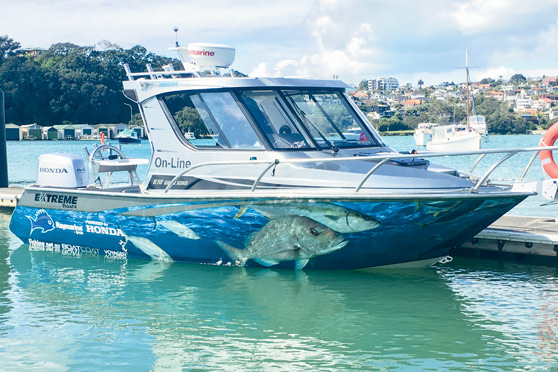
It’s easy to transform your boat from ordinary to awesome, sometimes in less than a day – just vinyl wrap it, writes John Eichelsheim.
Vinyl wrapping has been used for years to wrap motor vehicles with bold colour schemes and outlandish prints. More recently, vinyl-wrapped boats with graphic designs in striking designs have become a common sight on the water, too, as film materials and application techniques continue to improve.
Vinyl and boats
Vinyl film technology has huge appeal, which is why there is now such a variety of films available with different colours, finishes and effects.
Wrapping boats in coloured self-adhesive film has proven to be a durable and economical alternative to painting/repainting. Vinyl films can be applied to a wide range of surfaces (including metal, fiberglass/gelcoat, paint and prepared timber), are quick and easy to apply, cost less per square metre than paint, and look good for years if properly applied and maintained.

There are other benefits too: vinyl films look just like paint, but are much easier to clean, maintain or replace, and they protect whatever’s underneath from minor scratches, corrosive elements and damage from ultra-violet light, whether paint, gelcoat or bare metal. And when it’s time for a change, simply remove the old vinyl and apply new: vinyl film is much easier and cleaner to remove than paint.
Not all vinyls are equal
As boats must resist the destructive forces of the marine environment, a highly durable top sheet made from top-quality ingredients and colour pigments is essential. The challenges include: exposure to UV light (including reflection from the water); the effects of salt water immersion; and water finding its way between the film and the substrate when the boat’s moving, placing extra requirements on the f?ilm’s construction. Consequently, using just any old coloured film will not provide the look and durability boat owners expect.
Some products are thicker and more durable than others. For instance, Mactac Tuning Film offers special laminates that can be applied on top of coloured film for extra UV resistance and to protect against scratching. The latest Mactac Tuning Film innovation is a ‘self-healing’ laminate that, once scratched, can be regenerated with heat. Minor scratches disappear and the film surface looks like new again.
An alternative to paint
Manufacturers are increasingly offering vinyl wraps instead of – or alongside – paint on new aluminium trailer boats. Designs can be standard or customised.
Vinyl is available in a variety of options, including: plain colours; printed media; or combinations of the two with a printed graphic applied over a solid-colour vinyl media. A premium quality vinyl’s seven-year service life is comparable to a marine paint’s.
According to marine-vinyl-wrap professional Dan Nicholson from BoatCoat, blue is the most popular boat-wrap colour. BoatCoat wraps boats all over New Zealand and around the world. At home, wrapping aluminium trailer boats, the majority of them secondhand, has become an important part of his business, overtaking yachts, launches and commercial vessels by volume.

Nicholson uses mostly 3M vinyl films “because it [3M] has a three-year warranty”, or sometimes Nexus, and maintains vinyl wraps will give years of service if properly applied.
Vinyl film is usually measured and cut on-site, which takes considerable skill and experience. For marine applications, an understanding of boating dynamics and the demands of the marine environment is also important, says Nicholson.
Changing the colour/graphics is as easy as removing the old vinyl and replacing it – no sanding, undercoating or tedious paint preparation required, and what’s under the old vinyl is like new.
A good quality vinyl will come away easily and cleanly – any perceived cost savings from using a cheaper film product will quickly be negated if a cheaper film takes longer to remove, says Nicholson. The key is to use the right film in the first place and to take the film off before it starts to break down.
Durability and repair
Vinyl is less hardwearing than paint or gelcoat finishes, but is much easier to repair. During application, high wear areas (such as the bow) and places where fenders frequently rub, can be reinforced to extend the life of the vinyl finish.
Dings and scratches are the most common damage, but lifting along the edges, especially close to the waterline, can be the result of poor preparation, faulty application or problems with the substrate. A special sealant should be applied to the waterline edge to help prevent the vinyl from lifting or peeling and, where used, antifouling paint should be applied to just cover the vinyl edge to further protect it from lifting.

Vinyl film should be carefully trimmed around the gunwales, waterline and any fittings. Professionals trim down joins and seams to reduce their visibility, and the boat’s name, stripes and graphics are applied over the top of the vinyl wrap.
Colour-matching vinyl patches is much easier than matching paint. Vinyl doesn’t fade, so patches blend in easily. A good tradesman can show you how to make your own patch repairs and avoid adhesion problems.
Wrapping a boat
While many graphic-design and sign-writing companies offer creative services that include printing and cutting vinyl wrapping, the application of vinyl wraps is usually undertaken by specialists; if ordering a vinyl-wrap option for your new boat, the factory will probably take care of the details. Nor should it be a problem if you have a specific design in mind; many boat manufacturers work with graphics companies who should be able to come up with something. Alternatively, you could supply a computer file with your design or even the completed vinyl wrap for them to apply.
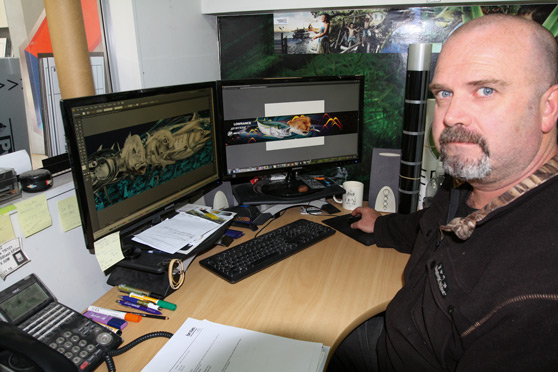
If you already own a boat and are considering having it vinyl wrapped, the process is relatively straight forward, beginning with an estimate for the job.
Usually a boat-wrapping professional will take care of the design, cutting and application of the vinyl wrap. Some work on trailer boats at their premises, including the preparation and application, but most travel to where the boat is kept and work on-site. This is mandatory for larger vessels.
So there you go, lots of options to choose from – and that’s a wrap.
Stuck for a design?
When we were thinking of putting a wrap on the NZ Fishing News Extreme 745 project boat, one of our concerns was ‘what design do we use’?
The solution was made easy for us. We went to Glenn Kipling of Brave Designs, whose company has been wrapping boats for around 10 years, and over the last three has been doing full wraps.
He had a whole library of designs produced by an Australian company Marine Graphics Inc.
“These are boat-specific artworks. Owner Mark has produced a stock book of all the different species, back grounds, and some combinations of both.”
The artwork is ordered and they come as flattened PDFs with a ‘first-use right’ only.
One of the first full wraps Brave Design did was for the Big Angry Fish television programme’s filming boat. Since then, boat owners have been making steady enquiries, be it for a full or partial wrap.
Glenn’s advice is to go with an experienced operator and use the best-quality vinyl only.
He uses a product called Primer 94 on the edges, the most vulnerable part of the wrap, to ensure it sticks well.
Prepping your boat
• Ensure the paint or gelcoat is sound (no flaking or excessive chalkiness)
• Fill and fare all dents and dings (any uneven areas will show up clearly under the vinyl)
• Make sure the surfaces are clean and free from marine growth, mould and mildew, as well as any silicone residue from through-hull fittings
• Skin fittings need to be removed (ideally, but if that’s not possible, the vinyl can be trimmed around them)
• Before wrapping, give the hull a final, last-minute clean to ensure the surfaces are free from dust and grease.
Wrapping not just cosmetic
Wraps are not just about making a vessel look good.
New Zealand Marine Protection Solutions can apply a high-performance, cost-effective biocide-free wrap that incorporates the latest European anti-foul technology.
There are two options. FLOW Silikon provides up to five years protection, is self-cleaning at eight knots, and by reducing friction by nine percent, improves hull speed and fuel efficiencies. Second option, FLOW Fouling, will last up to seven years.
The product is also patch repairable and can be replaced without extra preparation.
Start out sound
Vinyl wrapping can be applied to painted, fibreglass (gelcoat) and bare or painted boats, provided the surface is sound.
Several types and grades of wrap are available from different manufacturers, but not all are suitable for marine applications. Leading brands include 3M, Oracle, Avery, Mactac and Hexis.
Many sign-writing and printing/graphics companies offer boat wrapping as an extension of their automotive and general sign-writing business. Other companies and individuals specialise in wrapping boats.
Reputable boat-wrap professionals use only goodquality vinyl films suitable for marine use. While the lifespan of vinyl wrapping is usually given as seven to 10 years, only 3M offers a warranty for marine use – of just three years.
|
|
This article is reproduced with permission of |

Recent Forum Posts Visit Forum

Trailer wheel clamp
in The Boat Shed41 minutes ago
610gc
Hey teamI have a wheel clamp like the one below on the boat trailer. its getting harder and harder to unlockI've sprayed it with CRC on...

Shane Jones
in Fisheries Management24 hours ago
Tzer
Far cry to the twats at Liegasea/NZSFC were proposing of 5 Tarakihi person in their submission for the central management area and this is what our...

Bluefin Tuna at the cavs.
in The Briny Bar44 hours ago
smudge
Despite my years of fishing I haven't really fished many places, my focus has always been on Auckland's west coast and out toward Great Barrier. I...
Casting gloves
in Popper and Topwater Fishing88 hours ago
Mc Tool
100 bucks for a lure 😬. Watching one of them flying over the horizon without the line attached would be " character building " for sure...
I thought Id post some nice photo's , join...
in The Briny Bar139 hours ago
Alan L
That is a very cool pic Krow.The Far North is very cool, the Far far North even cooler. Mint looking day.Alan...

Mc Tools berley mincer
in The Briny Bar147 hours ago
SaltyC
Good size, they scrap well. Got an 18kg one up in Vava'u back a few years ago fishing off squeaky Going's boat. That was quite a...

Out with the "Twelves"
in Fishing Reports201 hours ago
Pcj
I should be able to get out end of October. The nephew been out virtually every weekend over winter and has done well. It seems the...
Manukau Harbour & West Coast fishing
in Fishing Reports209 hours ago
smudge
Nice work Schecter, I think snapper may be around sooner than you think. Well I am hoping so...

Whangarei Harbour report.
in Fishing Reports641 hours ago
krow
180 +m is where I've had to be lately. A lot less low foul around these parts and some of it shallower that looks like Tarakihi...
Whangarei Harbour Scallops
in Fisheries Management751 hours ago
Pcj
Reopening WhangÄ쳌rei Harbour to recreational scallop fishingTÄ“nÄ쳌 koeFisheries New Zealand is seeking feedback from tangata whenua, stakeholders, and the public on whether WhangÄ쳌rei Harbour should be...
Popular Articles

Softbait Fishing - Part 1 - gear selection
John Eichlesheim writes an article about selecting the right equipment for softbait fishing... Read More >
Softbait fishing Pt 2 - tips and tricks
Techniques, tips and tricks of softbait fishing – getting the most from your soft baits.... Read More >

Surfcasting - setting yourself up
Gary Kemsley helps sort out the necessary gear for intending surf fishers.... Read More >

Squid - How to catch them
Squid fishing is a rapidly growing aspect of fishing - Paul Senior shares some hints and tips to get started.... Read More >
Fishing Reports Visit Reports
Outer Hauraki Gulf Fishing Report 17/09/26
Spring wind the handbrake. Spring is starting to make its presence felt in the outer... Read More >
Top of the South Fishing Report - 17/09/26
Early snapper in Tasman Bay. Well, spring is finally here, and the days are getting... Read More >
Bream Bay Fishing Report - 17/09/26
Good snapper catches reported. After Tangaroa turned off the fish tap for a month or... Read More >
Bay of Islands Fishing Report - 17/09/26
Pacific bluefin tuna for the lucky few. The last fortnight has seen more fishable days... Read More >
Comments