
Bluefin tuna - best practice
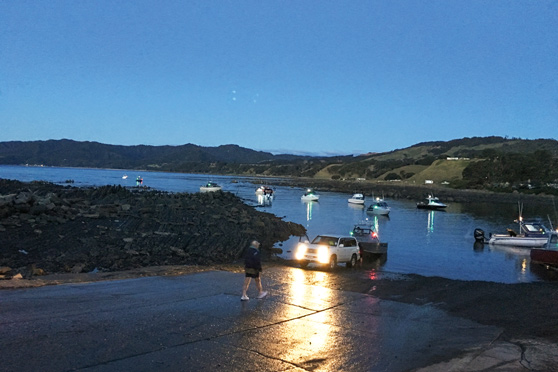
Social media ran red-hot, starting when several people with commercial-fishing knowledge posted information on where the fish could be found.
The rest is history. Around 130 trailers, maybe more, congregated at Waihau Bay boat ramp, with many anglers travelling great distances to get there. This saw the small coastal village’s resources pushed to the max. Accommodation was particularly hard to find, with some crews sleeping on board their boats for several nights. Fuel supplies ran dry when the tuna fever was at its peak, too, and ice was worth its weight in gold. Perhaps worst of all, you couldn’t buy a pie for love nor money!
On the positive side, the activity provided a massive and welcome mid-winter boost for local businesses. The Waihau Bay Fishing Club was overwhelmed, with anglers waiting up to two hours to have their fish weighed; the weighstation had to remain open for up to six hours at a time to deal with the influx of tuna.
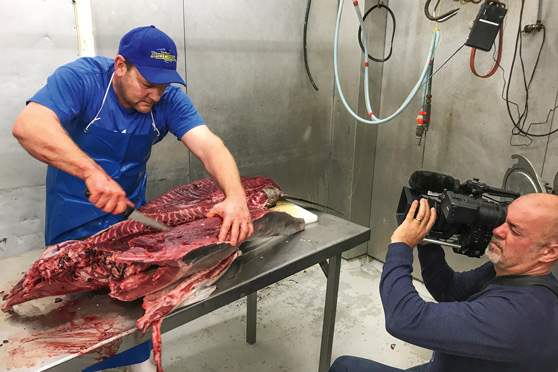
There was also the issue of what to do with the catch after going over the scales and all the photos had been taken. Many of the tuna were up to and over 100kg in weight – that is a lot of tuna in one place. So, with some crews taking three or four bluefin, how was all this meat going to be cared for until it could be broken down? After all, bluefin should ideally be bled out, headed and gutted, and large quantities of ice applied to quickly bring down the body’s core temperature if its legendary eating qualities are to be realised.
Managing editor Grant Dixon decided to take a look at the recent bluefin tuna rush, seeking comment from a number of people about what happened – the issues, the science, and how, as recreational anglers, we can do it better next time…
The Waihau Bay Club perspective
The first three weeks of July were a wild ride for Waihau Bay, with the power of social media drawing anglers from all over the country to fish for southern bluefin tuna – a ‘bucket list’ species they would not normally have dreamed of catching
. Indeed, a whole new recreational fishery was ‘created’ overnight, and it took the Waihau Bay Sports Fishing Club by surprise. Club spokespersons Christine Elmiger and Jim Kemp say such a remote club is not really set up to cope with such big angler and catch numbers.
“It was a very exciting event and great to see so many happy anglers catching their first SBT. Many people drove incredible distances towing their boats to take advantage of the tuna run, and most were rewarded for their efforts.
“The parking facilities are very limited and consequently some trailers had to be parked quite a way from the ramp. Over 130 trailers were counted one day – really stretching it for Waihau Bay.” The club’s weigh-masters were pushed, too, spending up to six hours at a stretch at the boat ramp (where managing the boat traffic also proved quite a trick).
“Unfortunately, recreational fishers got some bad press due to the irresponsible actions of a small minority, but there were many positives to come out of the ‘great tuna rush’. Most visitors looked after their fish well, and were respectful and grateful for the services provided. The main issue was around some crews taking too many fish.”
Based on its experiences this July, the club is developing ‘best practice’ guidelines should the tuna show up again next winter.
These measures include:
• One fish weighed per boat per day.
• Tag and release to be encouraged.
• Request anglers keep only enough fish for themselves and their friends’ needs.
• Dispose of waste in a responsible way.
• Fish must go back on the boat immediately after weighing, not left around the weigh-station.
• Encourage anglers to bleed, gut and ice down their fish immediately after boating
. • Bled tuna will not be classified as mutilated and will qualify for Waihau Bay Club trophies and records. (Note: this practice will still disqualify catches for any potential world or national records. Visiting anglers should check their home club policies first.)
• The club will organise donations of fish to locals.
• Remind boaties via VHF radio and Facebook that ramp fees are to be paid.
• Ask anglers to request the weighing of fish as early as possible.
Put fishery before your ego
The ITM Fishing Show host Matt Watson likened the bluefin tuna scenario to the halcyon days of the Whakatane Tuna Tournament and Coruba Shark Hunt, where big fish ended up being dumped.
“We’ve now seen this at Waihau, where fish were tipped off a bridge into a local stream, which was publicised on social media – not a good look for recreational fishers!” Matt says.
“Bluefin are a big, impressive looking fish and get lots of attention when posted on social media. So pics showing multiple large, dead fish reach a lot of people, which sort of normalises or even glorifies it. Sure, people should be proud of catching a good fish, but we all need to understand that these days we have considerable influence when pics and reports are posted on social media.”
He says Kiwis have this thing where everyone onboard needs to catch one, so if there are three anglers, each can take one, particularly if they’ve never caught one before. Matt says he has always held the belief that any fish caught on a boat is a team effort and has been caught by everyone on board, not just the angler winding the handle.
“I’ll proudly tell people I’ve caught over 1400 marlin, but that’s as a skipper or crewman; as an angler I’ve only wound in about 20. In my opinion, there is no need for everyone to catch and keep a tuna of their own. Instead, all jump in on the pic and share the credit as a team, just as you’d share out the fillets.”
Matt emphasises he is not ‘anti’ anyone catching a decent feed of fish, but if food is what you are after, you would be better off targeting bluenose – they’re more plentiful, and are easier to catch and keep in good shape in your bin.
“I do understand it is easy to get carried away with all the hype – catching big fish is exciting. But I promise you that releasing one of these awesome fish won’t detract from the thrill or the achievement.”
Southern bluefin tuna – by the numbers
• Southern bluefin tuna (SBT)stocks, which are highly migratory, are administered internationally by the Commission for the Conservation of Southern Bluefin Tuna (CCSBT), of which New Zealand is a founding member.
• The commission allocates a total allowable catch (TAC) of 14,647 tonnes across its member nations.
• Other nations involved – with their allocation tonnes in brackets – are Australia (5665), Japan (4847), Taiwan (1040), Korea (1040), New Zealand (1000), and Indonesia (750). The European Community, Philippines and South Africa, as ‘co-operating non-members’, have 95 tonnes between them.
• There are suspicions around illegal catches, especially when the volume of SBT reportedly sold in the Japanese markets far exceeds that nation’s CCSBT allocation.
• SBT were introduced to the Quota Management system in 2004. The 1000 tonnes currently allocated include eight tonnes for recreational, one tonne for Maori, four for mortality, and 987 for commercial.
• It is important a close watch is kept on the recreational catch, so as not to undermine New Zealand’s position at CCSBT. The recreational catch, especially the unreported fish, does concern commercial interests in this highly regulated fishery.
• New Zealand’s commercial allocation is caught predominantly by surface long-liners.
• There are positive signs of higher recruitment in recent years, but overall stocks remain at a low level – between 5 and 8 percent of biomass, depending on who you talk to.
Self-control needed
Bluewater Marine Research scientist and respected recreational fishing advisor John Holdsworth says the Australian recreational anglers were the first to benefit from the bluefin tuna stock rebuild.
“Now larger fish have turned up in northern New Zealand waters, and while stocks are improving, they started from a very low state – probably less than five percent of the biomass,” John says.
“Both commercial and recreational fishers need to be cautious about what they catch and keep, and avoid waste. NZ Sport Fishing Council will be doing what it can to report the total recreational catch from club records and estimates of unweighed fish.” John suggests it is likely these fish will return next year, so we should prepare for the opportunity and work out how best to treat this ‘new’ fishery.
“There will be time to discuss possible management measures with clubs and fishers. While we won’t know if next season will be as good, there will need to be some self-control shown on what is kept, otherwise MPI will set limits by regulation.”
He warns the New Zealand government will not allow us to exceed our country’s allowance set by the Commission for Conservation of Southern Bluefin Tuna. “However, there is some headroom in the recreational allowance.”
From the ministry
Ministry for Primary Industry’s Highly Migratory Species Manager Arthur Hore says no recreational bag limits currently apply, because the fishery has been small and intermittent to date, and he would expect annual variation in the catch within the allowance.
“With respect to the sudden jump in recreational catching of southern bluefin tuna, this is a first and is likely to be cyclical,” Arthur says.
“We understand that clubs have been asked to collect information on the catches and we encourage that.”
At this stage MPI is proposing to evaluate the available information on fishing success once the season has ended. They will then discuss with stakeholders how best to respond.
“In the meantime, we would ask that fishers exercise restraint and avoid excess catch that may lead to wastage of these valuable fish.”
Gamefish season extended
The ‘discovery’ of southern bluefin tuna at Waihau Bay this year provided a welcome two-month-long extension to the traditional New Zealand gamefish season.
This normally starts with the arrival of the traditional blue-water game fish such as marlin and yellowfin tuna in December/January, overlaps with the broadbill activity in March/April, and this year finished with a bang thanks to the presence of southern bluefin tuna off Cape Runaway.
This was a relative first for the North Island, in contrast to the South Island’s west coast, which has had winter fishing for northern and southern bluefin tuna for many years now.
“It remains to be seen whether this year’s bonanza was a one-off flash in the pan or the start of a very bright future, with a good eight-month gamefishing season now taking place in New Zealand’s North Island waters,” says NZ Sport Fishing Council’s spokesperson Bob Gutsell.
The council greatly appreciates the goodwill shown by commercial long-line fishermen in giving the game-fishing fraternity the ‘good oil’ on where the tuna were holding and how to find them.
“There is the question of the currently very small recreational allowance of eight tonnes, which has been well exceeded this season. We need to have good statistics and are encouraging all clubs that weigh fish to keep a good record of numbers and weights.”
Estimates for the recreational catch this season range between 20 and 40 tonnes, and will be able to be more accurately advised at the end of the current season.
Whilst the southern bluefin tuna stocks are rebuilding, they are still estimated to be only around 9% of the original biomass.
“There has been some emotive reaction to the numbers of fish being landed versus released. The numbers of fish weighed challenged the resources of the Waihau Bay Club.”
“NZSFC promotes fishing within the bounds of sustainability and needs as many of the landed fish to be weighed as possible, to ensure good catch statistics are maintained.
The council also asks that anglers and boat skippers consider the numbers of tuna they keep, and ensure that caught fish are well looked after and salt-iced down ASAP after capture for best results.
“We were disappointed by the actions of a small minority of anglers who in some cases dumped whole fish and, more frequently, fish carcasses, in local waterways and shorelines. The council does not condone this behaviour.”
LegaSea will be working with the Waihau Bay Sport Fishing Club and local community to ensure that if a similar tuna run occurs next year, there is sufficient salt ice available for anglers to properly look after their catches and maximise utilisation of the fish and the benefit to the community.
|
|
This article is reproduced with permission of |

Recent Forum Posts Visit Forum

Trailer wheel clamp
in The Boat Shed2 minutes ago
Pcj
Doesnt dry out like crc.I use it on my trailer lock...

Shane Jones
in Fisheries Management26 hours ago
Tzer
Far cry to the twats at Liegasea/NZSFC were proposing of 5 Tarakihi person in their submission for the central management area and this is what our...

Bluefin Tuna at the cavs.
in The Briny Bar46 hours ago
smudge
Despite my years of fishing I haven't really fished many places, my focus has always been on Auckland's west coast and out toward Great Barrier. I...

Casting gloves
in Popper and Topwater Fishing91 hours ago
Mc Tool
100 bucks for a lure 😬. Watching one of them flying over the horizon without the line attached would be " character building " for sure...
I thought Id post some nice photo's , join...
in The Briny Bar142 hours ago
Alan L
That is a very cool pic Krow.The Far North is very cool, the Far far North even cooler. Mint looking day.Alan...

Mc Tools berley mincer
in The Briny Bar149 hours ago
SaltyC
Good size, they scrap well. Got an 18kg one up in Vava'u back a few years ago fishing off squeaky Going's boat. That was quite a...
Out with the "Twelves"
in Fishing Reports203 hours ago
Pcj
I should be able to get out end of October. The nephew been out virtually every weekend over winter and has done well. It seems the...
Manukau Harbour & West Coast fishing
in Fishing Reports211 hours ago
smudge
Nice work Schecter, I think snapper may be around sooner than you think. Well I am hoping so...

Whangarei Harbour report.
in Fishing Reports643 hours ago
krow
180 +m is where I've had to be lately. A lot less low foul around these parts and some of it shallower that looks like Tarakihi...
Whangarei Harbour Scallops
in Fisheries Management753 hours ago
Pcj
Reopening WhangÄ쳌rei Harbour to recreational scallop fishingTÄ“nÄ쳌 koeFisheries New Zealand is seeking feedback from tangata whenua, stakeholders, and the public on whether WhangÄ쳌rei Harbour should be...
Popular Articles

Softbait Fishing - Part 1 - gear selection
John Eichlesheim writes an article about selecting the right equipment for softbait fishing... Read More >
Softbait fishing Pt 2 - tips and tricks
Techniques, tips and tricks of softbait fishing – getting the most from your soft baits.... Read More >

Surfcasting - setting yourself up
Gary Kemsley helps sort out the necessary gear for intending surf fishers.... Read More >

Squid - How to catch them
Squid fishing is a rapidly growing aspect of fishing - Paul Senior shares some hints and tips to get started.... Read More >
Fishing Reports Visit Reports
Outer Hauraki Gulf Fishing Report 17/09/26
Spring wind the handbrake. Spring is starting to make its presence felt in the outer... Read More >
Top of the South Fishing Report - 17/09/26
Early snapper in Tasman Bay. Well, spring is finally here, and the days are getting... Read More >
Bream Bay Fishing Report - 17/09/26
Good snapper catches reported. After Tangaroa turned off the fish tap for a month or... Read More >
Bay of Islands Fishing Report - 17/09/26
Pacific bluefin tuna for the lucky few. The last fortnight has seen more fishable days... Read More >
Comments