
Are Scallops Permanently off the Menu?

Under the Quota Management System (QMS) these two areas are the last remaining areas where scallops can be commercially harvested. Closures of these last two areas will make the scallops the first nationwide fishery to be wholly shut down due to greed and destruction under the QMS.
We need to acknowledge that the QMS is simply not working. An entire species is in line to be wiped out. The only way to restore coastal fish populations is to reduce the amount harvested and make destructive fishing techniques illegal.
The evidence is in a new NIWA report showing Hauraki Gulf scallop biomass (average weight of scallops over a given area) has plummeted 93 per cent in the last ten years to just 52 tonnes left. Northland’s East Coast scallop beds have also fallen 63 per cent over 13 years, to 64 tonnes.
Areas once abundant with scallops such as Spirits and Tom Bowling Bay have decreased in biomass by 96%.
After years of inaction, with irrefutable figures like the above, it’s likely Fisheries NZ (FNZ) will close both scallop fisheries for up to three years – a move we fully support. For FNZ, it may be another day in the office, but for coastal communities this action will result in economic, social, and cultural losses.
The key factors causing the decline in scallops are threefold.
1. Overallocation of catch allowances. We are harvesting too many scallops.
2. Ongoing use of scallop dredges. This destructive fishing technique smashes anything it doesn't catch and destroys the seafloor making it inhabitable for scallop spat to settle.
3. As seen in areas such as the Marlborough Sounds, land-based pollution or runoff also plays a part.
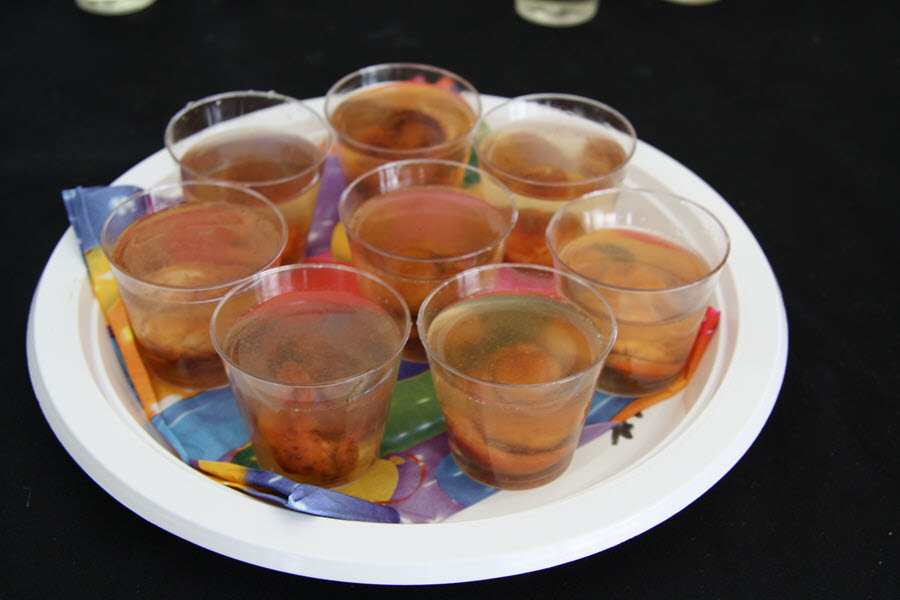
Scallop shots, along with all other scallop dishes, will most likely be off most people’s menus for the next two years.
It’s at this point we must acknowledge the effort of mana whenua. Without iwi and hapu such as Ngāti Hei, Ngāti Pāoa and Ngāti Manuhiri having the courage to boldly lay rāhui around the Hauraki Gulf to protect the remaining scallop beds, imagine how dire this report could have been. As a community an intervention has been staged, but it's not a solution.
While we are incredibly proud to support these rāhui, setting boundaries risks making the issue worse. The commercial operators simply fish elsewhere within the management area, while continuing destructive scallop dredging. A localized approach (without appropriate management) only leads to displacement.
In this instance, scallops are the ‘canary in the coalmine’. They indicate a much more substantial issue that requires systemic change.
We want to see scallop dredging and bottom trawling banned from our inshore waters. Scraping life on the seafloor is unacceptable. We’ve teamed up with organisations to create the Hauraki Gulf Alliance, a campaign to ban mobile bottom-contact fishing methods from the Hauraki Gulf Marine Park.
The Alliance is a step towards a much bigger picture of implementing Rescue Fish, a holistic approach to fisheries management nationwide. Banning inshore trawling and dredging is one of many Rescue Fish principles.
Sign our petition here for more fish in the water: https://rescuefish.co.nz/
Recent Forum Posts Visit Forum

Trailer wheel clamp
in The Boat Shed12 minutes ago
Pcj
Doesnt dry out like crc.I use it on my trailer lock...

Shane Jones
in Fisheries Management26 hours ago
Tzer
Far cry to the twats at Liegasea/NZSFC were proposing of 5 Tarakihi person in their submission for the central management area and this is what our...

Bluefin Tuna at the cavs.
in The Briny Bar46 hours ago
smudge
Despite my years of fishing I haven't really fished many places, my focus has always been on Auckland's west coast and out toward Great Barrier. I...

Casting gloves
in Popper and Topwater Fishing91 hours ago
Mc Tool
100 bucks for a lure 😬. Watching one of them flying over the horizon without the line attached would be " character building " for sure...
I thought Id post some nice photo's , join...
in The Briny Bar142 hours ago
Alan L
That is a very cool pic Krow.The Far North is very cool, the Far far North even cooler. Mint looking day.Alan...

Mc Tools berley mincer
in The Briny Bar149 hours ago
SaltyC
Good size, they scrap well. Got an 18kg one up in Vava'u back a few years ago fishing off squeaky Going's boat. That was quite a...
Out with the "Twelves"
in Fishing Reports203 hours ago
Pcj
I should be able to get out end of October. The nephew been out virtually every weekend over winter and has done well. It seems the...
Manukau Harbour & West Coast fishing
in Fishing Reports211 hours ago
smudge
Nice work Schecter, I think snapper may be around sooner than you think. Well I am hoping so...

Whangarei Harbour report.
in Fishing Reports643 hours ago
krow
180 +m is where I've had to be lately. A lot less low foul around these parts and some of it shallower that looks like Tarakihi...
Whangarei Harbour Scallops
in Fisheries Management753 hours ago
Pcj
Reopening WhangÄ쳌rei Harbour to recreational scallop fishingTÄ“nÄ쳌 koeFisheries New Zealand is seeking feedback from tangata whenua, stakeholders, and the public on whether WhangÄ쳌rei Harbour should be...
Popular Articles

Softbait Fishing - Part 1 - gear selection
John Eichlesheim writes an article about selecting the right equipment for softbait fishing... Read More >
Softbait fishing Pt 2 - tips and tricks
Techniques, tips and tricks of softbait fishing – getting the most from your soft baits.... Read More >

Surfcasting - setting yourself up
Gary Kemsley helps sort out the necessary gear for intending surf fishers.... Read More >

Squid - How to catch them
Squid fishing is a rapidly growing aspect of fishing - Paul Senior shares some hints and tips to get started.... Read More >
Fishing Reports Visit Reports
Outer Hauraki Gulf Fishing Report 17/09/26
Spring wind the handbrake. Spring is starting to make its presence felt in the outer... Read More >
Top of the South Fishing Report - 17/09/26
Early snapper in Tasman Bay. Well, spring is finally here, and the days are getting... Read More >
Bream Bay Fishing Report - 17/09/26
Good snapper catches reported. After Tangaroa turned off the fish tap for a month or... Read More >
Bay of Islands Fishing Report - 17/09/26
Pacific bluefin tuna for the lucky few. The last fortnight has seen more fishable days... Read More >
Comments