
Analysis: The Fisheries Amendment Bill Debate
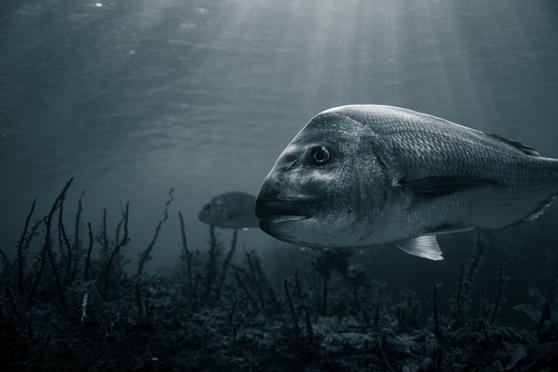
New Zealand’s Fisheries Amendment Bill has arrived in Parliament carrying the weight of both expectation and alarm. Framed by the Government as a necessary evolution of the Fisheries Act 1996, the Bill is intended to modernise how the country manages its marine resources – streamlining decision-making, enabling greater flexibility, and supporting economic growth within the seafood sector. Yet beyond the language of efficiency and opportunity lies a more contested reality, particularly for the hundreds of thousands of New Zealanders who engage with the fishery not as an industry, but as a birthright.

Photo: Alex Muir. LegaSea 2026 Photo Competition, Something Ain’t Right Category.
At the time of writing, the Bill is progressing into the Select Committee phase, where submissions from the public, industry, and advocacy groups should shape its eventual form. This stage is likely to prove pivotal. Fisheries management in New Zealand has long been held up by the commercial sector and the Ministry for Primary Industries (MPI) as a global model, but it has also exposed its flaws through the continued collapse of numerous important fisheries.
Managing fisheries is a delicate balancing act – one that attempts to reconcile commercial utilisation with sustainability, customary rights, and the widespread social, cultural, and economic value of recreational fishing.
The Government’s case for reform rests largely on the argument that the current system is too rigid. Fisheries, by their nature, are dynamic, and officials argue that management settings need to be able to respond more quickly to changing conditions, improved data, and shifting economic realities. The Bill therefore proposes to reduce consultation opportunities, lengthen decision timeframes, simplify regulatory processes, and allow greater discretion in how commercial fishers operate. The Fisheries Amendment Bill aims to fulfil the Coalition Agreement between NZ First and National to “remove regulations that impede the enormous potential of the seafood sector.” Tellingly, the Seafood Industry Forum worked with MPI officials to develop their proposals. Recreational and environmental interests were not invited to participate in the discussions, which extended over 18 months.

Photo: Judy Ormandy. LegaSea 2026 Photo Competition, Underwater Category.
In principle, few would argue against a system that is more responsive and less encumbered by bureaucracy. But for many in the recreational sector, flexibility is not an unqualified good. It raises a central question: flexibility for whom, and to what end? There is a lingering concern that, in seeking to reduce administrative friction, the reforms will also weaken the precautionary safeguards – such as public involvement in decision-making – that should underpin responsible management.
Public consultation on the original proposals occurred in early 2025. LegaSea launched a public awareness campaign titled ‘The Fisheries Reform Scam’ and collated over 25,000 submissions in response to the proposals – by far the largest public response to a fisheries issue in recent times. Over 90% of those submissions opposed the proposals. The 2026 Fisheries Amendment Bill includes the changes proposed in 2025, plus extra proposals that were not consulted on in 2025.
Nowhere is this tension more evident than in the last-minute proposal to remove minimum size limits for many commercially caught species. While recreational fishers would remain bound by size restrictions – returning undersized fish to the water – commercial operators could, under the new framework, land fish of any size provided they are accounted for within quota. The rationale is rooted in efficiency and waste reduction, but the optics are impossible to ignore. For many, it suggests a two-tier system in which the rules governing a shared public resource not only diverge depending on who is catching the fish, but also do nothing to incentivise commercial fishing methods that reduce the volume of small fish being killed.
Equally contentious are proposed changes to discarding practices. The Bill would allow greater scope for commercial fishers to return quota species to the sea under monitored conditions (supported by onboard cameras and electronic reporting) and at the same time reduce the deemed value penalties they are required to pay when they catch more fish than they are legally allowed. Advocates argue this reflects operational reality and reduces unnecessary waste. Critics, however, fear it risks promoting indiscriminate and destructive fishing methods, normalising high-grading – the practice of discarding fewer valuable fish in favour of higher-value catch – and eroding hard-won gains in accountability. While cameras are intended to provide oversight, provisions around data access and confidentiality have raised questions about who ultimately gets to see what happens at sea.
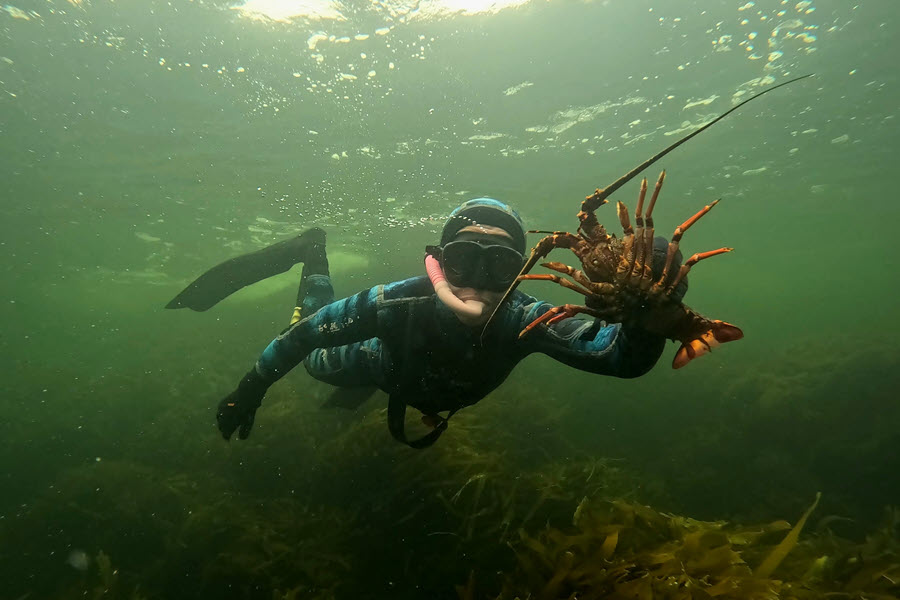
Photo: Kathryn McLachlan. LegaSea 2026 Photo Competition, Catching Kaimoana Category.
These concerns are not merely theoretical. They are shaped by a history in which public trust has regularly been strained by revelations of unreported discards and inconsistent enforcement. For recreational fishers, transparency is not an abstract principle but a prerequisite for confidence in the system. Any perception that visibility is being reduced – even in the name of protecting commercially sensitive information – engenders deepening scepticism.
More broadly, the Bill has reignited a longstanding debate about the nature of New Zealand’s fisheries: are they primarily an economic asset to be optimised, or a shared resource to be stewarded for the benefit of all? The Government’s emphasis on growth and utilisation suggests a heavy tilt toward the former, while recreational advocates argue that such an approach undervalues the social, cultural, and economic wellbeing benefits derived from accessible, abundant fisheries. After all, quota was simply handed to commercial fishers in the late 1980s based on a few years’ prior catch history, and now the major investors control around 90% of all quota shareholdings in fisheries. Why should a handful of companies, some not even Kiwi-owned (half of Sealord is owned by Japan’s behemoth Nissui Corporation, for example), profit at the expense of the estimated 700,000 Kiwis and almost 100,000 tourists who participate in recreational fishing and pump money into the economy every year?
This is not to suggest that the commercial sector’s interests are illegitimate. Far from it. Commercial fishing is an important part of the national economy, and the Quota Management System was, at least in the early days, one of the most sophisticated frameworks in the world. But the strength of that system has always depended on its ability to maintain a social licence – to convince the broader public that the allocation and management of fish stocks are fair, transparent, and sustainable.

Photo: Alex Muir. LegaSea 2026 Photo Competition, Landscapes Category.
Yet therein lies a further question – in the modern era, should sustainability be the goal? LegaSea promotes the idea of managing fisheries to abundant, rather than merely sustainable, levels because sustainability, in its narrowest sense, can allow fish stocks to be maintained at relatively low biomass levels so long as they continue to reproduce. From a recreational and public-interest perspective, that baseline is often seen as insufficient. Abundance, by contrast, implies fish populations that are thriving – large, resilient, and widely distributed – delivering richer ecological benefits and far better fishing experiences, ensuring that everyday New Zealanders can reliably access and enjoy a shared public resource. In this view, abundance is not an aspirational luxury, but a more appropriate benchmark for a country whose marine environment underpins both cultural identity and widespread public use.
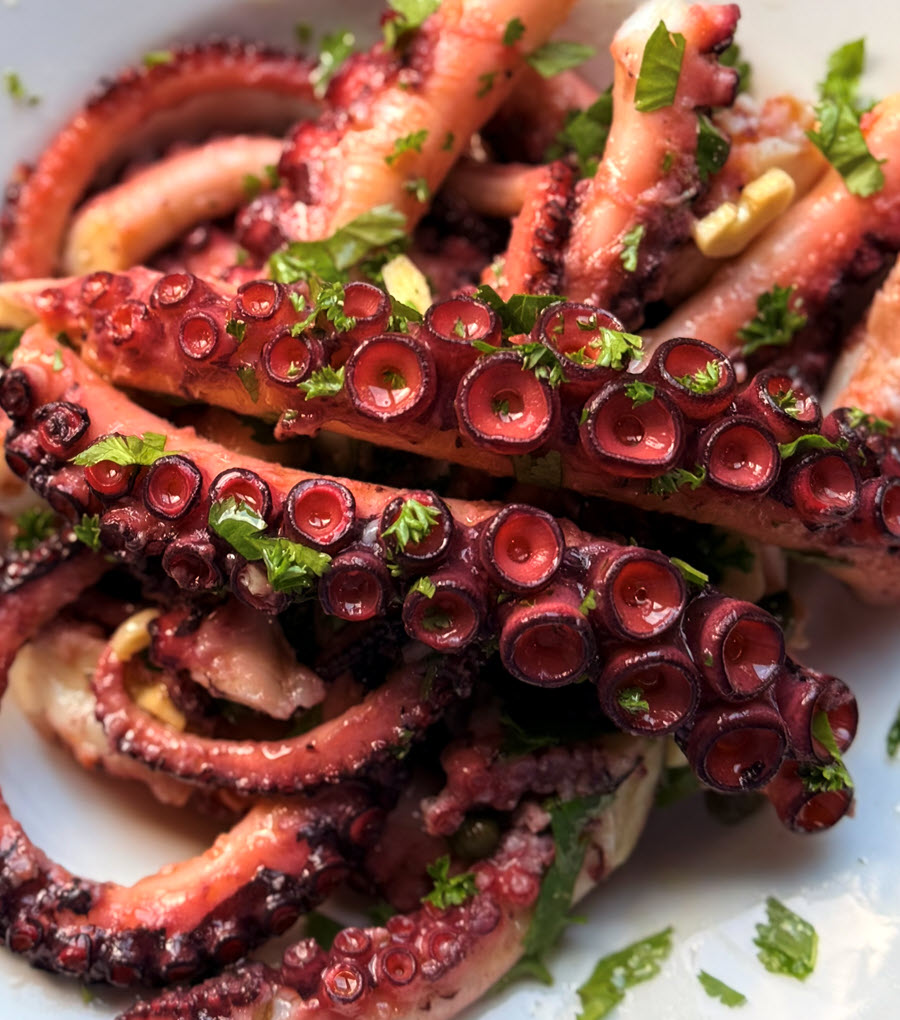
Photo: Tracy Gay. LegaSea 2026 Photo Competition, Cooking Kaimoana Category.
It is here that the current reforms appear most vulnerable and potentially damaging to political ambitions in an election year. By introducing changes that are widely perceived as favouring commercial flexibility, the Bill risks unsettling that balance. For recreational fishers, who vastly outnumber their commercial counterparts, the concern is not simply about access or allocation. It is about the long-term health of the fishery, and whether short-term efficiencies might come at the cost of future abundance.
As the Select Committee process unfolds, these competing perspectives will be tested in detail. Submissions will no doubt range from technical critiques to impassioned pleas, reflecting the diverse ways in which New Zealanders value their marine environment.
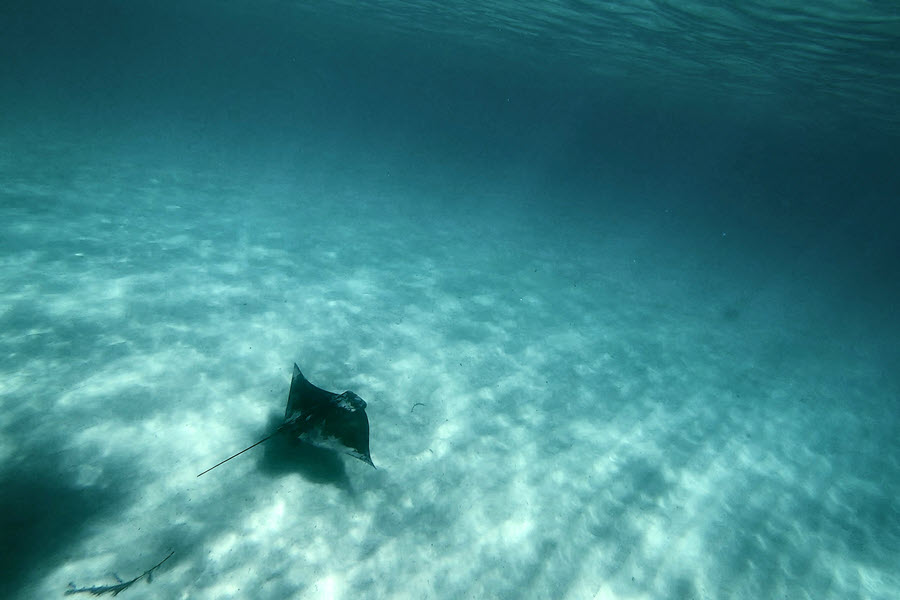
Photo: Jess Carter. LegaSea 2026 Photo Competition, Marine Life Category.
In the end, the Fisheries Amendment Bill transcends a set of policy adjustments. It is a statement about priorities. It asks whether New Zealand’s fisheries management will shift – subtly but significantly – toward a more commercially driven model. For those who measure the health of a fishery not in export dollars but in the bend of a rod and the quality time spent with family and friends, that distinction matters deeply.
Find our how you can get involved here: legasea.co.nz
- NZ Fishing News
Hero photo: Finn Stevenson. LegaSea 2026 Photo Competition, Overall Winner.
Recent Forum Posts Visit Forum

Trailer wheel clamp
in The Boat Shed4 hours ago
krow
I like the SAS wheel clamp. I've had no issues with the lock....

Shane Jones
in Fisheries Management6 hours ago
Fish Addict
The recreational sector can expect no favours from politicians. They know all too well who butters their bread and it ain't the recs. No different over...

Foton tunland v9
in The Briny Bar7 hours ago
Ho Dee
not fishing related and delete if required but was wondering if any has one of these or someone who has just wanting so e real world...

Bluefin Tuna at the cavs.
in The Briny Bar54 hours ago
smudge
Despite my years of fishing I haven't really fished many places, my focus has always been on Auckland's west coast and out toward Great Barrier. I...
Casting gloves
in Popper and Topwater Fishing98 hours ago
Mc Tool
100 bucks for a lure 😬. Watching one of them flying over the horizon without the line attached would be " character building " for sure...
I thought Id post some nice photo's , join...
in The Briny Bar149 hours ago
Alan L
That is a very cool pic Krow.The Far North is very cool, the Far far North even cooler. Mint looking day.Alan...

Mc Tools berley mincer
in The Briny Bar157 hours ago
SaltyC
Good size, they scrap well. Got an 18kg one up in Vava'u back a few years ago fishing off squeaky Going's boat. That was quite a...

Out with the "Twelves"
in Fishing Reports211 hours ago
Pcj
I should be able to get out end of October. The nephew been out virtually every weekend over winter and has done well. It seems the...
Manukau Harbour & West Coast fishing
in Fishing Reports219 hours ago
smudge
Nice work Schecter, I think snapper may be around sooner than you think. Well I am hoping so...
Whangarei Harbour report.
in Fishing Reports651 hours ago
krow
180 +m is where I've had to be lately. A lot less low foul around these parts and some of it shallower that looks like Tarakihi...
Popular Articles

Softbait Fishing - Part 1 - gear selection
John Eichlesheim writes an article about selecting the right equipment for softbait fishing... Read More >
Softbait fishing Pt 2 - tips and tricks
Techniques, tips and tricks of softbait fishing – getting the most from your soft baits.... Read More >

Surfcasting - setting yourself up
Gary Kemsley helps sort out the necessary gear for intending surf fishers.... Read More >

Squid - How to catch them
Squid fishing is a rapidly growing aspect of fishing - Paul Senior shares some hints and tips to get started.... Read More >
Fishing Reports Visit Reports
Outer Hauraki Gulf Fishing Report 17/09/26
Spring wind the handbrake. Spring is starting to make its presence felt in the outer... Read More >
Top of the South Fishing Report - 17/09/26
Early snapper in Tasman Bay. Well, spring is finally here, and the days are getting... Read More >
Bream Bay Fishing Report - 17/09/26
Good snapper catches reported. After Tangaroa turned off the fish tap for a month or... Read More >
Bay of Islands Fishing Report - 17/09/26
Pacific bluefin tuna for the lucky few. The last fortnight has seen more fishable days... Read More >
Comments