
A Technical Guide to Drone Fishing
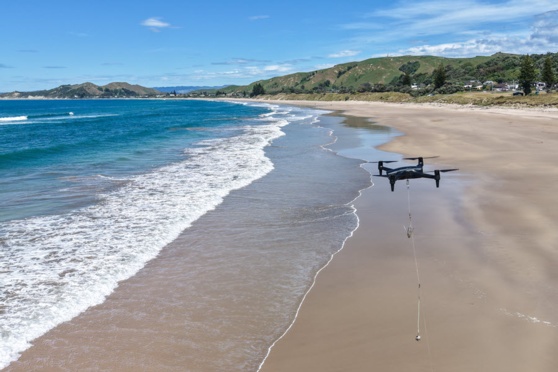
Drone fishing opens up a new world of possibilities for landbased anglers, although it can be a tad daunting for newcomers. From choosing the right aircraft and payload-release system to setting up rigs, reading the conditions, and flying your drone safely (and within Civil Aviation Authority rules), there are plenty of ways to turn a fun trip into an expensive exercise! However, get the fundamentals right, and you can deliver baits well beyond casting range and catch plenty of fish.
Why drone fish?
For landbased fishers, distance has always been one of the biggest limitations. Even with a balanced surfcasting outfit, a casting-friendly rig, and a well-practised heave, there is a limit to how far a bait can be delivered. Serious surfcasters generally prefer fishing the change of light and dark periods, but during the day, often desirable species like snapper and gurnard remain frustratingly out of reach.
Drone fishing changes that equation. By carrying a baited rig out over the surf, a suitable fishing drone can put a bait hundreds of metres (or further) offshore without the need for a boat. It can also allow anglers to precisely position baits into deeper gutters and other likely fish-holding areas.
As a father of young children, I’ve also come to realise that drone fishing from the beach is a great way to include the kids in your fishing adventure without hearing the dreaded “I’m bored” that inevitably comes when you’re out on the boat for too long. Kids love playing around on the beach, and watching the drone (and fish coming in) adds to the excitement for the little ones.
Choosing the right fishing drone
The first decision is whether to buy a purpose-built fishing drone or adapt a conventional camera drone. As the respective names suggest, they are not designed for the same job!
A camera drone prioritises image quality, portability, obstacle avoidance, and flight performance with its own relatively light equipment. A fishing drone needs to carry additional weight, operate reliably in coastal conditions, and release a baited rig – all without compromising flight stability. Some conventional drones can be adapted using compatible aftermarket release systems, but compatibility, payload capacity, and warranty implications need to be checked very carefully. I cut my teeth in the drone world flying a DJI Air3S camera drone for filming purposes, and with an aftermarket payload drop release (triggered by the drone’s auxiliary light) that cost less than $100, I did use it occasionally to take a two- or three-hook ledger rig with a 3oz sinker out beyond the surfline. However, even with this modest payload, it certainly affected flight performance, and I must admit I had some close calls!
Purpose-built fishing drones, on the other hand, are larger, more robust, carry greater payloads, feature dedicated payload-release mechanisms, and usually have other flight features designed around bait delivery and return-to-home functionality. Some also provide flotation, water-resistant construction, or other safeguards intended for use around the sea. These features are valuable, but no drone should be regarded as immune to saltwater damage, spray, or a forced landing.
Cost varies significantly between brands and models, and it pays to do your research around your intended use and budget – although, as with most fishing gear, you generally get what you pay for!
Payload capacity matters
Payload capacity is one of the most important specifications to understand. Manufacturers may quote a maximum payload that the aircraft can lift, but this should not automatically be interpreted as a sensible working load for a fishing mission.
Importantly, the total payload isn’t simply the weight of your sinker, fishing rig, and baits. The weight of hundreds of metres of line is significant, particularly in windy conditions.
The practical limit is also affected by wind, temperature, battery condition, flight distance, and the way the load hangs beneath the drone. A drone that can lift a particular load in calm conditions may struggle when flying into a headwind.
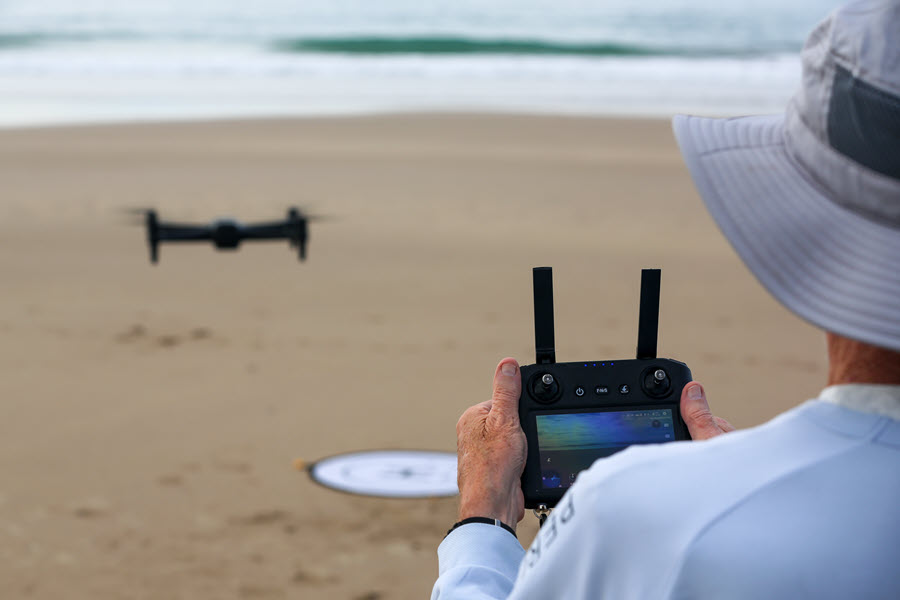
Some drones feature dedicated controllers with or without a live camera screen, while others will require connection to your smartphone and a relevant app to operate.
As a general principle, use a payload comfortably within the manufacturer’s specified limits rather than routinely operating near maximum capacity. Test the complete rig at a field in a range of conditions before heading out fishing. A drone that can lift a particular load in calm conditions on the beach may struggle when faced with stronger winds offshore.
Range and battery capacity
Advertised transmission range is not the same as safe fishing range. A manufacturer may quote several kilometres under ideal conditions, but that figure may not account for headwinds or crosswinds, interference, or the weight of your baited rig.
The relevant measurement is the entire flight: the outward journey, the release operation, the return flight, and a reserve for unexpected conditions. Obviously, a drone flying 500 metres offshore must travel at least that distance again to turn around and get home, with additional battery consumption if it encounters a headwind.
Battery performance may deteriorate with age and repeated use, while cold temperatures and heavy payloads can reduce available operating time. Salt contamination or physical damage to batteries and connectors can introduce further risks.
Choose a drone with sufficient capacity for the fishing you intend to do, but plan flights conservatively. Spare batteries are usually necessary for a prolonged fishing session. Low battery readings should prompt a change of battery rather than an attempt to squeeze in one more drop!
Civil Aviation Authority rules
Drone fishing must comply with both aviation and fishing regulations. The fact that a drone is being used to deliver a fishing rig does not exempt the operator from aviation requirements.
The Civil Aviation Authority’s Part 101 rules cover many small, unmanned aircraft operations, including recreational use. Operators must understand applicable airspace restrictions, take practicable steps to minimise hazards, give way to crewed aircraft, and comply with visual-line-of-sight and other operating requirements. The general height limit is 120 metres, subject to specified exceptions and conditions.
Controlled airspace, aerodromes, and restricted areas require particular attention. Before each flight, check the current Civil Aviation Authority guidance and relevant airspace information. The AirShare app with its mapping tool is the best point of reference to determine where you can and can’t fly.
Dropping an object from an aircraft is also subject to rules. Part 101 prohibits dropping an object where doing so creates a hazard to people or property. A fishing payload must therefore be released in a manner that does not create such a hazard.
Features worth considering
Controller and camera: Some drones feature dedicated controllers with or without a live camera screen, while others will require connection to your smartphone and a relevant app to operate.
Payload-release reliability: The mechanism must hold and release the rig cleanly without tangling or destabilising the aircraft.
Return-to-home functionality: Useful as a backup, but it must be configured correctly and tested before fishing.
Accurate positioning: GPS-assisted hovering and stable flight make it easier to fly and place a bait accurately.
Wind performance: Check the manufacturer’s wind-resistance rating and remember that this is not a guarantee of safe operation at that wind speed.
Battery information: Clear remaining-flight-time estimates and dependable low-battery warnings are valuable.
Saltwater protection: Corrosion-resistant components and appropriate sealing help, but they do not make the aircraft waterproof unless explicitly rated as such.
Visibility: A drone that remains easy to see against the sky and sea is easier to monitor throughout a flight – the size and colour of the drone are key here.
Calibration: Correct calibration of the compass, accelerometers, gyroscopes, and camera gimbals is important for drones, but how often you are required to undertake the calibration process varies between brands and models.
Parts and support: Replacement batteries, propellers, release mechanisms, and local servicing/support can be just as important as the original purchase price.
Setting up the aircraft
Before attaching any fishing tackle, familiarise yourself with the aircraft’s controls, flight modes, safety features, and emergency procedures. Read the manual, install any firmware updates, follow the requisite calibration procedure, and practise basic flight operations in a suitable open area away from people, buildings, roads, and other hazards.
Start with unloaded flights. Practise taking off, hovering, moving in different directions, maintaining orientation, and landing smoothly. Learn how the aircraft behaves when facing towards or away from you, and become comfortable with the difference between the drone’s position on the controller display and its actual position in the sky.
Get your head around the return-to-home function before the first fishing trip. Check that the home point is recorded correctly before every launch. If the drone loses its control link, its programmed response should be understood before the aircraft is sent offshore.
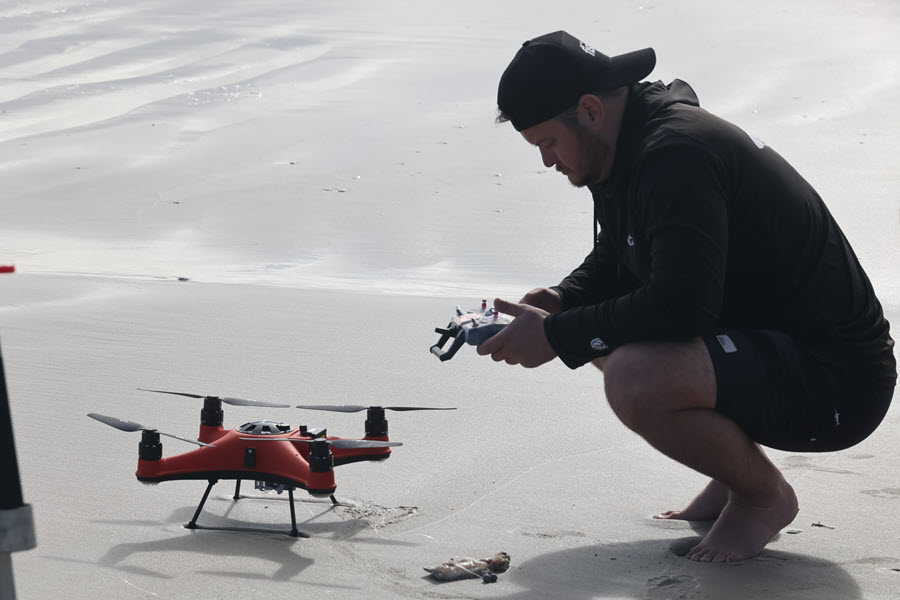
Before attaching any fishing tackle, familiarise yourself with Civil Aviation Authority rules and the operating procedures for your particular drone.
The release mechanism
Once you’re comfortable flying the drone unloaded, it’s time to carry the all-important fishing rig! The payload-release system is the connection between the aircraft and the fishing rig. If adding an aftermarket release mechanism, ensure it is approved for the aircraft or one specifically confirmed as compatible by its manufacturer. It should attach securely, remain clear of propellers and sensors, and release the payload reliably without putting excessive strain on the airframe. Follow the release-system manufacturer’s instructions for attaching the mechanism and routing the fishing line, and make sure you’ve configured the drone’s settings to effectively operate the release.
Dedicated fishing drones will feature in-built payload-release mechanisms and dedicated functionality on your controller, making the release process much simpler.
Whatever the release mechanism, it’s worth considering using a safety release clip as an intermediary between your rig and the drone’s payload-release mechanism. These tension-based release clips prevent your drone from being pulled back/tangling with your rig in the event of a spool jam/overrun on your fishing reel, snag, weight overload, or an unintended seabird collision with your line. They also act as a mechanical backup if the payload-release mechanism jams or the electronics/signals fail.
Before each session, inspect the payload-release mechanism for sand and salt deposits, and ensure it is operating freely.
Rod and reel (or winch) set-up
There’s plenty of flexibility when it comes to rod and reel, or winch, set-ups for drone fishing. For those who simply want to get a simple rig just beyond the breakers, a standard surfcasting rod and reel spooled with light monofilament or braid is sufficient. However, if you want to take many baited hooks out half a kilometre or further offshore, an electric reel with heavy, low-stretch braid and an appropriate rod, or an electric winch, are probably the best options.
Whatever your set-up, the fishing line needs to run freely from the reel as the drone carries the rig offshore. Before launch, check that there’s enough line capacity for your intended distance, the line is smoothly laid on the reel, and the drag or spool tension is set to prevent uncontrolled overruns. If using a spinning reel, it can often be safer and more controlled to fly baits out with the bail arm down and a very loose drag setting rather than having the bail arm open. Too much tension can affect flight stability or pull the aircraft off course; too little control can produce overruns or slack line issues on the ground.
Fishing rigs
For general beach drone fishing, a simple ledger or dropper rig adorned with circle hooks is typically the most practical approach. A sinker holds the bait near the seabed, while one or more hooks are positioned above it. A pulley-style or clipped-down rig may be great for surfcasters, but any arrangement carried by a drone must be immune to tangling with the propellers.
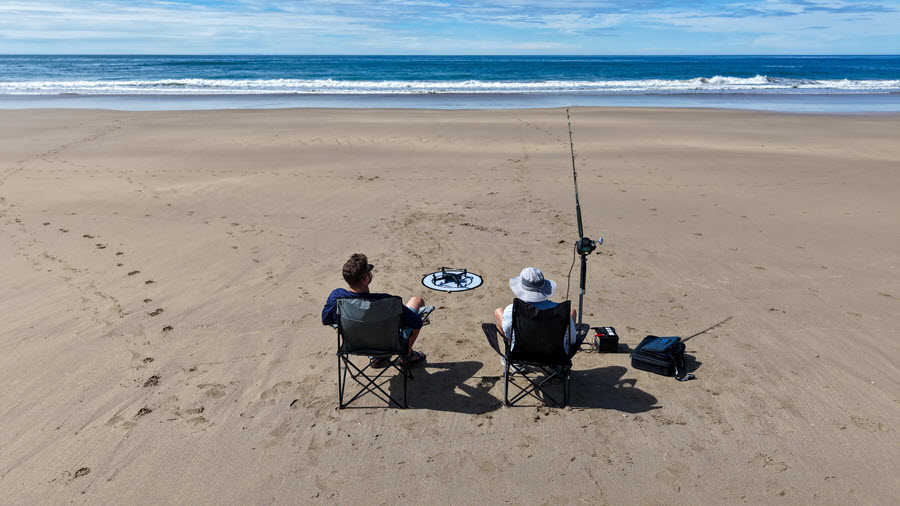
If you want to take many baited hooks out half a kilometre or further offshore, an electric reel or winch is the best option.
Keep the rig streamlined. Excessively long dropper trace branches and too much bling create more in-flight drag and tangling opportunities. The number of hooks on your dropper depends on your rod and reel set-up. Two to three is good for a surfcasting set, while you might want to set five or more hooks if employing a dedicated fishing drone and an electric reel. Although I don’t suggest flying out this many hooks unless you have a powerful drone, remember that the regulations allow a maximum of 25 hooks on a setline in New Zealand. Hook size should reflect the bait used and intended target species, but erring on the smaller size is best for payload consideration.
The right sinker
The sinker must be heavy enough to hold the rig at the desired fishing distance and depth, but its weight also contributes to the aircraft’s payload.
A sinker that is too light may allow the bait to drift with the line weight due to current or waves, while an unnecessarily heavy sinker adds weight without necessarily improving the presentation. On sandy beaches, a suitable breakout sinker may help hold position in the wash. On deeper or less turbulent ground, a streamlined sinker without spikes may be more appropriate. For a short flight drop on surfcasting gear, a 3-4oz sinker is about right. For a longer drop with five or six hooks, 6-10oz is probably better.
Bait selection
Compact, well-secured baits are typically more useful than an oversized bait that creates excessive drag or makes the payload difficult to control. Fresh is always best, and good options that hold on the hook well include mullet, kahawai, squid, and, if really focused on targeting snapper, octopus. Pilchards and skipjack tuna, whilst attractive baits, will not last as long, so secure such baits firmly with bait elastic where appropriate. Remember that the number of drops achievable in a session is limited by drone battery capacity and that your baits may be soaking for quite some time before retrieval.
Where to fish
Long, sandy beaches are often the easiest places to conduct drone fishing. They provide room for take-off and landing, relatively unobstructed sightlines, and plenty of opportunities to explore different distances offshore. Be considerate of other beach users. Avoid operating close to swimmers, surfers, other anglers, and wildlife like seals or gannet colonies!
A drone’s camera can be a valuable tool to help identify likely fishing spots. Look for deeper channels beyond the surfbreak running parallel to the beach and areas where waves break differently from the surrounding surf. These features can concentrate prey items and attract predators. An incoming tide can bring fish closer to shore, while the changing water level may alter the position of gutters and sandbars. A drone can help you reach a promising channel beyond the breakers, but local knowledge and observation remain invaluable. For instance, an accumulation of tuatua shells in the intertidal zone can reveal a healthy shellfish bed just offshore. The predators won’t be far away!
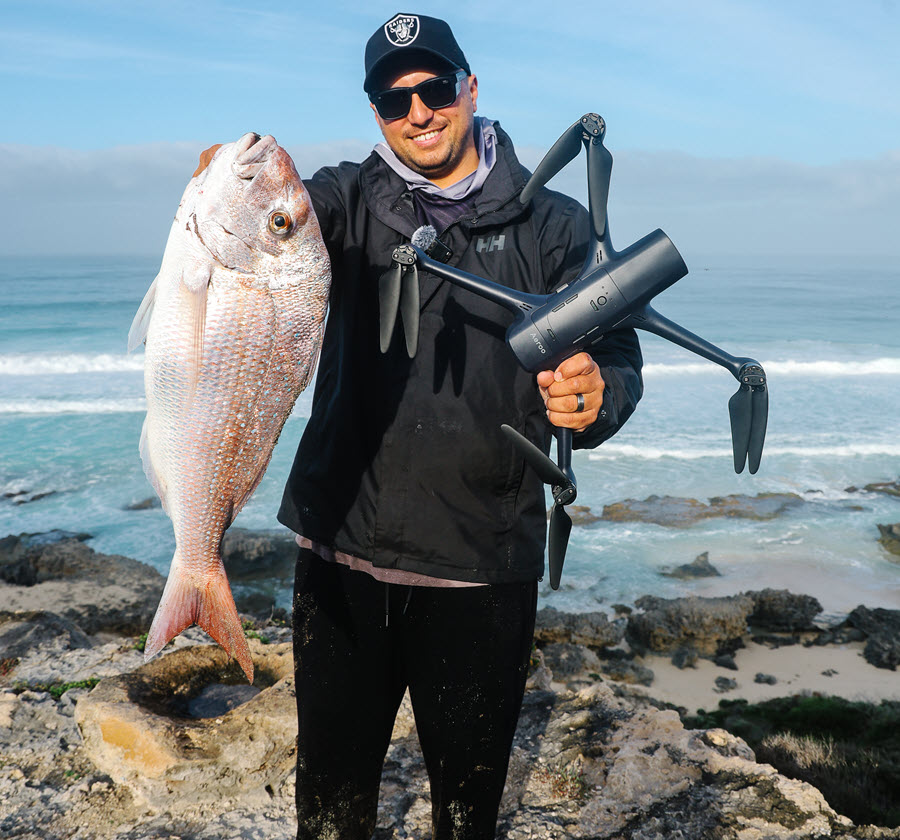
Rocky headlands and reef margins can offer great opportunities to target snapper, trevally, and other species like blue moki, but they introduce additional hazards.
If fishing further out to sea, nearshore features become less important, but having a geez at the local chart can help you identify the desired depth you’ll be fishing.
Rocky headlands and reef margins can offer great opportunities to target snapper, trevally, and other species like blue moki, but they introduce additional hazards. Strong currents may sweep a bait away from the intended location, while submerged reefs can snag sinkers and traces – not ideal when you have hundreds of metres of mainline out! Wind turbulence around headlands can also make flight less predictable.
Where possible, use charts, local knowledge, and visible shoreline features to identify suitable ground before launching. Avoid flying behind headlands or other obstructions, and ensure the drone remains within the applicable visual-line-of-sight requirements.
Estuary mouths and harbour channels can be productive fishing spots, although such locations can also present greater operational risks, including passing vessels, moorings, and controlled airspaces.
In a nutshell, before choosing a launch site, consider both the fishing opportunity and the aviation environment.
Choosing the right distance
This is probably the hardest choice a drone fisher faces! There is little value in sending a bait 500 metres offshore if the fish are feeding just beyond the breakers. If fishing a new spot, a series of controlled drops at different distances can help establish where fish are feeding. Record the location, tide, time, bait, and results so that successful patterns can be repeated.
Hooking and landing fish
Detecting a bite, hooking, and landing fish from several hundred metres offshore can be a very different proposition from one hooked within casting range. A long line means there may be significant delay when detecting a bite or setting the hook. Braided line helps reduce stretch, but wind bow, waves, and current can still mask subtle bites. It’s best to keep the line as tight (without pulling the breakaway sinker out) and perpendicular to the beach as possible when soaking baits in order to detect bites.
Once a fish is hooked, maintain steady pressure and avoid excessive drag settings. If you’re fishing an electric reel, avoid the temptation to rip the fish in as quickly as possible – such an approach can pull the hook out. Be prepared to move along the beach to improve the angle of retrieval, too.
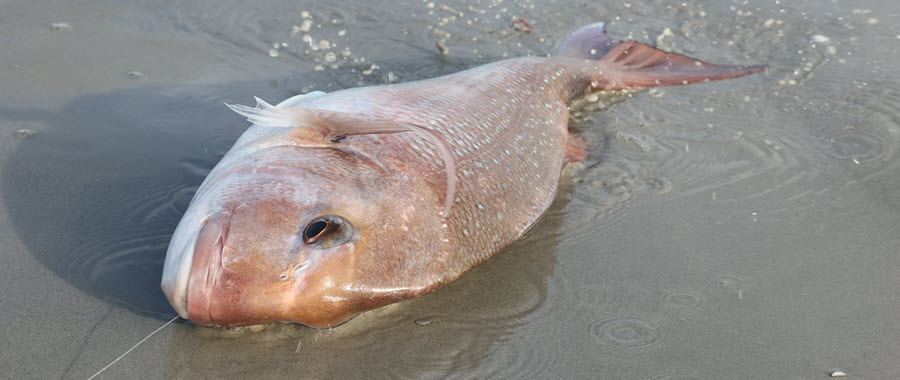
A nice snapper sliding up the sand makes the time and monetary investment worth it.
Knowing when not to fly
New Zealand’s coastal weather can change rapidly. A calm beach at launch may become a difficult flying environment when a front approaches, a summer afternoon sea breeze strengthens, or gusts swirl around headlands. A drone’s advertised wind-resistance rating should be treated as a limit under specified conditions, not as a recommendation for routine operation.
Avoid launching when thunderstorms, squalls, fog, or deteriorating visibility threaten the flight. Rain and sea spray can damage electronics, and wet propellers or contaminated sensors may compromise operation. The surf itself is another hazard. Sand and salt can damage aircraft componentry and electrical connections. Use a clean, stable launch area, keep the drone high enough away from breaking waves, and follow the manufacturer’s advice on wet-weather operation.
Maintenance
Saltwater exposure is one of the biggest long-term threats to coastal electronics. Even without a whoopsie, salt spray can accumulate around motors, fasteners, and battery contacts.
After each session, inspect the aircraft, release mechanism, propellers, landing gear, and batteries for damage or corrosion. Remove sand and debris using the method recommended by the manufacturer. Do not rinse anything with water unless the manufacturer specifically permits it. Store batteries according to the manufacturer’s instructions, away from excessive heat, moisture, and combustible materials. And always transport both the drone and batteries in a secure case to avoid any damage.
Getting the most out of drone fishing
The real advantage of drone fishing is the ability to place a bait accurately, repeat a productive deployment, and explore water that would otherwise be difficult to reach from the shore. Start with manageable flights, straightforward rigs, and familiar beaches. Learn how the aircraft behaves with a realistic payload, understand the way wind affects delivery, and develop a consistent pre-flight routine. Keep notes on successful locations, tides, bait choices, and conditions so each session builds on the last. Above all, treat the drone as an aircraft first and a fishing tool second.
Get these fundamentals right, and drones can add a valuable new dimension to your fishing… or even become your preferred fishing method!
Pre-flight checklist
- Check local airspace, flight restrictions, and fishing rules
- Assess wind, gusts, surf, visibility, and forecasted weather
- Inspect drone, propellers, motors, and release mechanism
- Confirm battery condition, charge, and return-to-home settings
- Verify drone calibration, GPS home point, and controller connection
- Ensure rig, sinker, and baits are easily within payload limits
- Clear the take-off and landing area of people and hazards, and ensure the fishing rig is not in a position to tangle with the drone on take-off
- Confirm the reel’s free-spool or drag settings and line-lay to ensure it runs freely without snagging
- Set a conservative flight plan that will maintain visual contact and ensure a safe battery return margin
- By Nick Jones
Seahorse Pegasus
Designed and hand-built in Tauranga, the Pegasus drone was developed to meet the needs of the Kiwi fisher, drawing on Seahorse’s beach-fishing experience. The Pegasus is an easy-to-use, efficient drone that can fly up to seven hooks up to 1,000 metres out to sea. The carbon fibre frame and top-of-the-line electronics deliver the performance and reliability you expect from Seahorse. The Pegasus uses components and firmware from the drone industry. No calibration is required, and GPS control lets the fisher focus on fishing. Built-in safety features make the Pegasus user-friendly, with audio and visual warnings and messages. The Skydroid app keeps the pilot informed. The Pegasus matches perfectly with an electric rod and reel.
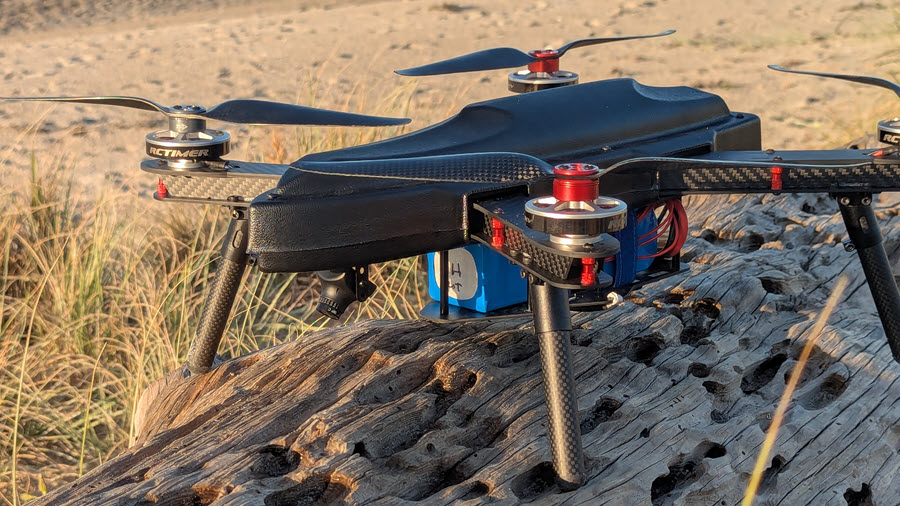
CutaCopter Trident BOSS+
The Trident BOSS+ fishing drone is a large, powerful drone that puts you in control of how you fish. It can pull 25 hooks out to 1,000 metres (or more) or a large 4.5kg bait over a shorter distance. The Trident BOSS+ can handle strong winds (25+ knots) and bad weather. It is waterproof (IP67) and built to withstand rain and the salty coastal environment. The Trident is the culmination of 15 years of fishing drone development, using advanced flight controllers, built-in safety features, and GPS-controlled flight modes to make flying as easy and safe as possible. It works with the Seahorse Drone winch, which can pull 25 fish in from 1,000 metres.
Visit Seahorse.nz for more information, or call Seahorse on 07 543 0266 for more details.
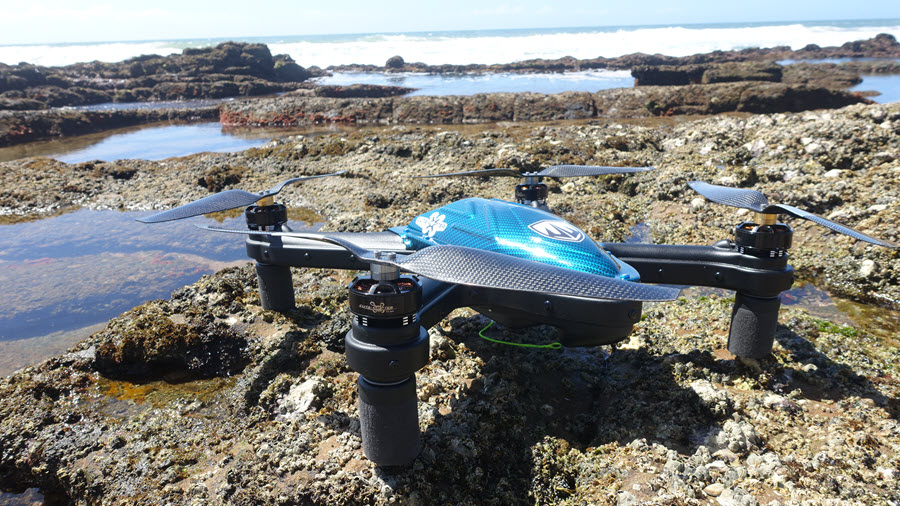
Condor Dedicated Fishing Drones
A New Zealand Brand | Since 2018
SIMPLE. POWERFUL. RELIABLE.
Purpose-built for fishing, CONDOR drones combine powerful performance with simple, reliable operation.
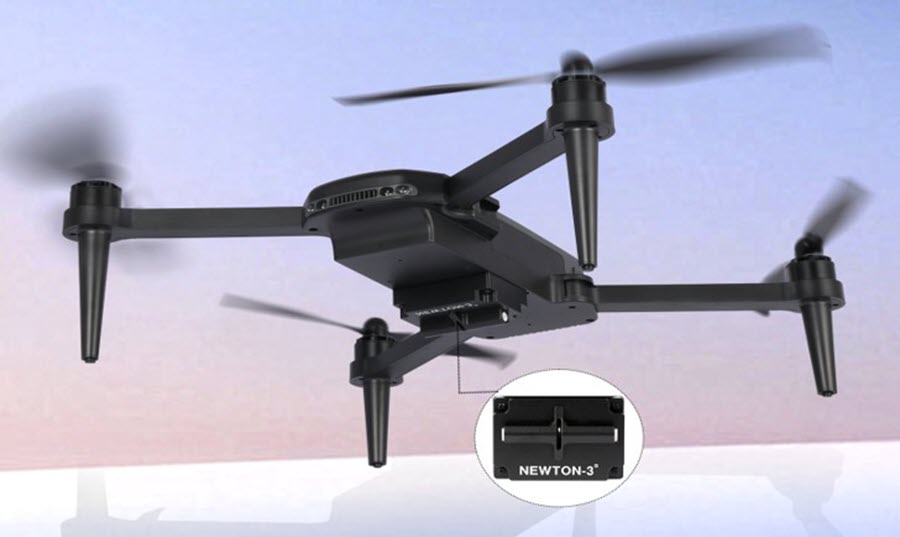
B2000 SERIES – Affordable, easy-to-use fishing drones featuring NEWTON3® bait release technology.
CONDOR PRO – Our premium fishing drone, built for greater lifting power and performance.
WHY CONDOR?
• NEWTON3® Simple Click & Failsafe Release
• One-Press AUTO Bait Deployment
• Up to 3kg NEWTON3® Release Capacity
• Local NZ Service & Support
FROM NZ$1,099
Aeroo Atlas
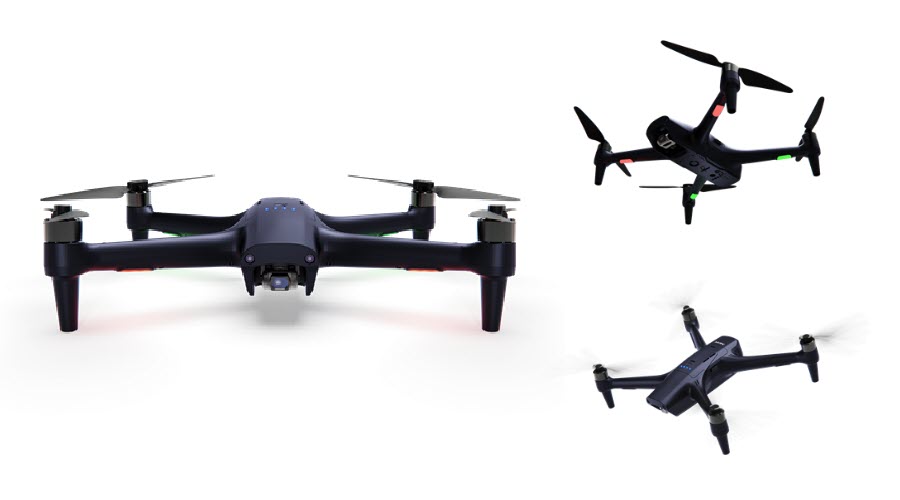
The Atlas is the next-generation fishing drone from Aeroo and the upgrade to the Aeroo Pro. It’s built for one job: getting your bait to the gutter, reef edge, or workup sitting just past casting range.
Compared to the Pro, it carries twice the payload (2kg), flies longer, handles wind better, and adds optional obstacle sensing front and rear. New LED arm lights show which way it’s facing over the water, and a new polarising filter in every kit cuts the glare so the 4K camera shows you structure and fish before you drop. Tap a saved spot on the map and Drop Point Autopilot takes off, flies out, drops your bait, and comes back on its own. If it loses signal or runs low on battery, it flies itself home, and safety clips release your rig if it snags.
With local support and a warehouse in Auckland, the Aeroo Atlas is stocked by retailers right across New Zealand. Kits from NZD $1,899 at nz.aeroodrones.com/products/atlas
Popular Articles

Softbait Fishing - Part 1 - gear selection
John Eichlesheim writes an article about selecting the right equipment for softbait fishing... Read More >
Softbait fishing Pt 2 - tips and tricks
Techniques, tips and tricks of softbait fishing – getting the most from your soft baits.... Read More >

Surfcasting - setting yourself up
Gary Kemsley helps sort out the necessary gear for intending surf fishers.... Read More >

Squid - How to catch them
Squid fishing is a rapidly growing aspect of fishing - Paul Senior shares some hints and tips to get started.... Read More >
Fishing Reports Visit Reports
Raglan Fishing Report - 12/11/26
Big spring snapper. With the more settled weather over the last couple of weeks there’s... Read More >
Mercury Bay Fishing Report - 12/11/26
Snapper hit and miss. Most reports have been telling us it’s becoming more difficult to... Read More >
Northland Fishing Report - 12/11/26
The switch has been flicked on! Call it what you want, El Niño, global warming,... Read More >
Tauranga Fishing Report - 12/11/26
Snapper and kahawai in close. Again, we start on a positive note, with some nice... Read More >
Comments