Jetski Trip Planning & Safety
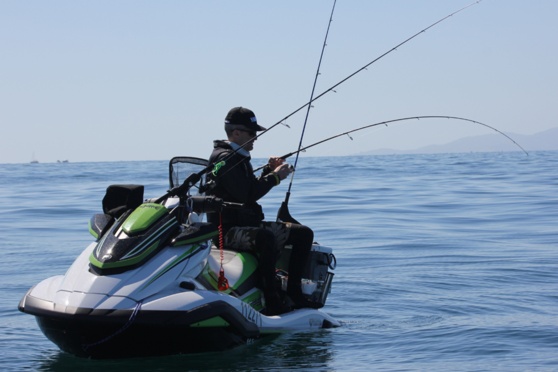
A jetski can feel very small out on the open ocean.
One of the most important parts of jetski fishing in New Zealand is understanding the environment you're operating in and planning accordingly. Weather, wind, swell, tides, currents, distance from shore, and your own experience all need to be considered before heading out.
Good preparation starts before the engine fires. Checking the forecast, understanding your fuel range, carrying appropriate communications and safety equipment, telling someone where you're going, and knowing when to turn around are all essential parts of responsible jetski fishing.
This guide covers the practical aspects of jetski fishing safety, trip planning, and preparing yourself and your machine for a day on the water.
The fundamentals
Water safety is paramount regardless of the craft you are in. For jetskis, a kill switch attached to the rider is non-negotiable. If you come off while underway, it’s critical the engine is switched off to give any chance of getting back on. It’s not a bad idea to carry a spare kill-switch lanyard, too. A high-quality lifejacket from a reputable manufacturer is another essential. Foam vests are generally considered the best option due to their immediate buoyancy in the event of a fall and the fact they provide more protection to the chest area in the event of an impact.
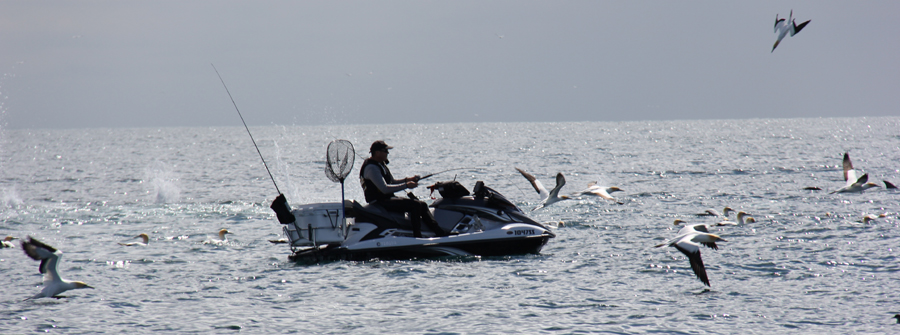
Other options include inflatable lifejackets and these come in manual or auto-inflating versions. An auto-inflate model has the obvious advantage of full functionality in the event the rider is hurt or unconscious after a fall, but it’s worth noting some countries specifically prohibit inflatable lifejackets for jetski riders as they don’t provide instant buoyancy or impact protection. If you are wearing an inflatable, ensure the mechanism is properly maintained, fully functional, and checked regularly.
Legal requirements in some areas at the time of writing vary. Some regions have by-laws requiring any occupant on watercraft of 6m or less to wear a lifejacket while underway. Irrespective of any legal requirements, riding a jetski without wearing a lifejacket would be stupidity in the extreme. Jetskis must also be registered in some New Zealand regions and display the six-digit registration number at least 90mm in height and visible from 50m.
There’s a reasonable chance you may be on your own and not have others in your immediate vicinity, so constant vigilance on your ski is critical. While no one is planning to end up in the water, accidents do happen, and you must be prepared. Some practice on general ski riding is a good idea before you go too far afield and it pays to be familiar with how to get back on the ski if you do end up in the drink, as with a fish bin on the stern, that isn’t an easy option.
If you’re out early morning/late evening, then you should install navigation lights. Railblaza have a handy and economical nav light LED safety pack that is easily installed without having to drill holes in your ski, or you can go the whole hog with fixed-mounted nav lights which are hard-wired with illuminated glove box-mounted waterproof switching. There are also other small battery-operated LED options that can be mounted at the end of handlebars or elsewhere on the ski (Railblaza or Absolute Marine) or flexible LED strips designed to stick onto the bow/sides and rear of the ski. They are bright and have a low power draw but require wiring to a 12V accessory circuit.
Communication options
It is essential to have several forms of communication as there is no guarantee that any one of them will be effective in any particular situation. A mobile phone securely attached to your lifejacket with a lanyard and in a waterproof case is generally the easiest and quickest way to get assistance when you require it. Constraints around mobile phone usage in an emergency include network coverage and ensuring that the phone is kept dry and usable. There’s no question that satellite network options now being offered by leading providers are a significant step forward when it comes to mobile coverage; however, to be fully operational, it's no use if the batteries are flat or the phone is wet.
A VHF radio is a necessity and the two options are a handheld unit or one fixed to the ski. Experienced jetski anglers have a handheld VHF securely fastened to their life vest so in the event you end up in the water and unable to get on the ski for any reason, you can still call for help. Ensure you get a waterproof model from a reputable brand, with a decent transmitting range so you are able to contact other vessels in your area or Coastguard on Channel 16. Prior to leaving your launching area, you should also log a trip report with Coastguard. This can be done via your VHF radio and is a good time to ensure it's in full working order and fully charged.
The alternative is via the Coastguard app, which only takes a moment. Trip reports should include planned destination and an estimated time for return together with your call sign and POB (passengers on board). You should have a VHF operator’s licence and a callsign. There’s an online course available to acquire a Maritime VHF Operator’s Certificate, which will ensure you can confidently and competently lodge calls and is a legal requirement for general VHF use.
The other investment in your safety is a Personal Locator Beacon, or PLB, attached to your lifejacket for any situation where neither your mobile phone nor VHF are effective. Activating a PLB will initiate a chain of events for rescue that will progress until you are located, so it should be used as a last resort where other communications have failed and the situation is life-threatening. Of course, it pays to be familiar with how to operate a PLB before heading out – it’s no use trying to figure it out in an emergency.
Other safety equipment
Installing a dual battery set-up gives peace of mind from any unexpected main battery failure or long-period current draw from electronics. Running a trickle-charger while your ski is not in use is best to keep voltage levels topped up. Other safety equipment can include flares, a basic first aid kit, and a few essential items to make up an emergency repair kit. Items that might be carried in an emergency repair kit include tape (both duct and electrical), cable ties, a multi-tool such as a Leatherman, crescent, side-cutters, Allen keys, headlamp, and a spare rope. Side ropes are also useful for tying up at pontoons or to other vessels.
Clothing and accessories
Catering to the conditions when it comes to clothing is the smart move. Take into account that the wind-chill factor can mean that cracking along at 40 knots on a warm summer’s day can be a lot cooler than you might have imagined. And a frosty winter day can be a bit like a trip to the Antarctic! Several layers and a wind/waterproof top layer work well for all seasons and good polypropylene and warm underlayers like merino will help keep you toasty warm. Light Gortex or other waterproof top layers complete the kit and over a day, you can always remove a layer or two as temperatures rise. Shorts are OK for warm summer days but long pants are preferable in colder weather.
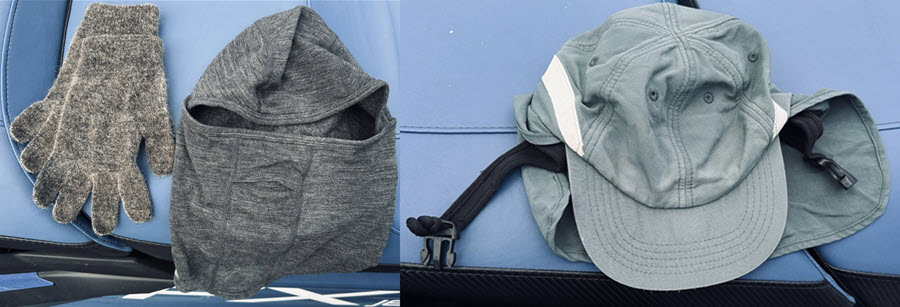
Some light gloves are a must and you’ll find those a useful addition even in summer. Possum/merino mix gloves are light and extremely warm. Sun protection is a must regardless of the season as there’s no shelter on a jetski. A peaked cap with flaps to cover your neck and ears is recommended and there are caps available with a neck strap that can be worn while you’re underway. A headtorch is a good option for early starts or later finishes and don’t forget the sunglasses – preferably with a floating retainer strap.
Footwear options include something light but warm and a thin pair of light merino socks with neoprene dive boots on top for colder weather or crocs/jandals are a reasonable summer option. You will undoubtedly get wet feet from launching and throughout the day, so think about options that will work in those conditions. Seaboots are a poor choice as these can fill with water and become heavy and make swimming difficult if you come off.
Trip planning and weather
Step one in trip planning is checking the weather and ensuring the forecasted conditions are appropriate for the day, so check the wind direction, wind speed, swell, and sea state for your intended trip. Are the areas you plan to fish sheltered or exposed, and what’s it going to be like actually getting there? As forecasting systems become more accurate, the risk around unforeseen gnarly weather is considerably less than it used to be. You should allow some margin for error, particularly when the weather windows are short and being measured in hours rather than days.
Swell and factors like wind direction against the tidal flow can turn a pleasant ride into a complete soaking, compromising safety, so it’s important to understand tidal flows for the areas you are going to fish. How the wind strength and direction interact with the tidal flow can potentially create conditions that are significantly more challenging than what you may have expected based purely on a wind forecast.
Apps that are worth considering to assist with planning include Windy, Predict Wind and for New Zealand conditions, the Coastguard Nowcasting app provides real-time wind strength and direction for a considerable number of locations around the country. Nowcasting provides an up-to-the-minute cross-check on how the forecast is tracking and is highly recommended as part of your planning process. If the weather is going to turn to custard earlier than forecasted, Nowcasting might just give you a clue.
If you are planning to fish considerable distances offshore, trip planning becomes more critical and that planning should always start with weather and general conditions.
Before you leave home checklist
- Ensure your battery or batteries are fully charged, and the terminals are tight and protected from corrosion (e.g., with CRC Soft Seal). Modern smart chargers like C-Tek support AGM, Gel and lead-acid battery charging. Jetski batteries are small (typically 14–30 Ah) and a 0.8–2A charger is ideal for general use. Routine charging keeps your battery in good condition, and look for a charger that doubles as a battery maintainer where it switches to a low-current float or periodic top-up mode once fully charged.
- Check your engine oil level.
- Make sure your jetski is secured on trailer with winch rope, safety chain, and rear tie-downs.
- Ensure all essential items are packed, stowed, and secure.
- Double-check that trailer tyre pressures are correct and lights/indicators are functional.
Offshore preparation
Longer offshore trips require appropriate preparation and planning.
Follow the forecast to ensure the conditions are suitable. Allow for variations in the forecast such as fronts arriving earlier than expected. Your ski needs to be mechanically sound, well-maintained, and seaworthy. An annual service is an excellent investment in your personal safety and is recommended regardless of the distances you might travel.
Calculate the approximate distance of your trip and ensure you have sufficient fuel for the journey, plus spare. Use your chart to plot the destination from your launching point, if you haven’t marked it previously, and you’ll need to do this to calculate estimated fuel usage anyway. It’s handy to have a backup to the fishfinder/chartplotter on your ski – a phone with up-to-date charts such as the Navionics boating app is a good option.
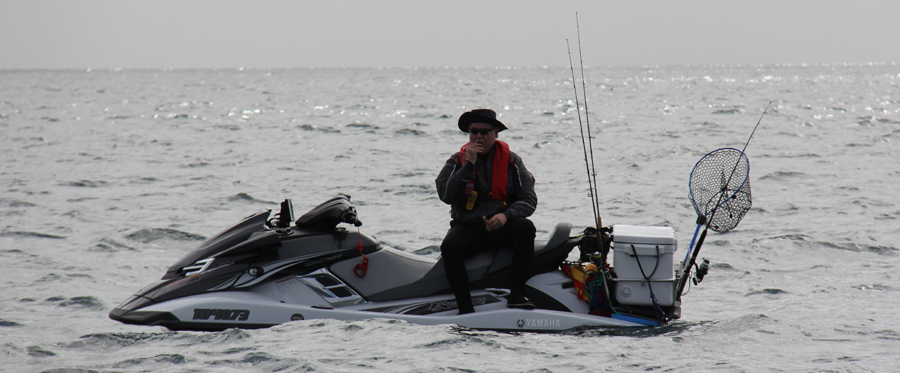
Take into account that some of that distance may not be covered at optimal fuel efficiency speeds, too. Jetskis are generally more fuel efficient at a displacement speed and on the plane at a modest cruising speed, but the best idea is to get some idea from previous trips and based on how you normally ride. Headwinds, ocean currents, rough seas, and load all affect fuel consumption, and a good rule of thumb is to allow for 1/3 of your fuel to get to the destination, 1/3 to get home, and 1/3 in reserve.
As an example – a 60L main tank plus two 15L reserve tanks gives a total fuel onboard of 90L. One third of that is 30L and if you’re getting 2.5km/L then a reasonable offshore destination range would be around 75km or 40 nautical miles. Running out of fuel simply isn’t an option!
Additional fuel should be carried in a suitable approved container and secured well to the ski, and not in the front storage area of any jetski where it could leak/spill and give you grief. Also consider any potential effect of extra weight on the ski's trim or handling.
Pre-launch checklist
- Fuel tank fill and fuel cap secure.
- Car keys stowed safely in waterproof bag or compartment.
- Bungs in place.
- Jet intake and impeller clear.
- No mechanical or gauge warnings when ignition turned to ON position
- Lifejacket is on. • Cellphone is charged and tethered to lifejacket.
- Knife/s in sheaths and tackle is stowed.
- Appropriate clothing, sunscreen, sunglasses, hat and face buff.
- Water and food.
- Rods/reels tethered in rodholders and reels covered to minimise salt exposure.
- First aid and emergency repair kit.
- No loose ropes, anchors or drogues.
- All storage compartments closed/latched.
- Check Nowcast if available for your area.
Crossing a bar?
Crossing a bar, harbour entrance, or rivermouth of any description has risks which are obviously greater in small craft than those with a much longer waterline length. In particular, our West Coast bars are constantly changing, and very susceptible to changing tidal flow, swell height, and wind conditions. Attending a bar crossing seminar, which are frequently provided by Coastguard, is highly recommended, as is talking to locals about current bar depths and conditions.
Check the bar immediately before crossing, secure all equipment and hatches, wear the PFD, have VHF and PLB immediately accessible, and lodge a bar crossing report. Coastguard notes that a bar report is different from a normal trip report because it places you on a short SAR watch and must be closed after you have safely crossed.
The bottom line is if you are in any doubt, then don't go out. It's that simple and your life is not worth a few fish for dinner - there will be other days.
On water towing considerations
If you’re unlucky enough to break down out on the briny, there are a few points to note about getting a tow on a jetski. Towing a jetski risks water being forced backwards up into the engine via the jet pump, with water ending up in the engine’s cylinders and likely causing major damage. Towing at a slow speed is generally an option, but it pays to be familiar with the particular requirements of the brand and model of ski you’re riding. It may be an option to clamp the exhaust cooling hose on a Yamaha ski and lock water flow off if you know how to do it and have the equipment.
If you are being towed, ensure the tow-rope has sufficient distance so the ski can't collide with the towing vessel and remember you’ll have next to no steering on the ski. Make sure the towing point is the winch hitch on the front of the ski.
Common questions
What should I check before a jetski fishing trip?
Weather, wind, swell, tides, currents, distance from shore and your own experience. Check the forecast, know your fuel range, carry comms and safety gear, tell someone where you are going, and know when to turn around.
Why is a kill switch essential on a jetski?
If you come off while underway, the engine has to stop or you may not get back on. A lanyard attached to the rider is non-negotiable, and a spare lanyard is worth carrying.
What lifejacket should a jetski fisher wear?
A high-quality lifejacket. Foam vests are generally preferred because they float immediately and protect the chest on impact. If you use an inflatable, keep the mechanism maintained and functional.


Sunday 29 November 2026
Major Bites
 -
 -
Minor Bites
 - -
Monday 30 November 2026
Major Bites
- - Minor Bites
- -