
Finding & Catching Fish from a Jetski
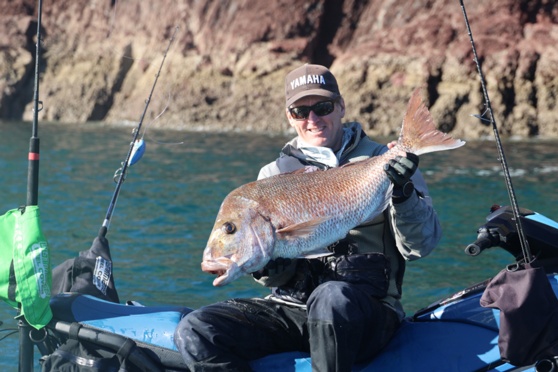
Having a well-equipped jetski and a plan around techniques and target species is only half the equation. The other half is finding the fish!
And while modern electronics have transformed the way we fish, there's still no substitute for learning to read the water. The speed and manoeuvrability of a jetski can be a major advantage when searching for productive water. With modern fishfinders and chartplotters, anglers can cover ground quickly, investigate structure and identify changes in depth, current and bottom composition that can hold fish.
But there is much more to finding and catching fish than simply watching your sounder. Understanding fish habitat, recognising signs such as bait schools, birds and surface activity, and assessing how seasons, wind, tide, current and water temperature influence fish behaviour can transform your results.
Perhaps the biggest advantage of fishing from a jetski is that you're not tied to one spot. If the fish aren't there, you can move. If you spot a promising piece of structure, you can investigate it. If the birds start working a kilometre away, you can be there in minutes.
This guide gets into the practical business of finding and catching fish from a jetski, including how to identify productive areas and times, read the ocean and your electronics, and use a well-setup ski like the Yamaha JetFish to your advantage.
Understanding habitat
Fish don't generally distribute themselves randomly. Different species have preferred habitats and seasons, and understanding what these look like is one of the most valuable skills an angler can develop.
Snapper, for example, can be found across an enormous range of habitats, from shallow rocky wash and sand flats through to deep foul and offshore structure. Kingfish are often associated with warmer water and pinnacles, reefs, current lines and bait schools, while hapuku and bass are closely linked with deeper rocky structure.
The first step, therefore, is learning to identify the features likely to attract the species you're targeting.
Narrowing down the options
The ocean is a big place, so it pays to focus your efforts on the most likely fishing areas. A good chart is one of the most valuable fishing tools you have. Before launching, spend some time looking at your local area and identify likely features. Changes in depth are particularly important. A large area of relatively flat bottom interrupted by a sudden rise, dropoff, or isolated pinnacle is often worth investigating. These features can concentrate bait or create current, which in turn can attract predators.
Reefs and isolated pinnacles are classic fish-holding structures. A pinnacle rising from deeper water creates an obvious ambush point for predators and can disrupt current, while the surrounding structure provides habitat for smaller fish and invertebrates.
Don't assume the fish will always be sitting directly on top of the structure, however. Depending on current, tide and bait movement, they may be suspended off the structure – often on the side where the current is hitting.
This is where your sounder becomes particularly useful. Make several passes over a mark rather than dropping a line at the first sight of structure. Look at the depth, shape of the bottom, direction of the current and, most importantly, whether there are bait or fish marks present.
Transitions can be just as productive as obvious structure. A rocky reef bordering a sand flat, the edge of a channel or a sudden change in depth can create feeding opportunities. Predators often patrol these boundaries because baitfish and other prey use them too. These are particularly good areas to prospect with softbaits. A jetski's ability to work shallow water quietly is another advantage here. You can fish right into shallow wash zones and along reef edges that may be difficult to access with a larger boat.
Channels can funnel both water and food, making them natural fish highways. Where current accelerates around a point, island, reef or channel entrance, baitfish can become concentrated, and predators may gather to take advantage. Learning to identify these current lines – both on the chart and on the water – is a powerful skill.
Satellite images are particularly useful for identifying shallow reefs, sand patches, channels, rocky wash shorelines and areas of colour change that may not be immediately obvious from a standard chart. Use satellite imagery to build a shortlist of areas worth investigating, then let your sounder and your senses guide your ski when you’re on the briny.
Find the bait, find the fish
One of the simplest rules in fishing is also one of the most reliable: Find the food and there's a good chance the predators won't be far away.
Bait schools can show up clearly on a modern fishfinder, but they're often easier to spot with your eyes first. Watch for working birds such as terns and diving gannets, and surface disturbances indicating baitfish or predatory movements. A flock of birds isn't automatically a guarantee of fish, but it is certainly worth investigating. Gannets diving repeatedly into one area (a.k.a., a workup) is a very promising sign.
If they're actively feeding rather than simply travelling or sitting on the water, there's a good chance something has pushed bait toward the surface. That might be kahawai, kingfish, tuna or other predators – and usually snapper will be underneath a workup picking off injured baitfish. In areas like the Hauraki Gulf in springtime, big workups are a daily occurrence, and chasing gannets around on a fast-moving ski is a heap of fun!
Right spot, wrong time
Fishing is a mysterious game, and one of the biggest mysteries is when fish will be on or off ‘the bite’. Often, a period of slow fishing will be encountered during the day, irrespective of what spot you’re fishing. Fortunately, there are a few guidelines to help predict when the fish will be hungry!
Dawn and dusk are most anglers' favoured times to drop a line, and it is widely regarded that fish feed hard as the sun is rising or going down. Sunrises and sunsets mean dim lighting for predatory fish to take advantage of, and also signal the ‘changing of the guard’ in terms of species and, consequently, the first or final chance for species to feed for the day or night – akin to humans’ eating dinner or breakfast.
Fish like snapper can be notoriously tricky to tempt during the middle of the day in summer; the fish are there, but they can be hard to catch. This may be related to spawning activity (sex > food), the water being too warm to sustain extended feeding activity, or simply the longer days spreading feeding opportunities out over a longer period. Perhaps it is simply the fact that our boats, terminal tackle, and leaders become more obvious in the full light of day, and predatory fish use the shallow light angles to their advantage.
The tide can completely change a fishing spot. A reef that looks unremarkable at slack water can come alive when current starts running across it, or when a swell pushes in and starts dislodging food. Conversely, a productive area may shut down when the tide changes direction or conditions are calm. Record what the tide and conditions were whenever you catch good fish. Over time, those observations become valuable information about which spots work best for certain conditions.
There’s another useful dataset to consult – bite times. Bite times are based on the solunar calendar, which considers the moon’s position relative to the Earth, and some keen Kiwi anglers plan their trips around these timings. There’s also a fair amount of scientific evidence to back up the bite times theory. You can look up the upcoming bite times for your area here.
One of the hardest lessons for any angler is knowing when to leave a spot. It's easy to convince yourself that the fish must be there because you've caught them there before. But conditions change – bait and predatory fish move with the seasons, and conditions always fluctuate.
If you've worked a spot thoroughly and there are no signs of life, don't be afraid to move. This is one area where a jetski really shines.
Fighting fish from a jetski
A jetski is surprisingly stable when you're positioned correctly, and modern fishing-oriented machines provide a remarkably capable platform for fighting fish. On a conventional boat, an angler may have to work around the bow, stern or gunwale to follow a running fish. On a jetski, a large, powerful fish will reposition the whole machine, allowing you to easily control line angle to stay on top of the fish, thus reducing the chances of getting busted off in reefs or structure.
Nevertheless, some aspects of fish fighting can become problematic on a ski. The old rule about avoiding high-sticking (lifting the rod too high in the air) is even more important on a jetski. When a fish gets close, resist the temptation to lift the rod vertically. Keep the rod at a sensible angle and use the reel and drag to do the work.
Be particularly careful with large fish beside the ski. A powerful kingfish or tuna can create considerable chaos in a very small area. Hooks, leaders, gaffs, nets, and fins don't mix particularly well on a small platform close to the water!
Care for the catch
So, you’ve caught a good fish and decided to keep it. Now, you must look after it properly to maximise its eating quality.
An iki-jime spike to the brain is a quick and effective way to dispatch fish. This is more humane than allowing the fish to suffocate and reduces struggling and stress. The heart continues beating reflexively for a period afterwards, so the catch can still be bled immediately after. Correct iking should show an initial flaring of the main fins, then complete relaxation of the mouth, body and eyes. If the fish you have just ikied is still flapping around in your fish bin, then you haven't done it properly!
Bleeding ensures cleaner fillets when you get to processing the catch, and you’ll note fewer dark bloodlines and spots in the fillets. Blood contains iron and nutrients that encourage deterioration of the flesh. It’s well documented that bleeding improves the longevity of storage, and a container that keeps the fillets above any draining liquid is also recommended.
Bleeding is most suited for highly vascular fish such as kingfish, trevally, and kahawai, but still improves other inshore species like snapper and gurnard.
To bleed your catch, lift the gill cover and cut through the gill arches on one side, close to where they join underneath the throat or cut the throat latch. Place in seawater or a loose ice–seawater slurry immediately after cutting will ensure the catch is bled thoroughly, rather than clotting.
Filleting at sea is never a good idea (and particularly difficult on a jetski!) as the flesh needs to set for optimal eating and storage. For best eating quality, most fish species should be chilled for 12-24 hours prior to filleting. Filleting the morning after a day on the water is a good option provided the catch is well iced. Removing it from a slurry and packing in flaked salt ice is best practice for longer storage.
Common questions
How do you find fish from a jetski?
Read the water as well as the sounder. Look for bait schools, birds and surface activity, and use a fishfinder to check structure, depth, current and bottom.
What is the advantage of a jetski when the fish are not there?
You are not tied to one spot. You can move to another piece of structure, or reach working birds a kilometre away in minutes.
Where do snapper and kingfish sit?
Snapper use a wide range of habitat, from shallow rocky wash and sand flats to deep foul and offshore structure. Kingfish are often on warmer water, pinnacles, reefs and current.
Continue Reading


Sunday 29 November 2026
Major Bites
 -
 -
Minor Bites
 - -
Monday 30 November 2026
Major Bites
- - Minor Bites
- - 
Fishing Reports Visit Reports
Canterbury Fishing Report - 26/11/26
Fresh and salt both delivering. December next week, to use a very cliché line, where... Read More >
Tauranga Fishing Report - 26/11/26
Mixed success. A varied report, as all local anglers seem to have different stories to... Read More >
Outer Hauraki Gulf Fishing Report - 26/11/26
Workups moving closer to the city. The Hauraki Gulf is starting to look increasingly fishy,... Read More >
Bream Bay Fishing Report - 26/11/26
Snapper action spreading out. Most of the sources contributing to this report were unanimous –... Read More >
Bay of Islands Fishing Report - 26/11/26
Fickle bite times. The snapper are still abundant in the Middle Ground area but the... Read More >
Raglan Fishing Report - 12/11/26
Big spring snapper. With the more settled weather over the last couple of weeks there’s... Read More >