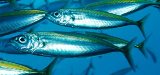
Not much, that's for sure - that's why I love presenting livebaits to kingfish using a balloon or float rig - it's great to get exciting glimpses of my quarry as they charge around after the tethered and franticly skittering live bait.
And judging by the number of balloons out behind boats and in front of land-based anglers, I'm far from alone in favouring this technique. However, it's also very apparent that few practitioners understand the full potential and versatility of this type of rig. Yes, they're good for holding baits up near the surface or away from the sea floor, and yes, they're useful for marking your bait's position, but there are so many other good reasons for using balloons and floats with your live baits.
Floats are ideal for smaller baits, especially in windy conditions, or if you need to cast out.
By smaller baits, I mean piper, kopapa (juvenile/half grown kahawai) and modest examples of the various mackerel species, including yellowtail, koheru and slimies. Herrings/sprats appear to be perfect candidates too, but I find they rarely attract a bite and only use them as a last resort.
So why not attach such baits to a balloon, as you would with bigger baits? Well, a fully inflated balloon possesses a lot of surface area and flotation, so small baits can be blown right out of the water if the offshore wind is too strong. Or, if it is an onshore wind, these same baits tend to be pushed back inshore or are prevented from swimming out from the rocks at all. And even if you do manage to get a kingfish bite, this same balloon buoyancy and surface-area pressure often causes the relatively lightly hooked baits to rip off the hook.
Yes, floats are the way to go with small baits, and luckily for us there are many different types and sizes available. I look for quite streamlined designs - usually called ‘turnips' and ‘torpedoes' - the size of a medium-sized lemon.
Floats should have a hole lengthwise through the middle so they can be threaded onto the mainline above a short trace. They need to be able to slide along the mainline until they hit the adjustable ‘stopper knot', which is tied on the line to prevent the float sliding any further. This knot allows anglers to position a bait quite deep down if desired, and when a fish is hooked, the float slides back down the line until it reaches the short trace's swivel, so the angler doesn't have to worry about trying to control the fish on a long trace at the last moment.
I also like the fact that these floats are streamlined and offer only moderate water resistance/floatation. This means they're dragged effortlessly through the water by quite small baits (so you can let them swim the float out for you if preferred), are little affected by wind (so the current or bait determines the float's position, not the breeze), and are easily pulled under the water by strikes, so there's less chance of baits ripping off the hook - or the kingfish feeling suspicious pressure and rejecting the bait. And should you want to cast (sometimes the presence of kingfish deters them from venturing away from the boat stern or rocks), no worries, as the very short trace makes this possible.
Even better, some heavy-duty plastic floats are hollow and filled with rattles, so every bob and jiggle produced by the live bait, or the ripples on the water, make a noise - great for attracting the curious kingfish. Additionally, some models feature reflective tape on their sides, imitating baitfish flashes - another trigger for predatory fish.
That's why Glitterbugs are my favourite floats - they possess all the above attributes and have a brightly coloured top, too, making them relatively easy to spot. Wish I knew who sells them now...
While searching for good-looking floats, you're bound to come across appropriately sized clip-on ball floats in two-toned colours. These do work (on a couple of occasions I have even had kingfish eat them!) and I like the idea of being able to clip such floats anywhere I want along the line. They come in a good selection of sizes, and I often use one of the very small models (the size of a walnut) to accompany my relatively weak-swimming piper baits, especially if they must battle a head-wind.
On the negative side of the ledger, these floats tend to be brittle (so don't drop them) and are prone to leaks, especially the cheap white and red ones (although it's possible to test them for leaks by unhygienically sucking around the joins!).
And, like all floats, they do have limitations - once a bait reaches a certain size it's able to drag floats underwater for long periods of times, defeating the purpose and being very bloody irritating. That's where balloons come in.
loons are great; because they can be inflated to different sizes, they are able to cover almost every eventuality and situation. For example, they will keep everything from piper to large kahawai and trevally away from the tackle-eating sea floor; make it much easier to keep track of livebaits; and can harness or compensate for prevailing wind and tidal conditions.
So let's look at these various attributes more closely. As already mentioned, there's nothing better than a balloon for attaching to a large live-bait's trace, especially balloons in garish colours such as pink, orange and red. Not only are these bright balloons easier to keep track of (so avoid white and blue - they're almost impossible to see), I believe they also draw the inquisitive kings in for a closer look. This is possibly because kings have got used to encountering similarly bright buoys marking many nautical and angling devices, including navigation buoys, moorings, nets, longlines, craypots etc. Some end up acting as mini FADs (fish attracting devices), with small fish sticking close to them for shelter, so kingfish instinctively check them out for potential prey.
The size of the balloon determines its role. A large balloon is generally used with big baits, not just to hold the bait in position away from the bottom, but also because the extra surface area will a) help sink the hook, and b) cause the balloon to snap away cleanly, especially if you're using something strong to attach it to the line/swivel, such as dental floss.
Or, if preferred, a well-inflated balloon can be used as a sail, so that the wind (or current) can take smaller baits further out to a better looking location or deeper water, and then hold it there.
Conversely, a smaller balloon, with its reduced surface area, allows baits to battle out against headwinds and currents more easily, and can be pulled under the water without bursting or breaking off - useful if you're low on balloons and floats. Slightly inflated balloons can also be used with smaller baits if you lack a suitable float.
The fact that balloons often alert us to the presence of predators by perhaps erratically zigzagging across the surface at high speed or burrowing half under the surface and trailing a foaming wake is another plus. Sometimes it's more like Custer's Last Stand all over again, with our colourful inflatable friend standing firm in the midst of hostilities, with hungry kingfish charging around it in foaming, crashing boils, while the desperately skittering kahawai tries to stay just in front.
On other occasions however, the take is almost a disappointment, with the first sign of a strike being the sight of your balloon gently wafting away in the grip of the breeze. If you see that, get over to your outfit quick - that ratchet's likely to burst into song at any second!
Whatever size balloon you use, much of its effectiveness is determined by the way it's attached to the live-bait rig. The most common method is to tie the inflated balloon to the trace's ball-bearing swivel (which is essential to the rig, otherwise anglers will suffer a twisted trace) - and it must be the ring connected to the mainline (or more trace), otherwise the swivel will not be able to turn, rendering it useless.
The materials and methods used to tie the balloon are many, but I stick to the tried and true, usually attaching my balloon via a short strand of dental floss. Don't make it too long or it will tangle around the swivel or the line. Three strands of cotton will also do the trick, but first test it for strength, since cotton can vary greatly.
I also like to use rod-binding thread, as it doesn't rot like cotton can - but again, test it first for strength, as the various brands and thicknesses have different breaking strains.
Once the balloon is attached and the bait's in the water, it pays to hold your kahawai tightly to begin with, as most try to charge away at a million miles an hour, often breaking the thread in their frenzy. And let me tell you, holding a thrashing kahawai at the water's edge with your gear way back up the rocks as your balloon sails merrily away is a very frustrating experience.
So let the fish reach the water and then hang on for a minute or so; the bait's initial burst of adrenalin soon dissipates, and you can then safely let the fish swim out.
Ironically, this same strand (or strands) of delicate thread is often indestructible when a kingfish tries to make off with your live-bait. Even large, well-inflated balloons are sometimes pulled underwater before reluctantly popping off, and with this amount of pressure occurring, I believe most kings are hooked at this point. Consequently, I have started using circle/re-curve hooks more regularly, as the reasonably steady pressure exerted by the balloon is perfect for setting them nicely into the corner of the fish's mouth.
My fishing buddy, Adam Clancey, likes them for this purpose, too, as well as for trolling, and doesn't do anything fancy when placing these hooks in the baits, simply scooping them through the bait's upper shoulder. He does alright, too.
However, I prefer a slightly more complex method, after seeing many more marlin caught using bridle-rigged baits attached to re-curve hooks by rubber bands. (This method was adopted when anglers realised that unless there is a little space between the bait and the hook, the bulk of the attached bait tends to interfere with how the circle hook naturally slides back around the jaw hinge.)
You might be put off by needing an open-eyed needle to do this. While bait needles are available at good fishing shops, I use a section of bike spoke, sharpened at one end with a file and given a long, slow taper at the other, so it can be bent over to form an ‘open eye'.
To bridle-rig the bait, first attach one end of a rubber band (#8 is generally about right) firmly to the hook. Next, place the other end of the rubber band into the needle's open eye and use the needle to pull it through the cartilaginous area just in front of the baitfish's eyes. At this point you will find out if you have tapered the needle's eye sufficiently and made the gap in the open eye small enough - if you haven't, you'll find yourself trying to drag part of the bait's skull through with it!
Take the needle off and spin the free end of the rubber band around until it is shorter and just able to be placed over the point and barb of the hook, so it holds the bait snugly to the base of the hook. Be careful not to make it too tight though, as you still want it to stretch a bit after the strike, divorcing it from the bulk of the bait and allowing it to ‘do its thing'.
So why bother? Well, apart from being extremely effective, this type of hook is also more responsible long-term, as standard J-type hooks often end up in the fish's gills, throat or gut. So even if the kingfish manages to escape or is cut free at the end of the fight, it may end up dying due to hook damage.
Circle hooks, on the other hand, have relatively little impact on a kingfish's ability to survive if it breaks free, and are also easily removed from the mouth by successful anglers for release if desired.
Whatever rig you settle on, keep in mind that kingfish are attracted by structure, so concentrate your efforts around them. And although spots deeper than 25-30 metres may occasionally have fish busting up above them, balloons and floats generally work better in shallower areas - around five to 20 metres is good.
Also, as kingfish tend to follow the contours of the coast, like to use active white water to help conceal their presence, and are attracted by the oily promise of berley trails, as well as by the vibrations of baitfish feeding in them, position your live bait to take advantage of these tendencies.
This means not allowing your bait to swim too far out from shore (20-40 metres is generally sufficient), while two baits - one set at 20 metres and the other at 40-50 metres - is a sensible tactic when fishing from anchored boats. And remember that the further the bait is allowed to swim away from you, the greater the distance between you and any kingfish you hook. Our yellow-tailed friends will use every metre of distance to look for something on which to bust the line! A short line is always better.â€ÂÂÂÂ

Kingfish Part 2
Last month we looked into timing for LBG kingfish, including factors such as the time of year, tides, the moon and so on.
This month I would like to discuss tackle requirements and fishing with both dead and live baits.
The tackle
Keep in mind that many of those in the game of advising on tackle requirements are also in the game of selling it. Many years ago, when a couple of mates and I started chasing kingfish, we had two rods each: one of around 10kg for catching baits, snapper and rat kings, plus throwing poppers, and an LBG rod for live-baiting. We did very well with such simple equipment, and it still works well today.
Rods: I have two Composite Sports 24-37kg LBG rods. They are very powerful, and if you really want to put the weight into them it is quite easy to break 15kg mono. They are both around 2.5 metres long. I like the extra length, though many people use standard game rods off the rocks for kingfish.
I fish 37kg mono on both rods. One rod is for live-baiting and the other is used for throwing dead baits – but more on this later. Admittedly they are somewhat overkill on mid-range fish, but there are two situations where you become very happy to have equipment like this in your hands.
Firstly, it’s not uncommon to have even reasonably small kingfish tie you up on the bottom. Most times, with 15kg gear, that’s the end of the opportunity. However, heavier line has much more abrasion resistance, so you can often extract these fish; we’ve had 10-15 metres of absolutely ruined line that’s destined for the bin, but this is a small price to pay for landing a hard-earned fish.
Also, the rod has the pulling power to drag something large over or around an obstruction. And every once in a while you may hook a fish that will thoroughly justify fishing such heavy tackle. Over the years we have landed quite a number of fish of around 40kg, and I doubt we would have landed a quarter of them on anything lighter. As you may have guessed, I am not a fan of light tackle.
Reels: There is no requirement for a reel as large as a 50-wide for kingfish off the rocks. I have and do sometimes use one, but these days tend to use two Penn Senators. They are much lighter to carry than a 50-wide, hold ample line and do the job just fine.
The one I use for live-baiting is a 6/0 model, while a smaller 4/0 is great for casting dead baits. Both are full of 37kg mono, can be cast and used for live-baiting. They’re versatile and not very expensive.
The one drawback with these reels, as opposed to a lever-drag, is that you cannot tighten the free-spool tensioner enough against strong swimming bait like a large kahawai. There are two ways to get around this, though. The first involves taking the line around a harness lug to add more tension; I always put the line around the lug opposite the gear-engage lever.
The other method is to pre-set your drag. Once a live-bait is out, back the drag off using a measured number of star movements until it’s running at about 1kg of drag. When your bait is taken, or you think it will be, simply turn the star-drag the required number of movements until you are back at your pre-set level. On my reels this is about five rotations. Don’t try to set your reel drags too heavy. I crank mine up to around 7-8kg. Much more than this and the rods are nearly unmanageable. If you momentarily need to increase the drag, either push your lever/star drag up some more or put your thumbs on the spool. Be careful though – I once witnessed an angler’s thumb get pulled in under the cross bar on top of the reel, thanks to a fast-running kingfish. He had line burn to be proud of afterwards!
Live and dead baits
Live baits: Most anglers targeting kingfish off the rocks prefer to use live kahawai. There are numerous ways of hooking up a live bait and plenty of information. My preferred way is to bridle-rig them, as they tend to last longer this way and allow circle hooks to be used (normally Owner Mutus when I can find them). The latter reason is important to me, as we tend to keep very few large kingfish, and with circle hooks most of these are hooked in the corner of the mouth. This makes letting them go easier, and if they get away, they’re less likely to die afterwards than if other styles are used.
However, if you plan to keep any kingfish caught live-baiting, off-set ‘J hooks’ work very well – but be aware they usually result in a throat hook-up.
Kingfish are quite capable of eating a bait around 10% of their own body weight, and sometimes even more. So if fishing where large kingfish are known to hang out and the only bait you have is a 3kg kahawai, use it. You may be surprised.
There will be numerous occasions when the large baits used attract kings that are too small to devour them, but these can be targeted with more appropriately sized dead baits if you have a second outfit.
For live-baiting, I use a leader about 2.5 metres in length, joined to the main line with a simple and cheap ball bearing swivel. On the top ring of the swivel I tie two 30cm lengths of dental floss to a balloon. One length of dental floss is fine for smaller baits.
Balloons have a lot of wind resistance and can wear out live baits quickly in onshore winds. Try one of the sausage-shaped balloons; they have plenty of air capacity to stay floating, but not the diameter, so have very little wind resistance.
Don’t tie on a balloon until you have caught a live bait. Wind can wrap, twist and tangle the balloon around a rod and line like you would not believe. It’s quicker to tie on a balloon than to untangle one.
I generally set live kahawai within five metres of the rocks. More kingfish tend to patrol this area than the surface waters 30 to 50 metres offshore. If fishing with two live baits, one will need to be set further out to avoid tangles.
If you can’t catch a kahawai, species such as trevally, small (but legal) snapper and even blue cod (again, of legal size) can make reasonable baits. Most of the reef species, such as wrasse, are bloody useless. I have tried them, and they either die very quickly or try to get into weeds.
Apart from kahawai, most baits are not strong swimmers, so work better when the wind is behind them to hold them out. Two balloons can help sometimes. Species such as mackerel and piper are deadly live baits, but need a lighter hook and an offshore wind. Both are best fished under a float, such as a bobby cork, rather than a balloon.
Piper work best if hooked underneath the body just behind the anus. Maomao can be okay, but spend all day trying to get back into the weeds, which can be very trying on your patience levels. Again, they need an offshore wind. Otherwise, try casting them in front of any kingfish that arrive; I find this to be the most effective way to use live maomao.
Dead baits: In the mid eighties, when my friends and I chased kingies off the rocks, there was little we could buy in the way of dead bait. Berley was made from skipjack tuna, and our arsenal consisted of live baits and homemade poppers. As pilchards became available, we used them and were quick to realise how readily rat and mid-sized kingfish would accept them.
What we were slow to learn though, is that all kingfish like pilchards, even the big ones. So we tended to use them on smaller models and continued relying on live baits for the larger fish. Over time I came to realise how effective dead baits can be. Big kingfish just love them. Large pilchards, saurey/sanma, piper, flying fish and clean, fresh squid all work well.
Let me give you an example. In March 2007 I had two Aussie anglers with me. We had landed a couple of large rat kings before low tide, but after that the fishing went quiet. Then, shortly into the incoming tide, a good fish turned up on a live bait. He followed it for a while, but we could tell he was not that interested. So, using our bait rod, we cast and presented a dead flying fish. Well, what a change in attitude! We had an instantaneous hook-up, and within a few minutes a fish of around 25kg joined us on the rocks.
But that was not the end, as two real horses turned up a little later. Again, neither was interested in the live bait, but they began eating the large pilchards I was feeding into the water, allowing us to quickly hook one of them on a bait. This encouraged us to wind in the live bait and replace it with a pilchard – which was also was quickly eaten.
One of these fish eventually broke us off, but the other we landed. It was a very impressive fish approaching 40kg.
Then, ten minutes later, a group of large kingfish turned up. After feeding them a few pilchards, I got both the guys to cast out. Again, we had instant hook-ups, and another couple of fish in the mid 20kg range were landed. Back-slapping all round – and then back to the fishing.
Like a copy of the previous action, another bunch of large fish arrived. Again, a few pilchards into the water and, once they were eaten, the boys cast out their hook-loaded baits, resulting in two more kingfish around 20kg.
Finally, to top it off, 15 minutes later we landed yet another fish, one of a pair, of around 10kg on a bait.
What an amazing hour! Seven hook-ups for six fish landed, with five of them weighing from 20 to nearly 40kg. And not one on a live bait! I have seen a lot of similar fishing in the past, though rarely have we dealt with so many large fish so quickly.
Another time we had a good fish of around 20kg turn up in the berley. We had a live bait out at the time, a real beauty of less than 1kg, which is a kingfish ‘lolly’ at this size. However, it was the only live bait we had, as they were very difficult to catch at the time.
So I quickly flicked in a couple of pilchards, which the kingfish was quick to eat. We then moved the live bait away from the centre of the action and proceeded to toss in a few more pillies. Once these were eaten, it was simply a matter of tossing in a hook-loaded bait to hook the kingie.
We landed this fish, but the real bonus was that we still had our live bait – although I must admit, it never did get eaten in the end!
These days we catch far more kingfish, both large and small, on dead baits than live baits. The trick is to be prepared. Next to my berley bucket I always keep half-a-dozen to a dozen dead baits, a bait-throwing rod and a popper rod (more on that later, too).
As mentioned earlier, the bait-throwing rod is full of 37kg mono. Rig this rod as soon as you arrive on location because, often, kingies will turn up straight away. There is no need for a leader. Tie the 37kg mono directly to the hook. I like small Owner Mutus, but any small, strong circle hook should be fine.
The baits are normally large pilchards. They must be thawed out, as frozen baits float. As soon as kingies are seen, throw a couple of pillies in the water, plus a spoonful or two of berley. You will be amazed how often these pilchards get eaten.
Next, quickly get another one or two into the water. If these get eaten too, hook one through the eyes and toss it in. You now have pre-fed kingfish at your feet and a hook-up is just about assured. Fish with the reel in gear; you will get much better hook-ups than by free-spooling to such fish.
Next month we discuss some factors that are often overlooked by anglers, but which can greatly influence the outcome of a day on the rocks. This includes ways to hook more fish, the effectiveness of poppers and berley, and how important it is to plan a day’s fishing properly.
By Mark Draper


Tarakihi on the bite Trips are few and far between at this time of year,... Read More >
Fresh and salt turning it on! It is not very often I get to say... Read More >
Lures paying dividends We finally had a break in the SE winds that have been... Read More >
Snapper and gurnard in the harbour The weather has finally taken a turn for the... Read More >


Major Bites
Minor Bites
Major Bites
Minor Bites

 Forum Topics
 New Posts
 Search
 FAQ
FAQ Register
 Login
Login


 Topic Options
 Post Options
 Likes(0)