
Trip and Bar Crossing Reports
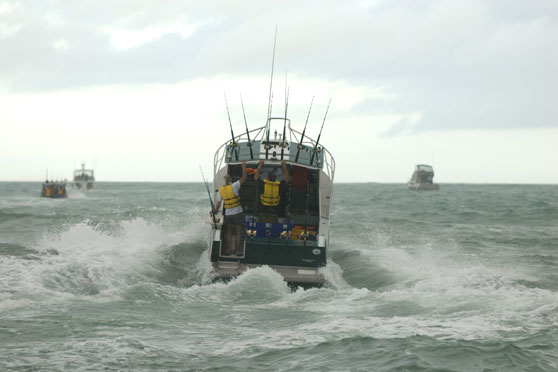
With the busy boating season upon us, Coastguard has seen a massive increase in the number of Trip Reports and Bar Crossing Reports already. Here’s a handy reminder of the best way to log a report with Coastguard – you don’t have to be a member to log a report, but if you get into trouble and need help Coastguard members get free assists! For more information on membership click here.
What is a Trip Report?
A trip report (TR) is a message that you pass to Coastguard Radio to advise them of your intended boating activity. We record this information, which gives us a great picture of your boating activity should it be needed for search and rescue purposes. It’s worth noting that if you forget to close your trip report it’s not the end of the world. We don’t necessarily start looking for you straight away but we highly recommend getting in the habit of closing your trip report when you arrive back safely from your day out.
What is a Bar-crossing Report?
A bar-crossing report is logged with Coastguard Radio when a boat is crossing one of the many challenging harbour or river bars around the country. Unlike a trip report, a bar-crossing report must be closed once you have safely crossed the bar or we initiate search and rescue procedures. A designated time is allocated to the specific location where the boat is crossing the bar, and we expect to hear from the boat within that timeframe.
How do I log a report with Coastguard Radio?
To log a report, tune your marine VHF radio to your local Coastguard Radio station (click here for the full list of stations) or call us on *500 from your mobile phone.
Reporting Format:
- Name and VHF Call Sign of your boat.
- Point of departure.
- Destination, route and estimated time of arrival (ETA). For a bar-crossing report, acknowledge that you are about to cross a bar, which direction you’re heading (in or out) and your location.
- Number of people on board (POB).
Remember you can break up a trip report. For example, if you are going fishing, you log a TR to the first fishing spot, then another when you depart again with an updated ETA and next destination.
Example of a departure trip report:
Establish communications before you pass the trip report information.
“Coastguard Radio (up to 3 times), this is Seabird ZMQ8088 (up to 3 times). Over.”
Coastguard replies: “Seabird ZMQ8088, This is Coastguard Radio – go ahead.”
“Coastguard Radio this is Seabird, departing from Opua Marina, destination Cape Brett via Roberton Island for some fishing, ETA Roberton Island 1800 this evening, 4 POB. Over.”
Coastguard replies: “Thanks Seabird, that’s all received. Coastguard Radio out.”
Remember it’s always good practice to close your TR when you arrive safely at your destination.
Example of arrival trip report:
“Coastguard Radio (up to 3 times), this is Seabird ZMQ8088 (up to 3 times). Over.”
Coastguard replies: “Seabird ZMQ8088, this is Coastguard Radio – go ahead.”
“Coastguard Radio this is Seabird, we have arrived at Roberton Island and would like to close our TR. Over.”
Coastguard replies: “Thanks Seabird, that’s all received. Coastguard Radio out.”
Example of a distress call:
Mayday. Mayday. Mayday.
This is Seabird, Seabird, Seabird ZMQ8088.
Mayday, Seabird ZMQ8088.
We are at (state your general geographical position) in position (latitude & longitude).
We have (state what is wrong, the nature of your distress). We require immediate assistance.
We have (state how many people on-board).
Any other helpful information.
Over.
Wait for a response from either Coastguard Radio or Maritime Radio (or a nearby vessel). They will then ask for more information and confirm assistance is being sent to you as soon as possible. In addition, relay calls will be issued to alert any nearby vessels to your position.
We can’t stress enough the importance of telling someone where you’re going and when you plan to be back. It not only leaves a trail but can narrow down the search time dramatically and make all the difference at the end of the day. If you haven’t already, we recommend getting along to one of our Maritime VHF Radio Operator courses. You’ll get the confidence you need to use the safety services on offer and ensure you know how to communicate key information calmly in an emergency. For more information on VHF courses click here.


Friday 25 September 2026
Major Bites
 - -
- - Minor Bites
 - -
- - Saturday 26 September 2026
Major Bites
- - Minor Bites
- - 
Fishing Reports Visit Reports
Outer Hauraki Gulf Fishing Report 17/09/26
Spring wind the handbrake. Spring is starting to make its presence felt in the outer... Read More >
Top of the South Fishing Report - 17/09/26
Early snapper in Tasman Bay. Well, spring is finally here, and the days are getting... Read More >
Bream Bay Fishing Report - 17/09/26
Good snapper catches reported. After Tangaroa turned off the fish tap for a month or... Read More >
Bay of Islands Fishing Report - 17/09/26
Pacific bluefin tuna for the lucky few. The last fortnight has seen more fishable days... Read More >
Comments