
SOS - SAVE OUR SNAPPER!
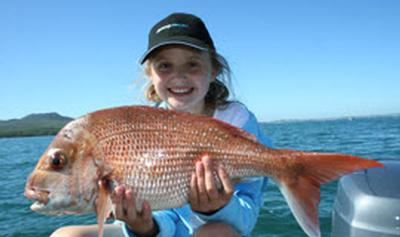
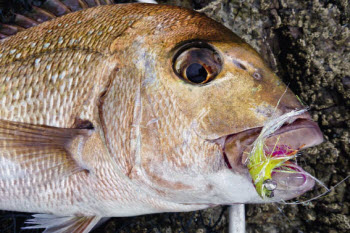 New Zealand is faced with rebuilding the snapper 1 fishery for future generations.
On 12 July 2013 the Ministry for Primary Industries issued a discussion paper that includes three main options for the future management of the Snapper 1 (SNA1) fishery that spans east Northland, the Hauraki Gulf and Bay of Plenty.
To continue rebuilding the snapper 1 fishery, more fish need to be conserved. The Ministry proposal is to place responsibility for this on the public of New Zealand, not the commercial sector.
Since 1984 public fishers have taken four bag limit cuts and a size limit increase – yet commercial quota is still at levels similar to 1986.
If the Ministry and the government are successful with ANY of these options it will set a dangerous precedent for all NZ fisheries.
This is about fighting for our rights as the people of New Zealand to be treated fairly and equitably by our own government representatives. We can longer allow our environment or future to be compromised by the single-minded pursuit of short-term economic gains.
The Options that have been proposed
All management options suggested by the Ministry will have a significant, negative impact on the people of New Zealand while only contributing less than 1% to rebuilding the fishery in the next five years.
· Option 1 = recreational catch reduction of 24%, no change to commercial quota
· Option 2 = recreational catch reduction of 19%, 7% increase commercial quota
· Option 3 = recreational catch reduction of 30%, 7% decrease commercial quota
These options will be put in place by imposing a mixture of lower daily bag limits and increased minimum size limits (see table 1) for recreational fishers.
We oppose all options presented by the Ministry. They effectively constrain us to an allowance that was made 16 years ago! This approach by Ministry is fundamentally flawed. See more on this below.
The proposed options
Table 1:
|
|
|
|
Allowances (tonnes) |
Estimated Catch |
Proposed minimum legal size (cm) & bag limit |
||||||
|
|
TAC (tonnes) |
TACC (tonnes) (Quota) |
Customary |
Other mortality |
Recrea- tional |
Recrea- tional |
|
|
|
|
|
|
27 |
30 |
33 |
35 |
36 |
|||||||
|
Current (set in 1997) |
7550 |
4500 |
300 |
450 |
2330 |
3365 |
9 |
- |
- |
- |
- |
|
Ministry proposals |
|
|
|
|
|
|
|
|
|
|
|
|
Option 1 |
7550 |
4500 |
50 |
450 |
2550 |
3365 |
3 |
3 |
4 |
9 |
9 |
|
Option 2 |
8050 |
4820 |
50 |
450 |
2730 |
3365 |
4 |
4 |
6 |
9 |
9 |
|
Option 3 |
7050 |
4180 |
50 |
450 |
2370 |
3365 |
3 |
3 |
3 |
5 |
9 |
Ministry has estimated current recreational catch at around 3365 tonnes (vs the 1997 allowance of 2300 tonnes).
Ministry have called for feedback, submissions are due by 23rd August. In September the Minister for Primary Industries, Nathan Guy, will make a decision on what (if any) changes will be made. Prior to the 23rd August deadline you can make a submission via the Legasea website. It’s easy and quick.
Interpreting the Ministry options – key terms explained:
Total Allowable Catch (TAC) is the total amount of fish that can be caught and killed in a year, in a particular fish stock. The Minister decides on this tonnage before considering how that is apportioned between, recreational, customary (Maori) and commercial interests.
By law the Minister is supposed consult interested parties before setting the TAC, then set aside an allowance to provide for recreational and Maori interests, and then finally, set the TACC (Total Allowable Commercial Catch or Quota).
A quota is set to constrain commercial fishing. Commercial fishers are allocated a fixed tonnage of fish. Financial penalties are incurred if they exceed their quota.
Unlike commercial fishers, recreational and customary fishers do not have a quota. This is a critical point. An allowance is made by the Minister to provide or ‘allow for’ recreational and customary interests and their future needs. A quota can be set to zero, but it would take a brave Minister to do so.
It is not possible to “overfish” an allowance yet all the proposed options are based on fitting recreational catch back into the allowance made in 1997. The 1997 allowance was flawed because it was based on an estimated 10% of the NZ population fishing. It is now widely accepted that approximately 20% of the population go fishing during the year. Numerous studies support this.
What the options mean:
Option 1 - ‘Status Quo’
Total Allowable Catch (TAC), commercial quota and recreational and customary allowances for snapper 1 remains the same as what it was in 1997.
The complication is that Ministry has estimated current recreational catch at around 3365 tonnes (vs the 1997 allowance of 2300 tonnes). They say this means we have “overfished” our allowance. Nice try, but no cigar. You’ll have to do better than that!
What this means for recreational fishers
Ministry argue that our current catch exceeds the allowance by 24%. They propose decreasing our current catch levels by slashing bag limits and/or increasing size limits.
We maintain the original allowance was wrong and cannot be used as a basis for any new decision. Any new allowance must take into account increased population and catches in a rebuilding fishery.
What this means for the commercial sector
No change to quota.
No change to minimum legal size (currently 25cm).
No change to damaging fishing methods that are killing hundreds of thousands of juvenile fish each year.
Winner option 1 = Commercial
Option 2 - Increase TAC by 500 tonnes.
Increase commercial quota to 4820 tonnes.
Increase recreational allowance to 2730 tonnes (still well short of current catch around 3365 tonnes).
What this means for recreational fishers
Slight increase in allowance from 1997 but still an overall catch decrease of 19%.
Impose restrictions of 4 fish at 27cm or larger or 9 fish at 35cm or larger (see table 1).
What this means for the commercial sector
INCREASE in quota by 7%.
No change to min legal size (25cm).
No change to damaging fishing methods that are killing hundreds of thousands of juvenile fish.
Winner option 2 = Commercial
Option 3 - Reduce TAC by 500 tonnes
What this means for recreational fishers
Decrease to 1997 allocated allowance and decrease our catch by 30%.
Impose restrictions of 3 fish at 27cm or larger or 9 fish at 36cm or larger (see Table 1).
What it means for the commercial sector
Reduction in quota by 7%.
No change to min legal size (25cm).
No change to damaging fishing methods that are killing hundreds of thousands of juvenile fish.
Winner option 3 = No clear winner but recreational is definitely the biggest loser!
All of the options:
Reduce customary allowance from 300 tonnes to 50 tonnes.
Do not address the wider economic impact these changes will have on the recreational fishing and marine industry, such as retail, bait, tackle & gear suppliers, charter boat operators, boat manufacturers, accommodation and tourism providers.
Use the Ministry’s preferred model of proportional allocation. This is a non-statutory approach, where recreational and commercial limits go up or down by the same percentage. Government policy is to grow the population, so it is inevitable that public fishing will reduce to 3 fish per day, then one per day - just to protect and reward the same commercial industry that catches hundreds of thousands of undersized snapper each year and dumps them over the side!
What this means for the snapper stock
The Ministry predictions say the cuts to recreational fishers will not affect the stock status by more than 1% by 2018, which is less than the margin of error.
There should be no cuts to bag limits or increases in minimum size limits are acceptable UNLESS these are accompanied by measures to improve all sector’s fishing practices, to prevent juvenile fish being killed through bulk harvesting methods (trawling and seining), dumping of legal sized fish, and gut hooking of undersized fish.
- Identification and closure of areas of high juvenile mortality to bulk harvesting methods (trawling and seining) is required.
- A realistic recreational allowance that allows for what we currently catch, accounts for improving catch rates as the fishery rebuilds and provides for future generations’ needs.
What are the main issues here?
- Historic commercial overfishing caused serious depletion and denied public access to a reasonable snapper fishery for many years. The Snapper 1 stock is now rebuilding.
- Ministryproposals are biased towards protecting commercial catch while cutting the recreational allowance.
- The Ministryfail to acknowledge recreational conservation efforts over 16 years to rebuild the SNA1 fishery.
- Ministryis trying to squeeze recreational catch into an allowance that was set in 1997 and based on questionable recreational catch estimates.
- Recreational fishers strongly object to proportional allocation of the TAC, as commercial quota and as a recreational allowance, in any of our fisheries.
- Allowances must be able to vary with population changes and/or to allow for improvement in recreational fishing, the allowance was set low at a time when the stock was depleted.
- Ministryfail to take account of the potential loss to small and large businesses in the boat building and recreational marine industry. Government policy is to double primary industry export value by 2025.
- No effort has been made to understand how recreational fishing contributes to the national economy, and how this fishing provides for the social, economic and cultural wellbeing of our communities.
- The real issue is that too many snapper are being killed and wasted in this iconic fishery!
Impacts on the people of New Zealand
- Recreational fishers will quickly be condemned to ever-reducing bag limits if we accept the Ministry’s options and their proportional policy, making our allowance a permanently fixed share of the TAC.
- Participation rates will collapse as recreational fishing becomes uneconomic and people are squeezed out of the fishery in favour of commercial interests.
- Land based, inshore and traditional fishers will be most affected by any proportional changes.
- Major impacts on the marine and bait and tackle industry, boat builders, service providers, charter businesses and fishing media.
What can you do to have your say?
Get ready for action! From early August you can send a submission from the LegaSea website to the Ministry, your local MP and the Minister for Primary Industries.
Tell you friends, family, work colleagues, dentist what’s happening here and encourage them to stand with us against the proposed options.
Come along to one of our LegaSea public meetings to find out more.
LegaSea's role
LegaSea is the public outreach brand of the New Zealand Sport Fishing Council. LegaSea raises awareness and campaigns around issues that affect recreational fishers, while the NZ Sport Fishing Council gets stuck into the grunt work of fisheries advocacy.
LegaSea provides you the opportunity to stand up for yourself, by voluntarily funding the work required to create fair outcomes to the way fisheries are managed in New Zealand.
More information
If you have any questions, information, feedback or suggestions please use the contact form or the following channels:
P: 0800 LEGASEA (534 273)
LegaSea : Mandy Kupenga 0800 LEGASEA (534 273)
NZ Sport Fishing Council spokesperson: Scott Macindoe 021 622463
Support the work that Legasea is doing for the recreational sector
If you appreciate the value of this work we would welcome your contribution. It's an easy process that we hope you will follow in the interests of achieving the LegaSea Vision of 'more fish in the water for future generations'.
You can contribute here » » »
Other helpful information
Stock Status:
- The SNA1 stock has rebuilt and now exceeds the 1997 management target of 20% of original stock size, in some areas.
- The stock is slowly rebuilding to the new management target of 40% of original size (B0).
- Sub-stock status – East Northland 24% B0; Hauraki Gulf 24% B0; Bay of Plenty below 10% B0.
In 2008 the Ministry of Fisheries (now Ministry) issued a Harvest Strategy Standardthat defined default management targets for our fisheries. The 40% target conforms to international standards. Prior to 2008 the target was 20%.
We have a long way to go to reach the 40% target, and we need to start now if we are to leave a legacy of abundance for future generations!
Allocation
- Ministry and the fishing industry propose a fixed share of the TAC for recreational interests.
- The Minister must, however make a reasonable allowance for recreational interests.
- Recreational interests include social, cultural, environmental and conservation aspects.
- There must be a mechanism to acknowledge and reward conservation.
- Any further cuts to recreational catches will be used to protect the commercial share of the snapper fishery.
On what basis was the 1997 recreational allowance set?
- From 1 October 1994 recreational fishers’ longline hook numbers was halved, from 50 to 25.
- In 1994 the minimum legal size for snapper was increased from 25 to 27cm, reducing recreational catch by an estimated 10%.
- In 1995 the Minister decreased the Snapper 1 TACC by 39%, from 4938 to 3000 tonnes. This TACC applied in 1995 and 1996. Commercial fishers appealed against the decision in the High Court and Court of Appeal, and won.
-
From 1st October 1997 a fresh Ministerial decision and rebuild plan was implemented, this included:
- A Total Allowable Catch (TAC) of 7550 tonnes (t).
- A 9% reduction to the Total Allowable Commercial Catch (TACC), from 4938 to 4500 t.
- Minimum legal size for commercial caught snapper retained at 25cm.
- An allowance for illegal catch of 450 t.
- A combined recreational and customary allowance of 2600 t.
- A reduced recreational bag limit from 15 to 9, at 27cm.
- The 1994 controls and 1997 daily bag reductions for recreational fishers remain in 2013.
Conservation and the snapper 1 fishery
Recreational fishers have a demonstrable record in rebuilding the Snapper 1 fishery. This conservation ought to be the basis of a new management plan to rebuild Snapper 1 to 40% of original biomass.
With an agreed plan in place we can implement the New Zealand Sport Fishing Council’s Snapper 1 policy, to achieve 40% biomass (B0), by promoting achievable and affordable actions to restore the fishery. Reducing juvenile mortality and wastage is critical to success; as is research and consultation on further voluntary measures the public could embrace to better look after the environment and to accelerate the rebuild.


Saturday 26 September 2026
Major Bites
 - -
- - Minor Bites
 - -
- - Sunday 27 September 2026
Major Bites
- Minor Bites
 - -
- - 
Fishing Reports Visit Reports
Outer Hauraki Gulf Fishing Report 17/09/26
Spring wind the handbrake. Spring is starting to make its presence felt in the outer... Read More >
Top of the South Fishing Report - 17/09/26
Early snapper in Tasman Bay. Well, spring is finally here, and the days are getting... Read More >
Bream Bay Fishing Report - 17/09/26
Good snapper catches reported. After Tangaroa turned off the fish tap for a month or... Read More >
Bay of Islands Fishing Report - 17/09/26
Pacific bluefin tuna for the lucky few. The last fortnight has seen more fishable days... Read More >
Comments