
New Research Quantifies Recreational Snapper Release & Mortality
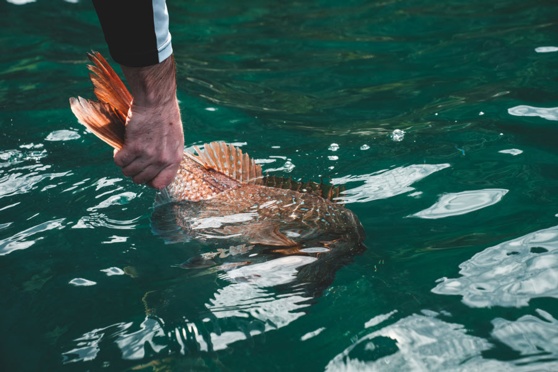
New Fisheries New Zealand research has quantified, for the first time at a fishery-wide scale, how many recreationally caught snapper die after being returned to the water – with the results highlighting both the scale of the issue and some straightforward ways anglers can reduce it.
The report estimates that around 248 tonnes of snapper – approximately 580,000 fish – die each year after being released by recreational fishers in the SNA 1 fishery. That equates to about 22% of all snapper released.
SNA 1 covers East Northland, Hauraki Gulf and Bay of Plenty waters and is New Zealand's largest recreational snapper fishery. The study is based on a programme of observations made aboard private and charter boats between January 2024 and January 2025, combined with existing estimates of recreational harvest and experimental research into snapper survival following capture.
The scale of the catch-and-release component is substantial. Researchers recorded 16,921 individual snapper across 1,746 private-boat fishing trips, with 53% of the fish below the minimum legal size. Overall, 62% of snapper caught from private boats were released. On charter vessels, researchers recorded another 7,092 snapper from 240 fishing events, with 60% below the minimum legal size and 69% of the catch released.
When those observations were extrapolated across the fishery, researchers estimated that private recreational boats release approximately 903 tonnes, or 2.1 million snapper, each year. Of those, about 200 tonnes, representing 477,000 fish, are expected to die. Charter boats account for another 207 tonnes of released snapper, with an estimated 48 tonnes, or 105,000 fish, subsequently dying.
The Hauraki Gulf accounts for the largest share by a considerable margin. Private boats alone were estimated to release 551 tonnes of snapper annually in the Gulf, with approximately 124 tonnes – 293,000 fish – expected to die. The Bay of Plenty accounted for an estimated 49 tonnes of private-boat release mortality, while East Northland contributed 27 tonnes.
Importantly, the research does not suggest that every undersized snapper released by an angler is doomed. Rather, mortality varies markedly according to how and where a fish is hooked and the depth from which it is caught.
The probability of death for lip-hooked snapper is extremely low in shallow water but rises with capture depth. The study's underlying experimental data estimates only around a 0.1% mortality probability for a lip-hooked fish caught at 1m, rising to roughly 11% at 15m and 24% at 20m. At 25m, the estimated probability is around 31%. Fish hooked externally or swallowed face considerably greater risks, particularly as depth increases.
That makes selecting spots based on depth, choosing the right terminal tackle, and utilising best-practice fish-handling practices potentially important tools for reducing recreational fishing's unseen mortality.
The findings build on earlier New Zealand research which found that hook location and capture depth were two of the most important determinants of whether released snapper survived. That work also highlighted the benefits of minimising handling time and avoiding contact with sensitive areas such as the eyes and gills.
For fish caught from greater depths, release devices can also make a significant difference by helping snapper overcome barotrauma and return to the depth from which they were caught.
There is, however, an important distinction between release mortality and overall fishery sustainability.
The researchers note that the estimated 248 tonnes of post-release mortality should be considered alongside the status of the SNA 1 stock, which was assessed as being in a favourable state. The study estimates that release mortality represents about 13% of the landed recreational catch by weight, although the number of fish dying after release is equivalent to approximately 37% of the number of fish retained.
That distinction matters because the majority of discarded snapper are small fish. The average weight of a released snapper in the private-boat fishery was estimated at just 0.42kg, compared with 1.26kg for retained fish.
The study therefore provides fisheries managers with a considerably better picture of what has previously been something of a blind spot: the fish that are caught, released, and quietly disappear from the fishery after being released.
For recreational anglers, the message is arguably more useful than the headline number. Catch-and-release is still doing exactly what it is supposed to do for the majority of undersized snapper – allowing them to return to the population. But where and how a fish is caught, and how it is treated before release, can determine whether that release is genuinely successful.
With millions of undersized snapper encountering recreational fishing gear every year in SNA 1, even modest improvements in survival could translate into many thousands of additional fish surviving to grow into the legal-sized population.
For anglers, that makes the humble undersized snapper worth treating with a little more care. After all, the fish released today is potentially tomorrow's 10-pounder.
- By Nick Jones


Friday 2 October 2026
Major Bites
 - -
- - Minor Bites
 - -
- - Saturday 3 October 2026
Major Bites
 - -
- - Minor Bites
- - 
Fishing Reports Visit Reports
Rotorua Fishing Report - 01/10/26
Opening is here! The opening of the trout season is upon us and weather conditions... Read More >
Bream Bay Fishing Report - 01/10/26
Signs of spring snapper action. There are some promising signs that Bream Bay is getting... Read More >
Houhora Fishing Report 01/10/26
Softbaiting on fire. September has seen 269 catches submitted to the NZOFC monthly competition through... Read More >
Outer Hauraki Gulf Fishing Report 01/10/26
Fishing kicking into gear. Spring has well and truly arrived in the outer Hauraki Gulf,... Read More >
Comments